
This article may contain affiliate or compensated links, and may feature complimentary or discounted experiences. All opinions are my own. Please read the Privacy Policy & Disclaimer for more info.
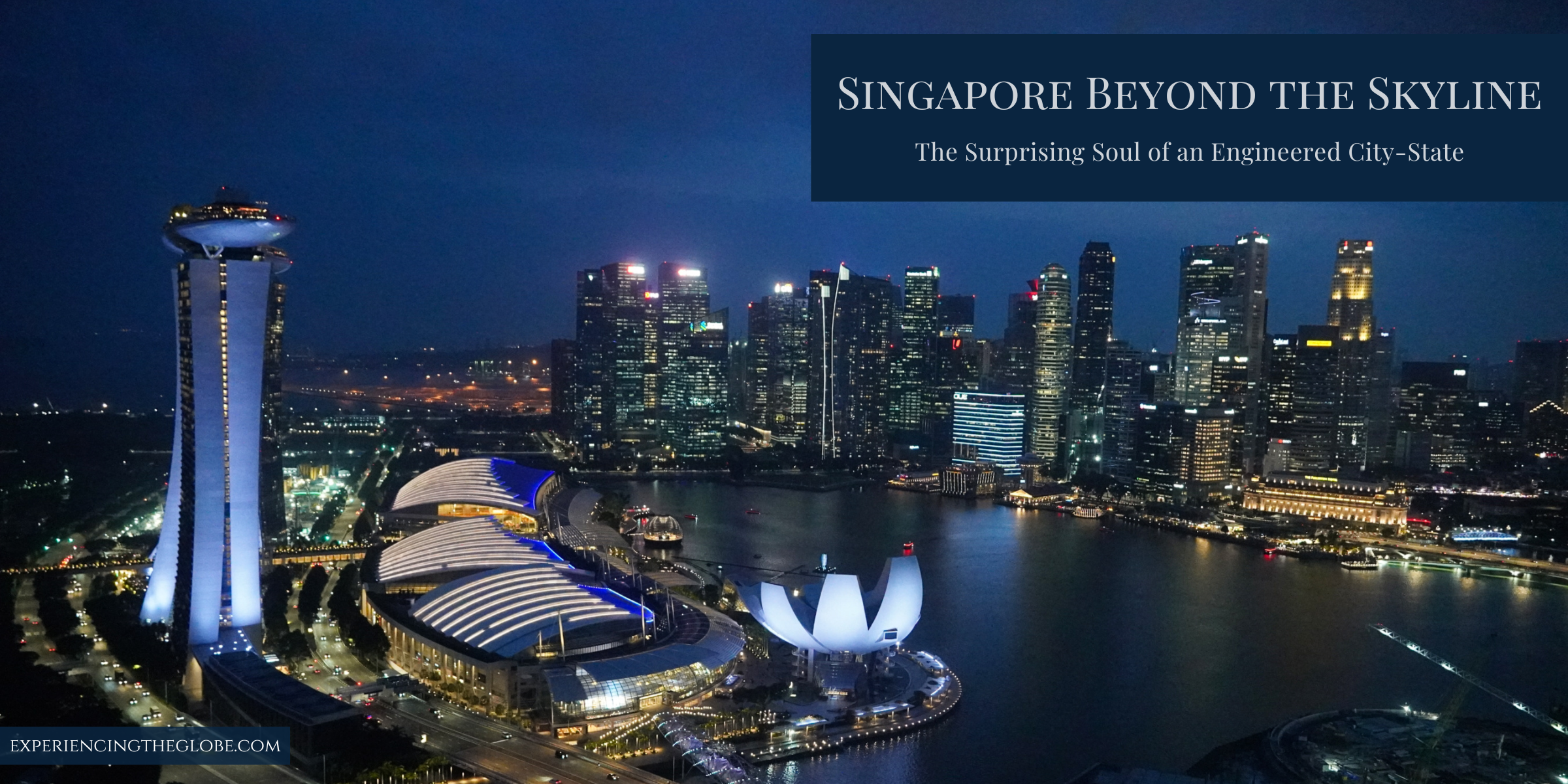
Singapore is often described as futuristic, immaculate and meticulously planned. But look closer, and its skyline reveals a more complicated story –of migration, ambition, reinvention and the relentless making of a nation. This isn’t a conventional Singapore travel guide or a list of things to do in Singapore, but a deep dive into a fascinating place that is often misjudged, and one that deserves to be seen as much more than a simple stopover.
There’s a version of me that ended up in Egypt, dusting sand off a pharaoh’s hidden chamber. Archaeology was my childhood dream –not in the vague way kids want to be astronauts, but with the burning conviction that ancient things were the only ones worth chasing. That career didn’t happen and the obsession never left. But I grew up in Chile, where something is considered old if it dates to the colonial period, so the scarcity of proper ancientness left a mark I’ve been chasing ever since.
Which is a long way of explaining why Singapore was never high on my list. The city-state has a reputation, and it’s not exactly archaeological. Ultra-modern, meticulously engineered, aggressively clean –a place that gets described as impressive and efficient and occasionally, in the same breath, a little soulless. I never felt a pull to visit Dubai or Doha. Singapore, by that logic, shouldn’t have called me. But it did.
What Singapore does, quietly and without announcing it, is to refuse the dichotomy. It’s not old in the way I usually mean the word –but it has roots, and it celebrates them. The pride people take in its history is visible, tangible, even architectural. Religions and ethnicities don’t just coexist, they’ve built something together, something that doesn’t look like anywhere else. The city is futuristic and green and urban and historical all at once, and it holds those contradictions without apparent effort.
How Singapore built its skyline from the sea: Marina Bay Sands and the waterfront that isn’t finished
I don’t usually stay in places like Marina Bay Sands. Luxury travel has never been my natural habitat –I’m more comfortable in a guesthouse with a good story than a hotel with a turndown service. But it was our honeymoon and my husband’s birthday, and as we rarely travel together, it felt like a good time to splurge. I went with a faint suspicion that it might be all spectacle and no substance, but I hoped the views would make the experience worth it.
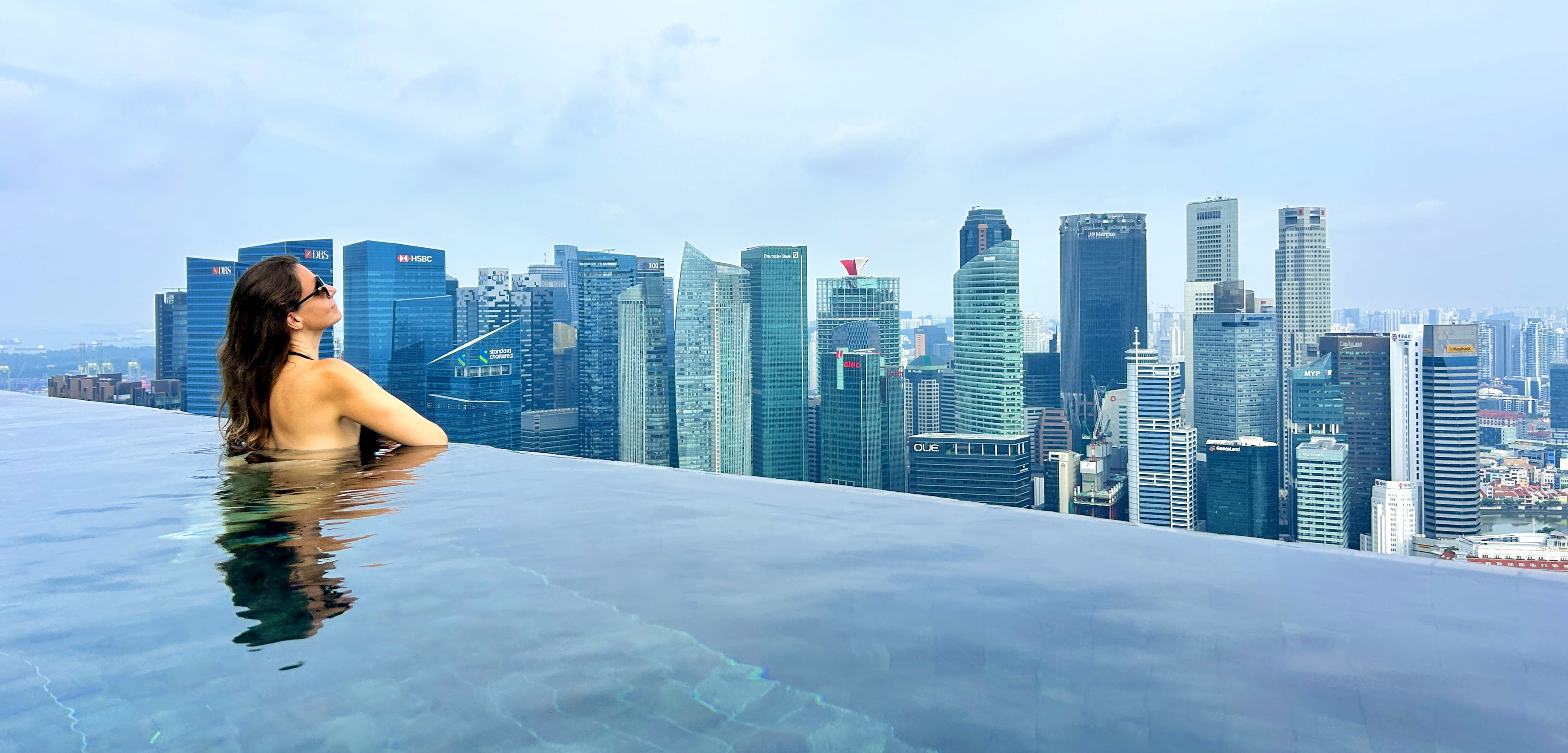
The infinity pool on the 57th floor is among the most photographed on earth. But it wasn’t the Instagram potential what made it bucket list material for me –though I took the photo, obviously– it was something more specific: the idea of seeing an entire country from the edge of water suspended above it, on reclaimed land. A feeling as fantastic as the history of the city-state itself.
But before the hotel, let’s talk about the land it sits on.
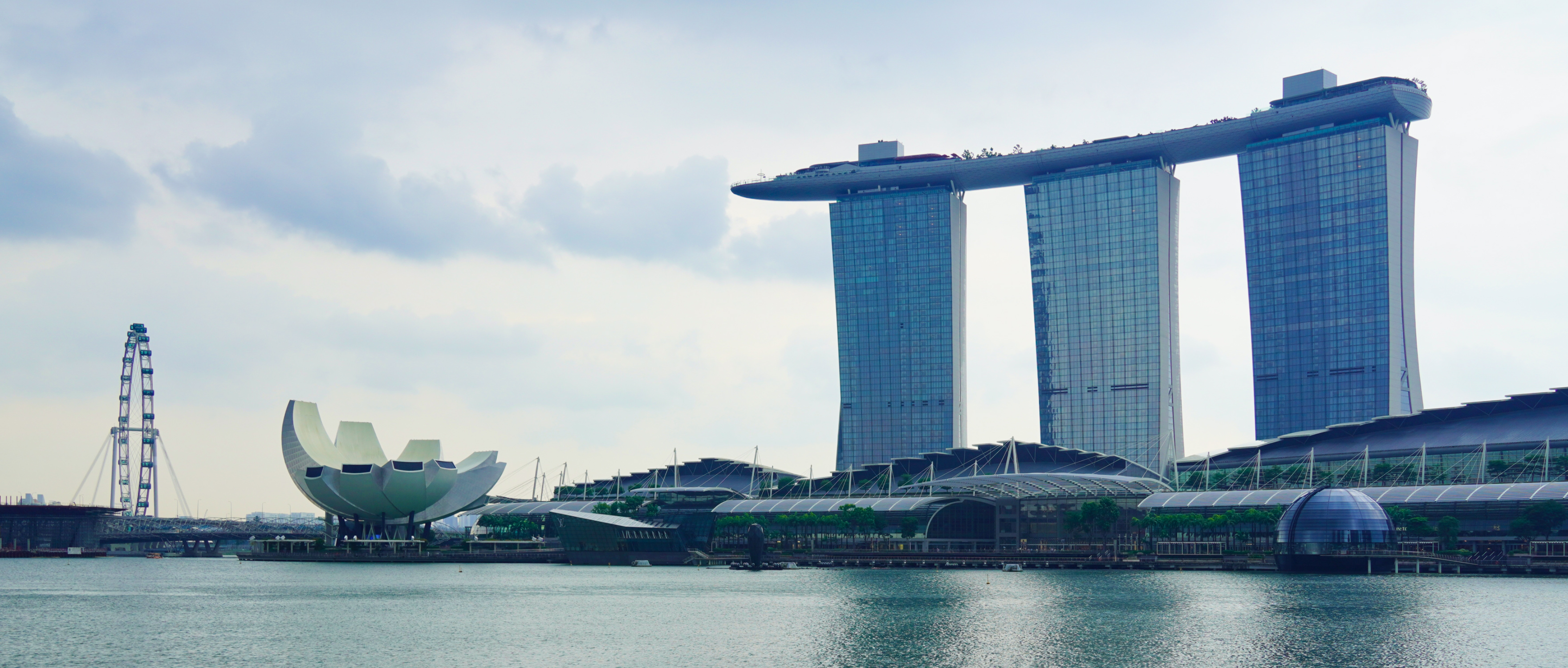
The waterfront that Marina Bay Sands now dominates didn’t exist until recently. Singapore has been reclaiming land from the sea since the 1970s, steadily expanding its coastline to accommodate a city that refuses to accept its own smallness. What was once a British colonial port –functional and mercantile, facing outward toward trade routes, still one of the world’s great maritime hubs– has been remade. The Singapore Flyer rose here in 2008. MBS and the Helix Bridge both followed in 2010. There are a sports venue and a Founders’ Memorial currently being built. The waterfront is still being written –the land MBS stands on didn’t exist when Singapore gained independence in 1965, and the project it belongs to isn’t finished yet.
Into this ongoing project, architect Moshe Safdie introduced something that most buildings in ultra-modern cities don’t bother with: the desire to belong. Towers in cities like this tend to compete, each one angling to be the centerpiece and forgetting that a skyline is a conversation rather than a monologue. Safdie saw it differently. “It’s all about rethinking and proposing a new kind of public realm” he said of the design, “which is counter to the predominant typology of a cluster of towers sitting over a mall, turning its back to the rest of the city”. You could, technically, describe Marina Bay Sands as a cluster of towers sitting over a mall. What that description would miss is that those towers –connected at the top by a cantilevered sky park extending 66.5 meters (218ft) beyond the north tower’s edge and a 150-meter (492ft) long infinity pool– didn’t just join the Singapore skyline, they defined it.
Beyond the story of the building itself, I must admit that every detail inside the hotel felt considered in a way that’s hard to articulate without reaching for superlatives. It actually made me crave a bit more luxury on future travels. As for the pool, I expected familiarity to soften it. You’ve seen the photo so many times that your own first encounter risks feeling secondhand, but it doesn’t. Standing at the edge with the city below, the bay catching the late afternoon light, the cranes of the next phase of the waterfront visible, makes the fantasy real. You understand, from up there, exactly what Singapore is trying to do –and how far it’s already come from the sheltered harbor that started all of this.
Understanding Singapore: how a city-state willed itself into existence
Most places have history. Singapore has a creation myth. The city-state that exists today is roughly 60 years old. What it became in that time is a story that sounds implausible in the telling and undeniable when you’re standing in the middle of it. To understand Singapore, you have to start at the water.
The origins of Singapore: a sheltered harbor and a legendary name
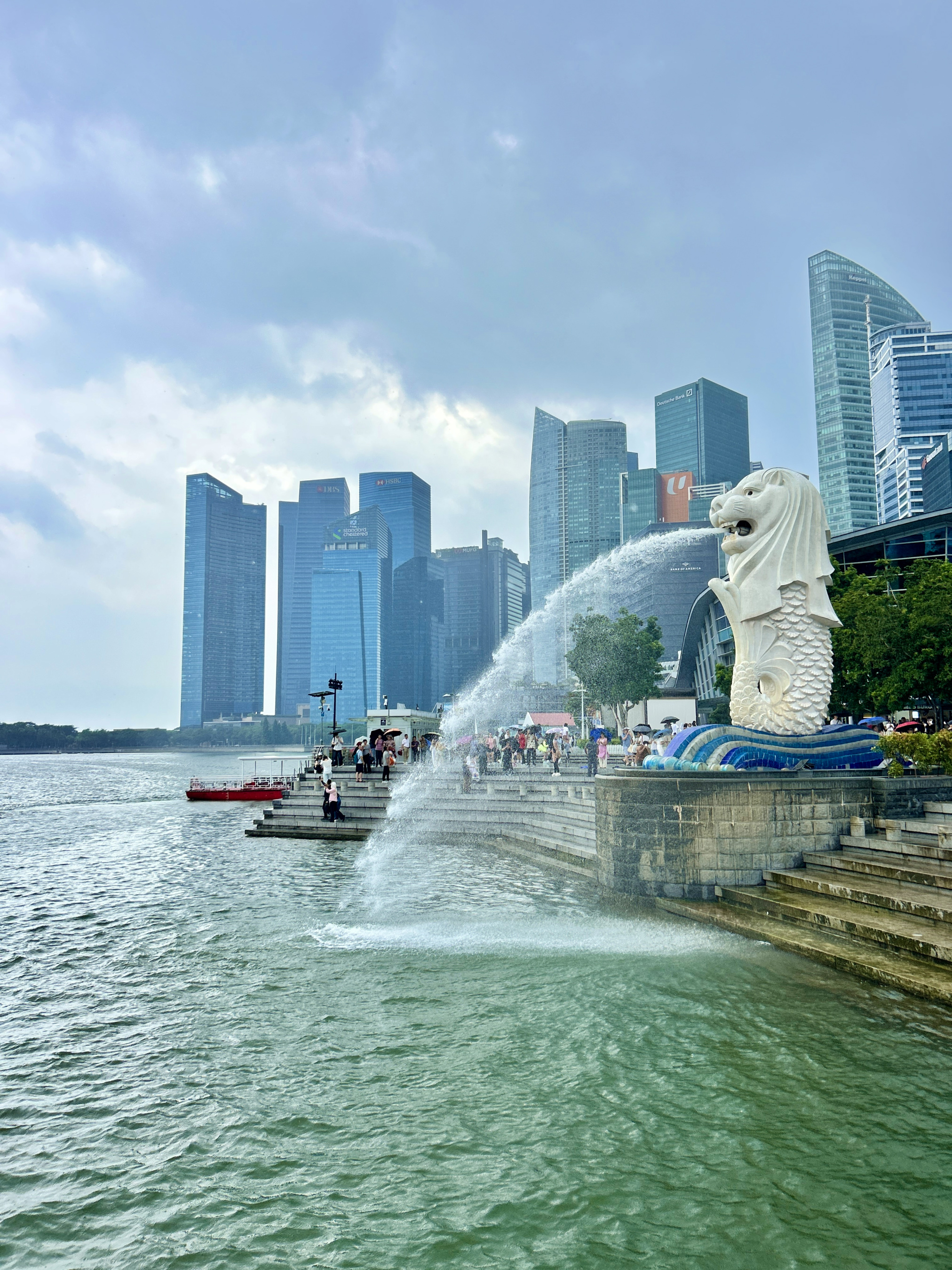
The name comes from a folktale. A Sumatran prince named Sang Nila Utama arrived on the island in the 13th century and spotted what he believed was a lion –an animal that had never actually lived in that part of the world, though that detail didn’t make it into the founding story. He named the place Singapura: lion city. The lion became the Merlion, half-fish and half-lion, the official mascot of a nation that understands the power of a symbol.
What the legend doesn’t mention is geography, which is where the real story begins. Singapore sits at the southern tip of the Malay Peninsula, at the point where the South China Sea meets the Strait of Malacca –one of the most strategically significant stretches of water on earth. For centuries before any colonial power arrived, this sheltered harbor was a natural waypoint on the Maritime Silk Road: Chinese silk moving south, Indian cotton moving east, Arabian goods moving through. Migration and trade were, from the beginning, what Singapore was.
The British understood this immediately.
Singapore’s colonial history: borrowed cultures and the ghost of Raffles
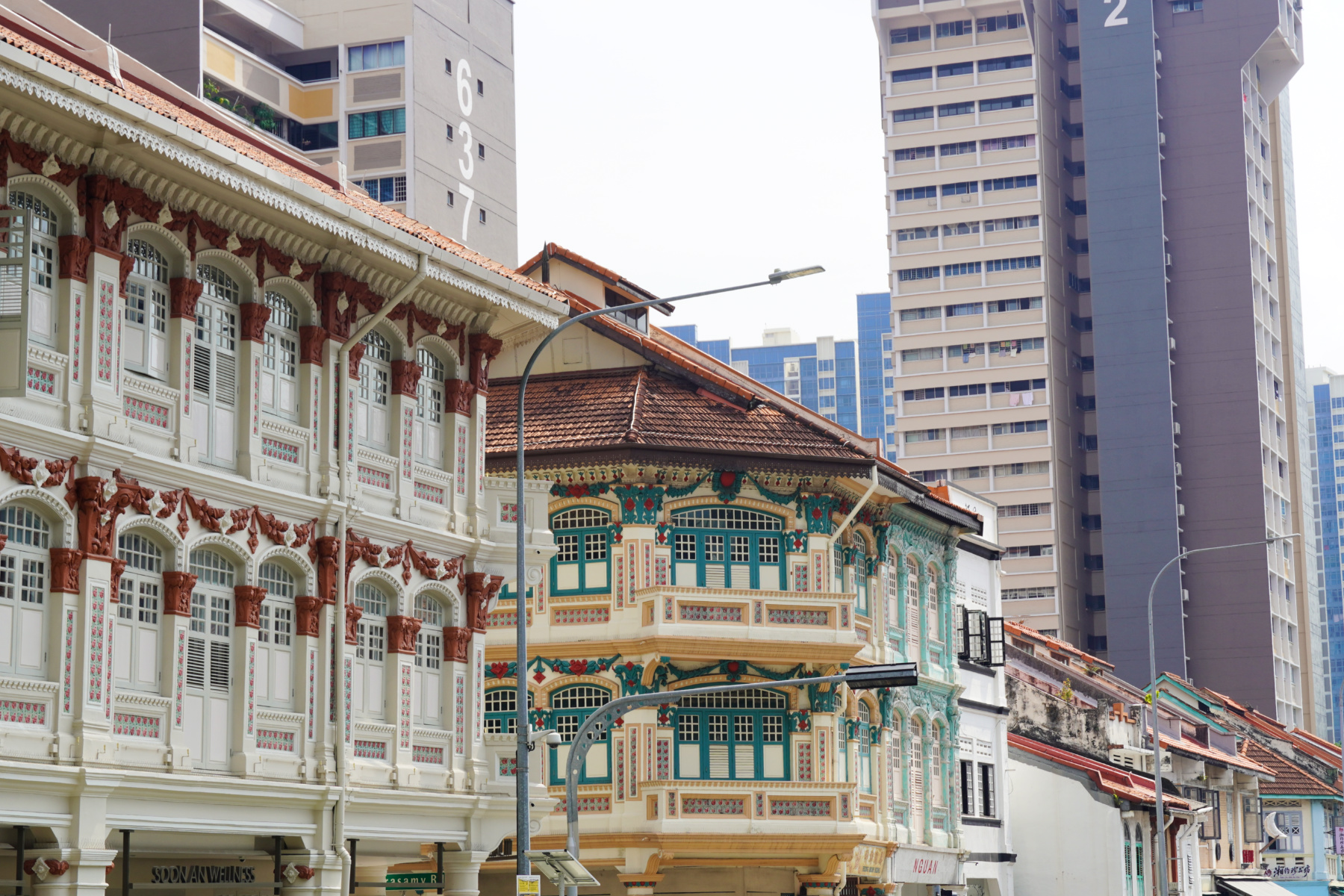
Stamford Raffles arrived in 1819 looking for a trading post to counter Dutch influence in the region and recognized the harbor for what it was: a choke point, and therefore a prize. He negotiated a treaty with the local Malay rulers, established a port, and set in motion the transformation of a fishing village into one of the most important commercial hubs in Asia. The colonial city that grew from that decision was organized with a particular logic –ethnic quarters assigned by the British administration: Chinatown for the Chinese, Kampong Glam for the Malays, Little India for the Indians –a spatial arrangement that was about management as much as multiculturalism. Those boundaries have blurred considerably, but the neighborhoods remain, and walking through them still tells you about how the city was built and by whom.
Raffles himself is everywhere. His name appears on a hotel, a hospital, a school, a shopping mall, a boulevard, a golf club. You notice it first as a curiosity, then as something more evident –a city making a deliberate choice about which version of its history to keep visible.
A statue stands on the north bank of the Singapore River, arm outstretched toward the site where is believed he landed. In 2019, for the bicentennial of his arrival, Singapore had a public debate about what to do with him –whether the statue should stay, whether the name should carry its current weight, whether a city built substantially by immigrant labor and governed through ethnic segregation should continue to frame its founding as a heroic act of British vision. The debate was met with pragmatism: the government’s position was that colonialism had been both good and bad, but that without it today’s Singapore would not exist.
The country’s relationship with its colonial past is neither the deletion you see in some post-colonial nations nor the uncritical celebration that characterized an earlier era of heritage tourism. It’s something more complicated: an acknowledgment that the British built real things, infrastructure and institutions that Singapore inherited and used, alongside a growing willingness to ask what that inheritance actually cost and who paid for it. The ethnic quarters of Chinatown, Little India and Kampong Glam were British administrative policy as much as they were cultural expression. That those same neighborhoods are now celebrated as expressions of Singapore’s multicultural identity is either a remarkable transformation or a very long act of reframing. Probably both.
The physical traces of the colonial city are everywhere once you start looking. Drive on the left. Plug into a UK socket. Step inside Lau Pa Sat, the Victorian cast-iron market structure that was shipped in pieces from Glasgow in 1894, now a hawker center serving laksa and satay under a roof that belongs, architecturally, in Scotland. The colonial city didn’t disappear, it got repurposed, absorbed into the texture of a Singapore that has become something the British neither planned nor imagined.
English is perhaps the most consequential inheritance. Singapore has four official languages –English, Mandarin, Malay and Tamil– a linguistic policy that is itself a political artifact, each language a nod to one of the major communities that built the city. But English is the common tongue of a city that has no other obvious candidate for that role, and it arrived on British ships. Walking through Singapore speaking English and being understood everywhere, is easy to forget what that fluency represents –or to notice, in the Singlish spoken between locals, the way a language defines an identity.
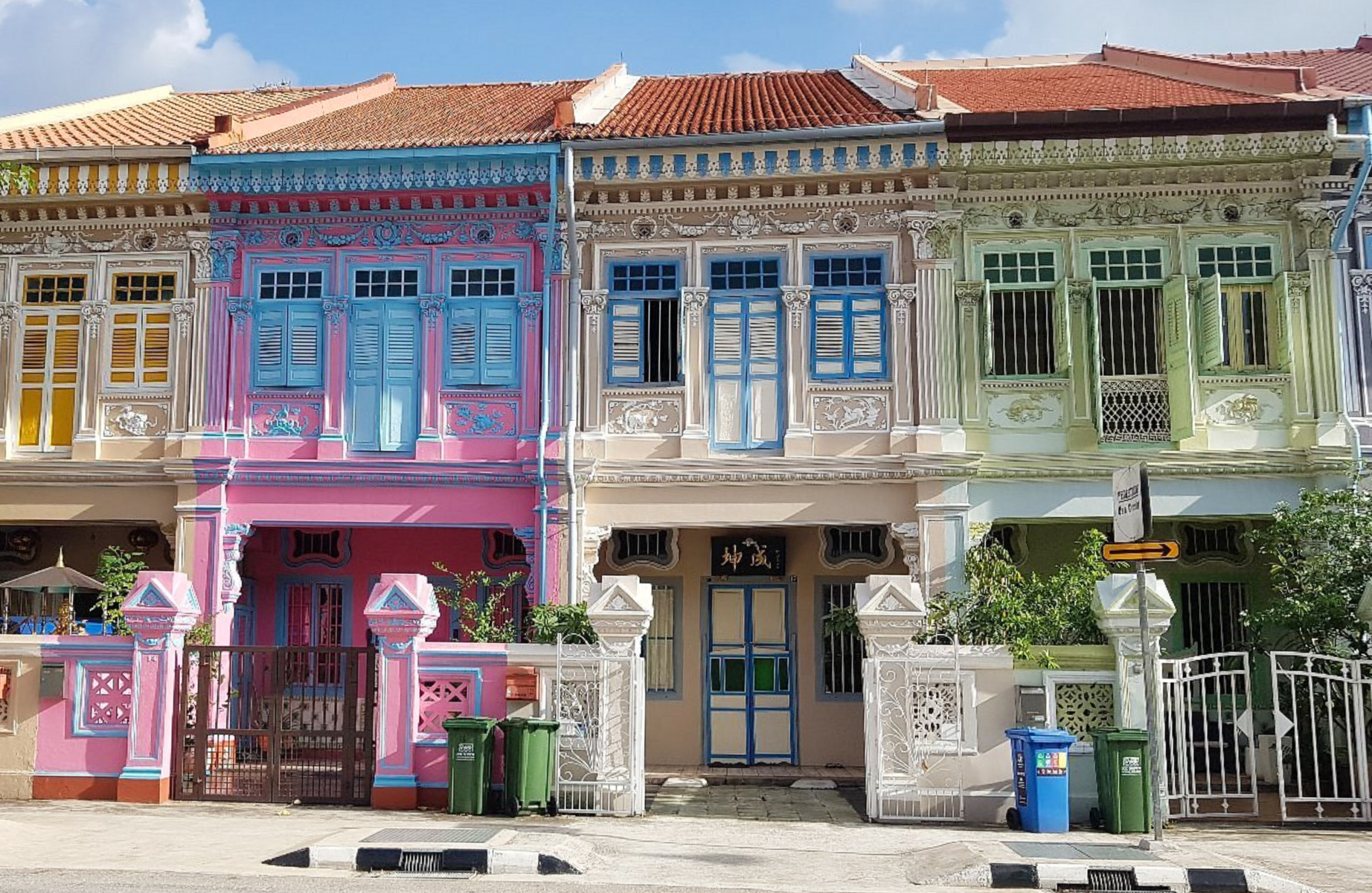
The Peranakan are perhaps the most vivid example of what happens when cultures don’t just coexist but genuinely combine. The term refers to the descendants of Chinese merchants who settled in the Malay Peninsula centuries ago and intermarried with local Malays, producing a hybrid culture with its own cuisine, language and distinctive aesthetic. The patterns are everywhere in Singapore –on tiles, on porcelain, on the facades of shophouses, on the souvenirs in Chinatown– and most visitors admire them without knowing what they’re looking at. The Peranakan Museum on Armenian Street and the cluster of heritage shophouses on Joo Chiat are worth the detour if your schedule allows –they tell a story about cultural mixing that is more interesting than the managed multiculturalism of the official narrative.
Colonial history in Singapore doesn’t sit in the past. It sits in the street names and the socket types and the language you’re reading this in –present tense, ongoing.
The British left in stages, and by 1963 the island joined the newly formed Malaysia. Two years later, it was expelled from it. The official narrative tends to surprise people. Singapore didn’t win independence, although the true story is more complicated. Declassified documents released in December 2025 (the Albatross File, a trove of Cabinet papers and confidential notes) revealed what actually happened: 25 days of careful, largely secret negotiations between Singapore and Malaysian leaders that both sides agreed to keep quiet. It was a door that both parties, for different reasons, chose to close.
Lee Kuan Yew, who had spent years campaigning for merger and genuinely believed Singapore’s future laid within Malaysia, teared up on television when he announced it. The nation that would become one of the wealthiest per capita in the world began its life having just negotiated its way out of the only larger project it had ever belonged to –with no natural resources, no hinterland, and no real reason to survive.
Lee Kuan Yew and the art of building a nation: order, prosperity and the fine print
Lee Kuan Yew governed Singapore from 1965 until 1990, and then, in various advisory capacities, until his death in 2015. Calling him influential understates it considerably. He didn’t shape Singapore so much as invent it –the economic model, the political culture, the physical landscape, the national identity. The city you walk through today is, in ways both obvious and invisible, the city he designed.
The model he chose was deliberate and unapologetic: economic liberalization paired with political control. Free markets, foreign investment, an aggressive push toward education –and alongside all of that, a one-party state that has held power without interruption since independence, a press that operates within carefully managed boundaries, and a legal system with a reputation for enforcement that tends to make visitors pay attention to signage.
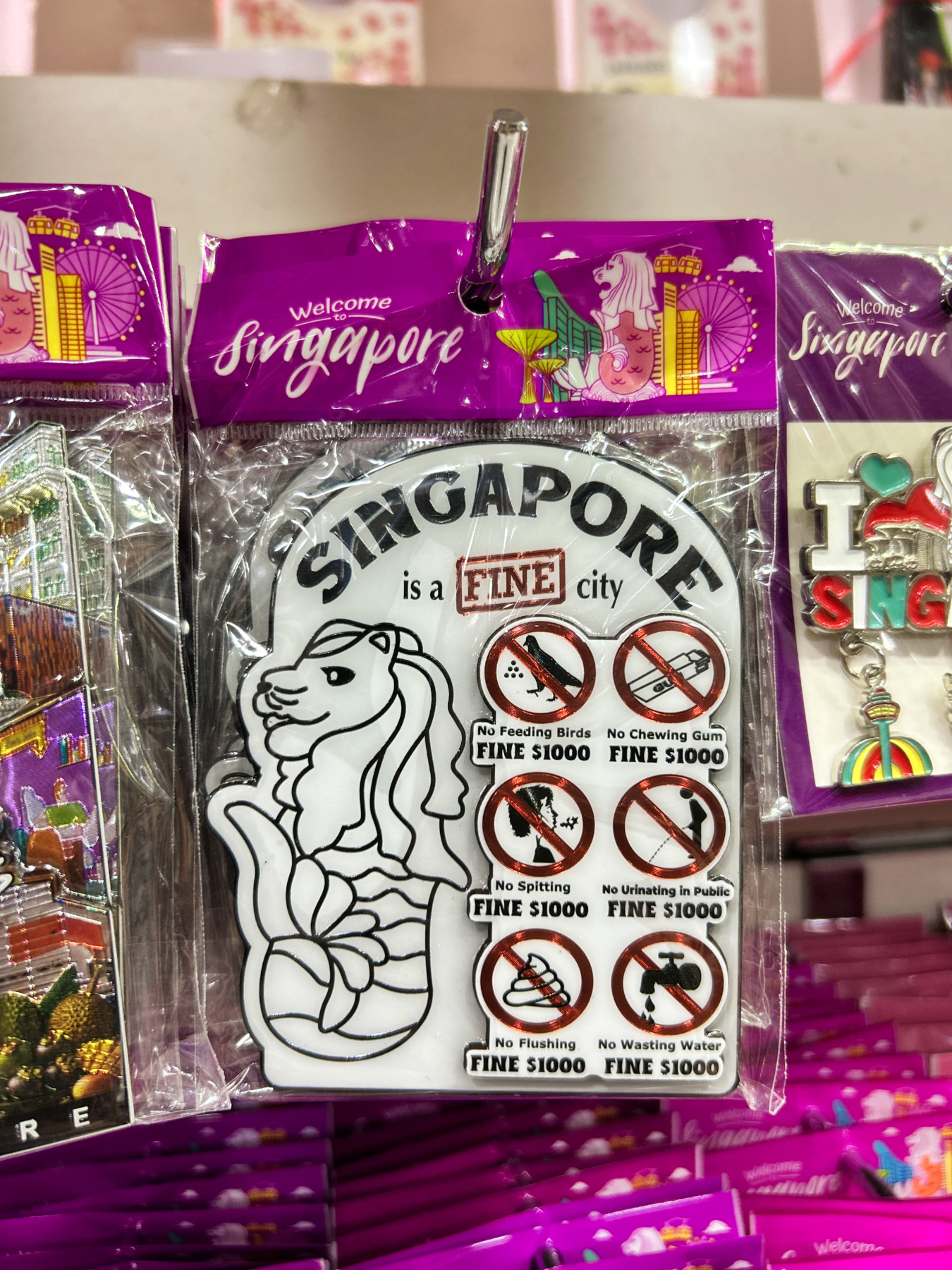
The signage is worth dwelling on. Singapore is famous for its prohibitions –the chewing gum ban is the one that has traveled furthest, but it’s only the beginning. Don’t feed the birds. Don’t litter. No durians on public transport. Don’t smoke outside designated areas. The rules are posted everywhere: on MRT carriages, park benches, the backs of taxi seats, and the fines attached to them are not suggestions. I saw a fridge magnet that catalogues them with cheerful irony: “Singapore is a fine city”, it reads, and then lists the prohibitions and fees.
What I found particularly interesting is that most of the rules, taken individually, are very reasonable. The city is genuinely clean, genuinely safe, genuinely functional in ways that cities half its size struggle to achieve. The issue isn’t whether the rules work –they clearly do– but the underlying feeling of oppression.Homosexuality was decriminalized in Singapore only in 2022, after decades of activism and resistance. The Internal Security Act allows detention without trial. Press freedom rankings place Singapore well below most of the countries its citizens can freely visit.
None of this is hidden. Singapore doesn’t pretend to be something it isn’t –it makes an explicit argument that the trade-off between certain civil liberties and the stability and prosperity it has achieved is a reasonable one, and a significant portion of its population agrees. Lee Kuan Yew made that argument himself, and it was persuasive enough for the People’s Action Party to win every general election since 1959.
What I found, walking through Singapore, was that the authoritarian undertow sits strangely beneath the surface of a city that feels, in almost every other respect, free. The streets are safe at any hour. The food is accessible to everyone. The parks are immaculate. The MRT runs reliably on time. The gap between that lived experience and the legal architecture underneath it is hard to close.
Lee Kuan Yew died in 2015, and Singapore mourned him at a scale beyond ordinary grief. His son, Lee Hsien Loong, had already been Prime Minister since 2004 –the third in Singapore’s history, following Goh Chok Tong, who held the role from 1990 to 2004. When the younger Lee stepped down in 2024, power passed to Lawrence Wong, his designated successor, in a transition choreographed years in advance. That’s only four prime ministers across more than 60 years of independence, which tells you enough about how power moves in Singapore.
What to see in Singapore: a city that wears its story on its skyline
The standard approach to Singapore’s attractions is a list: go here, see this, allow two hours. That approach misses something, because almost everything worth seeing in Singapore is also telling a story –about the city’s origins, its ambitions, its carefully tended sense of self-identity. The sights can be read.
Let’s start at the water, where Singapore started.
Singapore’s icons: the skyline Singapore built
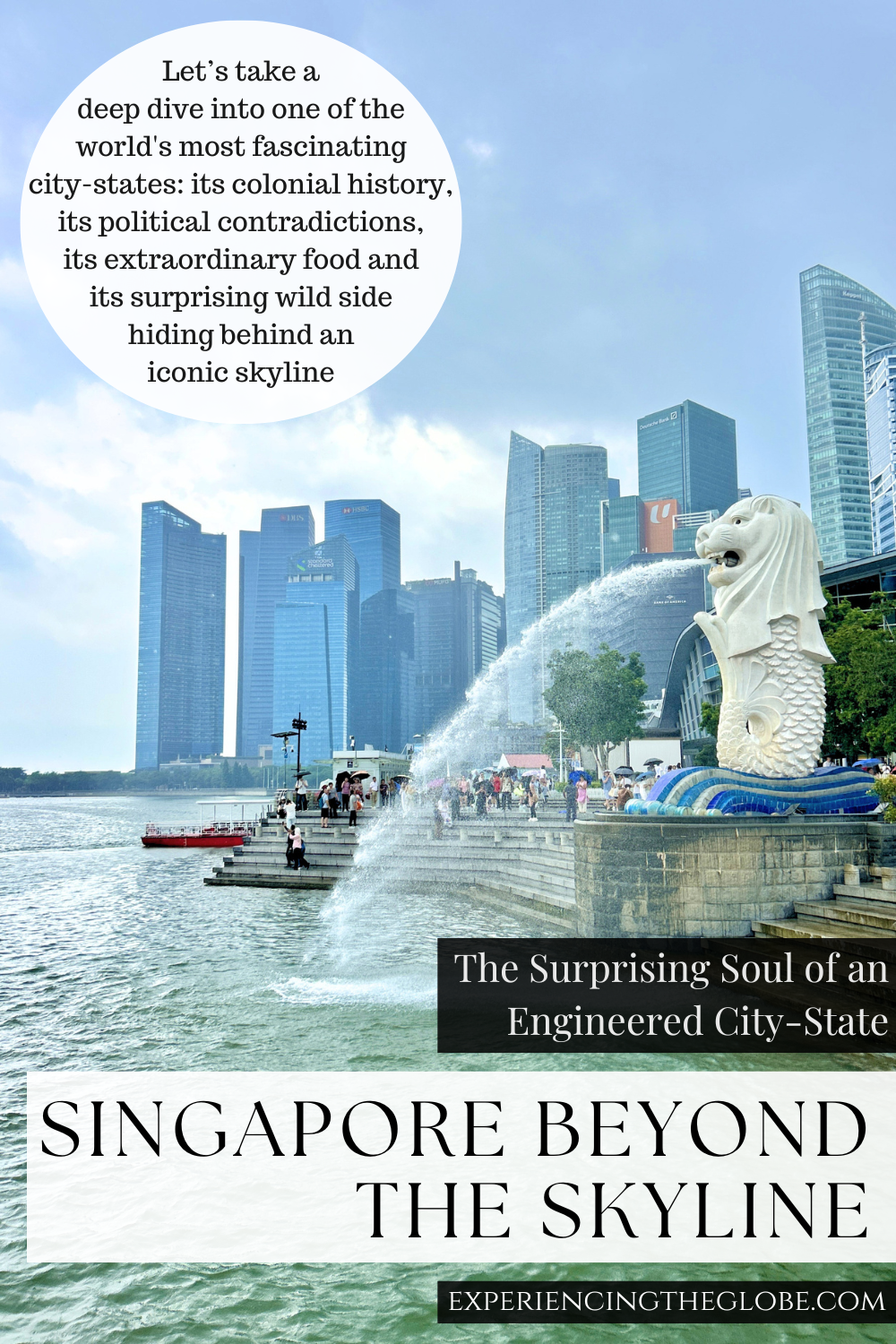
The Merlion stands at the edge of Marina Bay, half-lion and half-fish, spouting water toward the skyline. It’s a bit kitsch and Singaporeans are aware of it –the national mascot was actually derecognized as an official symbol in the 1990s before being rehabilitated by sheer force of affection. What makes it worth more than a passing glance is the origin story it encodes: the lion of Sang Nila Utama’s legend, the fish tail acknowledging the fishing village that preceded the port, the whole merged creature standing at the edge of reclaimed land that didn’t exist when the symbol was designed.
Behind it, the Singapore River is where the city’s history becomes physical again. Boat Quay, once the commercial heart of the colonial port, is now a curve of restored shophouses filled with restaurants and bars, while Clarke Quay further upstream has turned the warehouses of the old trading district into one of Singapore’s main nightlife areas. The transformation is almost too neat –the river that once carried the goods that made Singapore rich now carries tourists and cocktails– but the geography still tells the story. This was the artery through which the city grew, and walking along the water from the Civic District toward the quays gives you a sense of how trade, migration and commerce shaped Singapore long before the skyline arrived.
Across the bay, Marina Bay Sands rises like a ship balanced improbably on three towers, its rooftop SkyPark Observation Deck offering one of the best vantage points from which to understand Singapore as a whole. As you move around the panorama, information panels point out Singapore’s different neighborhoods and landmarks, explaining the city you are looking at while also celebrating the extraordinary ambition behind its buildings. The skyline becomes almost impossible to miss as a story –of districts with distinct histories, of land reclaimed from the sea, and of a small city-state that has turned the act of building into a source of national pride.
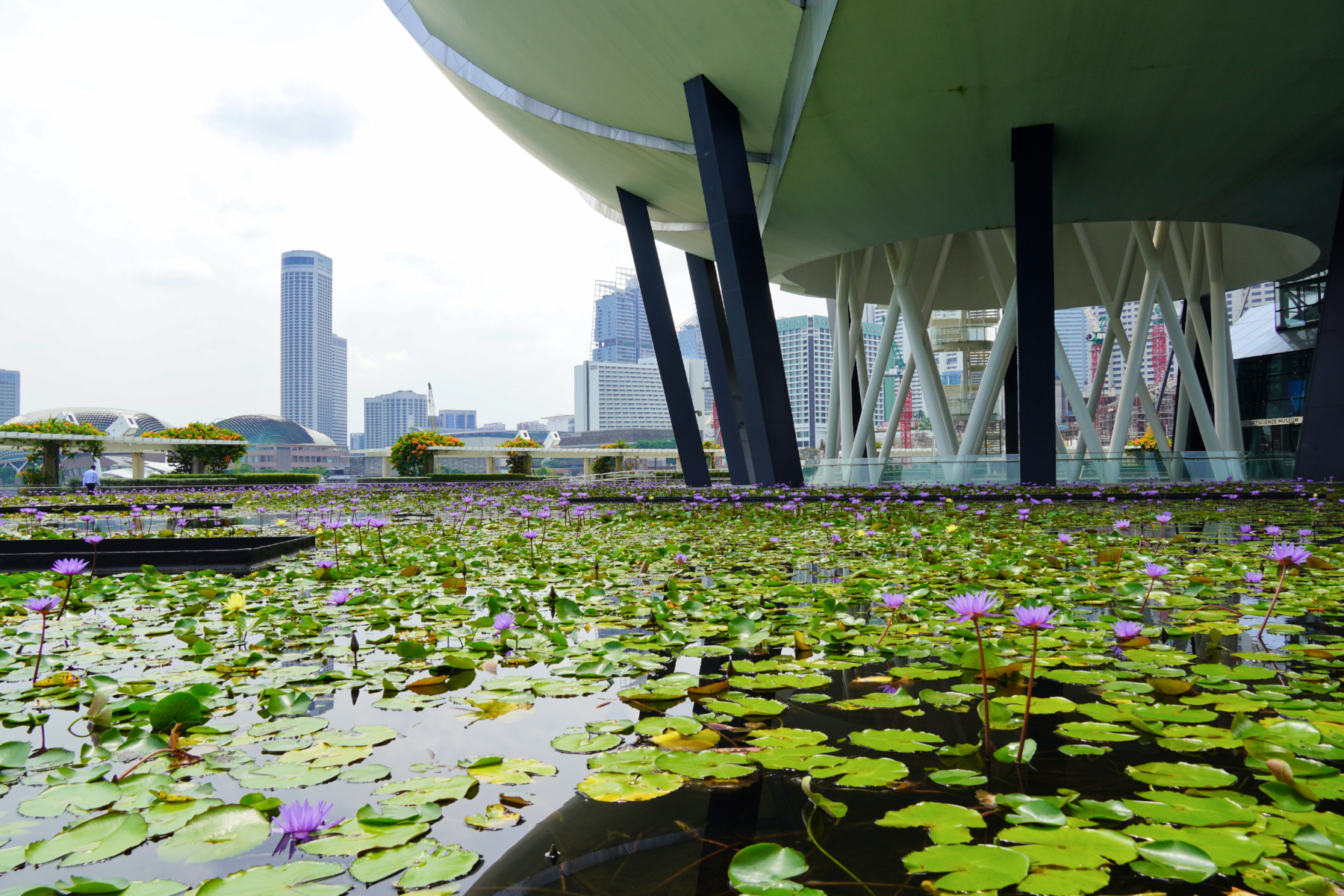
The ArtScience Museum sits in front, its lotus-shaped structure opening toward the sky above a shallow reflecting pool where actual lotus flowers bloom –pink and somehow more surreal than the building above them. The architecture makes its own argument: a museum that frames art and science as the same inquiry, designed to look like something growing from the water rather than imposed on it. The building is the draw, and it earns the attention –the lotus pond beneath it, with the futuristic petals overhead and the heritage shophouses visible across the water, captures in a single frame the visual grammar of Singapore: old and new in the same reflection, neither canceling the other out.
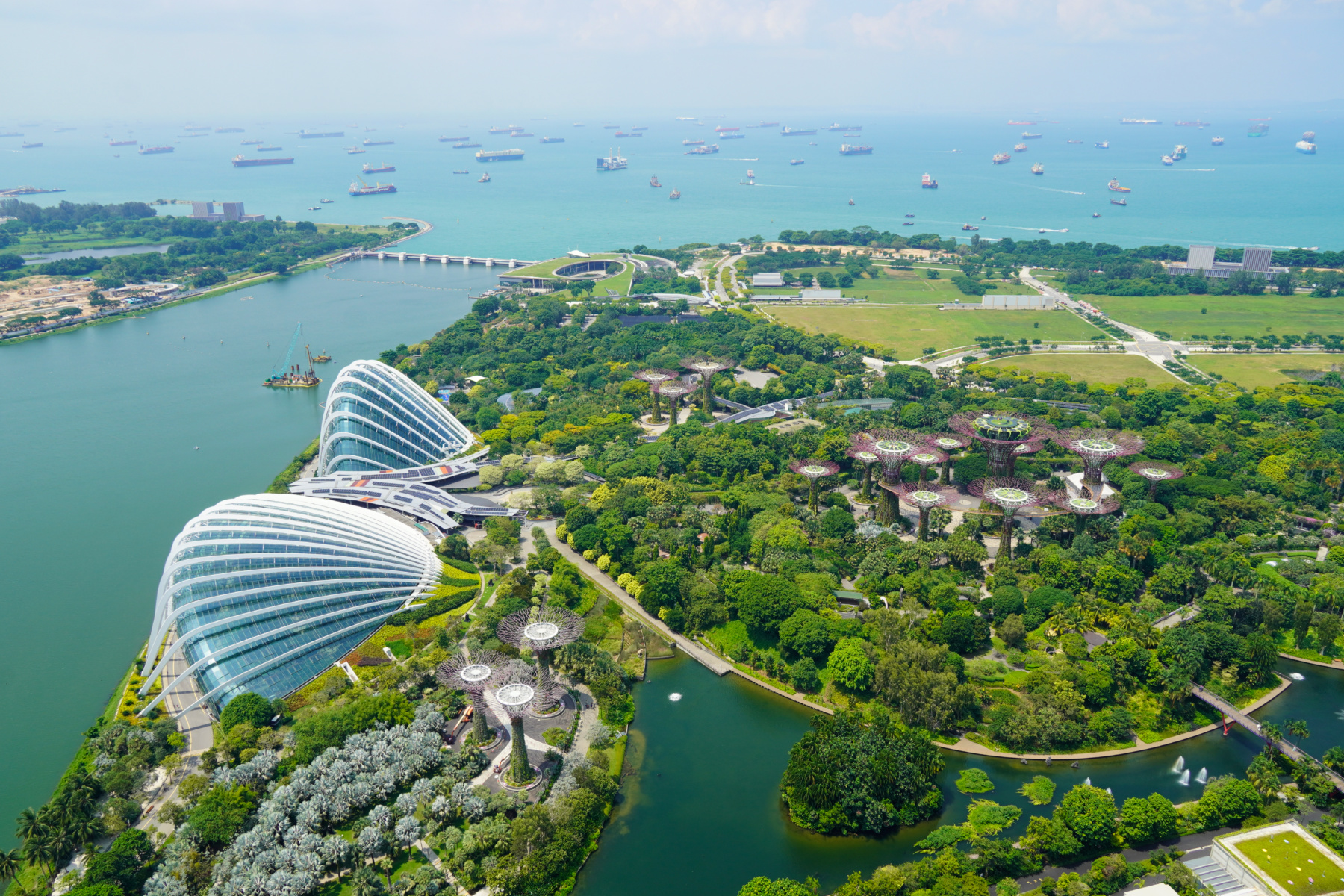
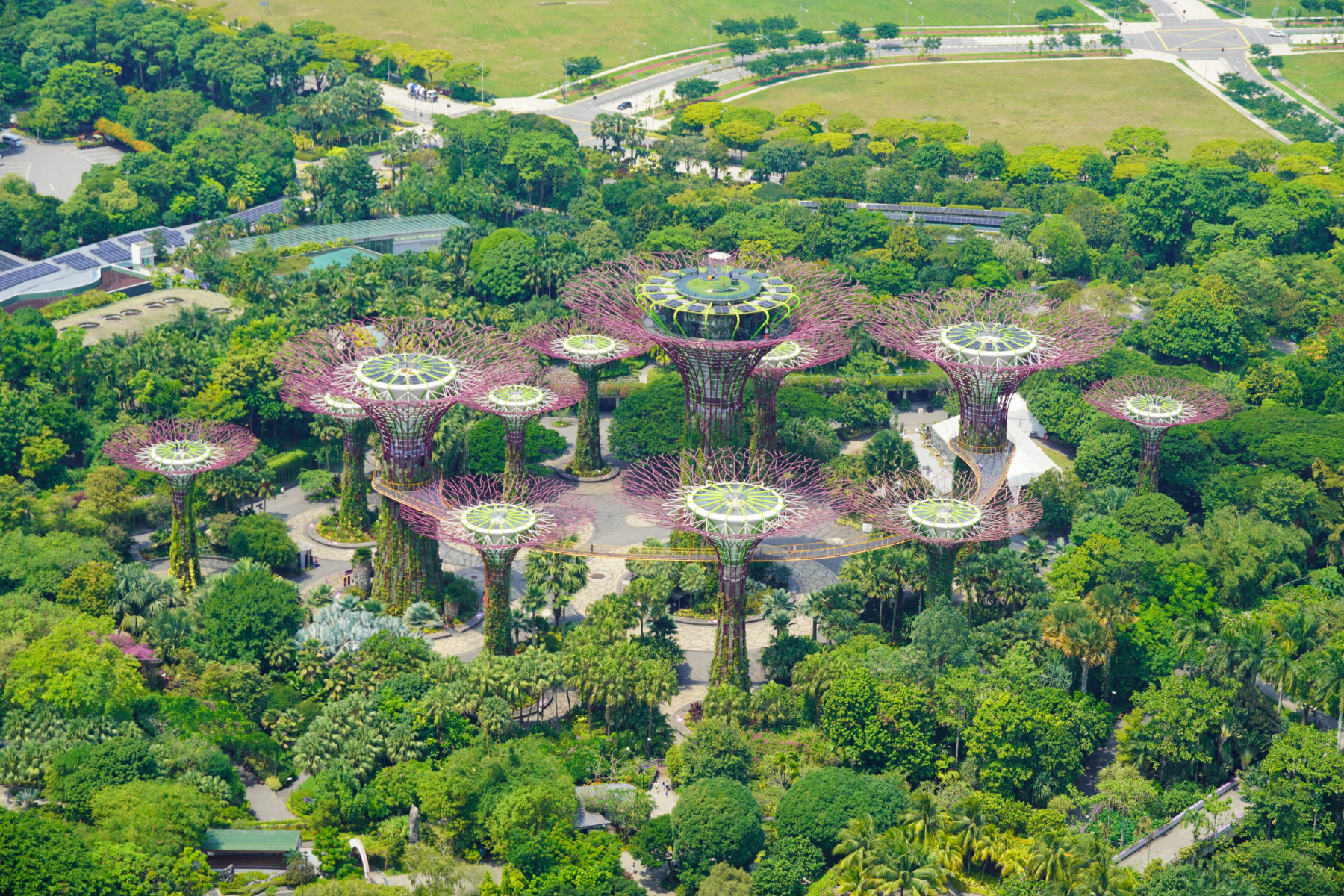
Behind Marina Bay Sands, Gardens by the Bay takes Singapore’s obsession with building a city in nature –rather than simply building a city and adding a few parks– to its most spectacular conclusion. The two enormous conservatories, the Flower Dome and Cloud Forest, recreate entirely different climates beneath their glass shells, from Mediterranean landscapes to a misty tropical mountain environment complete with one of the world’s tallest indoor waterfalls. Outside, the Supertrees rise like something from a science-fiction film, but their purpose is more practical than their appearance suggests: they collect solar energy, harvest rainwater and support the gardens’ environmental systems. It’s a fittingly Singaporean vision of nature –not untouched wilderness, but something carefully engineered, ambitious and astonishingly beautiful. Whether you find the result inspiring or slightly surreal, it asks an interesting question at the heart of the city itself: what happens when a place decides that even nature can be part of the master plan? More on this later, on the Singapore’s green side section.
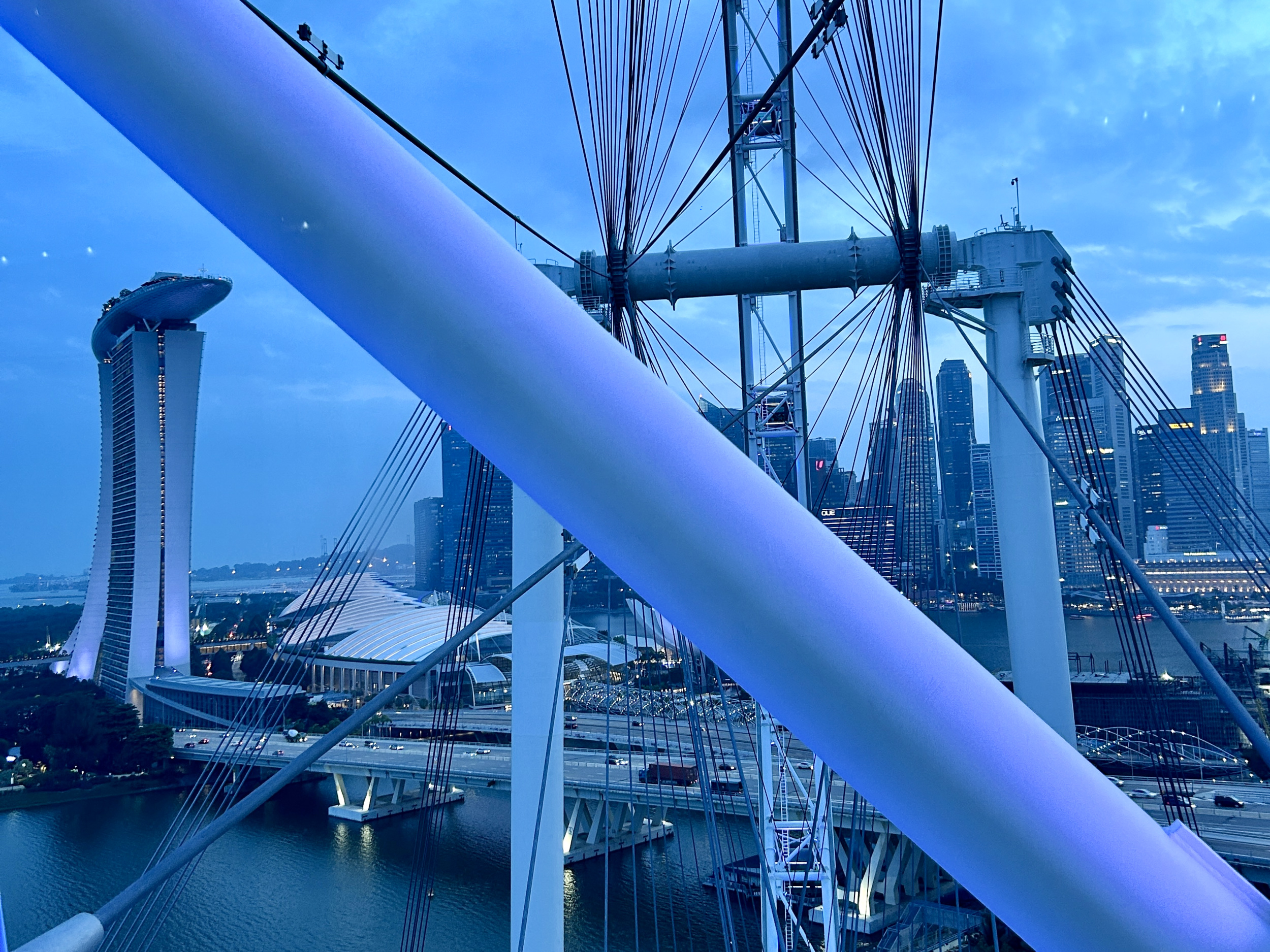
A short walk across the Helix Bridge brings you to the Singapore Flyer, one of the world’s largest observation wheels, which opened in 2008. The view from the top is the obvious draw, but the more unexpected experience is the Time Capsule at its base –a multi-sensory immersive zone where Singapore’s history, heritage and landscape are laid out with the help of R65, a cute robot guide. It’s a characteristically Singaporean proposition: futuristic delivery of historical content. The Flyer itself offers views across Marina Bay to the city and, on a clear day, as far as the Indonesian islands to the south –context that makes the land reclamation story visible in a single pan. Try to take it for sunset to catch both far-reaching views and the lit-up skyline.
The city that came before the skyline: where Singapore’s history lives
Go along the waterfront toward the Esplanade –the performing arts center locals call “the durian” for the spiked domes of its sunshade structure– and you’re in the Civic District that Raffles laid out in the 1820s. The National Gallery occupies the former Supreme Court and City Hall buildings, two colonial landmarks joined by a contemporary steel canopy that is itself a statement about how Singapore wants to hold its past: preserved and repurposed. The collection inside focuses on Southeast Asian art.
Nearby, the National Museum of Singapore traces the country’s story from its earliest days through colonial rule, Japanese occupation and independence, while the Peranakan Museum explores one of the cultures that emerged from the centuries of migration and intermarriage that shaped the region. Across the Singapore River, the Asian Civilisations Museum widens the lens further, placing Singapore within the much larger networks of trade, religion and migration that connected Asia long before the modern city-state existed. Taken together, these museums make the Civic District feel less like a collection of grand old buildings than a conversation between the many versions of Singapore that came before the one you see today.
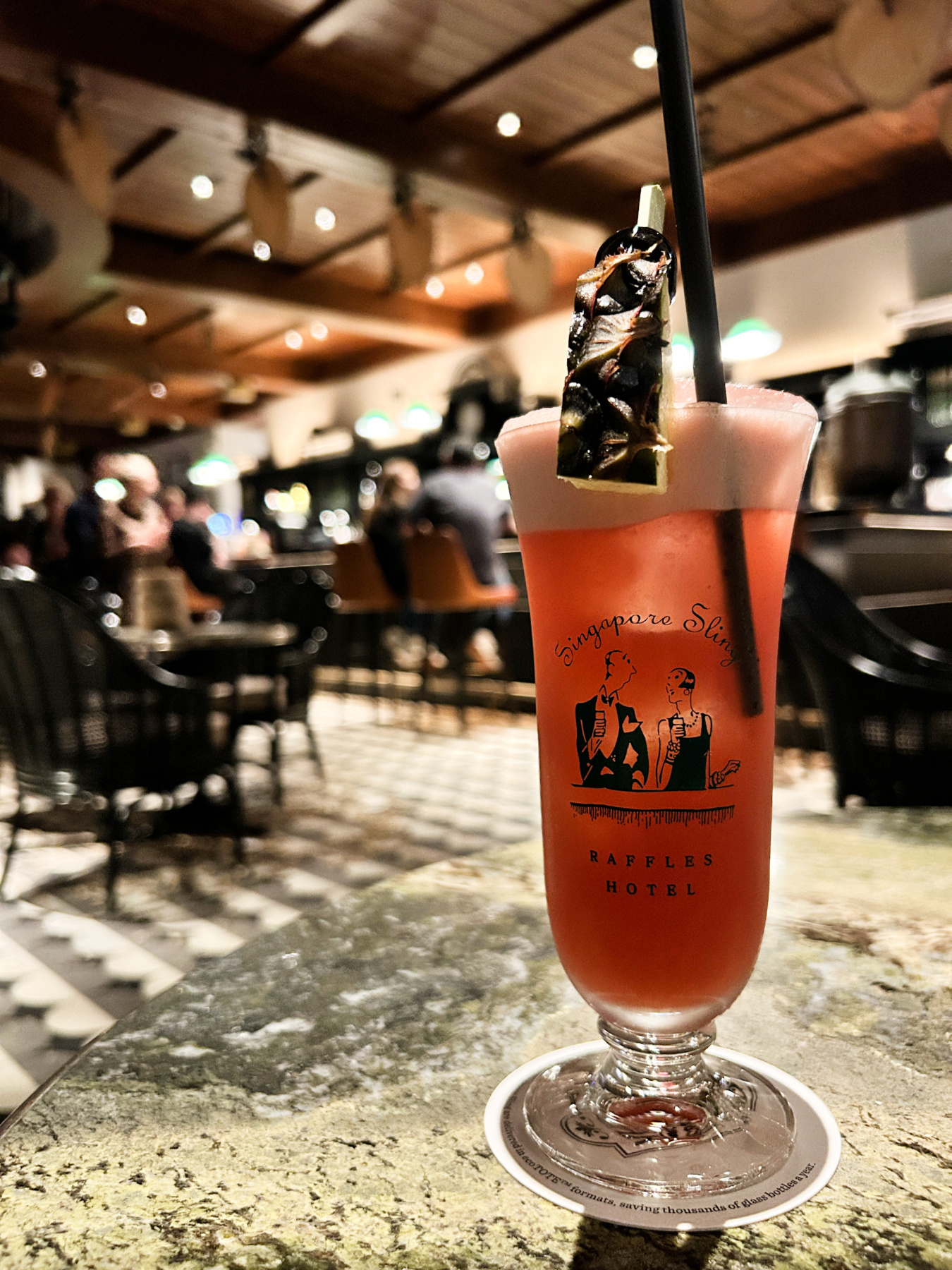
The Raffles hotel is the most obvious example of Singapore’s colonial history. It opened in 1887, a gleaming white colonial building that became, almost immediately, a symbol of British Singapore. It’s where the Singapore Sling was invented, mixed for the first time at the Long Bar in 1915 by a Hainanese bartender named Ngiam Tong Boon. The cocktail is pink and touristy and costs considerably more than you’d expect, but the story behind it is better than the drink itself. Women were socially discouraged from drinking alcohol in public in colonial Singapore, so Ngiam designed a cocktail that looked like fruit juice: the gin was the secret, the pink hue was the disguise. The Long Bar still has peanuts on the tables and still encourages you to drop the shells on the floor, which is either charmingly anachronistic or a knowing joke about Singapore’s relationship with its own rules, depending on your mood.
For a different glimpse into colonial architecture, head to Sri Temasek, the official residence of Singapore’s prime minister since independence. The house is open to the public only on selected public holidays (check the official site for opening dates and tickets), so if your visit coincides with one, it’s worth taking the opportunity. This is where the story of Singapore’s carefully managed succession, continuity and political power becomes tangible –a quiet house behind the gates of one of the world’s most tightly organized states.
The Singapore of today and tomorrow: luxury, street food & spectacle
Orchard Road is Singapore’s answer to anyone who expects a shopping capital. The famous boulevard is lined with mall after mall –polished, air-conditioned temples to fashion, electronics and luxury brands. Singapore has deliberately cultivated a reputation as a shopping destination, and Orchard Road is where that is most visible. It’s not a part of the city I found particularly interesting, but it’s worth seeing precisely because it reveals another side of Singapore’s identity: a city that has made global consumption part of its urban landscape as deliberately as it made room for heritage and nature.
A sight on their own are the hawker centers, Singapore’s communal dining rooms –covered complexes with dozens of independent stalls. Lau Pa Sat is the most architecturally striking –and the most touristy. Maxwell Food Centre in Chinatown is smaller and less-frequented. The food at any hawker center is amazing, and the prices welcome travelers of every budget. More on them on the where to eat in Singapore section.
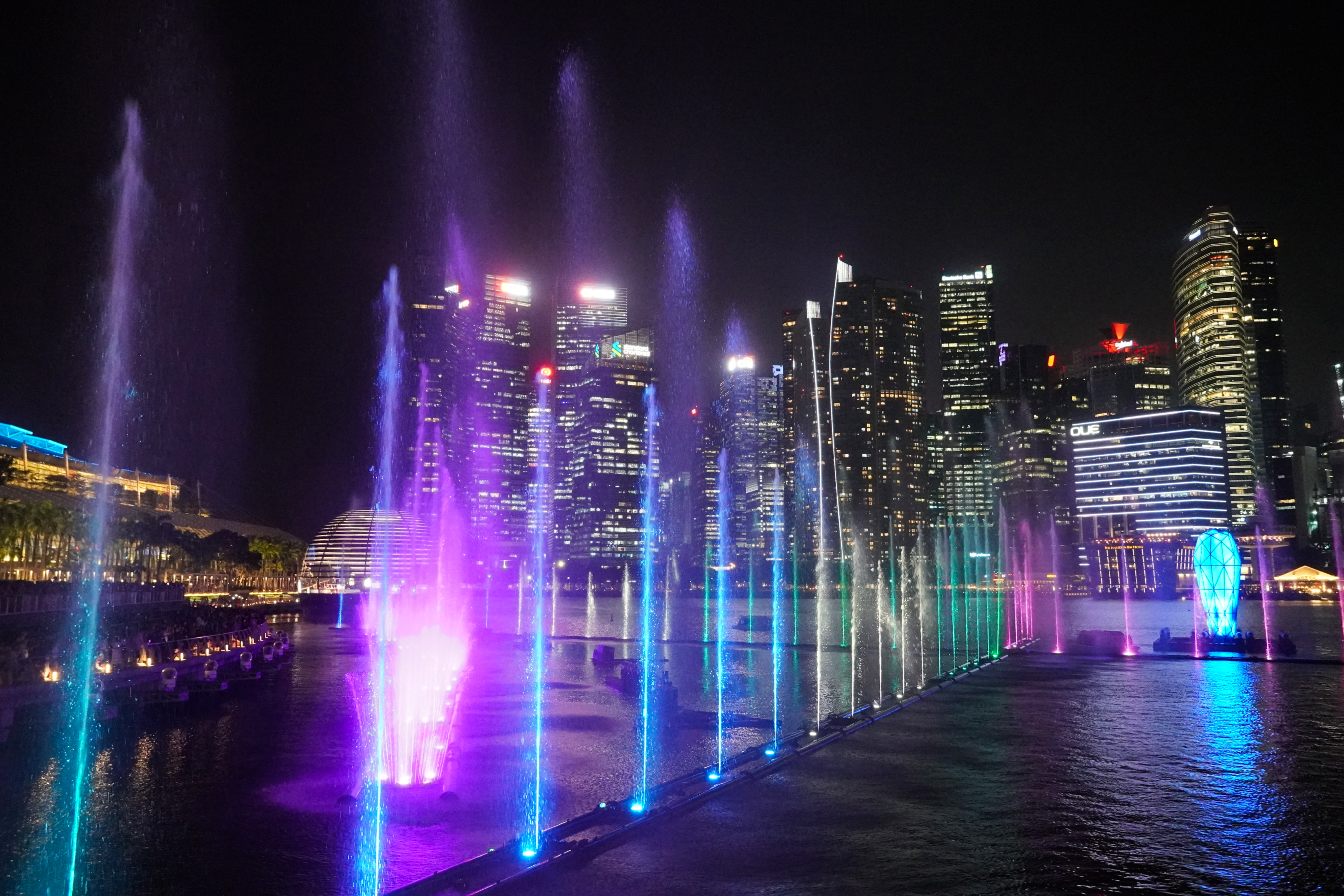
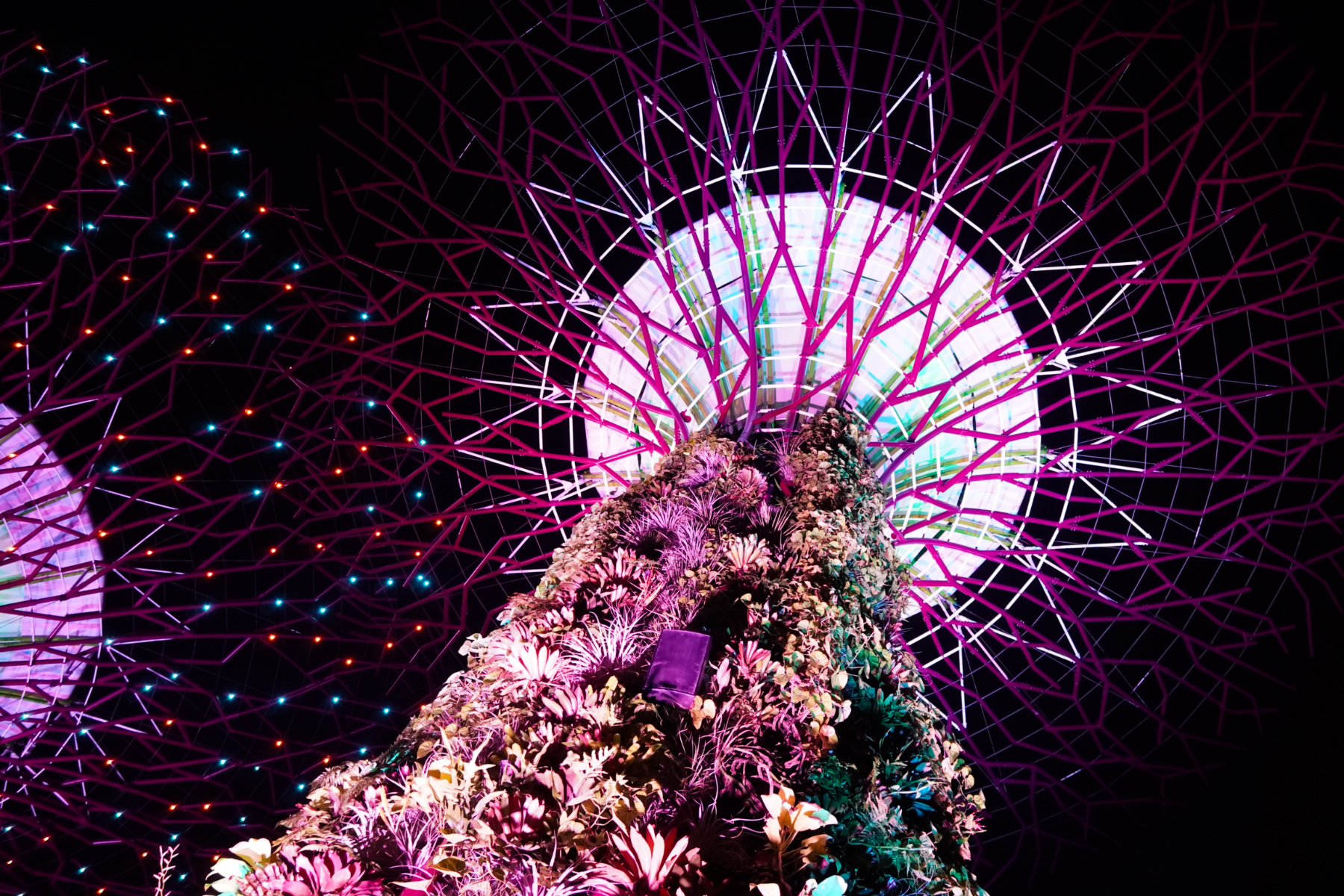
After dark, Singapore’s skyline becomes a spectacle on its own right. Spectra, the light and water show staged outside Marina Bay Sands, turns the waterfront into a theatrical celebration of Singapore’s journey from fishing village to global city, with fountains, lasers, projections and music choreographed across the bay. Over at Gardens by the Bay, the Garden Rhapsody light show takes a more surreal approach, illuminating the Supertrees in shifting colors and patterns as music plays beneath them. Watching these enormous artificial trees glow against the night sky is one of those moments when Singapore’s contradictions seem to converge: technology and nature, engineering and beauty, spectacle and sustainability. Both shows are free, and both are worth seeing –not simply because they are impressive, but because they reveal how Singapore has turned the act of imagining its future into one of its defining attractions.
The land reclamation timeline runs beneath all of this. The Founders’ Memorial, scheduled to open in 2028 on the eastern edge of Marina Bay, will add another chapter to a waterfront that is still, visibly, under construction. Cranes appear in the photographs you take from the SkyPark whether you want them there or not. Singapore doesn’t hide them. It seems, if anything, to consider them part of the view –evidence of a city that hasn’t finished becoming what it intends to be.
Singapore’s neighborhoods: how ethnic quarters became a multicultural city
Every city has neighborhoods. Singapore has something more deliberate than that. When Stamford Raffles drew up his town plan in 1822, he mapped more than roads and buildings, he divided people. The Chinese here, the Malays there, the Indians in a quarter, the Europeans in another. It was colonial administration expressed as urban planning: a multiethnic population made legible, and therefore manageable, by being kept spatially separate. What it produced, over two centuries of blurring and mixing and gradual dissolution of those hard boundaries, are the neighborhoods Singapore is now famous for: places that began as instruments of control and became, somehow, expressions of genuine cultural identity. Walking through them knowing that history changes what you see.
Where the map was drawn: Singapore’s historic ethnic quarters
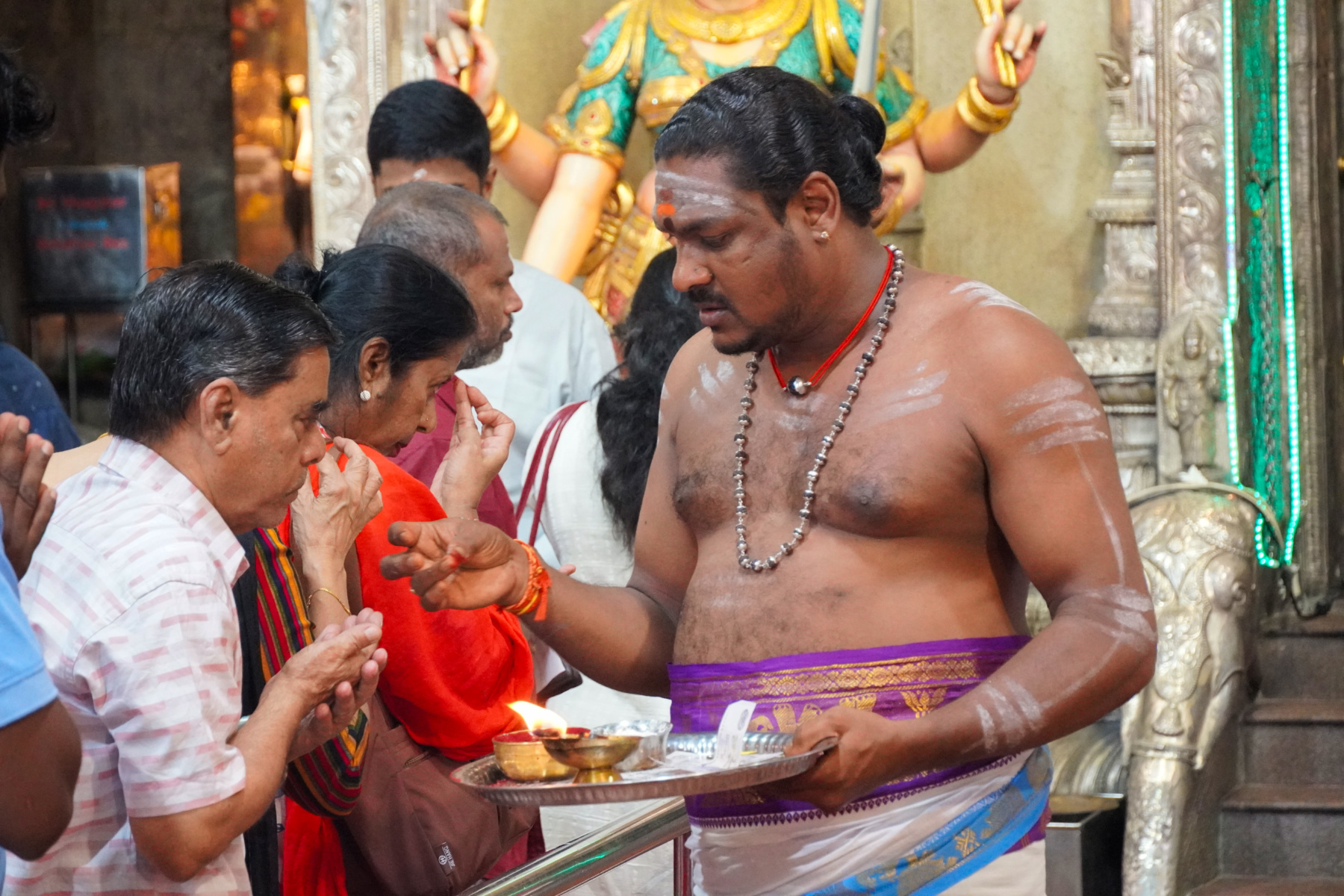
Chinatown is the densest and most visited, a grid of shophouses around Pagoda and Trengganu streets that manages to be simultaneously touristy and functional –the pace suggests that people actually live here rather than simply perform their heritage for visitors. The temples are the anchor: Sri Mariamman, a Hindu temple that arrived with the Tamil workers Raffles also brought to the island, is the detail that reminds you that the ethnic quarters were always more porous than the British intended. So are the Taoist temple Thian Hock Keng and the Buddha Tooth Relic Temple a few blocks further.
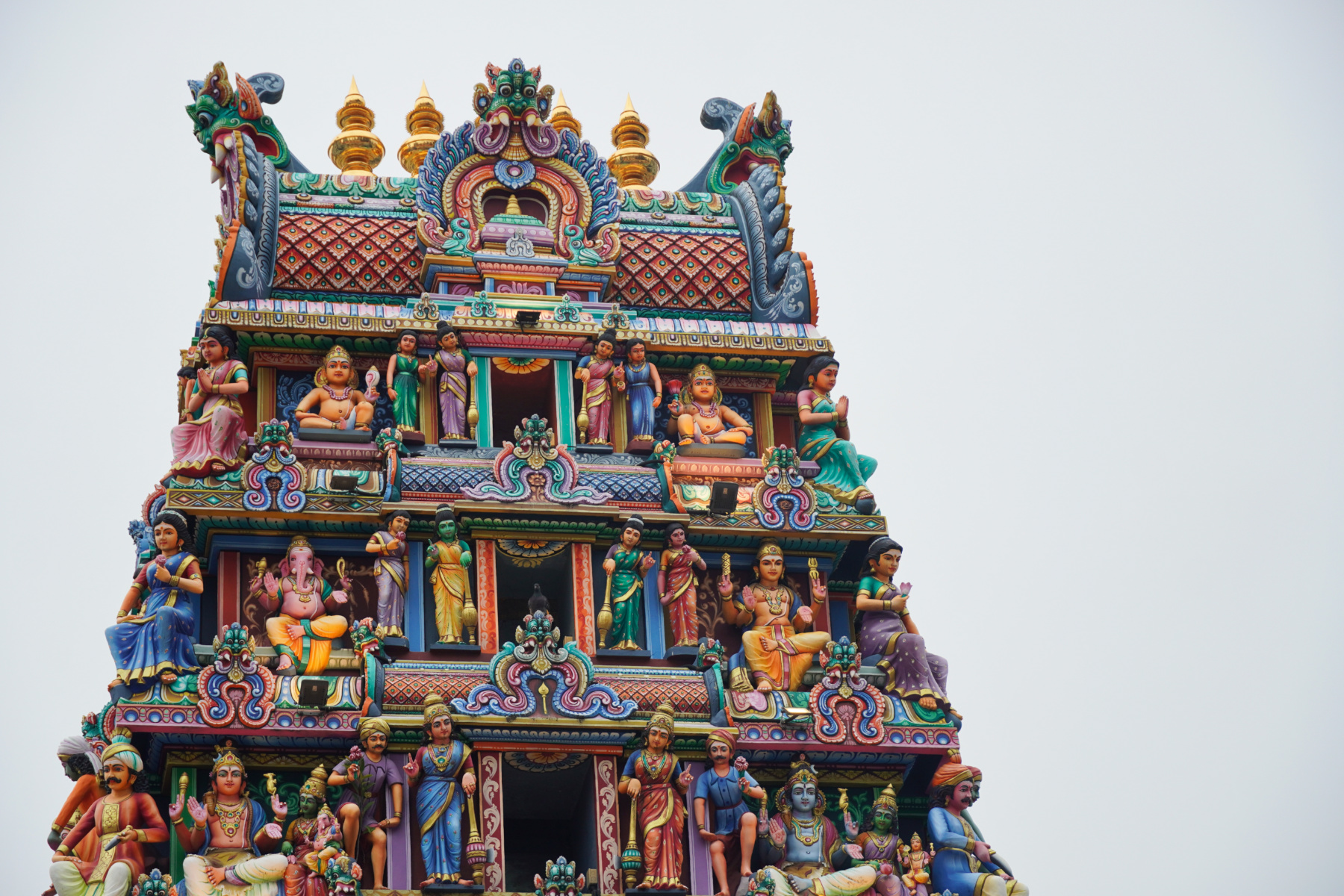
Little India is the neighborhood that feels least curated, which is its strength. The streets around Serangoon Road move faster than the rest of Singapore –the flower garlands stacked outside the shops, the smell of incense mixing with roti and curry, the temples painted in colors that seem to vibrate against each other. Sri Veeramakaliamman Temple is the architectural centerpiece, dedicated to the goddess Kali and decorated with a gopuram –the towering sculptural gateway of South Indian temple architecture. The neighborhood that started with the Tamil and South Asian laborers who built colonial Singapore and stayed, remained a working commercial district rather than a heritage zone, which gives it an energy the other quarters sometimes lack.
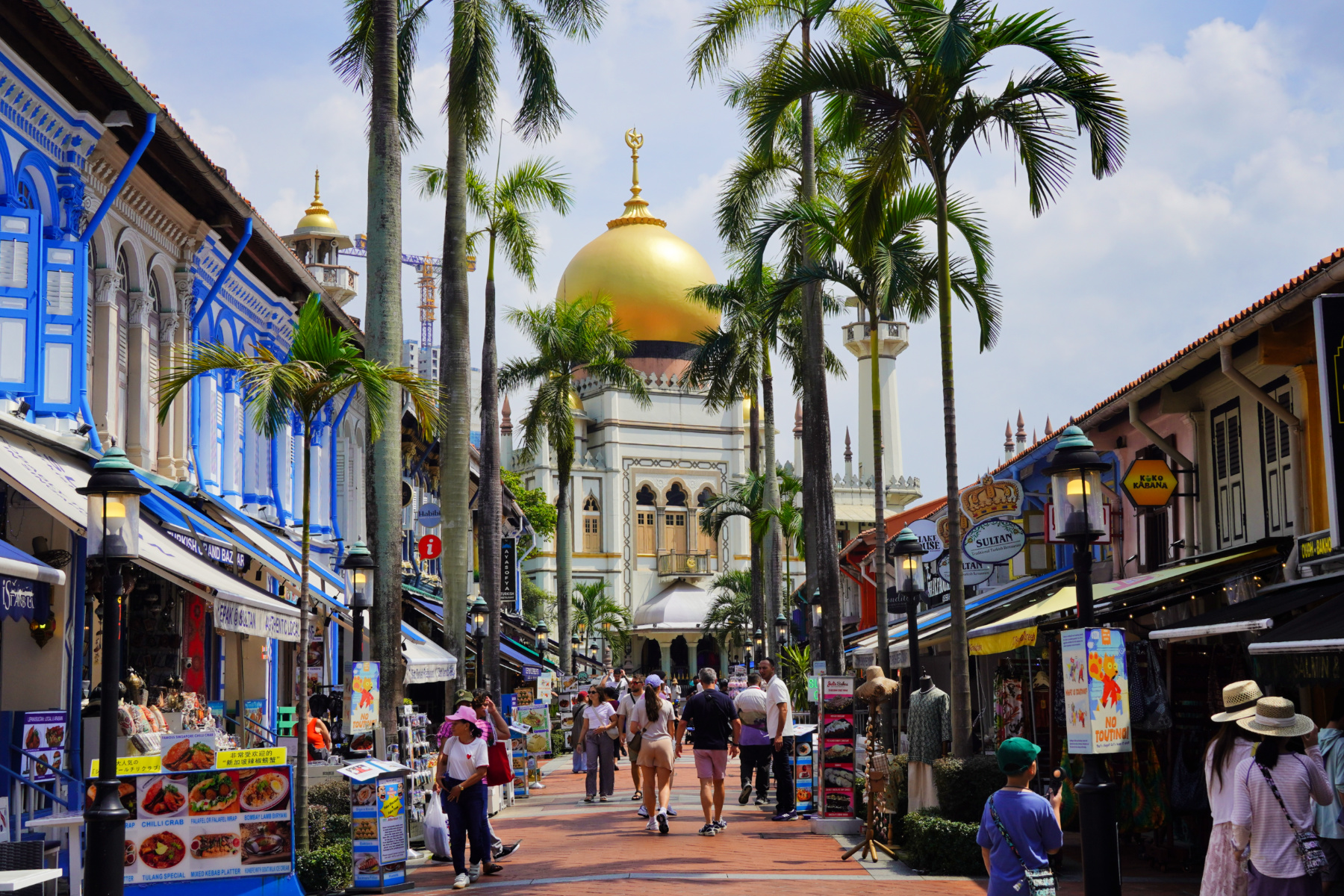
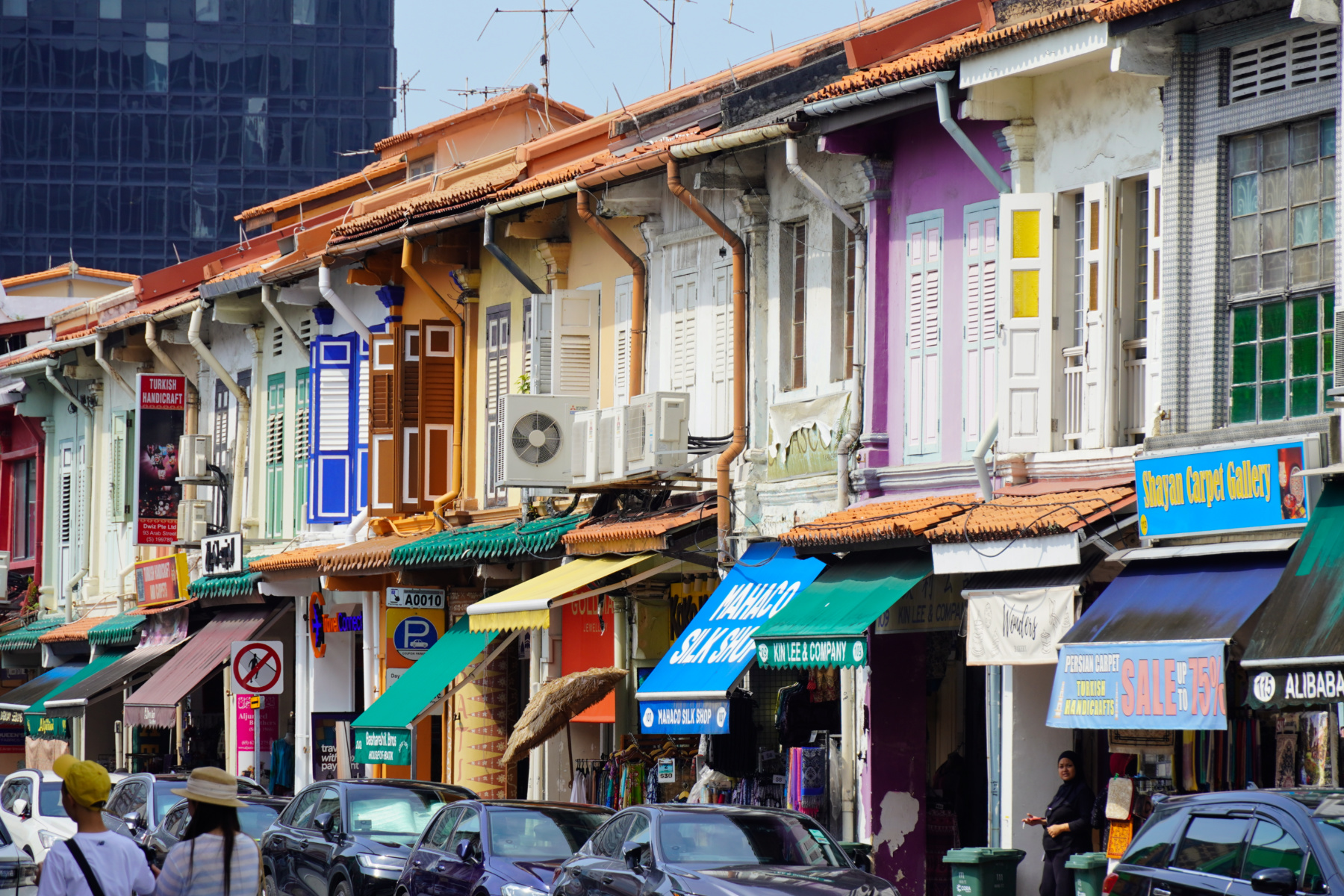
Kampong Glam is the Malay and Arab quarter, centered on the golden dome of Sultan Mosque. It’s the oldest mosque in Singapore in its current form, commissioned by Raffles and rebuilt in the 1920s in its present Indo-Saracenic style: a Malay religious building filtered through British colonial architecture. Haji Lane is the Instagram version of the neighborhood: a narrow street of pastel shopfronts and independent boutiques that has become one of the most photographed streets in Singapore. It’s genuinely pretty, and worth seeing, but a better version of Kampong Glam is found on the roads around Arab Street, where the fabric shops and carpet traders that gave the neighborhood its commercial identity are still operating alongside the cafés and galleries that arrived more recently.
The Downtown Core is where all this flows into the gleaming Singapore most people picture when they hear the name: the towers of the financial district, the Civic District, and the row of white colonial buildings along the Padang that Singapore has chosen to preserve rather than replace.
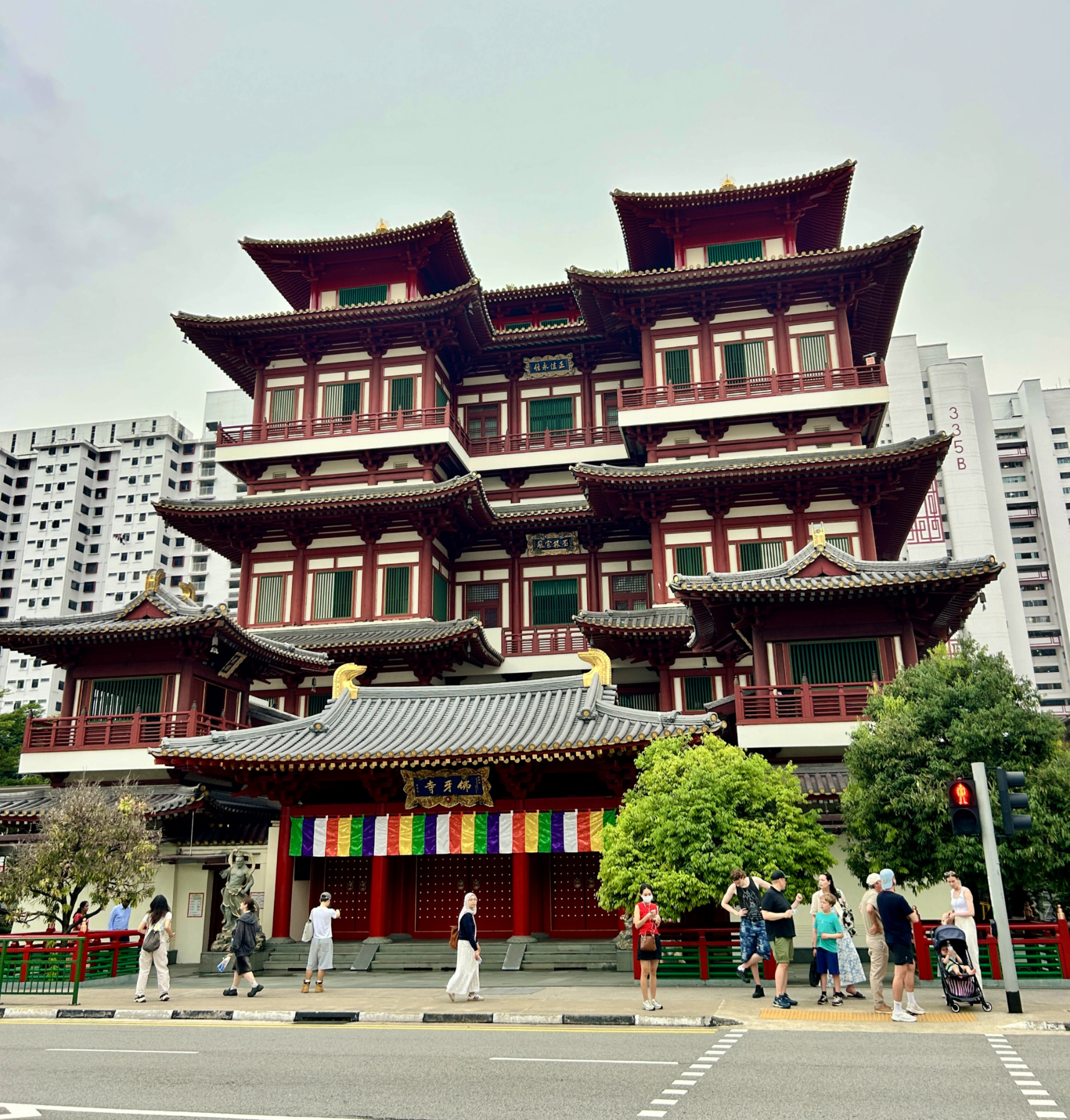
Beyond the colonial map: the neighborhoods that wrote their own story
Singapore’s neighborhood story doesn’t end with the old ethnic quarters. East of the center, Joo Chiat and Katong offer a different version of the city’s multicultural identity: Peranakan culture, born from centuries of migration and intermarriage, is written into the colorful shophouses, ornate façades and food traditions. The neighborhood feels less like an assigned place on a colonial map and more like the product of cultures that have spent generations borrowing from one another.
Tiong Bahru and Tanjong Pagar tell a similar story at different scales. Tiong Bahru was built in the 1930s as one of Singapore’s earliest public housing estates, its Streamline Moderne apartment blocks designed for residents, not tourists. Today the streets are lined with cafés and independent bookshops. Tanjong Pagar has a different origin –a Victorian commercial district that once served as the end of the railway from Malaysia– but the same trajectory: heritage shophouses now housing bars and restaurants, the Pinnacle@Duxton tower offering rooftop views of the skyline for just a few dollars.
These places offer a glimpse of a Singapore beyond the known version, one where identity is less neatly divided, and where even the places built for everyday life are constantly being reinvented.
That constant reinvention is not accidental. Part of what makes Singapore’s pace of transformation possible is a policy most visitors never hear about: much of the country’s land is held by the state and made available for development on long-term leases, often 99 years. When those leases expire, the land returns to state control, although renewal or redevelopment could be considered. The system gives the government an unusual degree of influence over what the city becomes, and helps explain why Singapore’s skyline feels so deliberately shaped. Much of what rises is, quite literally, built on borrowed time. Singapore’s concept of property ownership is unusually intertwined with the country’s long-term planning philosophy.
Singapore’s green side: the ultra-modern city that chose to embrace nature
Singapore describes itself as a garden city –it’s been official policy since Lee Kuan Yew declared it in 1967, two years after independence, in what was then a fairly audacious claim for a newly sovereign city-state with more pressing things to worry about than urban greenery. But the ambition of the policy is understated. Singapore built a city around the premise that nature and density are not a trade-off.
The evidence is everywhere. Vines climb building facades along Orchard Road. The highway flyovers have plants growing from their crash barriers. The newer residential towers have greenery built into their balconies and terraces. Even Changi Airport makes the argument: Jewel, the glass-and-steel dome connecting the terminals, houses the world’s tallest indoor waterfall: 40 meters of cascading water surrounded by a five-level indoor forest of some 3,000 trees and 60,000 shrubs, free to visit whether you have a flight or not. The city has a target of having 80% of its buildings incorporate some form of green feature by 2030, and you can see the project mid-execution.
Nature as architecture and heritage: Gardens by the Bay & Botanical Gardens
Gardens by the Bay is where that ambition reaches its most theatrical expression. The numbers are a useful context: 101 hectares of reclaimed land, 2 climate-controlled conservatories, 18 Supertrees ranging from 25 to 50 meters (82 to 164 feet) in height, a canopy walkway connecting the tallest of them at 22 meters (72ft) above the ground.
The figures don’t prepare you for the experience of standing among the Supertrees at dusk, when the structures shift from extraordinary to genuinely strange –vertical gardens planted with ferns and orchids and bromeliads, their steel frames disappearing into the foliage, the whole grove lit from within as the evening darkens around it. The light show is the version most people see, but don’t miss the hour before it, when the grove is less crowded and the city skyline is visible through the gaps.
The conservatories intention, beyond spectacle, is conservation: both domes house threatened plant species and hold substantive research programs running alongside the visitor experience. The Flower Dome maintains a Mediterranean climate inside a glass shell in the tropics, housing plants from five continents in conditions that shouldn’t exist this close to the equator. The Cloud Forest encloses a 35-meter (115ft) indoor mountain covered in tropical highland plants, with a waterfall running down its face and a walkway that spirals around the outside.
The Singapore Botanic Gardens tell a quieter version of the same story. Founded in 1859 under British colonial rule, the gardens became a center for botanical research and played a crucial role in the development of the rubber industry that transformed Malaya’s economy. Today, the 82-hectare gardens are a remarkably peaceful counterpoint to the city’s glass and steel, with rainforest, lakes and the National Orchid Garden spread across the grounds. They are Singapore’s first UNESCO World Heritage Site, inscribed in 2015.
Singapore has been cultivating, studying and strategically using its tropical landscape for well over a century, what has changed is the scale and ambition of the experiment.
The wild Singapore: rainforest, peculiar spaces & managed parks
For a version of Singapore’s green side that doesn’t involve tickets, crowds or climate control, the Southern Ridges walk is where to go.
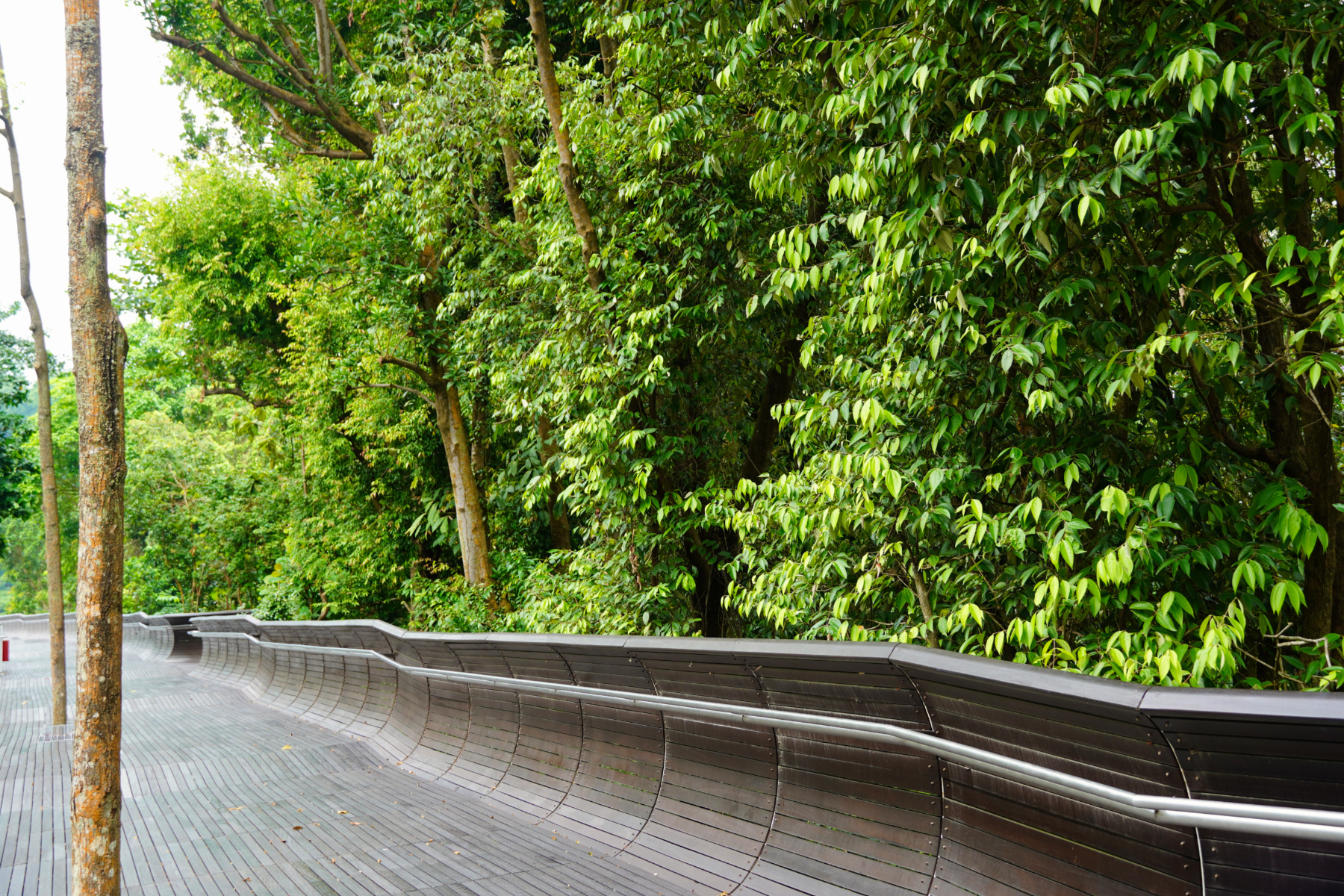
The trail connects a series of parks and nature reserves along the southern edge of the island, running for about 10km (6mi) through secondary forest and hilltop parkland between Labrador Nature Reserve in the east and Telok Blangah Hill in the west. Henderson Waves is the architectural centerpiece: a pedestrian bridge at 36 meters (118ft) above the forest floor, its curved timber wave structure offering views across the treetops to the city beyond.
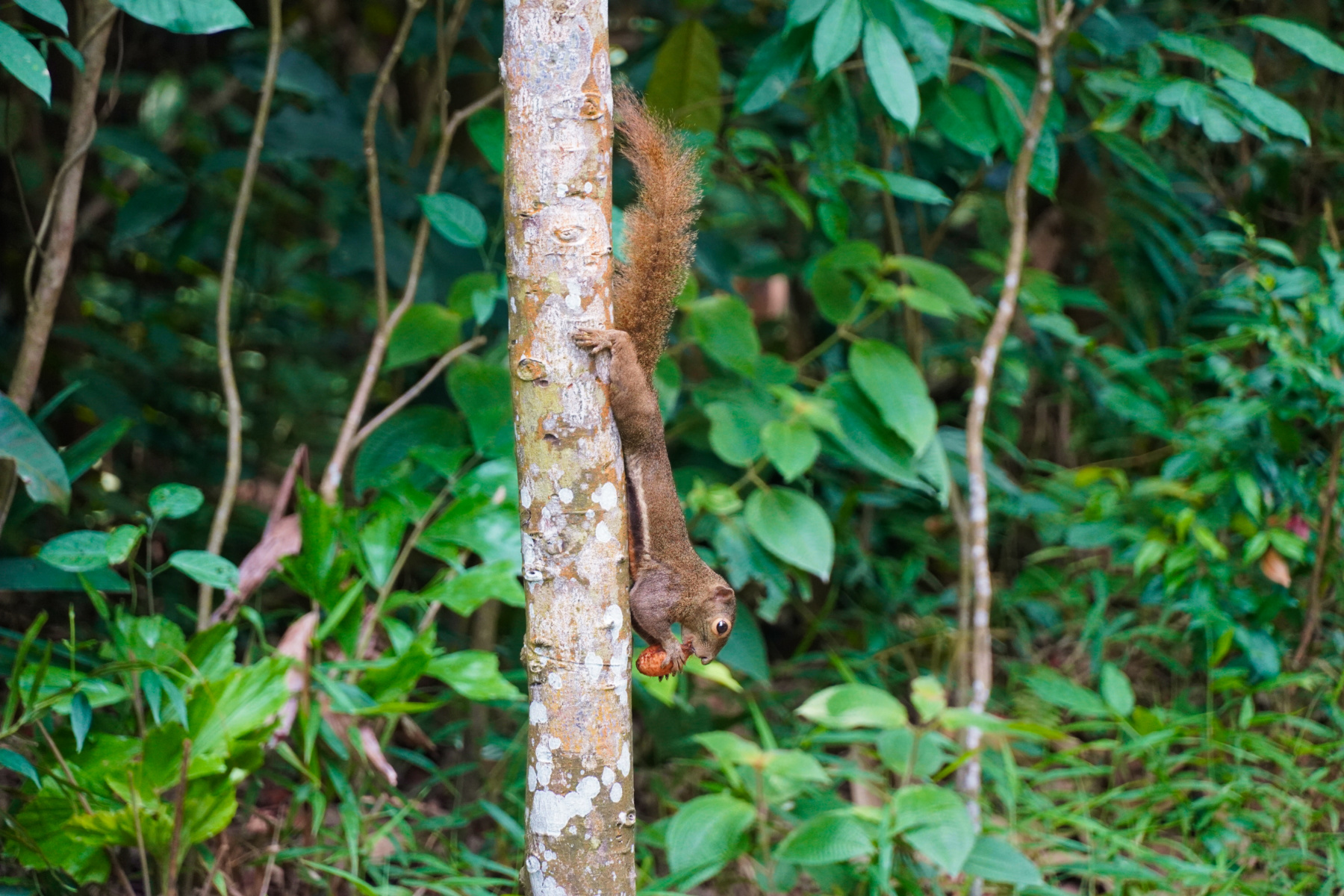
Further north, closer to the geographic heart of the island, Bukit Timah Nature Reserve offers a different proposition entirely. Singapore’s highest natural point at 163 meters (535ft), Bukit Timah sits roughly 15km (9mi) from the city center and contains one of the few remaining patches of primary rainforest in Singapore: forest that looks, according to botanists, much as it did when Raffles arrived in 1819. The reserve has been protected since 1883, which means it predates Singapore as a its own nation and survived the development that consumed most of the island’s original vegetation. Macaques move through the canopy overhead, and the biodiversity is worth the trip: over 840 plant species and 500 animal species in 163 hectares.
Connecting both is the Rail Corridor, one of Singapore’s less obvious green spaces and one of its most historical. The 24km (15mi) greenway follows the footprint of a former colonial-era railway that once connected Singapore to the Malay Peninsula. When the last train to Malaysia departed in 2011 and the land reverted to the Singapore government, the city chose conservation over development. The result is a continuous trail running north to south through forests, grasslands and restored habitats. The corridor is deliberately unlit at night to allow nocturnal wildlife to move freely, a remarkable example of Singapore’s priorities. Check the official website before visiting as sections are periodically closed for ongoing restoration work.
Haw Par Villa –a theme park that’s free, largely unvisited by tourists and truly strange– was built in 1937 by the Aw brothers, the Burmese-Chinese entrepreneurs behind Tiger Balm, as a space for teaching traditional Chinese values and folklore. The result is a garden populated by hundreds of figures depicting scenes from Chinese mythology, moral tales, and the Ten Courts of Hell –a section of the park that is exactly as graphic as it sounds, featuring detailed dioramas of the punishments awaiting sinners in the afterlife. It’s not clear whether Haw Par Villa is intended to be educational, devotional, or simply eccentric, but the ambiguity is part of what makes it memorable.
The Mandai Wildlife Reserve in the north collects Singapore’s major animal attractions –the Singapore Zoo, River Wonders, Bird Paradise, and the Night Safari– under a single managed complex. The Night Safari, which opened in 1994 as the world’s first nocturnal wildlife park, is worth knowing about for travelers with children or a serious interest in Southeast Asian fauna. The reserve’s parent organization is accredited by both the European Association of Zoos and Aquaria and the Zoo and Aquarium Association of Australasia, serves as Singapore’s designated rescue and rehabilitation center for injured local wildlife, and operates breeding programs for threatened species including Malayan tigers and Sunda pangolins. I have many reservations about attractions with wildlife in captivity, and I haven’t attempted to resolve them here (nor I visited any of these), but if you’re going to go to a zoo anywhere in Southeast Asia, this is the one with the most serious case for its own existence.
Singapore’s islands: resorts, beaches & escapes
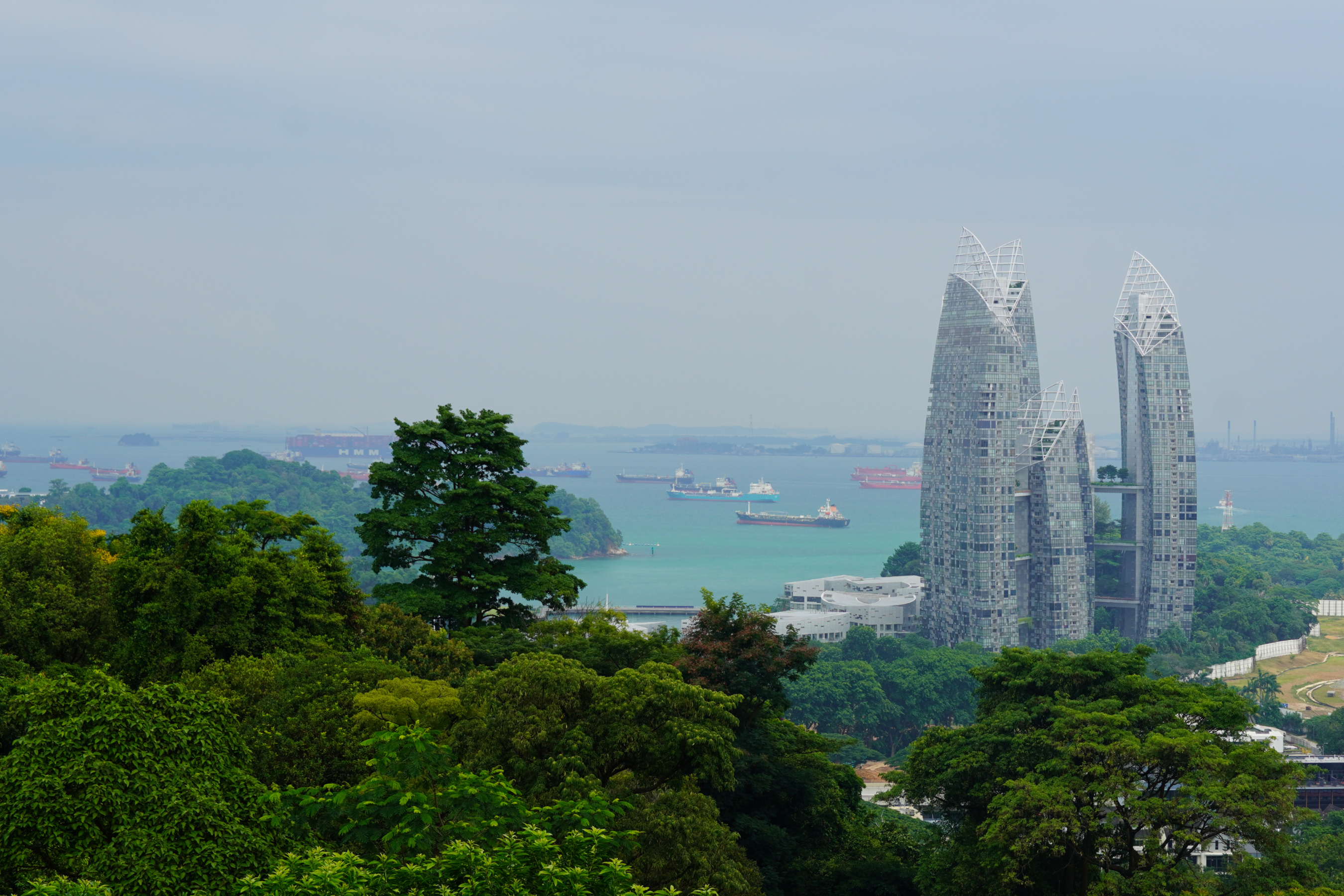
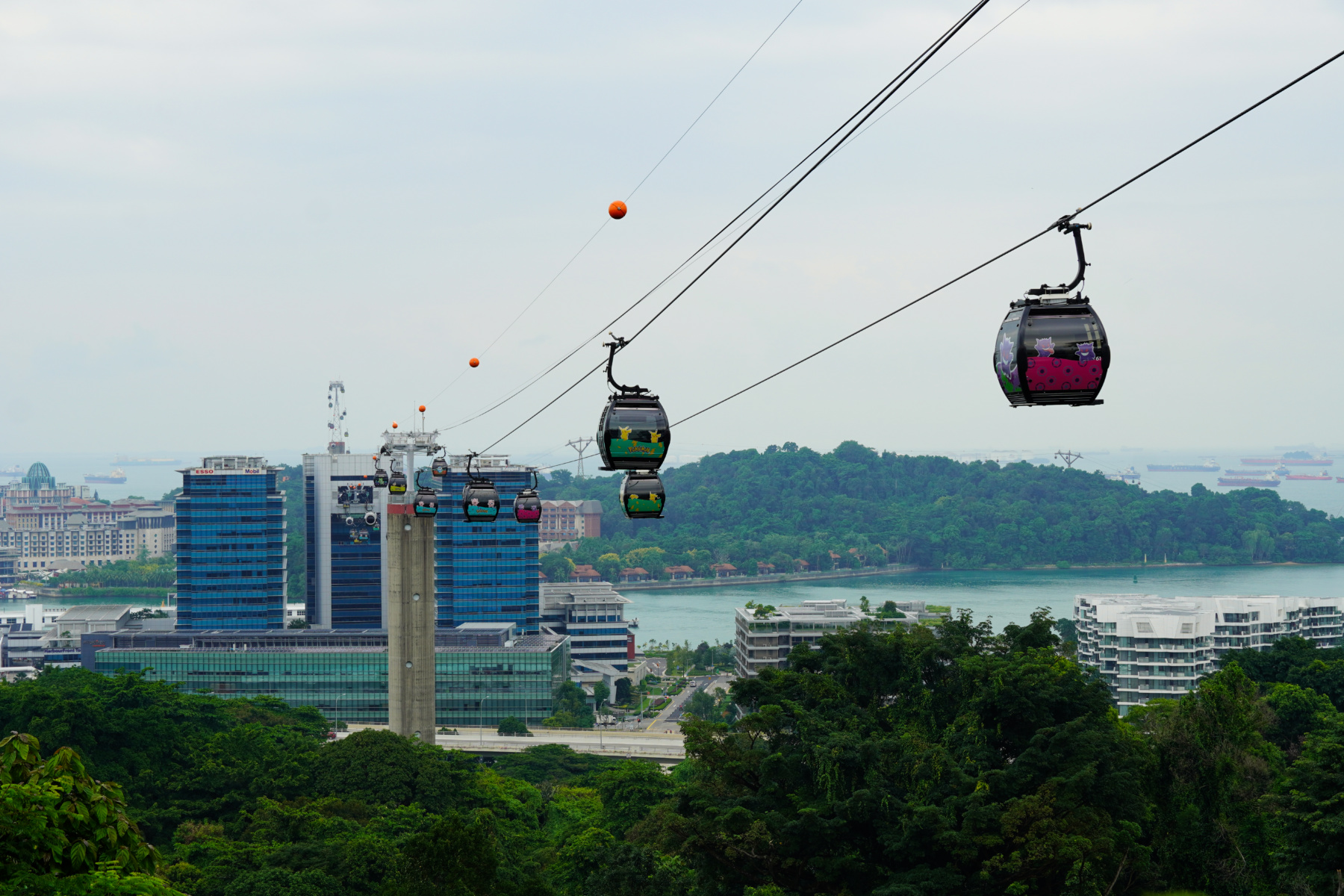
Sentosa, connected to the mainland by road, MRT and cable car, is Singapore’s resort island: Universal Studios, beach clubs, water parks, and the country’s second casino. It’s not my cup of tea, but it would be dishonest to leave it out of a post about Singapore. The cable car ride from Mount Faber is one of the world’s first cable car systems to cross a harbor, operating since 1974, offering views of the port and the southern coastline. The ride itself takes about 15 minutes each direction, and the views of the container ships in the Strait of Malacca and the city receding behind you are probably worth the ticket price even if you turn around at Sentosa and come straight back.
Further south, accessible by a short and inexpensive ferry from Marina South Pier, lie the Southern Islands –St John’s, Lazarus and Kusu among them– which represent a version of Singapore that most visitors never find. Lazarus in particular has white sand, clear water and almost no infrastructure, which is remarkable for a place only 30 minutes away from an ultra-modern city-state.
For an even stranger glimpse of the Singapore that existed before the skyline, take the bumboat to Pulau Ubin, an island northeast of the mainland where old quarries and forest paths survive in a landscape that feels almost impossibly rural by Singaporean standards.
The botanical thread running through all of this –the Supertrees, the Southern Ridges forest, the primary rainforest at Bukit Timah, the islands a ferry ride away– is Singapore making the same argument it makes with its neighborhoods and its political system: that apparent contradictions can be resolved through sufficient determination. A city in a tropical climate, land-scarce and dense, has decided it will also be one of the greenest urban environments on earth.
Where to eat in Singapore: from hawker centers to Michelin stars to dining in the dark
Singapore takes food seriously. You see it in the Michelin stars accumulated by restaurants that charge accordingly and in the UNESCO inscription that officially declared hawker culture part of humanity’s intangible heritage. The range between those two poles –a few-dollar plate of chicken rice and a tasting menu at a three-star restaurant– is where Singapore’s culinary identity actually lives.
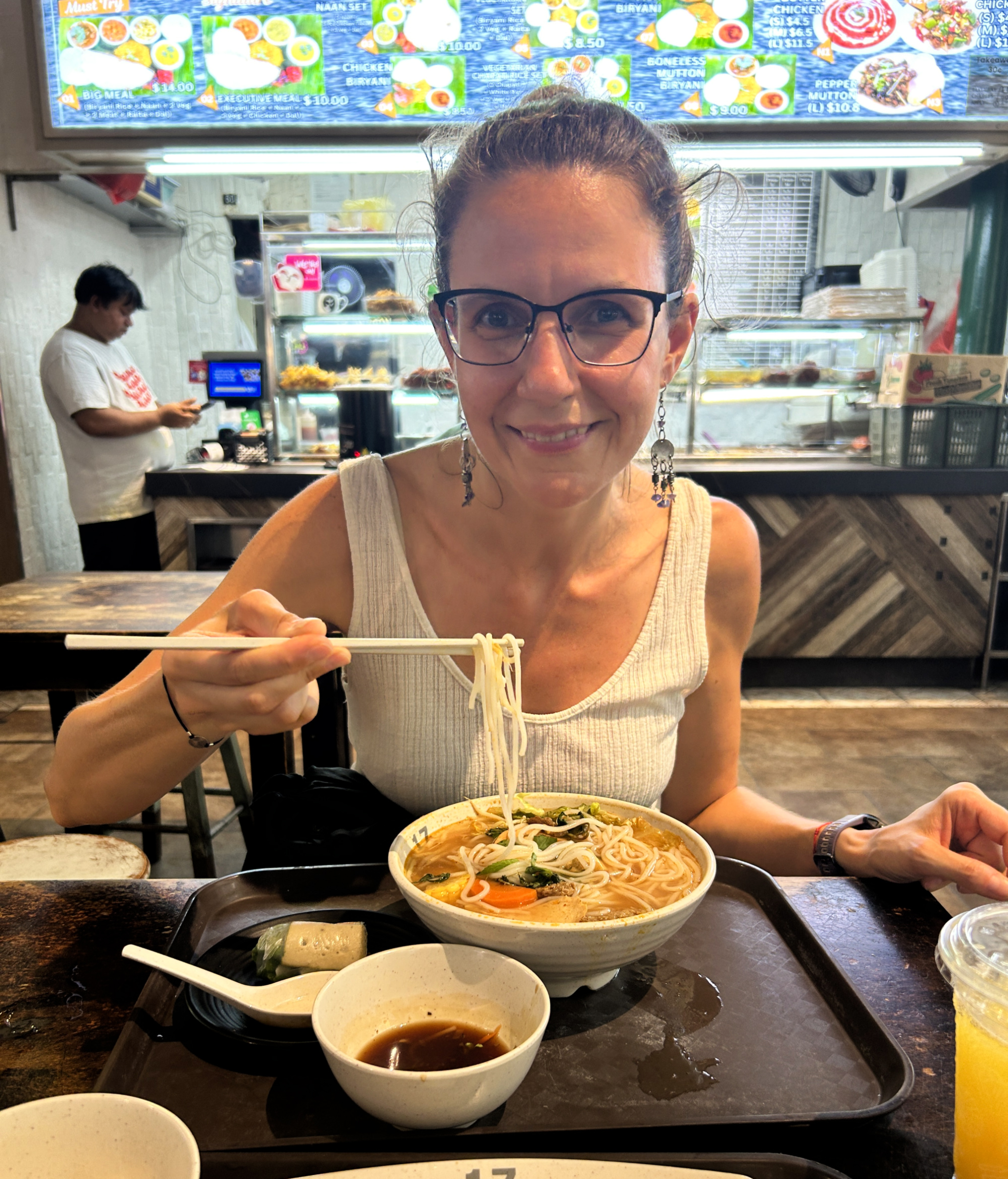
Start at the hawker centers for a sensory overload. The concept is straightforward: a covered space housing dozens of independent food stalls. What’s less obvious is how culturally loaded that simplicity is. The hawker centers were built by the government in the 1970s as part of a deliberate effort to move street food vendors off the sidewalks and into regulated, hygienic spaces –another instance of Singapore solving a problem through infrastructure. The street food culture survived the move, and in some ways was strengthened by it, because the fixed locations meant reputations could accumulate over decades.
Lau Pa Sat makes the historical argument most visibly: a building shipped in pieces from Glasgow in 1894. The colonial frame filled with the food that actually built the city is a perfect metaphor, and a very good lunch. For a less touristed version of the same experience, Chinatown Complex Food Centre is the largest hawker center in Singapore. The stalls have been there long enough that the vendors are the institution, and the prices reflect the fact that the primary customers are not visitors.
The other end of Singapore’s culinary spectrum are the Michelin-starred restaurants. The city has an extraordinary concentration of fine dining, but even here, Singapore resists being easily categorized. At one end is Hill Street Tai Hwa Pork Noodle, a tiny stall where a bowl of bak chor mee costs a fraction of what you’d expect from a Michelin-starred meal; at the other is Les Amis, one of Singapore’s grandest fine-dining institutions, where French cuisine is served with polished precision in an elegant dining room. Between them lies an astonishing range of culinary ambition, from contemporary Asian tasting menus to restaurants that reinterpret Singaporean flavors through techniques borrowed from around the world. This is perhaps the most revealing thing about eating in Singapore: the city’s food culture isn’t divided between “authentic local food” and “imported luxury”. The two exist side by side, sometimes even within the same Michelin Guide, because Singapore has spent decades turning its position as a crossroads of cultures into one of the world’s most diverse dining scenes.
Yet the most singular meal I had in Singapore was at neither extreme.
At NOX, in the Ann Siang Hill area, dinner happens in complete darkness. Not dimness, but total blackness –the kind your eyes never adjust to. The waitstaff are blind, navigating the space with practiced ease, while you’re served twelve dishes with wine pairing, without knowing what you’re eating or drinking. Without sight, everything else sharpens: textures become more specific, temperatures more noticeable, conversation more immediate because there’s nothing to look at. But the most humbling part is realizing how much you rely on your eyes for things you barely think about. The final test, comparing what you thought you tasted with what was actually on your plate, reveals just how much your perception depends on sight.
Singapore has many restaurants that call themselves unique. NOX earns the word.
Singapore Travel FAQ: everything you need to know before visiting
Singapore is a city-state –a city that is also its own country– located at the southern tip of the Malay Peninsula, separated from Malaysia by the narrow Johor Strait. It’s one of only three surviving city-states in the world (alongside Monaco and San Marino) and the only one in Southeast Asia. Its total land area is roughly 730 square kilometers (282 sq mi) –smaller than many cities it outperforms economically– and a significant portion of that land didn’t exist naturally: Singapore has been reclaiming territory from the sea since the 1970s and is still doing so. It has four official languages (English, Mandarin, Malay and Tamil) and a per capita GDP that ranks among the highest on earth.
Depends on what you want from the city. For first-time visitors, the area around Marina Bay and the Civic District puts you close to the major sights, although it’s also among the most expensive parts of the city. Chinatown is more atmospheric, while Kampong Glam and Little India offer a more colorful, lived-in experience. These are my specific recommendations:
Splurge: Marina Bay Sands for luxe in the skyline (and if you want to swim in their infinity pool) or Raffles Hotel for heritage indulgence; mid-range: PARKROYAL Collection for the greenest hotel you’ve ever seen, Lloyd’s Inn for full minimalism, or The Fullerton Hotel if you want a classic on the upper side of mid-range; budget: Cube Social Boutique Capsule Hotel for an interesting stay or Hotel Mi Bencoolen for a more conventional one; backpackers: Straits Heritage Hostel or BEAT. Capsule Hostel.
The stopover reputation is the thing Singapore most consistently disproves. The city-state is routinely used as a transit point between Europe and Australia or between Southeast Asia and East Asia, and many people pass through it without actually being there. That’s a significant mistake. The post you’ve just read is the argument for staying longer.
Absolutely not. The rules are real, the enforcement is real, and the cleanliness is so consistent it initially reads as sterile. But the texture of Singapore –the hawker centers, the temples crowded against the office towers, the primary rainforest 30 minutes from the financial district, the Peranakan patterns on the tiles of a shop selling souvenirs, the blind waiters navigating a pitch-dark dining room– is not the texture of a sanitized place. It’s how a place that’s been very deliberately built looks like, which is a different thing. Whether you find the deliberateness appealing or unsettling is a reasonable question. But it’s definitely interesting.
Singapore is commonly imagined as a destination for luxury travelers and shoppers, and the many malls –an almost surreal concentration of retail– do their part to support that image. But the city works equally well, arguably better, for a different kind of traveler: someone interested in history, urban design, food culture, or the geopolitics of small states. The hawker centers are budget friendly. The parks, nature reserves, and Southern Islands are largely free. The MRT will set you back only a few dollars. You can have a tight budget in Singapore and have a genuinely rich experience –the expense comes from the upper end of the food scene and accommodation, both of which are optional.
Two days is the minimum for the Marina Bay waterfront, the main neighborhoods, and a meal or two that matters. 4-5 days gives you time for the Southern Ridges, Bukit Timah and an island day trip without cutting anything short.
Singapore offers visa-free entry to citizens of over 160 countries, including the US, UK, EU nations, Australia, Canada and most of Latin America. Visitors typically receive a 30 or 90-day entry pass on arrival, depending on nationality. Check the official website for your specific situation before you travel. Regardless of visa status, all visitors are required to submit the SG Arrival Card (SGAC), a free digital declaration, within three days before arrival, through the ICA website or the MyICA app.
The MRT system is the answer to almost every transport question. It’s clean, air-conditioned, reliable to the minute, covers the city comprehensively enough that you rarely need anything else (including the airport), and accepts contactless cards as payment. Taxis and ride-hailing apps like Grab are widely available when you want door-to-door convenience, particularly in the heat or when travelling with luggage. For most visitors, there is simply no reason to rent a car.
More expensive than the rest of Southeast Asia, and roughly comparable to Western Europe. If you’ve come from Indonesia or Malaysia, the price adjustment is jarring; if you’ve come from London or Paris, it feels familiar. The hawker centers bring the food cost down, and public transport is cheap and efficient. Accommodation is the main cost driver, particularly in the Marina Bay area.
Singapore sits slightly north of the equator, which means the answer is always the same: hot and humid, with temperatures staying between 25°C and 32°C (77-90°F) year-round. The real variable is rainfall. February to April and July to September are generally the most favorable months, with relatively lower rainfall. November through January bring the northeast monsoon and the heaviest rains. I went in July and was sweating constantly, which is simply normal in the tropics.
Yes. Singapore is one of the easiest and safest places in Asia to travel alone. Violent crime is rare, public transport is reliable and safe, and you can walk around at night without the level of caution required in many other major cities. Singapore’s strict laws can catch visitors by surprise, so it’s worth familiarizing yourself with local rules before you arrive. For a solo traveler, the bigger challenge is likely to be the cost rather than safety.
Tipping is not customary. In hawker centers, coffee shops and most local restaurants, it’s not expected at all. Most mid-range and upscale restaurants include a service charge in the bill, so you’re already paying for the service whether you see it or not. If you genuinely want to acknowledge exceptional service, rounding up the total is appreciated.
Lee Kuan Yew’s own account in From Third World to First is biased by definition, but fundamental for understanding how Singapore sees itself and how the man who built it wanted to be remembered. C.M. Turnbull’s A History of Modern Singapore 1819–2005 is a good scholarly counterweight: the same arc, without the editorial hand. And Teo You Yenn’s This Is What Inequality Looks Like for the sharpest corrective to the Crazy Rich Asians version of Singapore that tends to dominate Western perception. For the parts of Singapore’s history that official narratives tend to quietly omit –the uprisings, the crackdowns, the arrests– Jeremy Tiang’s historical novel State of Emergency covers ground you won’t find in the memoirs. And for the relationship between Singapore and Malaysia that the 1965 separation left unresolved, Sudhir Thomas Vadaketh’s Floating on a Malayan Breeze follows a cycling trip across both countries in search of what changed and what didn’t. For ongoing reading, the National Library Board’s BiblioAsia journal publishes, free of charge, accessible writing on Singapore history and heritage.
Singapore’s most remarkable achievement isn’t that it built an extraordinary skyline in a small island. It’s that, in the space of a few generations, it built an identity. The neighborhoods, the food, the greenery, the reclaimed coastline, the homes and skyscrapers: all of them are part of the same ongoing experiment in deciding what the city-state can become.
That’s what makes Singapore so much more interesting than the polished, futuristic stopover it’s often reduced to. The city is engineered, but it’s not finished. Its identity is still being negotiated between history and ambition, nature and density, preservation and reinvention. When you see the skyline, look a little longer. The story is underneath it.
Liked it? Want to read it later? Pin it!
Enjoyed what you read? A lovely way to show appreciation is by buying me a coffee.
Your support keeps the stories, guides and geopolitical insights coming. Thank you so much!


Such an interesting perspective on Singapore! I love how this goes beyond the famous skyline and explores the history, multicultural neighborhoods, green spaces, and the way the city has been shaped over time. The contrast between Marina Bay Sands, historic districts, and hawker culture makes Singapore sound especially fascinating.