

This article may contain affiliate or compensated links, and may feature complimentary or discounted experiences. All opinions are my own. Please read the Privacy Policy & Disclaimer for more info.
Wine tourism is becoming more and more popular and wine producing countries are stepping up to the challenge. With stellar infrastructure to accommodate the incoming guests, visiting wineries has become a travel experience. If you want to dive into the world of wine, start here with an overview of the best wine destinations around the world, so you can understand them better, know which regions to visit and which wines to try.
Wine tourism
Oh, wine! It’s no longer only a lovely drink to have, it’s a reason to travel. Visiting the best wine destinations allows us to understand the complexities in the glass we’re drinking, explore the terroir that gave birth to the wine, and meet the people who put their heart and soul into creating what’s inside each bottle.
Wine tourism has been thriving in recent years for precisely these reasons. Strolling around wine country, exploring new wineries and tasting different labels makes for a great vacation. Many vineyards around the world have opened visitor centers equipped with tasting rooms, bars or restaurants to accommodate wine lovers looking to learn more.
With millennia of tradition, it’s a given that Old World wine has the spotlight when it comes to the best wine destinations. We all think of Tuscany or Bordeaux when imagining a wine escape. But you’ll be surprised at how much the New World is stepping up. Nowadays, Napa Valley, Colchagua Valley and the Cape Winelands, to name a few, are starting to be recognized not only by wine connoisseurs, and their infrastructure for receiving visitors has nothing to envy from their European counterparts.
Whether you’re just entering the fascinating world of wine or looking to expand your horizons, here’s an overview of the world’s top wine destinations: the best regions, wineries and labels to try. The list covers some of the biggest and best-known wine-producing countries in the world. If you’d rather go more niche, I’ve also put together a guide to the most underrated wine destinations in Europe, countries you might not immediately associate with wine, but that have a rich winemaking history; and another featuring emerging wine destinations around the world, with regions that will surprise you and that are well worth keeping an eye on.
Best wine destinations: Old World wine
Wine from Italy
Overview of Italian wine
Many Encyclopedia-like books have been written about Italian wine, so given a brief overview is not an easy task. With over 350 recognized indigenous varieties, Italy is the world’s largest wine producer.
Italy offers the perfect wine for every occasion, thanks to the diversity of the varieties it grows. Actually, every single one of the 20 Italian region produces wine, reflecting their own individual characteristics. Sangiovese is the backbone of many Tuscan reds, producing wines with bright acidity, red fruit and earthy, savory notes, most famously in Chianti and Brunello di Montalcino. In Piedmont, Nebbiolo produces the powerful, age-worthy wines of Barolo and Barbaresco, with characteristic notes of red fruit, roses, spices and, with age, truffle. In the Veneto, Corvina is the main grape behind Valpolicella and the richer Amarone, while the region’s famous Prosecco is made primarily from Glera. For white wines, look for Pinot Grigio and the mineral, aromatic Fiano and Vermentino, as well as Garganega, the grape behind Soave. And this is only scratching the surface. From Sicily’s Nero d’Avola and Frappato to Campania’s Aglianico and Falanghina, exploring Italy’s native grapes is one of the best ways to discover just how different its wine regions can be.
Trying to make sense of Italian wine labels can be daunting, but there are a few basics worth knowing. Italian wines fall into different categories depending on their geographical designation and production rules. At the top of the geographical classification are DOP wines, which include the DOC and DOCG designations, while IGP (traditionally labelled IGT in Italy) covers wines with a broader geographical indication. There are also wines without a geographical designation, simply classified as Vino, which generally have fewer production restrictions.
Don’t assume, however, that a more prestigious designation automatically means a better wine. Some excellent Italian wines deliberately fall outside the traditional classification because their producers choose grapes or winemaking methods that don’t conform to the rules of a particular appellation. The most famous example are the Super Tuscans, which helped prove that a wine didn’t need to carry a DOP label to achieve international prestige. And within the traditional classifications, terms such as Classico, Superiore and Riserva indicate specific additional requirements rather than simply a higher “quality level”.
Best regions and wineries in Italy
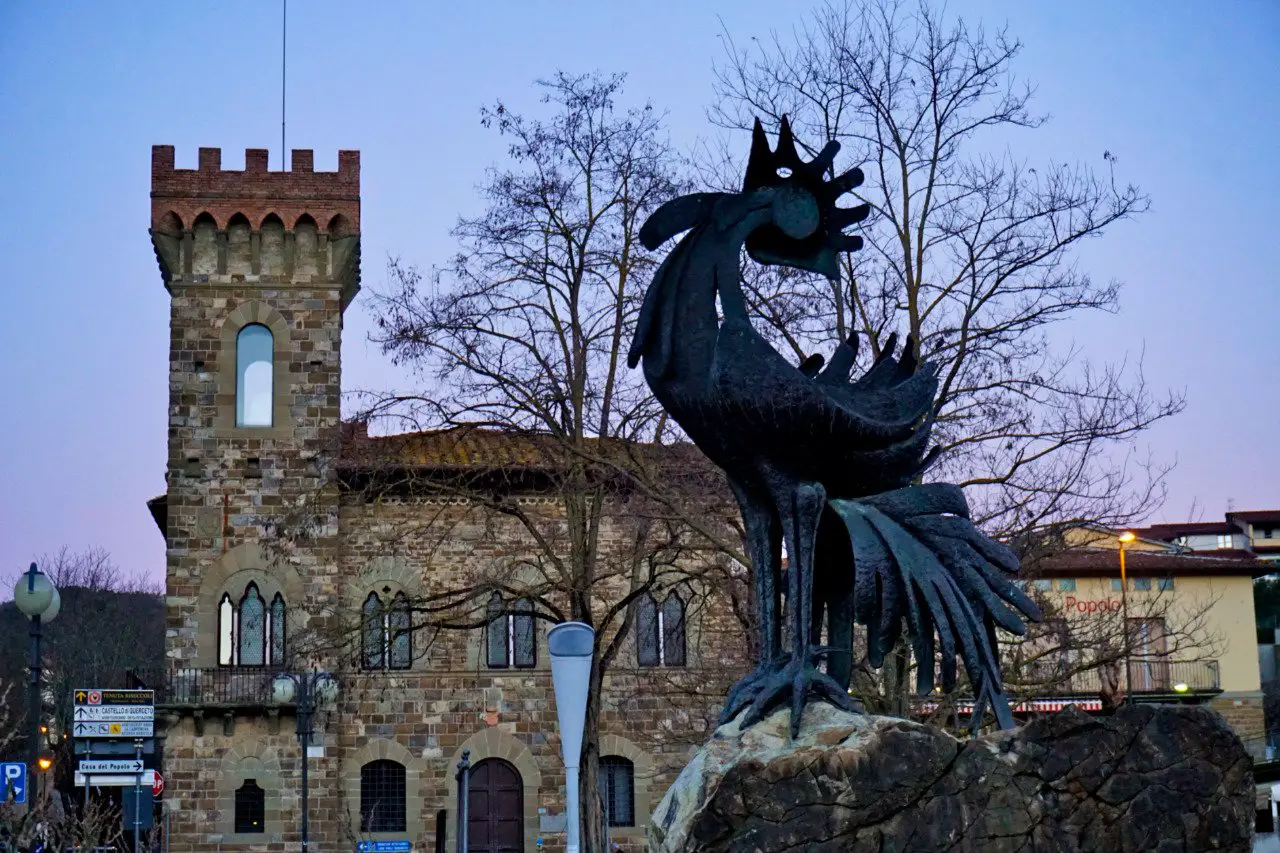
Without a doubt the most famous region is Tuscany. The rolling hills covered in vines are a postcard of Italy. The easiest way to visit this area is to base yourself in Florence or Siena and take a guided tour (like this one) to some of the wineries. If you have your own wheels, then I’d recommend stopping in Antinori Winery, to get a sense of the large variety of the region, including the star –Chianti Classico–, and the best Super Tuscans ever made. Then head to Greve in Chianti, a town revolving around wine, where you can do a tasting in an enoteca (a traditional wine bar) or explore any of the hundreds of wineries around.
Barolo is often called the King of Italian wines. To dive into it you’ll need to go to Piedmont. There you’ll also meet its queen, Barbaresco. Both are complex wines, that need years in the bottle to fully develop. If you want something easier to drink, then Barbera d’Alba is the best option. Base yourself in Turin and take a guided tour (like this one), or opt for one of the many charming hilltop villages if you’re driving.
An up-and-comer to international markets and that deserves attention is Amarone della Valpolicella, from the Veneto region. It’s dry and rich due to its unique making process: appassimento, where the grapes are left to dry to concentrate the flavor. In this region also try their whites, Soave and Pinot Grigio.
If you want to keep an eye on some of Italy’s most exciting wines, look towards the islands. Sicily and Sardinia are producing increasingly ambitious wines, with producers experimenting with native varieties and distinctive island terroirs to create bottles that feel both deeply rooted and refreshingly contemporary.
Italian wines to try
From Tuscany you can’t miss a Chianti Classico and a Brunello de Montalcino. If you want to discover Super Tuscans, Tignanello and Solaia from Antinori are a must. As for Piedmont, any Barolo will be worth the price tag. When it comes to Amarone, my personal favorites are the ones from Serego Alighieri, a joint venture with Masi that dates back to 1353, when the son of the poet Dante bought the estate.
I’ve been exploring the wines of different Italian regions for years, visiting wineries and tasting far too many labels along the way. I have to confess: I’ve developed a serious love for Italian wine. Wine tourism is wonderful wherever you go, but some of my favorite experiences have been in Italy’s off-the-beaten-path destinations, like the wine roads of Western Sicily, where the landscapes are quieter and you can taste the heritage in the wines.
Wine from France
Overview of French wine
France and wine are practically synonymous. With centuries of winemaking tradition, some of the world’s most famous wine regions, and an extraordinary number of appellations and grape varieties, France is one of those countries where wine can easily become the reason for booking a trip. But French wine can also be intimidating: unlike New World wines, French labels traditionally put the place rather than the grape front and center. Learning a little about the main regions makes navigating them much easier.
Bordeaux is the most famous of them all, known for its grand châteaux and age-worthy red blends based primarily on Cabernet Sauvignon, Merlot and Cabernet Franc. The Left Bank, including Médoc and Graves, is particularly associated with Cabernet Sauvignon, while the Right Bank is dominated by Merlot and Cabernet Franc. The landscape of vineyards, elegant estates and small villages makes Bordeaux as rewarding to explore beyond the tasting room as it is from the glass. The region has around 60 appellations, so there is plenty to discover beyond the famous names.
Burgundy, where the idea of terroir is taken to an almost obsessive level: tiny vineyard plots known as climats can produce dramatically different wines, from Pinot Noir to Chardonnay, despite being only a few meters apart. The famous Route des Grands Crus between Dijon and Santenay passes through villages whose names have become synonymous with fine wine: Gevrey-Chambertin, Nuits-Saint-Georges, Pommard, Meursault and Chassagne-Montrachet, among others. Burgundy’s 1,247 vineyard climats are recognized as a UNESCO World Heritage site.
For something completely different, head north to Champagne. This is the home of the world’s most famous sparkling wine, produced primarily from Chardonnay, Pinot Noir and Meunier. The region is as much about the experience as the bottle: grand Champagne houses in Reims and Épernay, miles of underground cellars, chalky vineyards and picturesque villages. The vineyards, houses and cellars of Champagne are also UNESCO-listed, and the region has several marked wine routes for exploring beyond the major producers.
The Loire Valley is one of the best destinations for discovering just how diverse French wine can be. Stretching for hundreds of miles along the Loire, it produces everything from crisp Muscadet and mineral Sancerre to aromatic Vouvray, elegant Savennières, and red and rosé wines from Cabernet Franc in places such as Chinon and Bourgueil. Add the region’s extraordinary châteaux and charming villages, and you have one of the most enjoyable wine road trips in France.
In the south, the Rhône Valley offers another dramatic change of scenery and style. The Northern Rhône is the land of Syrah, producing structured, peppery reds in appellations such as Côte-Rôtie and Hermitage, while the Southern Rhône is dominated by blends, with Grenache, Syrah and Mourvèdre among the key varieties. The region is particularly rewarding for travelers because vineyards, historic towns and gastronomy are woven together along the Rhône.
Don’t overlook Alsace, tucked against the German border. Its colorful villages and vineyards produce some of France’s most aromatic whites, particularly Riesling, Gewürztraminer and Pinot Gris, and the Alsace Wine Route is one of the country’s prettiest ways to explore wine country. Further south, Provence is synonymous with rosé, but there is considerably more to discover, including reds and whites from a landscape of Mediterranean hills, olive groves and vineyards.
Stretching along the Mediterranean coast there’s the vast Languedoc-Roussillon. Once associated primarily with inexpensive bulk wine, the region has undergone a remarkable transformation and is now one of France’s most dynamic wine areas, with old vines, organic and natural producers, and a huge variety of Mediterranean grapes. It’s also one of the best places to look beyond the famous French appellations without sacrificing quality.
Best regions and wineries in France
The beauty of wine tourism in France is that you don’t have to choose between wine and everything else. Vineyards are woven into landscapes of historic towns, castles, gastronomy, and beautiful cycling and walking routes. Follow the Route des Grands Crus through Burgundy, visit châteaux around Bordeaux, cycle between vineyards and castles in the Loire Valley, descend into Champagne’s underground cellars, or combine wine tasting with Mediterranean villages in Provence and Languedoc.
For a first wine trip, Bordeaux and Burgundy are the obvious classics, while Champagne is ideal for a shorter getaway. Loire, Rhône, Alsace and Languedoc offer plenty of room to venture beyond the most famous names. Some of France’s most memorable experiences can be found at small family-run domaines, where the person pouring your wine may also be the person who harvested the grapes.
There are plenty of ways to make wine the focus of your trip without having to worry about driving. Bordeaux and Burgundy are well suited to guided wine tours (like this and this), while in Champagne, a cellar tour in Reims or Épernay is almost as essential as the tasting itself. The Loire is perfect for a slower tour combining vineyards and château-hopping.
French wines to try
With so many regions and appellations, knowing where to start can be overwhelming. A few classic labels make good introductions: Château Margaux or Château Lynch-Bages for Bordeaux, Domaine Leflaive for white Burgundy, Louis Roederer Cristal for Champagne, and Domaine Huet Vouvray for the Loire Valley. For something from the Rhône, try E. Guigal Côte-Rôtie, while Trimbach Riesling is a great introduction to Alsace. And if you want to explore France’s newer generation of exciting producers, look toward the Languedoc, where independent winemakers are doing increasingly interesting things with old Mediterranean vines.
I’ve always loved how much history, culture and geography can fit into a glass of wine, and France takes this to another level. From the grand vineyards of Bordeaux and Burgundy to tiny domaines tucked into valleys and mountains, wine is deeply intertwined with the country’s identity, and its intriguing relationship with place. Perhaps that’s why exploring French wine country feels like such a natural extension of my belief that all maps are lying: the real world is always far more interesting, messy and nuanced than the lines we draw across it.

Wine from Spain
Overview of Spanish wine
Spain has more than 4,000 wineries spread across an extraordinary variety of landscapes. From the green Atlantic coast of Galicia to the dry plains of Castilla-La Mancha and the rugged mountains of Priorat, Spanish wine is as diverse as the country itself. It’s also a country where wine tourism is deeply connected to food, history and landscape: there are dozens of established wine routes where you can visit wineries, stay among the vineyards, cycle between bodegas, and discover the traditions behind each bottle.
Spanish wine labels can be a little confusing. At the broadest level, you’ll find Vino de España, essentially the country’s basic wine category. Vino de la Tierra offers a little more geographical specificity while allowing producers more freedom in how they make their wines (it’s roughly equivalent to the European Union’s Protected Geographical Indication: IGP). Above this are Denominación de Origen (DO) wines, produced according to rules established for a defined region. At the top of the geographical classification are Denominación de Origen Calificada (DOCa) wines, a designation currently held by Rioja and Priorat. As elsewhere in Europe, don’t assume that the strictest designation automatically means the best wine: the producer, vineyard and style matter far more than the letters on the label.
Best regions and wineries in Spain
La Rioja is the best place to begin. One of Spain’s most famous wine regions, it’s particularly associated with Tempranillo, producing everything from fresh and fruit-forward to long-aged and complex wines. The region is divided into Rioja Alta, Rioja Alavesa and Rioja Oriental, each with its own character. Around Haro, Laguardia and Logroño, wineries range from historic bodegas to striking contemporary buildings, while medieval villages, excellent food and the Cantabrian mountains make this much more than a wine stop. Rioja is also home to more than 500 wineries, many of which welcome visitors.
For a similar focus on Tempranillo but a very different landscape, head to Ribera del Duero. The vineyards lie on the high plateau along the Duero River, producing deeply colored, structured reds with plenty of aging potential. Traditional underground cellars sit alongside spectacular modern wineries, while castles, monasteries and historic towns make the region particularly rewarding to explore by road.
In Catalonia, Priorat offers something more rugged. Its steep vineyards grow in the region’s distinctive slate soils, known locally as llicorella, producing powerful, concentrated reds based largely on Garnacha and Cariñena. The landscape is dramatic, with tiny villages, winding roads and vineyards clinging to hillsides. Nearby Penedès offers a completely different experience and is the heartland of Cava, Spain’s traditional-method sparkling wine.
Then head north to Galicia for some of Spain’s freshest wines. Rías Baixas is the home of Albariño, a bright, aromatic white. The vineyards sit among green landscapes, estuaries and traditional pazos, making this one of the country’s most appealing wine regions if you want to combine wine with coastal scenery and gastronomy.
For something completely different, go south to explore Jerez and the Sherry Triangle in Andalusia. The wines are made from Palomino, Pedro Ximénez and Moscatel, and the region’s historic bodegas are as much a part of the experience as the wines themselves. From dry, saline Fino and Manzanilla to rich, sweet Pedro Ximénez, Sherry is one of Spain’s most distinctive, and most misunderstood, wine traditions.
Castilla-La Mancha is home to some of the largest vineyard areas in the world. It may not have the prestige of Rioja or Priorat, but its enormous scale is an important part of Spain’s wine story. Beyond the vineyards, the region offers historic cities such as Toledo and a very different, arid landscape from the lush wine country of northern Spain.
Don’t overlook the country’s smaller and more unusual wine regions, either. Rueda is particularly known for crisp, aromatic Verdejo; Ribeira Sacra produces distinctive wines from steep vineyards along river valleys in Galicia; and the Basque Country’s Txakoli offers light, refreshing, slightly saline whites.
Spain’s official Wine Routes network includes 38 courses, so there’s plenty of room to explore beyond the names that dominate international wine lists.
Spanish wines to try
With so many regions and styles to choose from, narrowing down a few labels can be tricky. For classic Rioja, try Marqués de Riscal Reserva or La Rioja Alta Viña Ardanza, both good introductions to the region’s Tempranillo-based reds. From Ribera del Duero, Vega Sicilia Valbuena 5º is an iconic yet splurge-worthy example of what the region can produce. For something completely different, look for Álvaro Palacios L’Ermita from Priorat, one of Spain’s most celebrated expressions of Garnacha.
Spanish whites deserve just as much attention. Martín Códax Albariño is an approachable introduction to the fresh, Atlantic style of Rías Baixas, while Marqués de Riscal Finca Montico showcases the crisp, aromatic character of Verdejo from Rueda. And no exploration of Spanish wine would be complete without trying Tío Pepe Fino from Jerez, a classic dry Sherry that is worlds apart from the sweet, fortified wines many people associate with the style.
Because of my Spanish heritage, the country has been calling my name my entire life. In fact, several destinations in Spain made it onto my travel experiences bucket list. I was delighted to discover that Spanish wine lived up to the high standards I had expected from the country, and then some. It was a beautiful discovery, and one more reason to keep exploring Spain.
Wine from Portugal
Overview of Portuguese wine
Portugal may be best known for Port, but reducing Portuguese wine to its famous fortified drink would mean missing out on a surprisingly diverse wine country. Although Portugal’s wine regions are relatively small, its long Atlantic coastline, varied landscapes, and hundreds of native grape varieties have produced a wine culture that’s distinctly its own, from the crisp whites of the north to the full-bodied reds of the Alentejo and the fortified wines of Madeira.
Portuguese labels can also look a little intimidating at first, especially with all those unfamiliar grape names. The label often highlights the region or producer rather than the grape variety. At the top of the geographical classification are Denominação de Origem Protegida (DOP) wines, which are made according to rules established for a specific region. Indicação Geográfica Protegida (IGP) wines cover a broader geographical area and give producers more freedom. You’ll also find plenty of wines simply labeled Vinho, with fewer geographical restrictions.
Best regions and wineries in Portugal
The most iconic place to start is the Douro Valley. It has been a demarcated wine region since 1756, making it one of the oldest regulated wine regions in the world. This spectacular landscape of terraced vineyards climbing the slopes of the Douro River is the historic home of Port, but the region also produces excellent dry red and white wines under the Douro designation. The best way to experience it is to slow down: stay at a quinta, visit wineries, take a river cruise, or simply follow the winding roads through the vineyards. If you don’t have a car, the easiest way it to take a tour like this one.
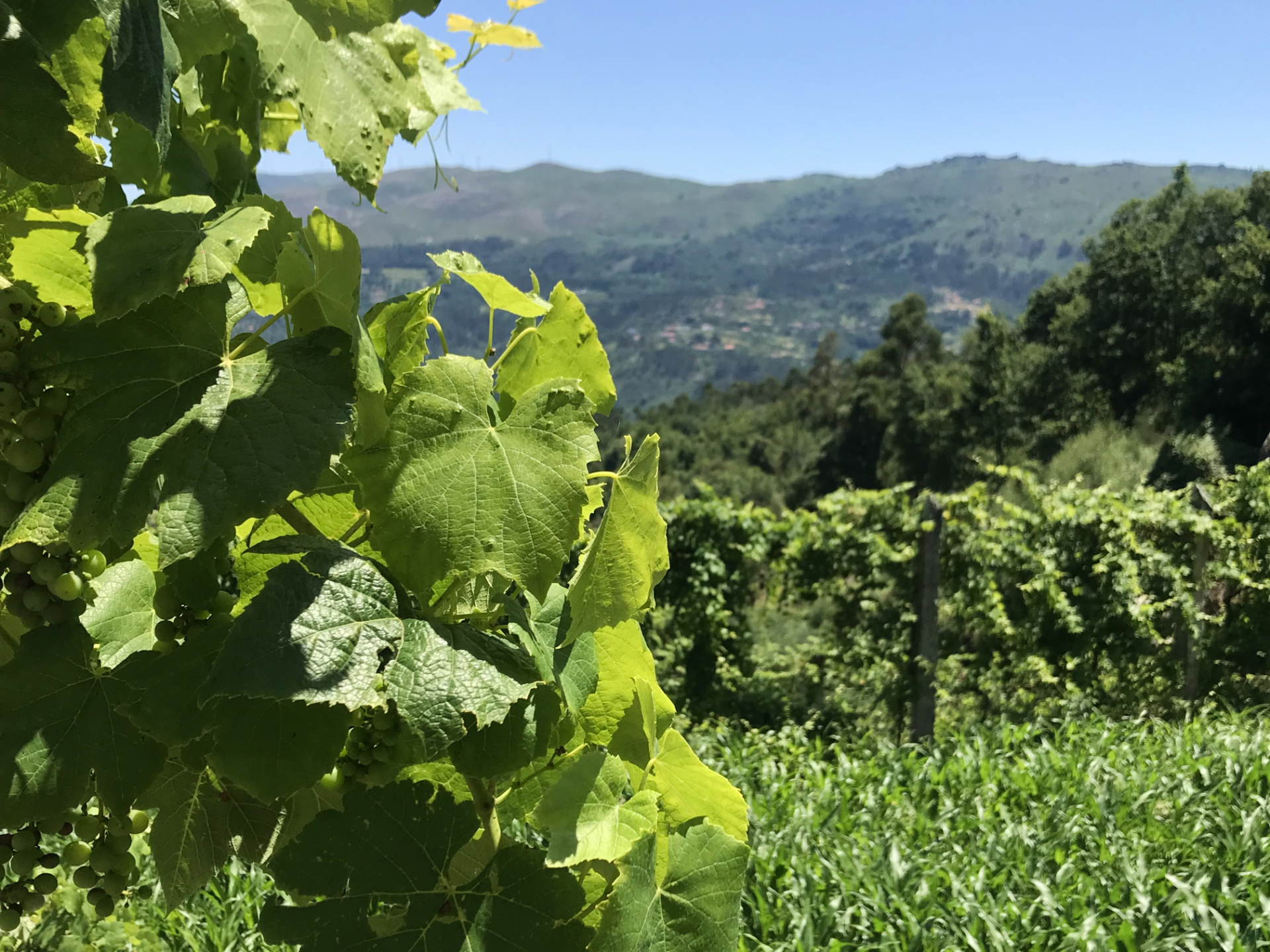
In the north, Vinho Verde offers a completely different experience. The lush Minho landscape is dotted with small vineyards, rivers and historic manor houses, and the region’s wines are generally light, fresh and high in acidity. Look especially for Alvarinho from Monção and Melgaço, where the grape produces fuller, more structured whites than the Vinho Verde you may encounter elsewhere. If time is limited, you can do an organized day trip like this one.
Further south, Alentejo is one of Portugal’s most important wine regions, with broad landscapes of vineyards, cork oaks and olive groves. Its warm, dry climate produces generous reds as well as increasingly interesting whites. Around Évora, Estremoz and Monsaraz, wineries range from historic estates to modern producers, making the region particularly easy to explore as a wine-focused road trip, although you can see the highlights on a day tour like this one.
If you want to venture beyond the classics, look at Dão for elegant, mineral-driven reds and whites, Bairrada for distinctive sparkling wines and structured reds, and the Setúbal Peninsula for the famously sweet fortified wine Moscatel de Setúbal. On the islands, Madeira produces some of the world’s most distinctive fortified wines, while the volcanic Azores are home to vineyards shaped by the Atlantic and volcanic landscape.
Portuguese wines to try
Portugal has an enormous range of native grapes, so this is a good destination for trying beyond the usual international varieties. Start with Vinho Verde made from Alvarinho for a fresh, aromatic white, then try a Douro red made primarily from Touriga Nacional to see how differently Portuguese wine can express itself. For something from Dão, look for Quinta dos Roques Tinto, while Niepoort Redoma is a good introduction to the more refined side of Douro reds.
And, of course, you can’t fully experience Portuguese wine without trying Port. Taylor’s 20 Year Old Tawny Port is a classic introduction to the style, with the nutty, dried-fruit character that develops through aging in wood. For something completely different, seek out Blandy’s 10 Year Old Malmsey Madeira, a rich, sweet wine from Madeira that’s remarkably complex and long-lived.
My first encounter with Vinho Verde was with a group of Portuguese friends, who suggested we order some with our food. “Green wine?” I asked, looking thoroughly confused. They looked at me even more confused. “Of course”, they said. Once I actually tried it, the joke was on me: Vinho Verde became the wine I drank most during my time in Portugal. You just have to trust the locals.
Wine from Germany
Overview of German wine
Germany will mostly make you think of beer, I know, but with 13 wine-growing regions, more than 100,000 hectares of vineyards, and around 11,000 wineries, German wine is far more diverse than its reputation for Oktoberfest might suggest.
The country’s vineyards are concentrated mainly along rivers, where steep slopes, reflected sunlight, and relatively cool conditions create an ideal environment for grapes to ripen slowly while retaining plenty of acidity. That’s a big part of what makes German wines so distinctive: even ripe wines often have a freshness and precision that’s difficult to replicate in warmer climates.
Riesling is the country’s signature grape, producing everything from bone-dry wines to intensely sweet, age-worthy bottles. But Germany is also an important producer of Spätburgunder (Pinot Noir), particularly in Baden and the Ahr, as well as Grauburgunder (Pinot Gris), Weissburgunder (Pinot Blanc) and Silvaner.
German wine labels can be confusing, partly because the country has traditionally used a fairly elaborate classification system. The current system is increasingly focused on geographical origin, with wines becoming more specific as you move from a broad region to a particular village or vineyard. You’ll still see terms such as Kabinett, Spätlese, Auslese, Beerenauslese, Eiswein and Trockenbeerenauslese, which refer to the ripeness of the grapes at harvest rather than simply how sweet the finished wine will be. Since the 2026 vintage, the new origin-based rules are becoming mandatory, so the emphasis on the terroir is more important than ever.
Best regions and wineries in Germany
The Mosel is probably the best place to begin. Vineyards cling to steep slopes above the river, with slate soils and a cool climate that produce elegant, high-acid Rieslings. The landscape is almost as compelling as the wine, with medieval villages, castles, river bends and vineyards that seem to disappear vertically into the hills. Wine hiking trails make it particularly rewarding for travelers who want to combine tasting with getting out into the landscape. Next door, the Rheingau is another classic Riesling region, stretching along the Rhine west of Frankfurt. The area is home to some of Germany’s most historic wine estates, including Schloss Johannisberg and Schloss Vollrads.
Rheinhessen, Germany’s largest wine-growing region, is worth a closer look if you want to see where the country’s wine scene is heading. Once known for inexpensive mass-market wines, the region now has a new generation of producers making ambitious Rieslings and Silvaners. The Rheinterrassen around Nierstein are especially scenic, with vineyards overlooking the Rhine.
For red wine, head to the Ahr, a small valley north of the Mosel that’s particularly known for Spätburgunder. Its steep vineyards and dramatic landscape make it one of Germany’s most distinctive wine regions, while Baden, in the southwest, offers a warmer climate and a broader range of grapes, including excellent Pinot Noir, Pinot Gris and Chardonnay.
Don’t overlook Franken, where Silvaner is the star and wines are traditionally bottled in distinctive flattened Bocksbeutel bottles. If you’re interested in exploring beyond Germany’s famous western wine regions, Saale-Unstrut and Saxony offer a very different experience, with vineyards further east in a cooler continental climate.
German wines to try
If you’re new to German wine, Riesling is the obvious place to start. Dr. Loosen Erdener Treppchen Riesling offers a good introduction to the Mosel’s combination of fruit, acidity and mineral character, while Georg Breuer Rüdesheimer Berg Schlossberg Riesling showcases the more powerful style of the Rheingau.
For something different, try Hans Wirsching Iphöfer Julius-Echter-Berg Silvaner from Franken, one of the country’s classic expressions of the grape. And if you’d rather explore Germany’s red wines, look for Meyer-Näkel Spätburgunder from the Ahr or Friedrich Becker Spätburgunder from the Pfalz.
Finally, if you have a sweet tooth, or simply want to understand why German wines have a reputation for aging, try a Kabinett or Spätlese Riesling. At the sweeter end of the spectrum, Eiswein is one of Germany’s most distinctive specialties, made from grapes harvested and pressed while naturally frozen.
When most people picture Germany, wine isn’t necessarily the first thing that comes to mind. Oktoberfest and castles take over. Yet Germany has been making wine for centuries. So maybe we should add Riesling to the list of things we associate with Germany, and give the beer a little competition.
Best wine destinations: New World wine
Wine from Chile
Overview of Chilean wine
Chile has an unusually favorable combination of geography and climate for growing grapes. The country’s wine regions are squeezed between the Pacific Ocean and the Andes, with the Atacama Desert to the north and colder conditions toward Patagonia. The result is an extraordinary range of terroirs, from warm inland valleys to cool coastal vineyards and high-altitude plantings in the foothills of the Andes.
Chile is best known internationally for Cabernet Sauvignon and Carmenère, but there’s much more to explore. Sauvignon Blanc, Chardonnay, Syrah, Pinot Noir, País, Carignan and Cinsault are all part of the country’s wine story, and a new generation of producers is increasingly interested in old vines, forgotten varieties, dry-farmed vineyards and cooler climates.
Chile’s wine history goes back to the 16th century, when Spanish settlers brought European grapevines to the country. French varieties arrived in greater numbers during the 19th century, and Chile’s isolation from many of the pests and diseases that devastated European vineyards helped preserve some of these vines. Today, Chile has a wine industry that combines this long history with modern winemaking and an increasing focus on sustainability and site-specific wines.
The star variety is Carménère, a Bordeaux grape that was long thought to have disappeared after phylloxera devastated European vineyards, until old vines that had been mistaken for Merlot were identified in Chile as Carménère in 1994. The discovery helped establish Carmenère as Chile’s signature grape. Today, you’ll find everything from ripe, fruit-forward examples to more restrained wines with herbal and savory character.
Best regions and wineries in Chile
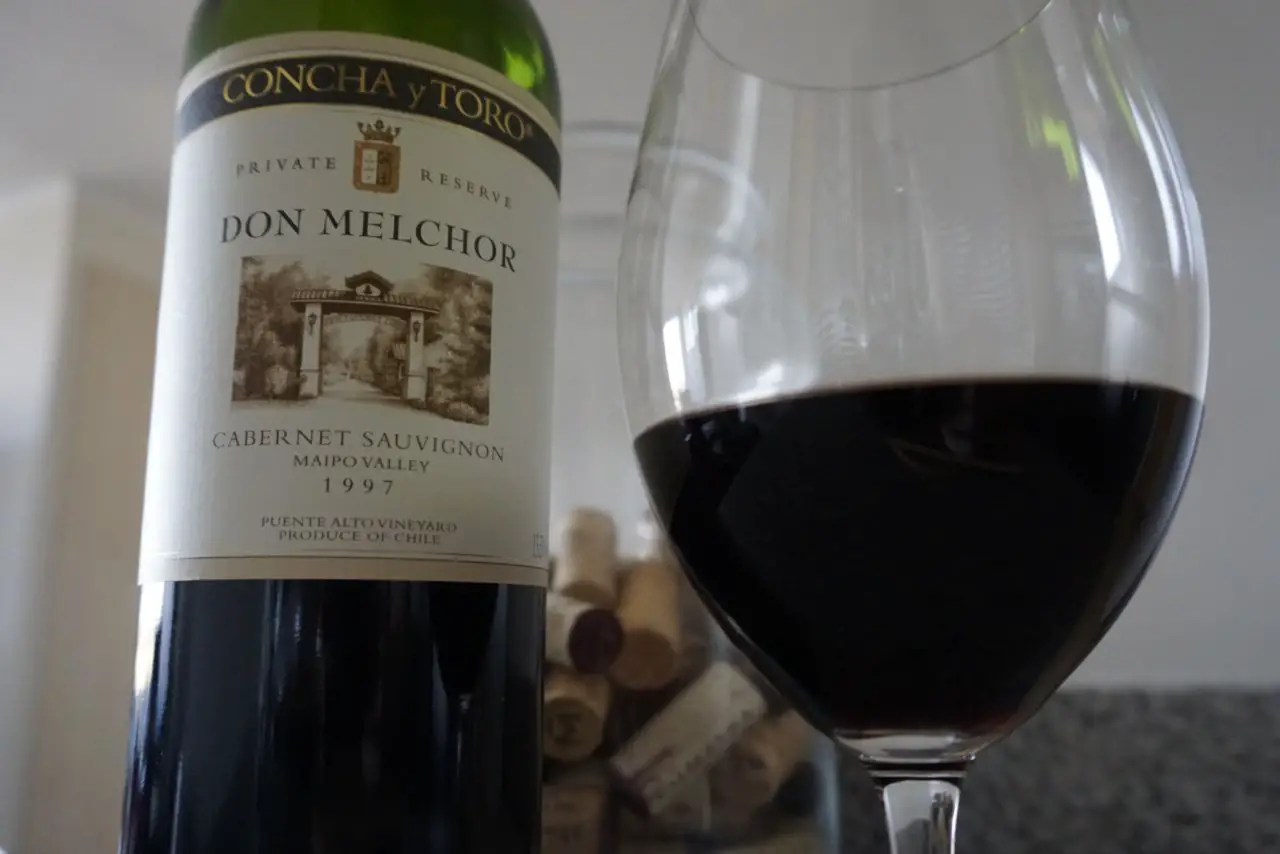
Maipo Valley is the country’s historic home of Cabernet Sauvignon. Puente Alto and Pirque, at the foot of the Andes, are particularly famous for elegant, structured reds, and home to some of Chile’s most iconic wines, including Concha y Toro’s Don Melchor, Viñedo Chadwick and Almaviva. It’s also one of the easiest wine regions to visit, siting in the outskirts of Santiago, making it a natural starting point for a Chilean wine trip.
Further north, the Aconcagua Valley offers a distinctly different expression of Chilean wine, focusing on Cabernet Franc and Syrah. Viña Errázuriz is one of the region’s historic names, while Von Siebenthal focuses more on innovation. Seña, the pioneering Chilean-Californian collaboration created by Eduardo Chadwick and Robert Mondavi, has become one of its most celebrated wines. Its 2018 vintage received a perfect 100 points from James Suckling.
The Casablanca Valley was one of Chile’s first major cool-climate wine regions, and its proximity to the Pacific gives it a completely different character from the warmer inland valleys. Morning fog and ocean breezes help preserve acidity, making Casablanca particularly well known for Sauvignon Blanc and Chardonnay, as well as Pinot Noir. Emiliana and Matetić are good places to start exploring the region. Its location between Santiago and Valparaíso also makes this valley an easy addition.
Next comes the Cachapoal Valley, part of the broader Rapel Valley and home to some of Chile’s most ambitious red wines. The valley’s warm days and cooler nights are particularly well suited to Cabernet Sauvignon, Carmenère and other Bordeaux varieties. The standout name here is Vik, an ambitious estate surrounded by the hills of Millahue, whose striking winery and flagship red have helped put the region on the map, especially after their 100-point 2021 vintage.
Further south, Colchagua Valley is one of Chile’s great red-wine regions, particularly for Carmenère, Cabernet Sauvignon and Syrah. The valley is broad enough to contain several distinct terroirs, from warmer inland areas to cooler vineyards closer to the Pacific. Apalta, surrounded by the Coastal Range, is particularly renowned for powerful, age-worthy red blends. Clos Apalta is one of Chile’s benchmark wines, with several vintages receiving 100 points from James Suckling. Montes, Casa Silva, Viu Manent, Neyén and Lapostolle are among the producers worth seeking out.
Beyond these better-known central valleys, Maule and Itata offer a glimpse into a much older side of Chilean wine. These southern regions are home to some of the country’s oldest vineyards, including dry-farmed, head-trained vines of País, Cinsault and Carignan. Once associated mainly with inexpensive, everyday wine, these old vineyards have attracted a new generation of producers who are giving traditional varieties and low-intervention winemaking a fresh look.
But Chilean winemakers are increasingly pushing vineyards into environments that seem almost impossible for viticulture. In the north, producers are experimenting with vineyards around the Atacama Desert, including the Elqui and Huasco valleys, where extreme dryness, altitude and intense sunlight create very distinctive growing conditions. At the other end of the country, viticulture is moving further south toward Patagonia, where cooler temperatures are opening up possibilities for varieties and styles that would struggle in Chile’s warmer central valleys. These projects remain small compared with the country’s established wine regions, but they’re fascinating to watch, and a reminder that Chile’s wine map is still being written.
Chilean wines to try
If you’re looking for the classics, start with Cabernet Sauvignon from Maipo and Carmenère from Colchagua. Viña Almaviva is one of Chile’s most prestigious Bordeaux-style reds, while Carmín de Peumo is a benchmark example of premium Carmenère. For a more affordable introduction to the country’s reds, Von Siebenthal Carabantes, Emiliana Coyam, Vik Milla Cala and Montes Alpha Cabernet Sauvignon are reliable choices.
Chile’s whites deserve attention too. Matetic EQ Coastal Sauvignon Blanc from the San Antonio Valley is a good example of the country’s cool-climate style, while Lapostolle Cuvée Alexandre Chardonnay showcases the potential of Chilean Chardonnay.
For something more adventurous, seek out a bottle made from País, Cinsault or old-vine Carignan. De Martino Viejas Tinajas Cinsault is a particularly interesting introduction to the revival of these traditional varieties. And for something truly unusual, look for TARA Sauvignon Blanc from Ventisquero’s project in the Huasco Valley, on the edge of the Atacama Desert.
I was born and raised in Chile, so call me biased, but I think the country makes some extraordinary wine. Having traveled extensively through the Old World wine regions, it’s been wonderful to see how well Chilean wines stand up to some of Europe’s most celebrated bottles. I also love seeing how many producers are focusing on sustainability, experimenting with biodynamic and organic techniques, and embracing more responsible ways of working with Chile’s landscapes.
Wine from Argentina
Overview of Argentinian wine
Argentina is best known for Malbec, but there’s much more to its wine story than one grape. Vineyards stretch from the high-altitude valleys of the Andes to the cooler regions of Patagonia, with dramatically different climates and landscapes along the way. The result is a country where altitude, sunshine, dry conditions and huge temperature swings between day and night create wines with plenty of character.
Argentina’s wine industry has deep roots. Spanish settlers brought vines in the 16th century, and later waves of European immigration helped shape the country’s modern wine culture. Today, Mendoza is by far the country’s most important wine region, but Salta, San Juan, La Rioja, Río Negro and Neuquén are producing increasingly distinctive wines.
Malbec remains Argentina’s signature grape, but Cabernet Sauvignon, Cabernet Franc, Syrah, Bonarda and Pinot Noir are all important red varieties, while Torrontés is the country’s best-known native white grape. Argentina is also developing a reputation for high-altitude Chardonnay, Semillón and Sauvignon Blanc, particularly in the Uco Valley.
Best regions and wineries in Argentina
Mendoza is where most wine travelers begin, and for good reason. The province accounts for the vast majority of Argentina’s wine production and is home to three broad areas with distinct personalities. Luján de Cuyo is the traditional heartland of Argentinian Malbec, producing ripe wines with plenty of structure. The Uco Valley, further south and at higher elevations, has become the country’s great laboratory for terroir-driven wines, with subregions such as Gualtallary, Paraje Altamira and Los Chacayes producing increasingly distinctive expressions. Valle de Uco is also where you’ll find some of Argentina’s most exciting Chardonnay and other high-altitude whites.
Mendoza is also one of the easiest wine regions in South America to explore as a traveler. You can base yourself in the city and visit wineries in Luján de Cuyo, spend several nights surrounded by vineyards in the Uco Valley, or combine tastings with cycling and views of the Andes. Catena Zapata, Bodega Norton, Zuccardi, Salentein, and Bodega Séptima are among the better-known names, but some of the most interesting experiences can be found at smaller producers working with individual vineyards and less conventional varieties.
Further north, Salta offers a completely different wine experience. The vineyards of the Calchaquí Valleys are among the highest in the world, with some sites reaching well over 2,000 meters above sea level. The region is particularly famous for Torrontés, producing intensely aromatic whites with floral and citrus notes, but high-altitude reds are becoming increasingly interesting too. Around Cafayate, wineries such as Bodega El Esteco and Bodega El Porvenir make good starting points, while the more remote areas around Cachi and Molinos are pushing high-altitude viticulture even further.
South of Mendoza, Patagonia offers yet another side of Argentinian wine. The cooler climate and strong winds produce wines with more freshness and a different expression of Malbec, as well as excellent Pinot Noir and Chardonnay. Río Negro and Neuquén are the main wine-producing areas, while vineyards are also being planted further south. Look for Bodega del Fin del Mundo, Humberto Canale and Bodega Noemia if you want to explore this cooler end of the country’s wine map.
Argentinian wines to try
You can’t visit Argentina without trying Malbec, but I’d recommend tasting it from different regions rather than assuming all Argentinian Malbec tastes the same. Catena Malbec is a good introduction to Mendoza, while Zuccardi Aluvional offers a more terroir-focused expression from the Uco Valley. For a splurge, Catena Zapata Adrianna Vineyard Malbec is one of the country’s benchmark wines.
For something different, try El Esteco Old Vines Torrontés from Salta to experience Argentina’s signature white grape, or look for a high-altitude Chardonnay from Gualtallary if you want to see how far Argentinian whites have come. El Enemigo Cabernet Franc is another bottle worth seeking out, combining the grape’s naturally herbal character with the ripeness and concentration of Mendoza. And if you want to explore the country’s cooler side, try a Patagonian Pinot Noir from producers such as Bodega Chacra or Humberto Canale.
Growing up in Chile, I lightheartedly saw Argentina as a rival, so naturally I never seriously considered that their wines could be on par with ours. Then, purely for educational purposes, I tried a Malbec. Then a Torrontés. Then a Chardonnay. Before I knew it, I was working my way through Argentinian wine until I felt qualified to write about it, and had to begrudgingly admit that, yes, they make some pretty damn good wine. Consider this my reluctant endorsement.

Wine from the United States
Overview of American wine
The United States is the world’s fourth-largest wine producer, with vineyards spread across the country, although California dominates both production and international recognition. From the Cabernet Sauvignon of Napa Valley to the Pinot Noir of Oregon and the Rieslings of New York’s Finger Lakes, American wine is much more diverse than its California reputation suggests.
California’s wine industry took off in the 20th century, particularly after the 1976 Judgment of Paris, when its wines famously outperformed several highly regarded French wines in blind tastings. Today, the state remains best known for Cabernet Sauvignon, Chardonnay, Pinot Noir and Zinfandel, while producers across the country work with a much wider range of varieties.
American wine labels are generally straightforward compared with many European systems. American Viticultural Areas (AVAs) define geographically distinct wine-growing regions, but unlike European appellations, they don’t prescribe which grapes must be planted or how the wine must be made. This gives producers considerable freedom to experiment with varieties and styles.
Best regions and wineries in the United States
Napa Valley is the country’s most famous wine destination, particularly for Cabernet Sauvignon. Its relatively small size makes it easy to explore, with hundreds of wineries ranging from historic estates to contemporary tasting rooms. Sonoma County, next door, is more varied, producing Cabernet Sauvignon, Pinot Noir, Chardonnay, Zinfandel and other styles across a much larger area.
Outside California, Oregon’s Willamette Valley is particularly known for Pinot Noir and Chardonnay, while Washington State produces excellent Cabernet Sauvignon, Merlot, Syrah and Riesling. On the other side of the country, Finger Lakes in New York have built a strong reputation for Riesling and other cool-climate varieties.
Wine tourism is well established in the major regions, with winery visits often combined with restaurants, cycling, hiking and vineyard stays. Napa and Sonoma are easy to visit as dedicated wine trips, while Oregon and Washington can be incorporated into broader explorations of the Pacific Northwest.
American wines to try
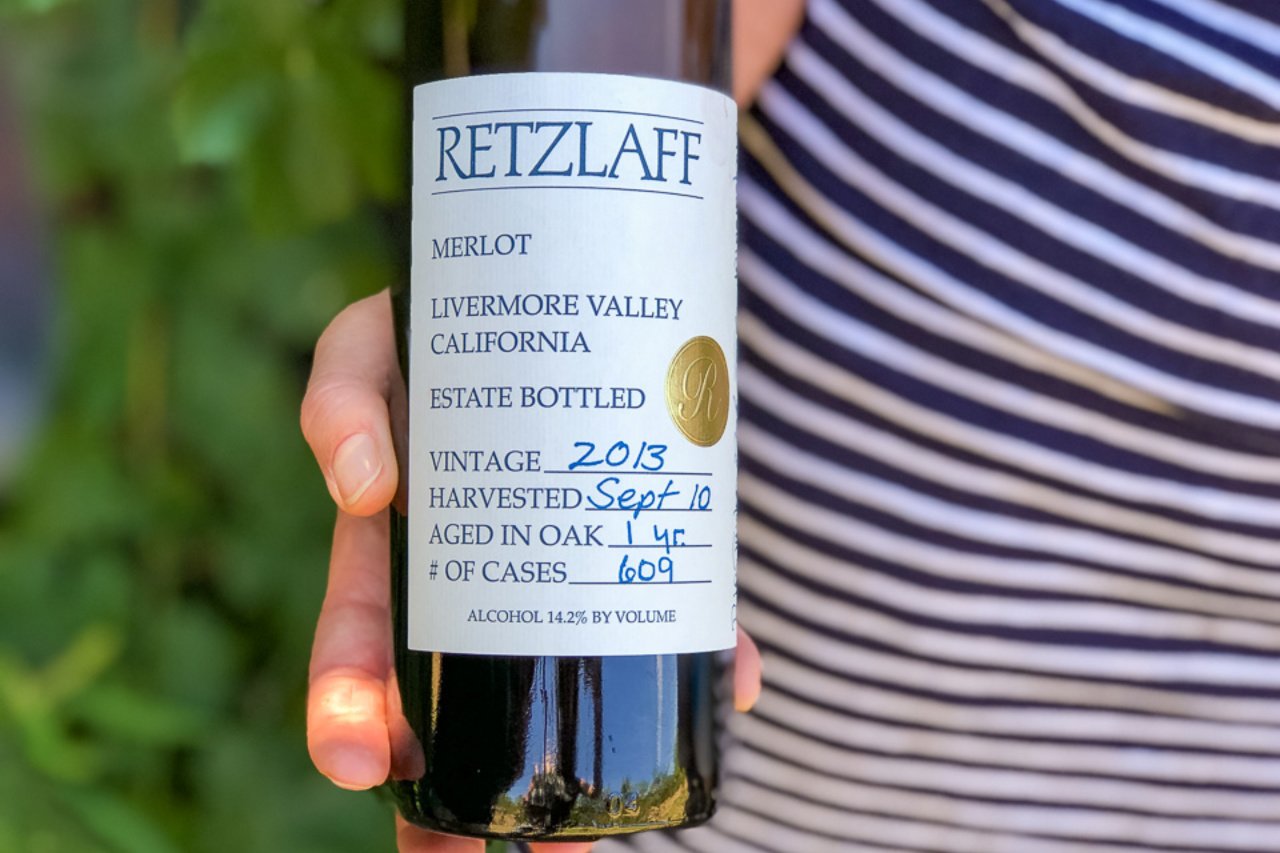
For a taste of California classics, look for Stag’s Leap Wine Cellars Artemis Cabernet Sauvignon from Napa or Ridge Lytton Springs from Sonoma. Grgich Hills Estate Chardonnay is another particularly interesting bottle to seek out, not only because it’s a classic Napa Chardonnay, but because the winery was founded by Croatian-born winemaker Miljenko “Mike” Grgich. Born in Croatia, Grgich became one of Napa’s most influential winemakers and was behind the Chardonnay that won the famous 1976 Judgment of Paris tasting.
For a taste of California classics, look for Stag’s Leap Wine Cellars Artemis Cabernet Sauvignon from Napa or Ridge Lytton Springs from Sonoma.
For something from outside California, Domaine Serene Evenstad Reserve Pinot Noir is a good introduction to Oregon, while Chateau Ste. Michelle Riesling offers an accessible example of Washington State wine. If budget isn’t an issue, Opus One remains one of Napa’s best-known prestige wines.
Trivia time. Did you know that Zinfandel, one of California’s signature grapes, is iactually Crljenak Kaštelanski, a Croatian variety that was almost lost to history? And that Chateau Montelena Chardonnay, the wine that won in the famous 1976 Judgment of Paris, was made by Croatian-born Miljenko “Mike” Grgich? There’s more Croatia in American wine than you might expect, even though the focus tends to be in their Pinot Noir, courtesy of the movie Sideways. In a world where French varieties reign supreme, an underrated wine country has defined one of the world’s biggest producers.
Wine from South Africa
Overview of South African wine
South Africa’s winemaking history goes back to the 17th century. The first vines arrived at the Cape in the 1650s, and the first wine was produced in 1659. A few decades later, French Huguenots fleeing religious persecution in Europe settled in the Cape and helped establish viticulture beyond the original Dutch settlement. Today, South Africa has more than 700 wineries, spread across a wine-producing landscape divided into 26 districts.
The country has developed its own wine identity while embracing an impressive variety of international grapes. Chenin Blanc is the most widely planted variety, producing everything from fresh and uncomplicated to complex and age-worthy wines. Pinotage, a uniquely South African crossing of Pinot Noir and Cinsaut created in 1925, is the country’s signature grape. But don’t stop there: Cabernet Sauvignon, Syrah, Sauvignon Blanc, Chardonnay, Semillon and increasingly adventurous Mediterranean and Rhône varieties are all part of the picture.
Best regions and wineries in South Africa
The heart of South African wine tourism is the Cape Winelands, where mountains, historic Cape Dutch architecture and vineyards come together within easy reach of Cape Town. The best-known areas are Stellenbosch, Franschhoek, Paarl and Constantia, and while you can visit them as day trips from the city (on tours like this or this), I’d recommend staying overnight if you have the time (if you can splurge, stay in Lanzerac Hotel & Spa or Spier Hotel and Wine Farm, with Brenaissance Wine & Stud Estatebeing being a lovely mid-range alternative).
Stellenbosch is South Africa’s second-oldest town, established in 1679. Its streets are lined with Cape Dutch, Georgian and Victorian buildings, making it almost surreal to wander through. Vineyards stretch across the valley and climb towards the surrounding mountains. The best way to explore without driving is to use one of the hop-on-hop-off wine routes, which let you choose your stops and linger as long as you like. Stellenbosch has an enormous number of estates, so don’t try to see everything. Pick a route and embrace the slow pace.
Across the mountains lies Franschhoek, meaning “French Corner”, where the influence of the Huguenots is still visible in the town’s character and wine culture. The valley is beautifully framed by green mountains, with vineyards mingling with fruit orchards and lavender fields. Take the famous Franschhoek Wine Tram to hop on and off between estates and make the journey part of the experience.
Paarl, meanwhile, feels somewhat less polished and more agricultural than its neighbors. It’s another important wine-producing area, with everything from large producers to boutique estates, and makes a good addition if you’re interested in seeing how varied the Cape’s wine landscape can be.
Then, right in Cape Town’s backyard, there’s Constantia. This is the easiest wine region to visit. Take an Uber and explore at your own pace, hop on the city’s sightseeing bus, or join an organized tour. Although it’s home to South Africa’s oldest wine-producing estate, Groot Constantia, its neighbor vineyard is the one that deserves a special mention: Klein Constantia. Established in 1685, it’s famous for its historic Vin de Constance, but the estate isn’t simply resting on its past. Its current approach combines heritage with experimentation and innovation, from regenerative viticulture and biodiversity initiatives to new approaches in the winemaking process. Its wines go well beyond the legendary sweet wine, with a range of cool-climate whites worth tasting. And the Vin de Constance is still very much at the top of its game: the 2023 vintage received a perfect 100 points.
The Cape Winelands may be the country’s most famous wine destination, but they are by no means the whole story. South Africa’s wine regions stretch far beyond Cape Town, from the cooler Hemel-en-Aarde Valley around Hermanus, particularly known for elegant Pinot Noir and Chardonnay, to the rugged Swartland, where innovative producers have helped put old-vine Chenin Blanc and Mediterranean varieties on the map. Further afield, the Robertson Wine Valley, Elgin, Breedekloof and Walker Bay offer very different landscapes and wine styles.
South African wines to try
Some labels worth looking for include Kanonkop Pinotage for a classic South African taste, Meerlust Rubicon, a Bordeaux-style blend from Stellenbosch, Sadie Family Mev. Kirsten, a celebrated old-vine Chenin from the Swartland, and Creation Pinot Noir from the cool-climate Hemel-en-Aarde Valley. And, of course, Klein Constantia Vin de Constance, the legendary sweet Muscat de Frontignan that put Constantia on the international wine map.
My name being Constanza makes a wine called Vin de Constance feel almost suspiciously destined for me. Add my love of trains to South Africa’s Franschhoek Wine Tram, and I’m pretty much sold: vineyards, wine tasting, beautiful scenery, and no need to get behind the wheel. It’s hard to think of a better combination.

Wine from New Zealand
Overview of New Zealander wine
New Zealand’s wine industry is relatively young by European standards, but it has developed a strong international reputation, particularly for Sauvignon Blanc. The country’s maritime climate, long growing season and generally cool conditions also make it well suited to Pinot Noir, Chardonnay, Riesling and other cool-climate varieties.
Marlborough put New Zealand wine on the international map with its distinctive Sauvignon Blanc, but the country’s wine regions are much more varied than that reputation suggests. Vineyards stretch from the northern tip of the North Island to Central Otago in the south, with significant differences in climate and terroir along the way.
Best regions and wineries in New Zealand
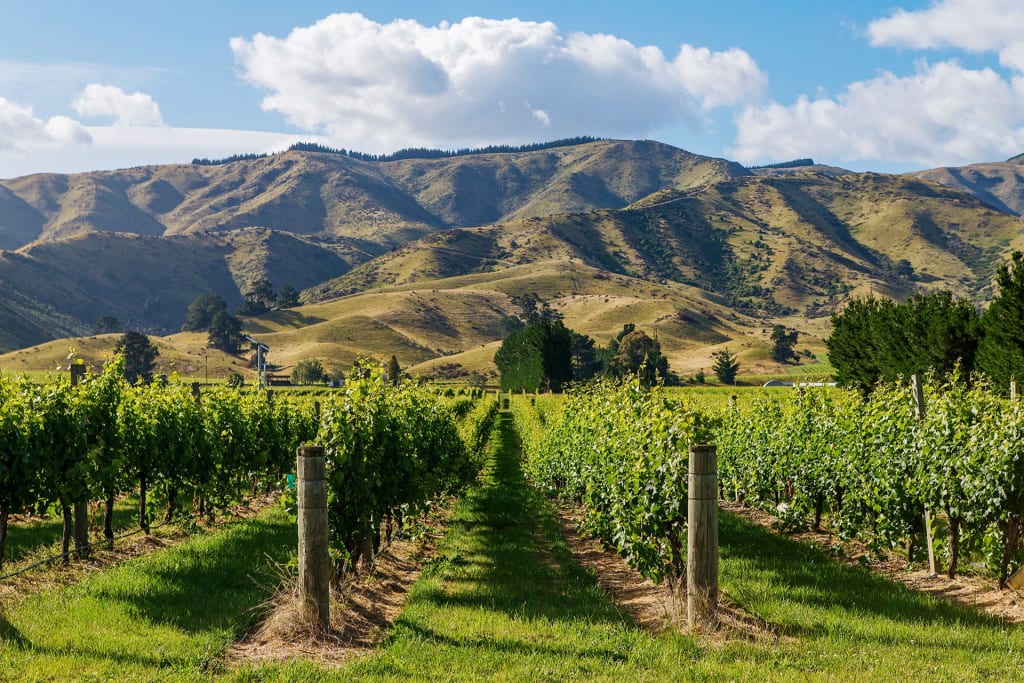
Marlborough is by far the country’s largest wine region and remains synonymous with Sauvignon Blanc. Cloudy Bay helped establish the region’s international reputation, while producers such as Dog Point and Greywacke offer different interpretations of the style.
On the North Island, Hawke’s Bay is the country’s main region for red wines, particularly Syrah and Bordeaux varieties, as well as Chardonnay. Te Mata Estate is one of its best-known producers.
Further south, Martinborough in the Wairarapa region is particularly associated with Pinot Noir, while Central Otago has become one of the Southern Hemisphere’s notable cool-climate Pinot Noir regions. Its dry continental climate and dramatic mountain landscape make it quite different from the maritime conditions of Marlborough.
New Zealander wines to try
Start with a classic Marlborough Sauvignon Blanc, such as Cloudy Bay Sauvignon Blanc, then compare it with Dog Point Sauvignon Blanc. For Pinot Noir, Craggy Range Te Muna Road Pinot Noir from Martinborough and Felton Road Bannockburn Pinot Noir from Central Otago are good examples of how different New Zealand’s regions can be.
From Hawke’s Bay, Te Mata Coleraine is a benchmark Bordeaux-style red and a useful reminder that New Zealand’s wine scene extends well beyond Sauvignon Blanc.
New Zealand has Middle-earth, spectacular landscapes, sheep and Sauvignon Blanc. One of those probably isn’t what you expected to find on a wine list. While The Lord of the Rings helped put the country’s landscapes on the world’s screens, Marlborough Sauvignon Blanc did something similar for its wine.
Wine from Australia
Overview of Australian wine
Australia is one of the world’s major wine-producing countries, with vineyards spread across a range of climates from warm inland regions to cool coastal areas. It’s best known internationally for Shiraz, but Australian wine has a much broader identity, including Cabernet Sauvignon, Chardonnay, Pinot Noir, Riesling and the distinctive Semillon of the Hunter Valley.
Australian winemaking combines European traditions with a relatively flexible approach to grape varieties and styles. The country is also known for its focus on regional identity, with producers increasingly exploring cooler sites, Mediterranean varieties, old vines, and more sustainable approaches to viticulture.
Best regions and wineries in Australia
The Barossa Valley is the classic destination for Australian Shiraz, including wines made from some of the country’s oldest surviving vines. Nearby McLaren Vale is also known for Shiraz and Grenache, while its Mediterranean climate has encouraged producers to experiment with varieties such as Mataro and Fiano.
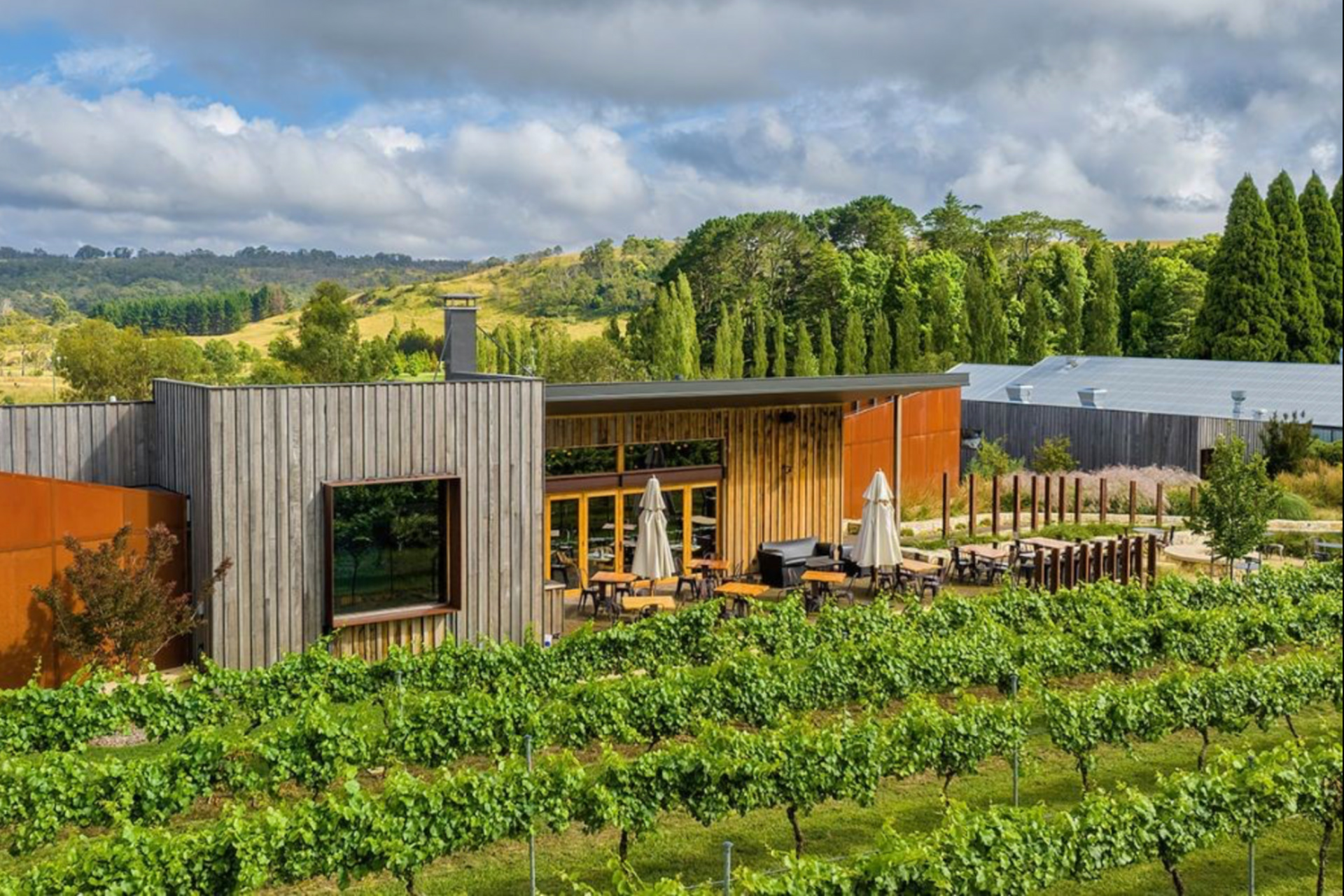
For a different style, head to the Hunter Valley, north of Sydney, where Semillon is the signature wine. Young Hunter Valley Semillon is light and high in acidity, while well-aged examples can develop remarkable complexity.
In Western Australia, Margaret River is particularly respected for Cabernet Sauvignon and Chardonnay. Yarra Valley in Victoria is known for Pinot Noir and Chardonnay, while Tasmania has become increasingly important for cool-climate Pinot Noir, Chardonnay and sparkling wine.
Australian wines to try
For classic Australian Shiraz, Penfolds Grange is the obvious prestige bottle, while Torbreck RunRig offers another highly regarded Barossa example. Tyrrell’s Vat 1 Semillon is a classic Hunter Valley wine, and Leeuwin Estate Art Series Chardonnay is one of Margaret River’s best-known whites.
For something from a cooler climate, try Giant Steps Pinot Noir from the Yarra Valley or explore Tasmania’s sparkling wines.
Australian wine has spent decades fighting a rather unfair stereotype: big bottles of cheap Shiraz drank at a barbecue and exported by the truckload. There’s certainly nothing wrong with mass production, but Australian wine has become a lot more interesting than that and there’s plenty here to challenge the stereotype.
Wine is a pretty good excuse to travel. It takes you beyond the famous sights and into landscapes, traditions and communities you might otherwise miss. Whether you’re following an ancient wine route through Europe, exploring the vineyards of the New World, or discovering a bottle made somewhere you never expected, the best wine destinations offer more than something good in your glass.
WHAT TO READ NEXT?
- Wine tourism in Europe: the most underrated wine destinations
- Booming wine destinations around the world
- The Ultimate Travel Experiences Bucket List
- Travel resources: the best travel tips and tricks
Liked it? Want to read it later? Pin it!


Enjoyed what you read? A lovely way to show appreciation is by buying me a coffee.
Your support keeps the stories, guides and geopolitical insights coming. Thank you so much!


Fantastic roundup! I really enjoyed learning about the variety of wine destinations you’ve featured. What stands out to me is how wine travel is about so much more than the tastings—it’s a chance to experience local culture, beautiful landscapes, regional cuisine, and the stories behind each destination. Thanks for putting together such an inspiring guide for travelers and wine lovers alike!
Thank you, Chandra! I couldn’t agree more. Wine travel can be about discovering a place through its people, food, landscapes, and traditions, not just what’s in the glass. I’m so glad you enjoyed the guide!
Howdy! I just want to give you a huge thumbs up for your excellent info you have got here on this post. I want to visit every single one of these places
Thanks so much, Kurt! Hope 2021 comes full of travels!
Great list! Traverse City in Michigan is also a HUGE hub for wine making. They have an annual cherry festival and tons of different local wineries/cideries/breweries.
The US is huge and has way too many amazing destinations. I’ll check Traverse City out. Thanks for the suggestion!
I’ve only been to Napa Valley and Tuscany on this list, but this just gave me so many more ideas on destinations! I usually look for a vineyard anywhere I travel to.
You started with 2 of the most renowned ones, so the standards are high! Still, I’m sure that any of the other ones described in this post will not disappoint you. And even in more obscure destinations, you’re bound to find a hidden treasure. The world of wine is a whole, interesting universe 🙂
The Portuguese wine sounds incredible, I really want to go to Douro Valley – hopefully will be able too once corona virus dies down & things become safer
Portugal is an great country, with so much to offer. And the wine is amazing! I’m always surprised at how it’s not more known. Anyhow, I’m sure your trip will be wonderful -hope it happens soon!
I have seen so many people raving about wine tourism! I loved the wine museum in Bordeaux but after reading this blog I think I’ve only dipped my toes in – definitely excited to discover more now.
Wine tourism is definitely on the rise, and deservedly so! There’re so many destinations to discover, where not only you get a great drink, but you get to experience an important part of the culture of the place. I’m happy I got you intrigued, hope you thoroughly enjoy the world of wine!
One of my favorite things to do is try wines (or any drink for that matter) from the region I’m visiting! This gave me lots of inspiration. 🙂 I live in the Yadkin Valley Wine Region in North Carolina (USA). Hope to visit the Napa Valley this fall!
Getting to know a place through the drinks is a great approach to traveling! I’ve heard a lot about the Yadkin Valley, hope to be able to visit soon -how lucky you are to live there! Enjoy the trip to Napa, and hopefully soon you’ll also explore many of the other fantastic wine destinations of this post 🙂
This is so thorough!! I fell in LOVE with vinho verdo from Portugal! I wish I knew of somewhere in the states that I could easily get it. I haven’t found it near my home yet.
A friend from Portugal introduced me to vinho verde, and I loved it too! I wasn’t expecting much, but I was so surprised on how crisp and fresh it was -just lovely!
Total wine and more, and 1000 corks sell it in the US, probably they’ll deliver to wherever you are 🙂
Wow…this is a very impressive and comprehensive resource for wine lovers. Love all the details about the regions. This is the ultimate wine tour bucket list.
Thanks so much! I’m happy you enjoyed the post. Hope you get to visit them all -let me know which ones are your favorites! 🙂
Thank you so much for including New Zealand in this list! I lived in New Zealand for a year and even though I’m not usually a wine drinker, I drank SO MUCH. Waiheke is amazing – it’s like a wine island. Their sauvs are the best!
New Zealand might not be as known as the rest of the countries in this list, but it’s one of the biggest wine producers, and the quality of the wine produced there is outstanding. I’m jealous about you spending a year there -I’d love to do that! It’s such an amazing destination!
Love this article for the best wine destinations! I’m super keen to spend some time in France and Italy, so this is super helpful. Want to give a shout out to some underappreciated ones – Moldova and Croatia. Thanks so much for sharing all of these great wines with us!
Thanks, Jamie! I’m happy you enjoyed reading and that it’ll be helpful to plan your trip! ❤️
Just now I’m writing about underrated destinations, and I’m featuring Croatia and Moldova. They indeed have excellent wine and have a very developed wine tourism industry. So come back to read about them, and many other overlooked countries 🙂