
This article may contain compensated links. Please read the Privacy Policy & Disclaimer for more info.
Whether you’re planning a trip or want to see how life looks here beyond the postcards, I invite you to see Split not just as a place, but as a rhythm. And that rhythm shifts with the seasons, which means the best time to visit Split depends entirely on the experience you’re looking for.
This guide is for those seeking a deeper travel experience, who want to know where the locals go when they need quiet and how to enjoy Split without overwhelming it.
Disclaimer: During the writing of this guide I partnered with a few local businesses. While some experiences were hosted, all opinions are entirely my own –I only feature activities I genuinely enjoyed.
Welcome to Split
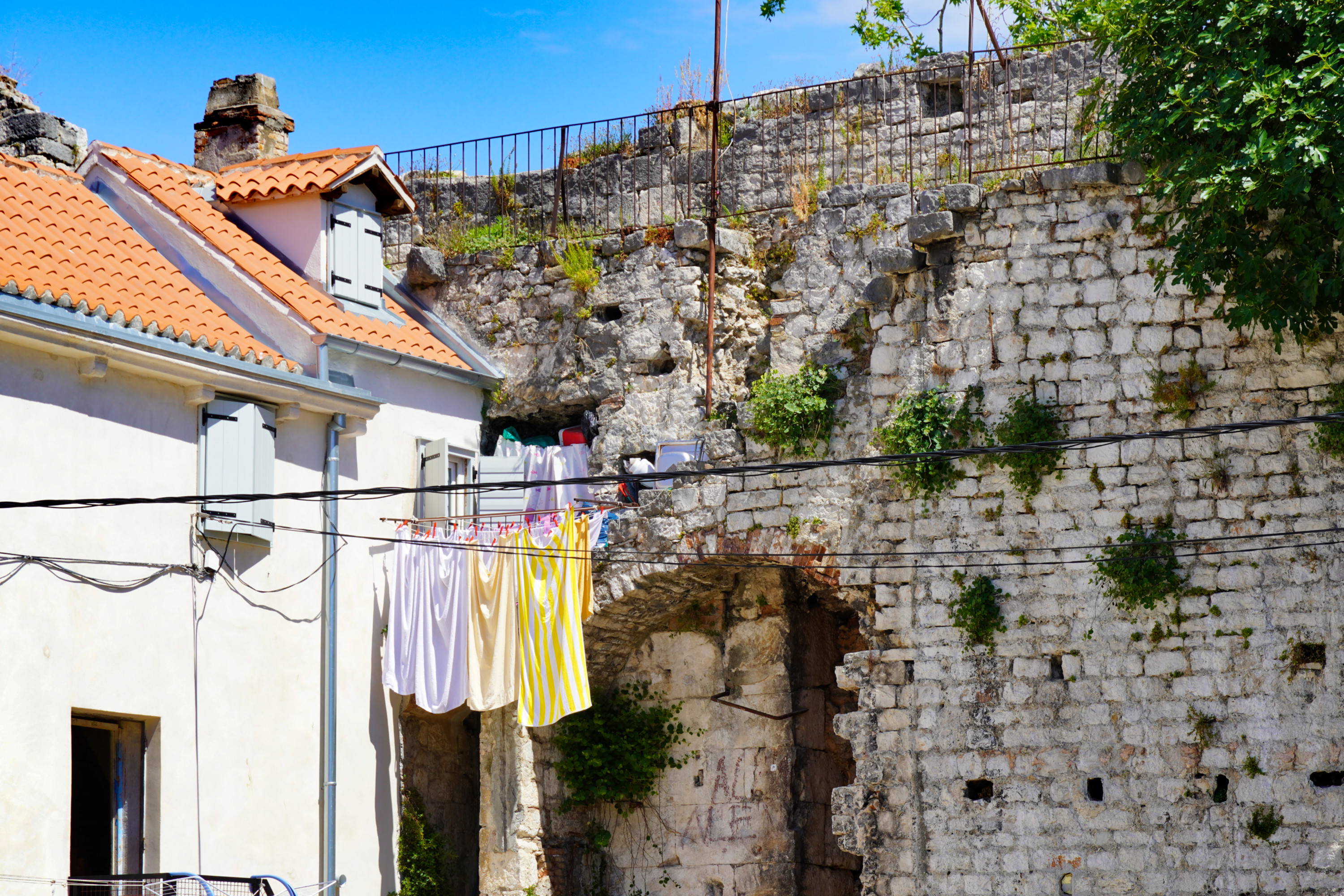
Split is a city that’s always been lived in. What began as a Roman emperor’s retirement home 1,700 years ago grew into a medieval maze, then a Venetian port, a Yugoslav hub, and now –a bit of everything. It’s a place where layers of history are not only visible but inhabited: homes nestled into palace walls, laundry lines fluttering beneath ancient arches and school kids kicking footballs against thousand-year-old stones.
Most visitors see Split in summer, when the sun sparks off the Adriatic and the stone streets echo with the sounds of suitcase wheels and multiple languages. And while the city’s charm shines then, it also strains. Crowds fill the palace, cruise ships spill over, and the rhythm of daily life bends around the pressure of peak season.
But Split is much more than a summer destination. It’s a city of seasons –and if you stay a while, or come at quieter times, you’ll feel them unfold.
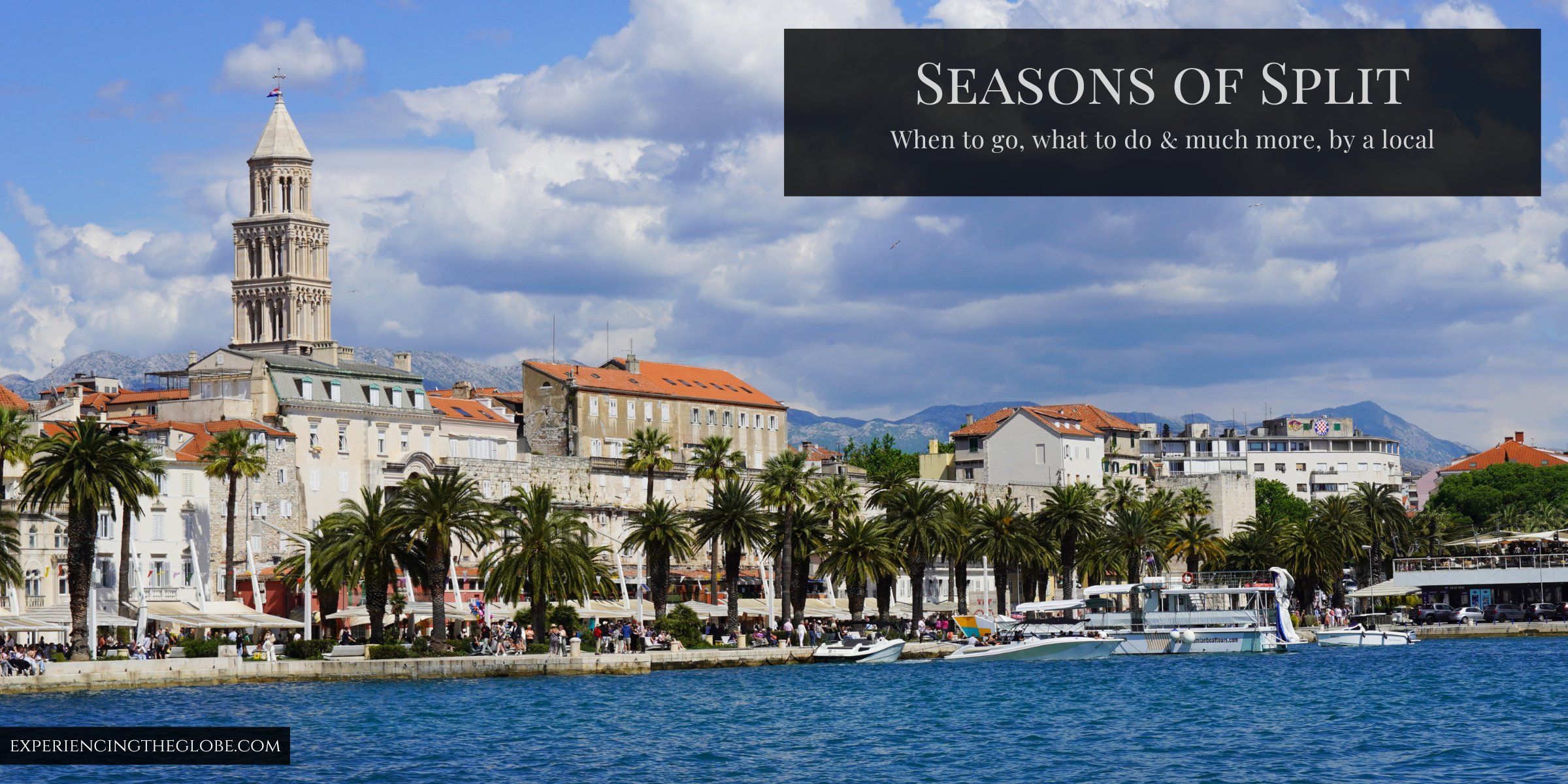
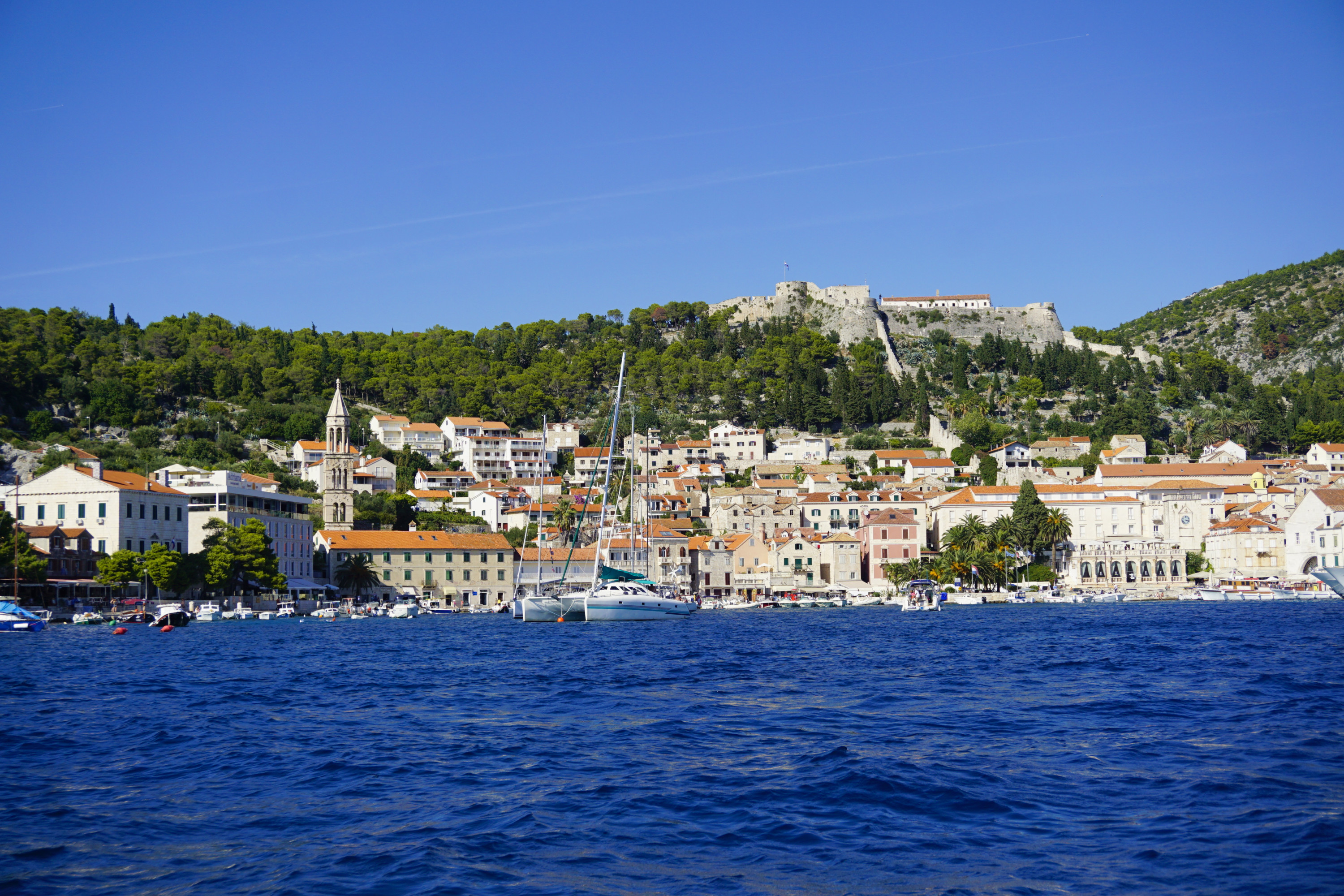
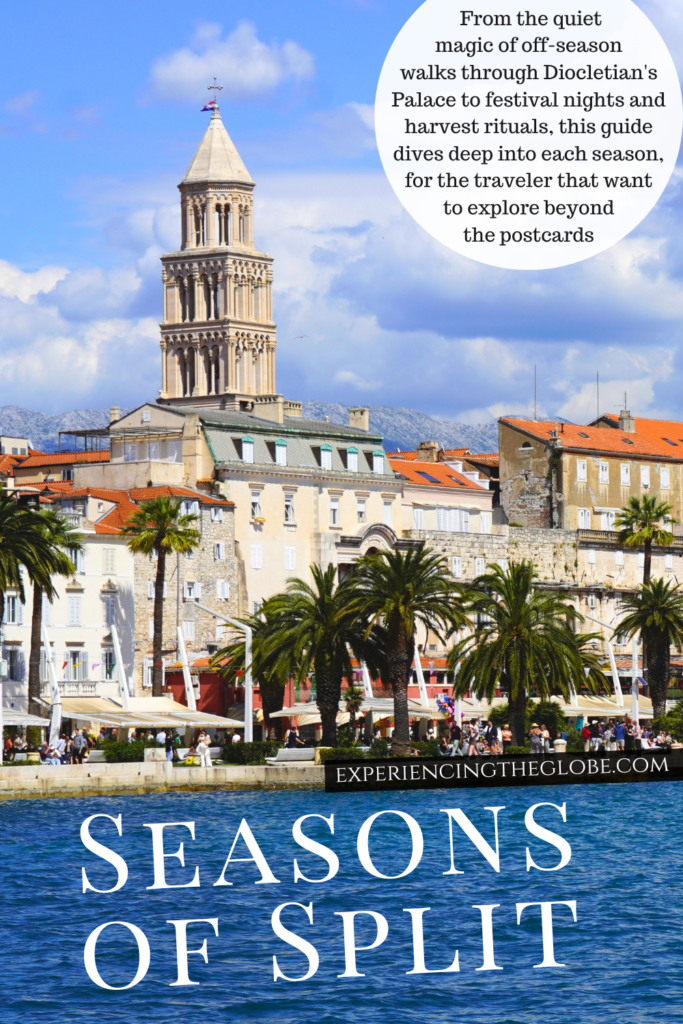
No matter when you visit, nor how you get here, Split welcomes you with a wow. If you fly into town, the Adriatic is seen at its best –aquamarine shores in a sea of cerulean, only interrupted by spots of green in the shape of forested islands. If you take a ferry, the city shows itself from the distance: the mountains in the background, the palm trees of the promenade, the belfry standing tall as a beacon inside Diocletian’s Palace. If you drive or take a bus you’ll have to cross the small mountain range that separates Dalmatia from the hinterlands. As you descend, a tunnel opens to terracotta roofs with a backsplash of endless blue. Without setting foot in Split, you will already fall in love.
Must-see in Split, Croatia: A Guide to the City’s Icons
Let’s get these out of the way, shall we? Because even if you want to avoid the crowds, there are some places in Split that are absolutely worth visiting –ideally early in the morning or outside the summer season.
Diocletian’s Palace
More than being Split’s main attraction, Diocletian’s Palace is Split. It’s not a museum or a cordoned-off ruin –it’s a living, breathing city center where ancient Roman walls house apartments, cafés, boutiques and secrets. Built at the turn of the 4th century by the Roman emperor Diocletian as his retirement residence, the palace was conceived as a hybrid of fortress, seaside villa and mausoleum. But over time, as empires rose and fell, people moved in, and this lived-in quality never went away.
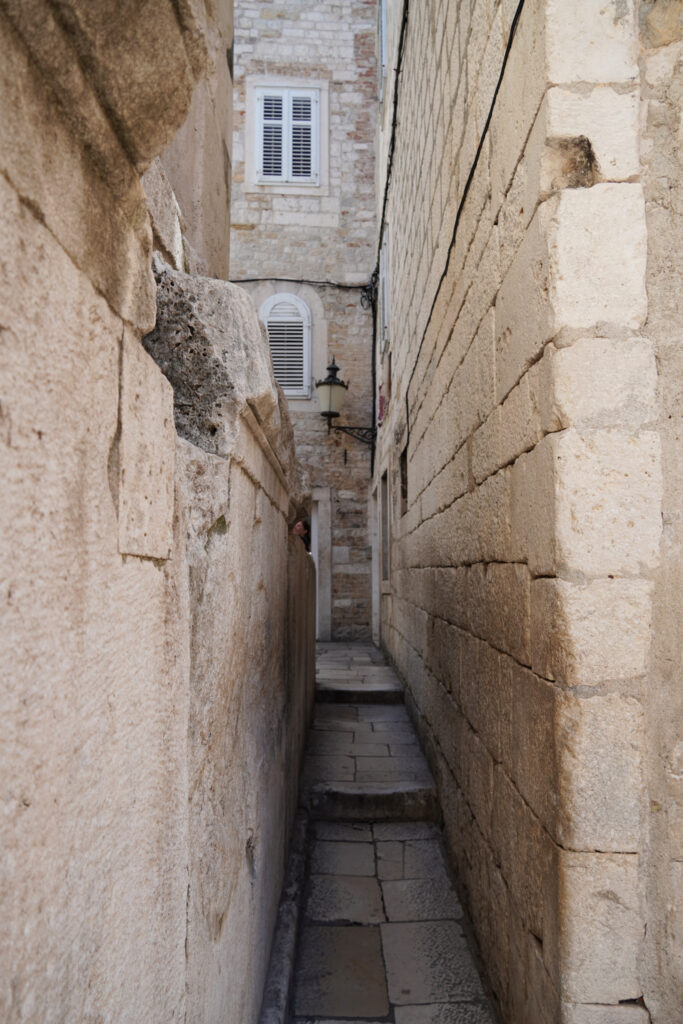
Wander through its labyrinthine alleys, and you’ll find yourself journeying through time: laundry flapping from windows above Corinthian columns, cats basking in the sun on 1,700-year-old steps, and espresso-sipping locals seated where soldiers once stood guard.
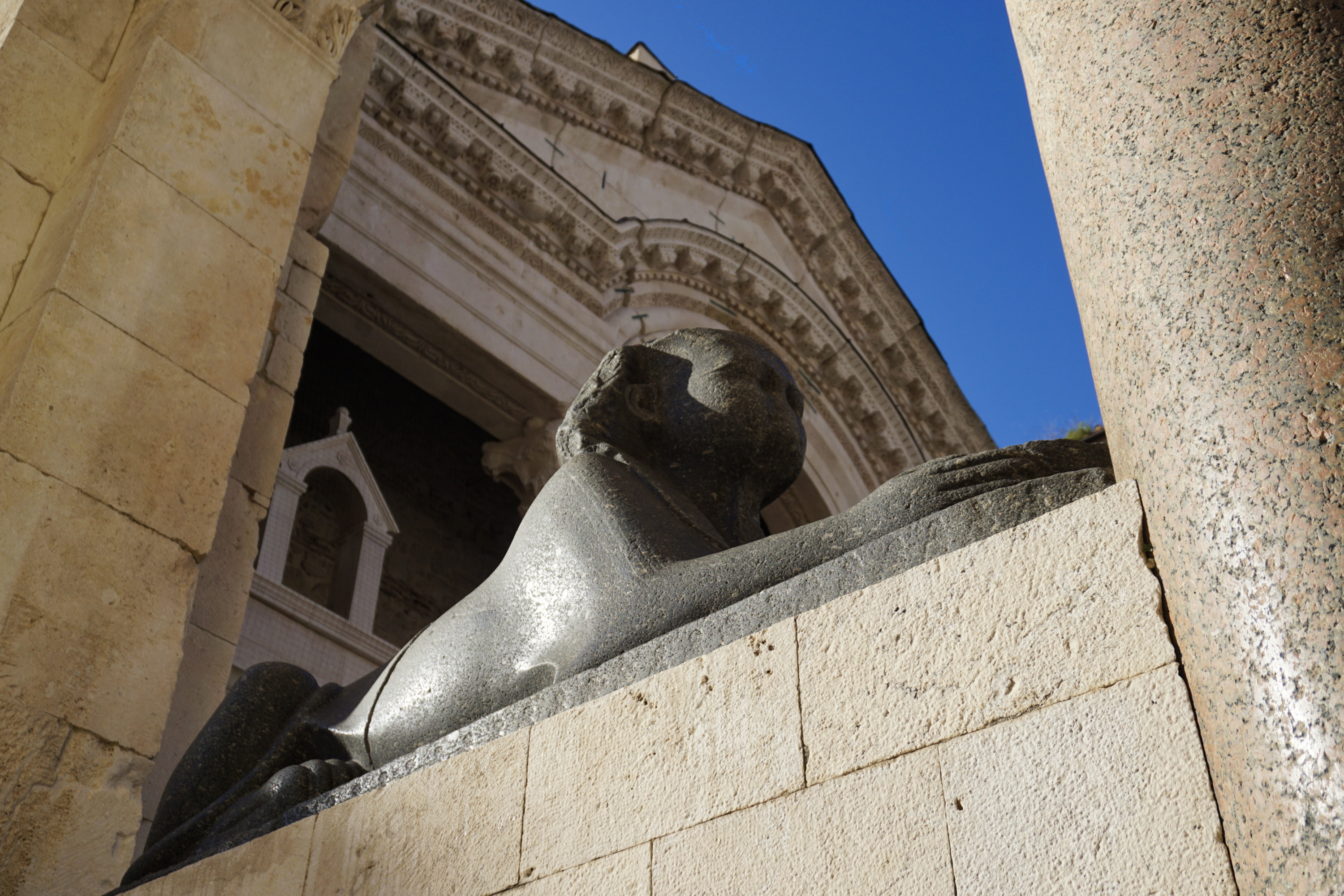
At its heart is the Peristyle, the ceremonial courtyard where Diocletian presented himself as a living god. The red granite columns still stand tall, flanked by the solemn gaze of an Egyptian sphinx –one of at least a dozen Diocletian brought from Luxor to adorn his palace. Most were destroyed or scattered over the centuries, but a few remain: this one stands guard at the Peristyle, while a headless sphinx rests silently outside Jupiter’s Temple.
The palace itself was built with materials gathered from across the empire: marble from Italy, bricks from what is now Hungary, and the creamy white limestone from the nearby island of Brač, still quarried today. Locals like to say that the same Brač stone was later used to build the White House in Washington DC –a story that may lean more on legend than fact, but captures the pride Croatia takes in its resources.
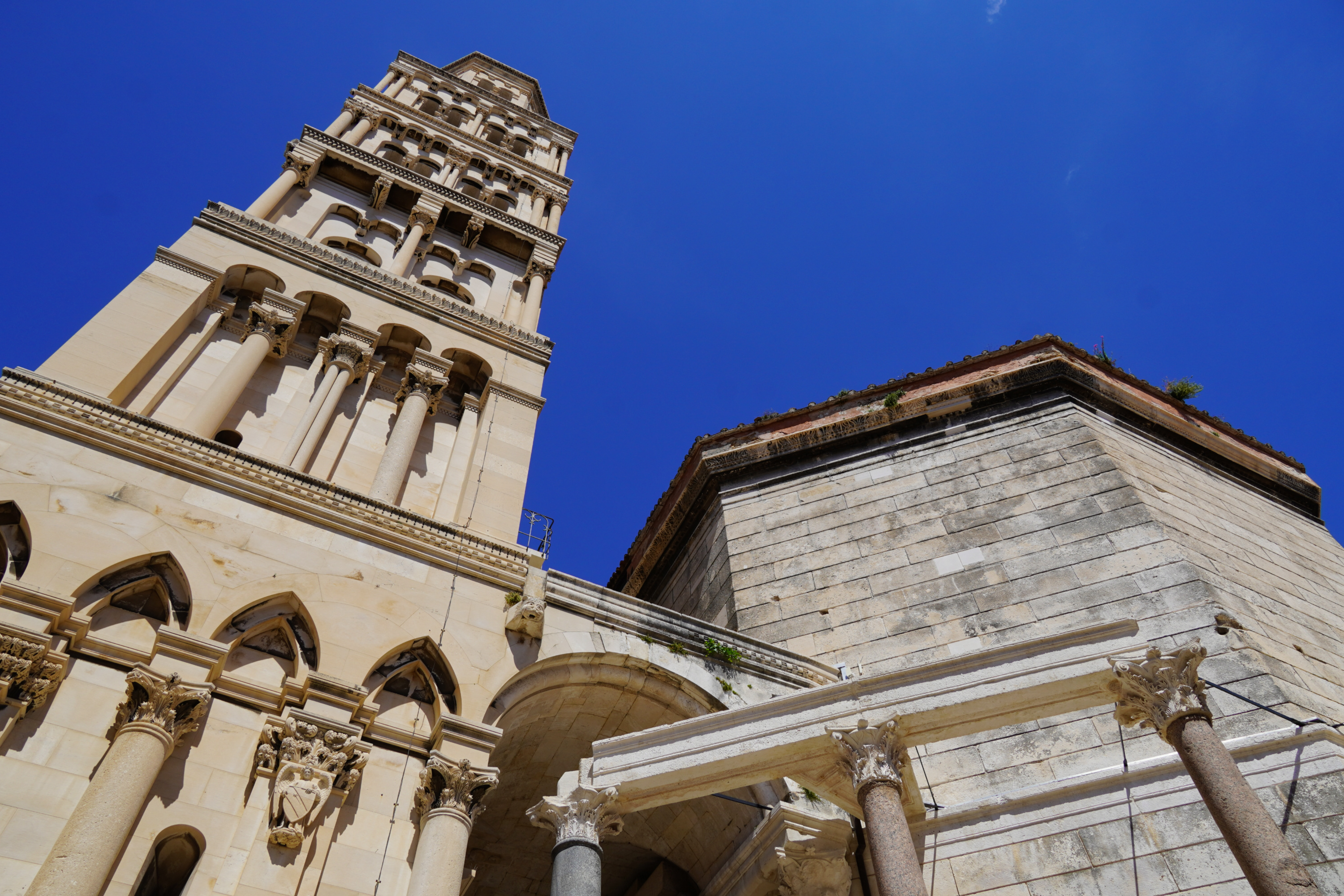
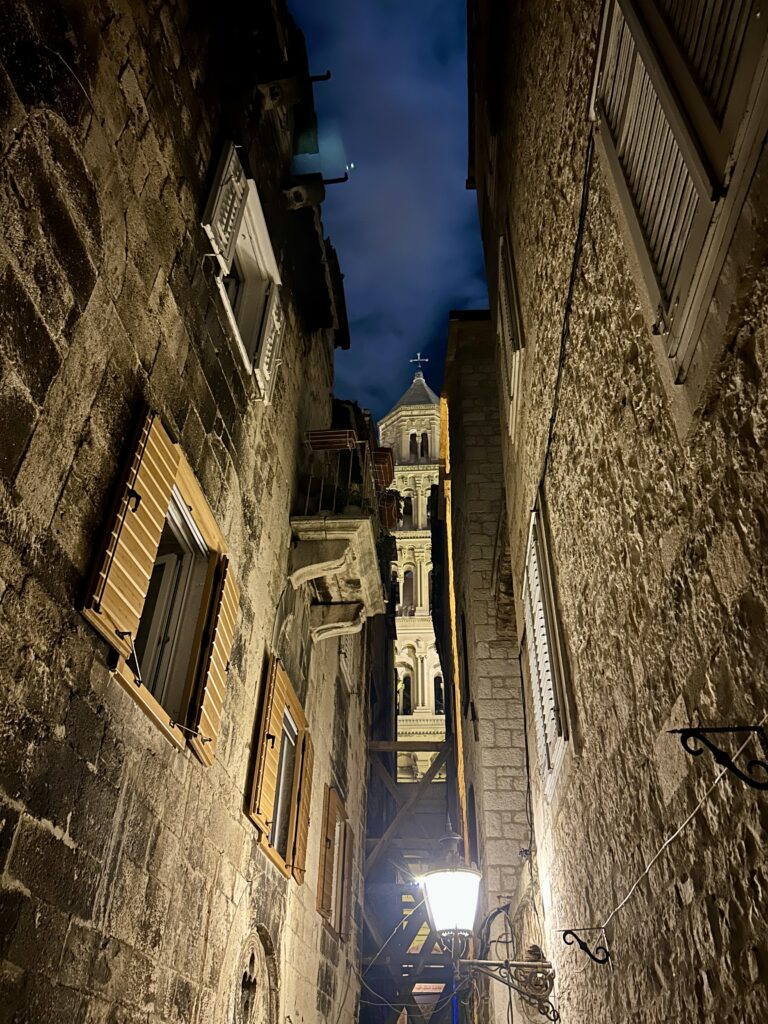
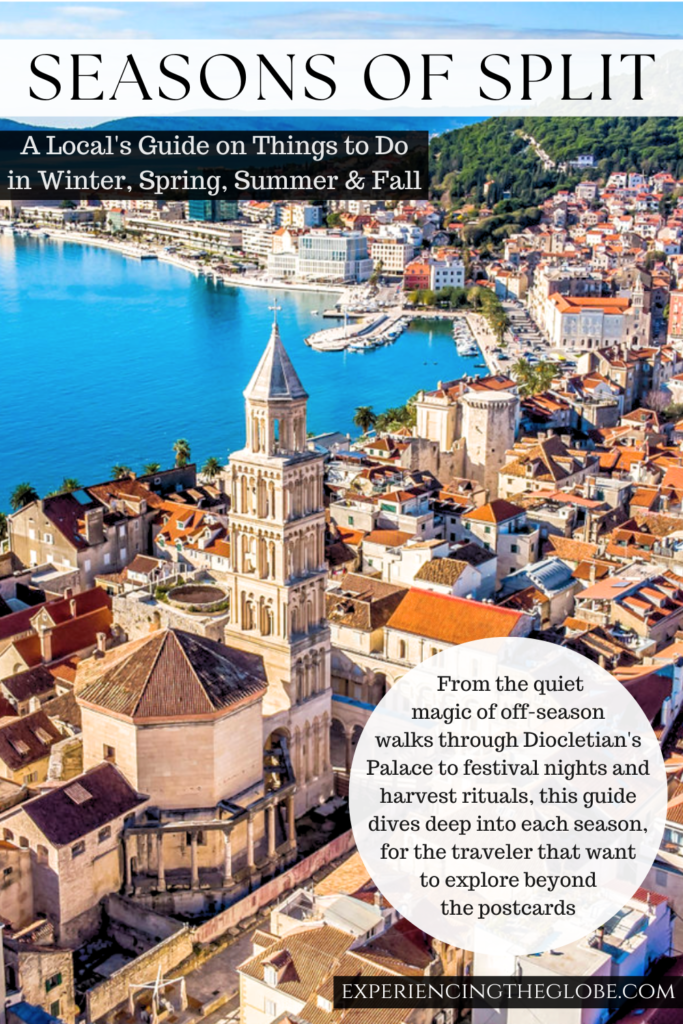
From here, look up to the Cathedral of Saint Domnius, once the emperor’s mausoleum and now the oldest cathedral in the world still used in its original structure. In a twist of fate –or poetic justice– the final resting place of a man who fiercely persecuted early Christians was transformed into a Catholic cathedral, dedicated to one of the very martyrs he tried to silence. Climb the 173 steps of its bell tower for sweeping views of terracotta rooftops and the sea beyond.
A few steps south of the Peristyle will lead you to the Vestibule, the circular, open-roofed chamber that once connected the private apartments to the public square. Step inside and let its perfect acoustics envelop you –it’s the favorite stage for spontaneous klapa (traditional Dalmatian a cappella singing) performances that echo off the marble.
Nearby, tucked in an unassuming corner, lies the Temple of Jupiter. Converted into St. John the Baptist’s Baptistery during the Middle Ages, it still holds a striking Roman barrel-vaulted ceiling and a beautifully preserved 12th-century baptismal font shaped like a Croatian king’s crown.
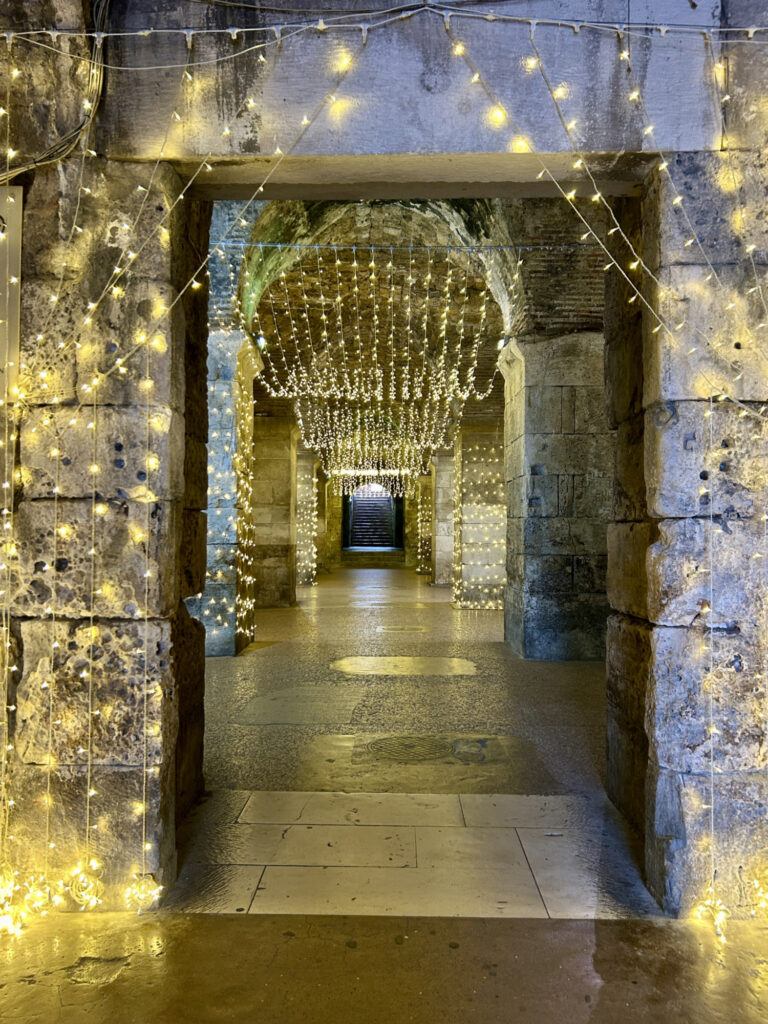
Beneath your feet, the Basement Halls mirror the original floor plan of the palace above. Once used for drainage and storage, they now host seasonal events –from wine tastings to film screenings– and served as the filming location for Daenerys’ throne room and dragon dungeon in Game of Thrones. Their shadowy corridors, once forgotten, are now one of the best-preserved examples of Roman substructures in the world.
Wandering the palace is free but to visit the Cathedral, Crypt, Baptistery, Treasury and to climb the Bell Tower you’ll need to purchase a ticket, individually or in bundles, ranging from €9 to €15 depending on how many you combine. The Basement Halls are ticketed separately at €8, although there’s a passage connecting the Bronze Gate to the Peristyle that is free of charge. Neither of these tickets can be booked online –they are sold on the day at the entrance of each attraction.
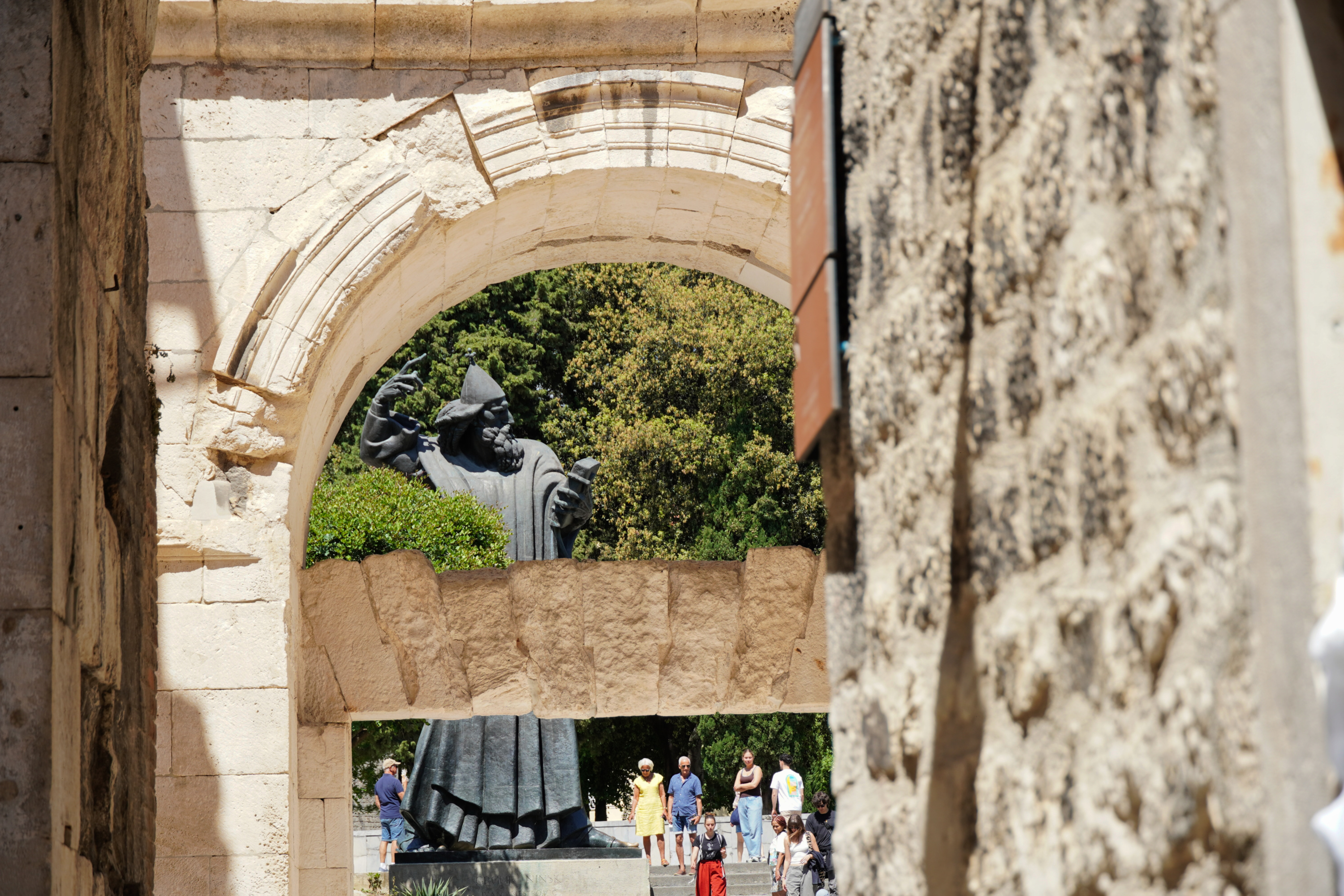
Four gates once controlled access to the palace: the Golden Gate (north), Silver Gate (east), Iron Gate (west) and Bronze Gate (south). Today, they frame the flow of daily life. The Golden Gate, once reserved for imperial processions, is now guarded by the towering statue of Grgur Ninski (Gregory of Nin), a medieval bishop sculpted by Croatia’s greatest artist, Ivan Meštrović. Locals and visitors alike rub his toe for good luck and in hope of coming back to Split.
And yet, the real magic of the palace lies not just in these landmarks, but in everything in between. It’s in the small chapels built into corners, the scent of roasted chestnuts drifting through narrow lanes, the layers of empire and rebellion etched into every stone. No trip to Split is complete without getting a little lost inside these walls.


Beyond the Palace Walls
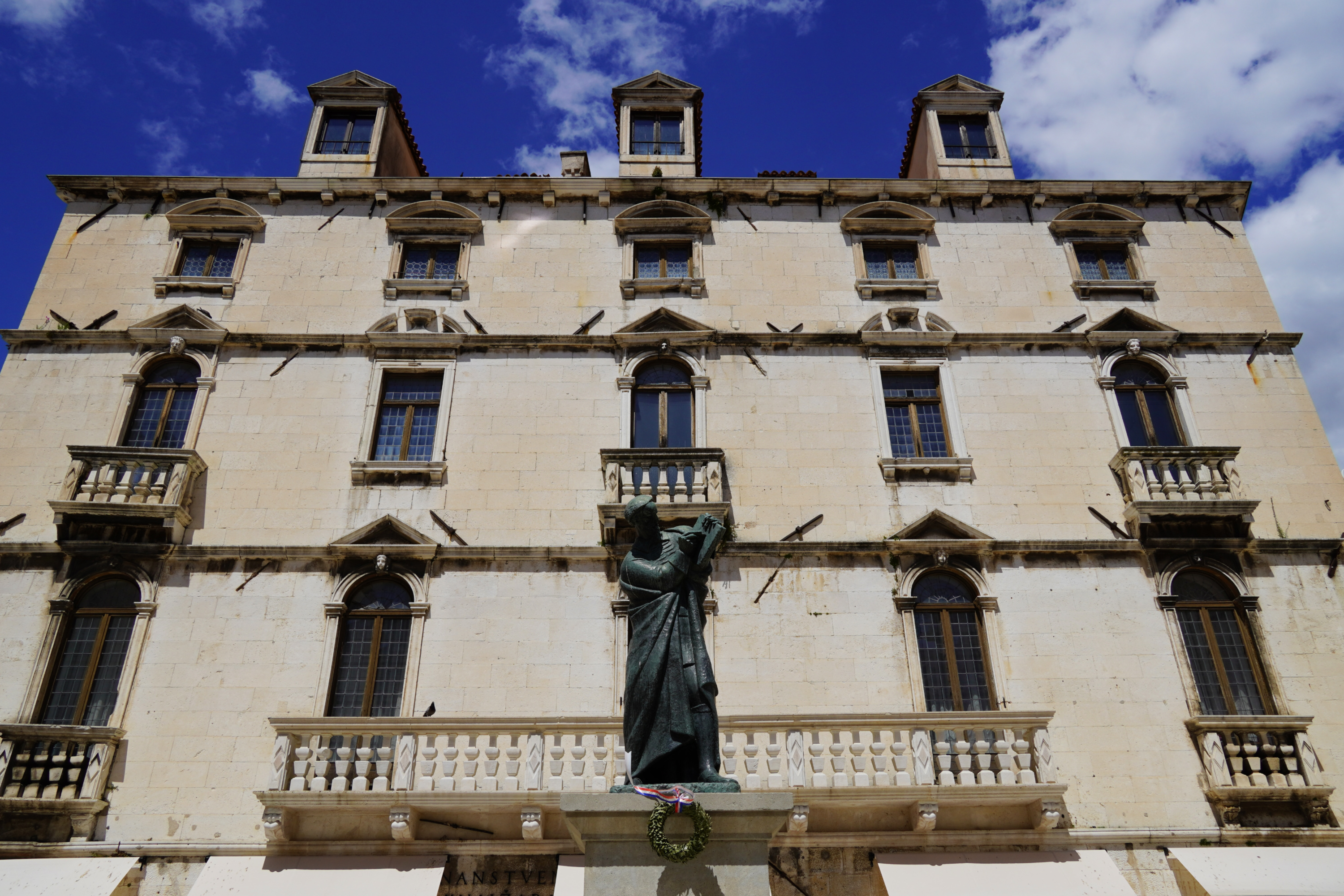
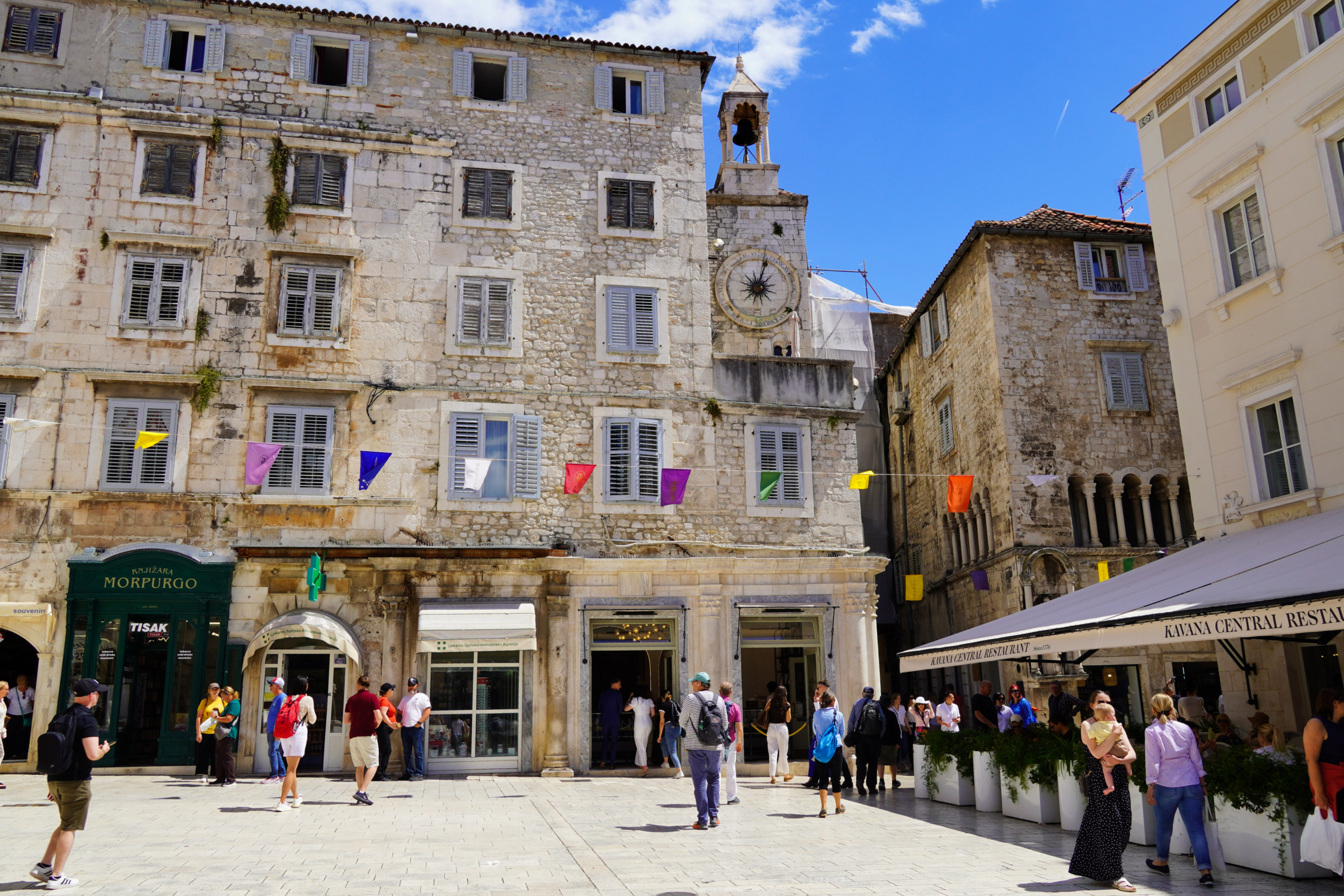
Step outside Diocletian’s ancient walls and you’ll find Split’s graceful expansion into later centuries. Start at Voćni trg (Fruit Square), where Renaissance palaces meet lively bars and the statue of humanist Marko Marulić reminds you of the city’s deep literary roots. Continue to Pjaca (People’s Square), Split’s medieval center, framed by Gothic, Renaissance and Baroque façades and watched over by a rare 24-hour clock that has ticked for centuries.
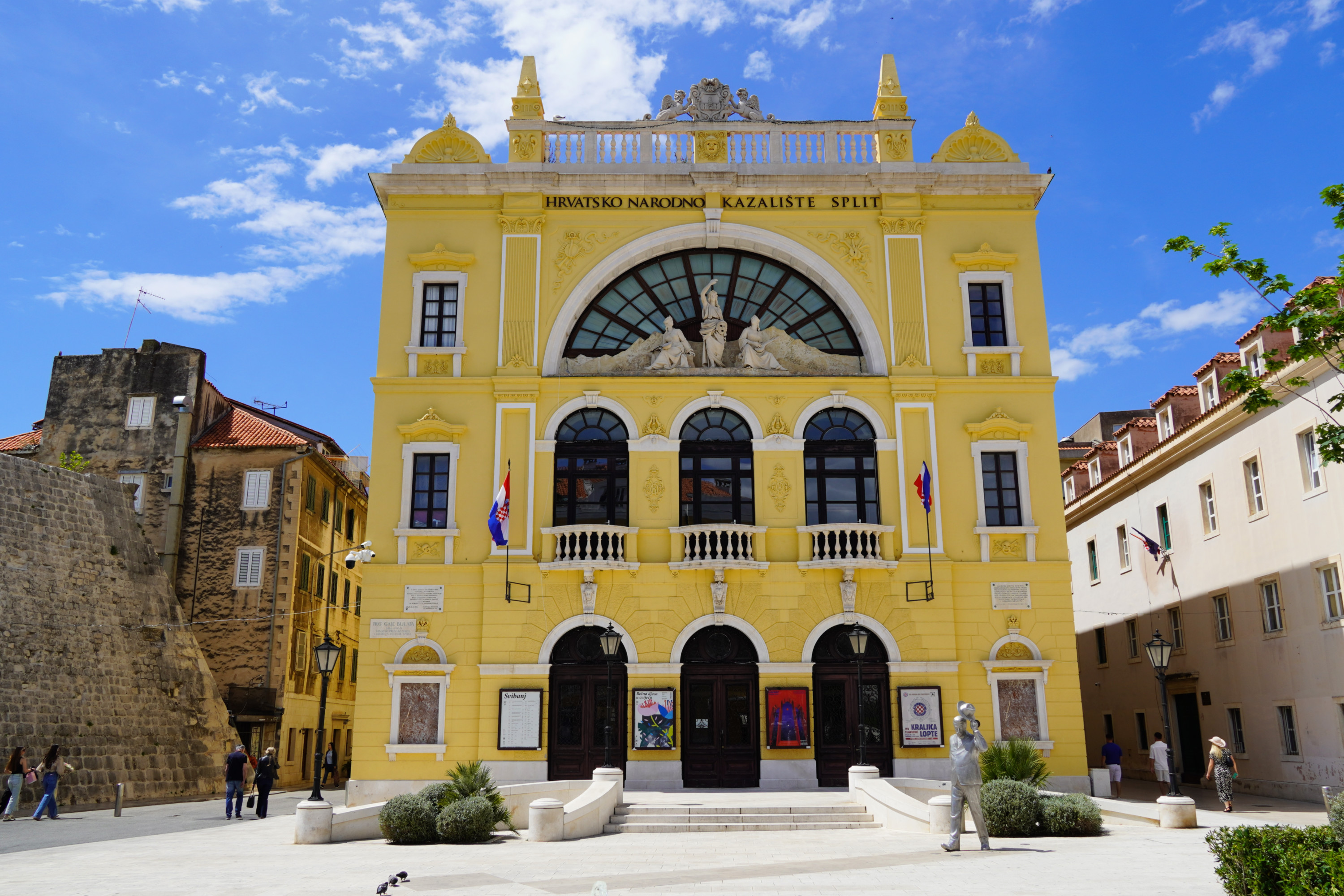
From there, make your way to Prokurative (Republic Square), with its grand Venetian-style arches and sea-facing cafés. Then stroll up Marmontova, the city’s main shopping promenade, lined with boutiques and galleries. Look up to spot the elegant art deco building that once housed the public baths, a remnant of Split’s early modern charm. At the top, you’ll reach the Croatian National Theatre, a cultural landmark that anchors this newer part of town.
Riva
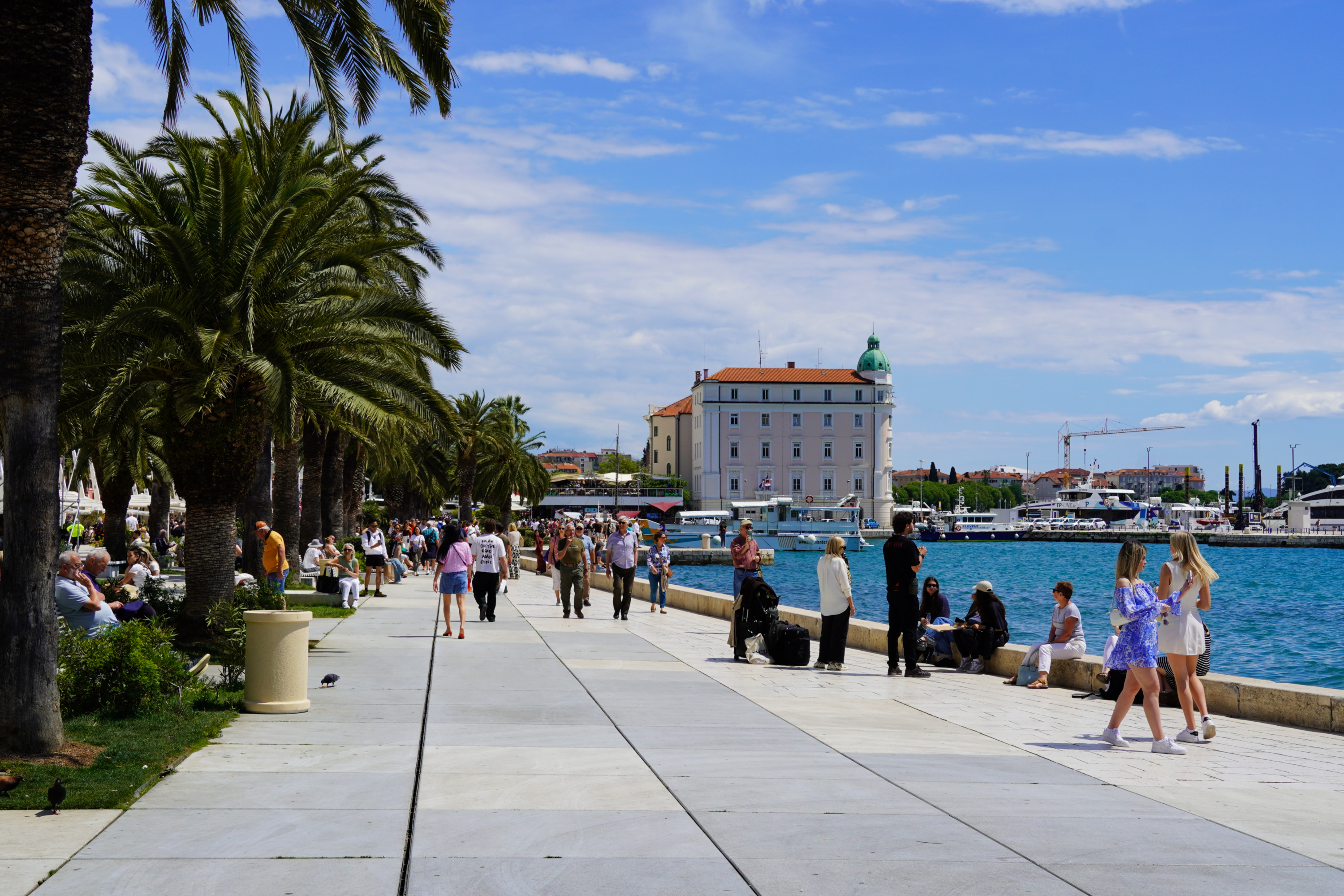
Riva is more than a promenade –it’s the city’s front porch, open to the sun, the sea and the endless rhythm of fjaka, the Dalmatian art of doing nothing. Framed by palm trees and pastel façades, this waterfront walkway is where locals sip slow coffees and strut in their best outfits. It’s a place to see and be seen. It’s both a stage and a mirror –tourists gazing out to the sea, locals watching them watch. Sit here long enough and you’ll see weddings, protests, parades, toddlers learning to ride bikes, and everything in between.
Marjan Forest Park
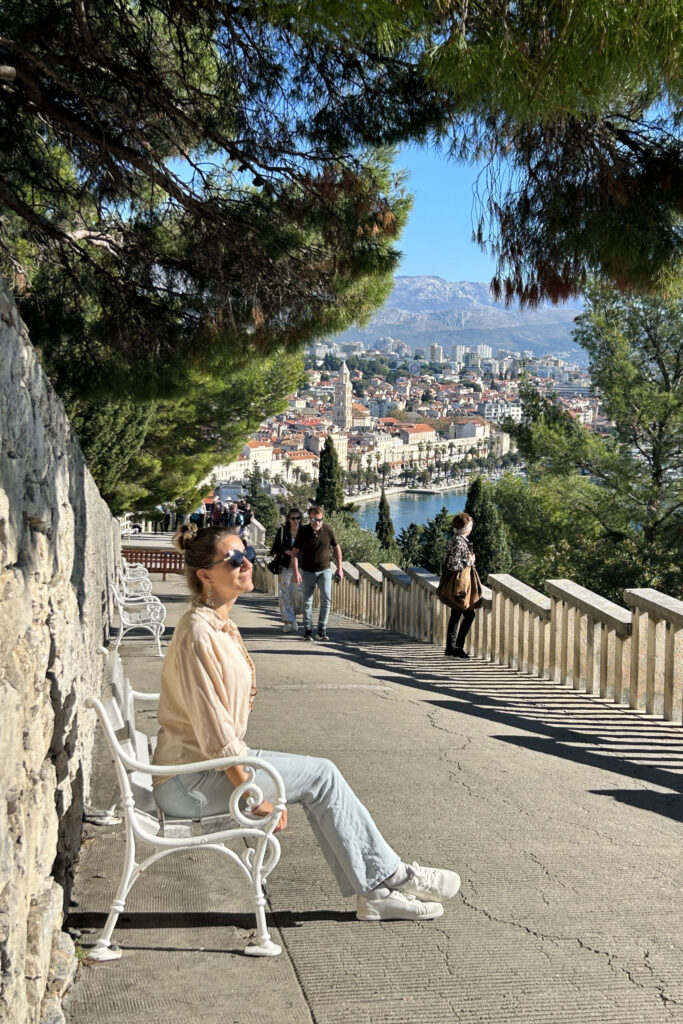
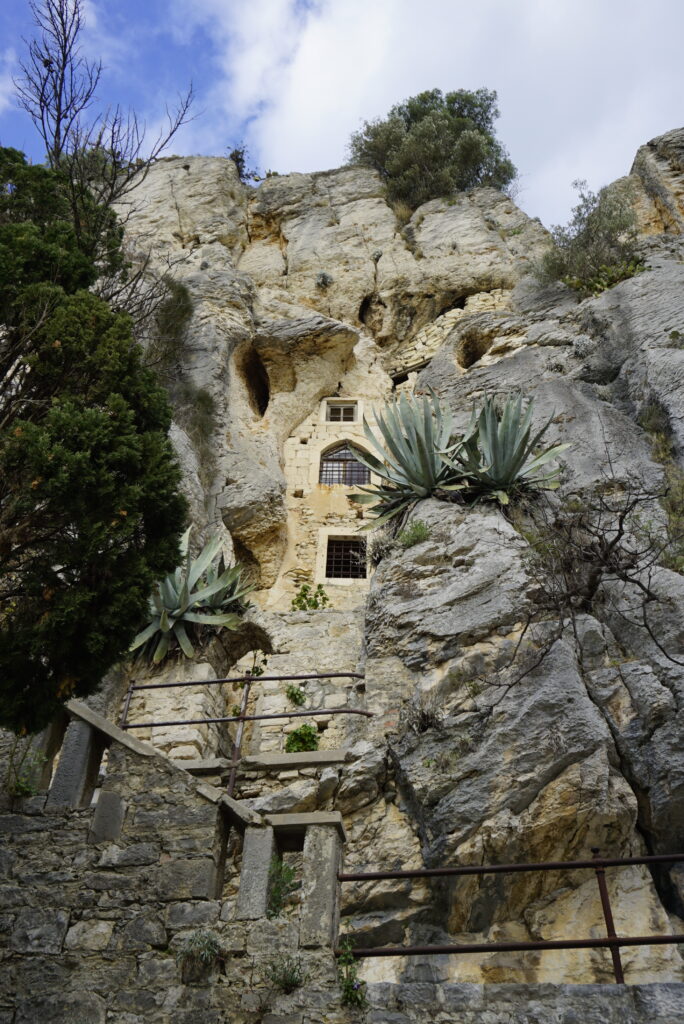
Marjan is the green soul of the city. This pine-covered hill is a sanctuary. A place where joggers, lovers and philosophers find their way. Stone steps wind past medieval chapels tucked into cliffs and panoramic viewpoints that stretch from the islands to the mountains. Look closely and you’ll spot the cave of a 15th-century hermit, and St. Jerome’s Church, carved directly into the rock, as if Split’s spirituality grew straight from the limestone itself.
Some come for the peaceful paths, others for rock climbing, with Marjan offering some of the best sea-facing routes in Dalmatia. Tucked deeper in the woods, a new botanical garden is slowly taking root near the old one, and a viewing tower now rises above the canopy, offering a fresh perspective on the city and sea.
In summer, the rocky coves at Marjan’s base become favorite swimming spots. In winter, the trails quiet down, and the scent of pine sharpens in the cool air.
Bačvice (and the best beaches in Split)
Bačvice isn’t the prettiest beach in Dalmatia –but it became one of the most known. Just a short walk from the palace walls, this shallow, sandy stretch is where generations of locals learned to swim and play picigin, a chaotic handball-like game played in waist-deep water. The rules? Keep the ball from falling. The real rule? Make it look good.
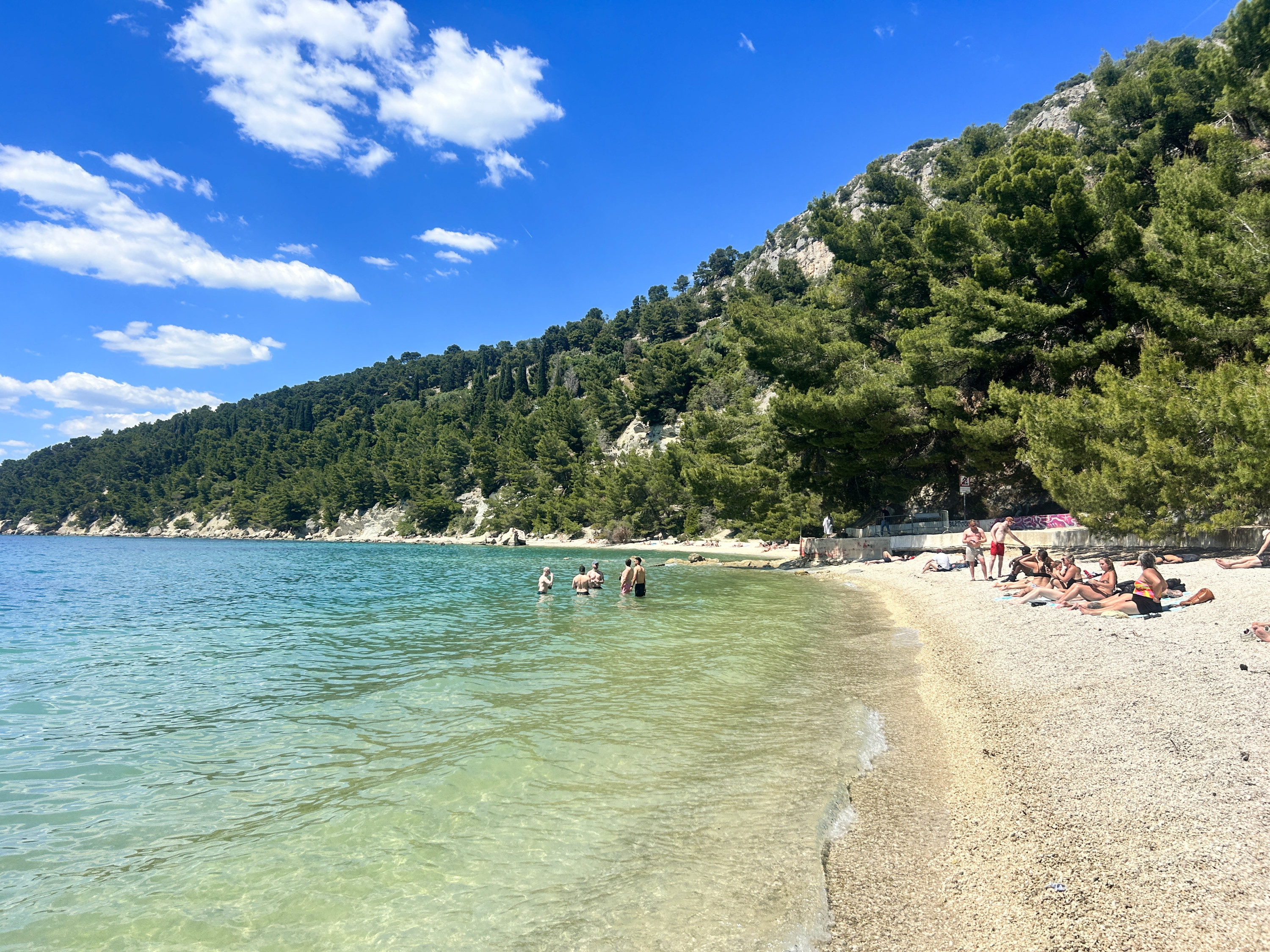
Take a look or a swim, have a drink in one of the cafés lining Bačvice, then move on to any of the much better beaches nearby. A short stroll along the coast will take you to Trstenik and then to Žnjan, which offer cleaner waters and more space to spread out, especially the latter, which is newly renovated.
If you head toward Marjan, you’ll find beautiful coves like Obojena and Kašjuni –my personal favorite beach in the city, even if it gets crowded in summer. For thinner crowds and a more relaxed vibe, continue further around the peninsula toward Institut, where locals go to swim in peace beneath the pine trees.
Pazar & Peškarija
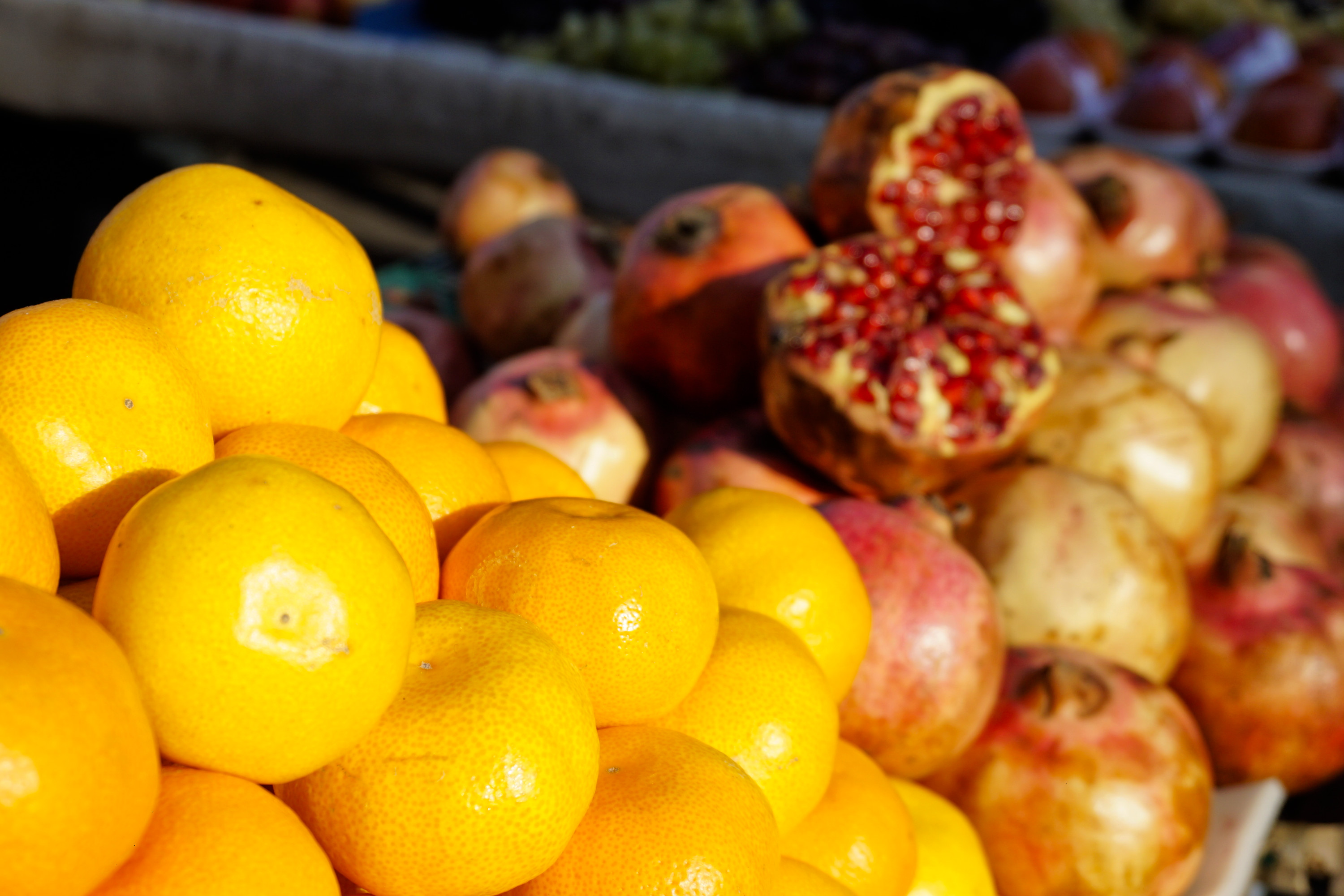
Just outside the Silver Gate lies Pazar, Split’s daily green market. Stalls overflow with tomatoes still warm from the sun, bundles of wild asparagus, and grannies selling herbs from their gardens and eggs from backyard hens. Come early to hear the haggling and the gossip, or just to smell the sweetness of seasonal fruit.
At the other side of the palace you’ll find Peškarija, the city’s fish market. Nothing fancy, just fresh catch laid out on stone slabs polished by decades of trade. The building has no ventilation system, just a clever location: beneath it flows a sulfur spring, whose pungent scent naturally keeps the flies away.
Museums in Split
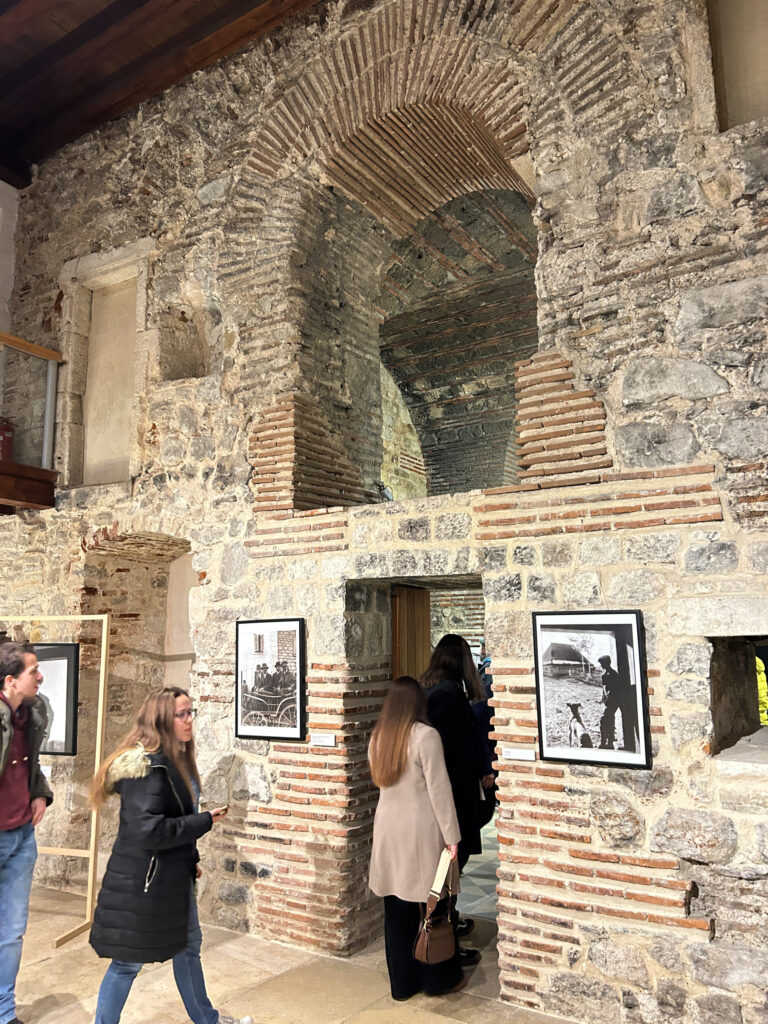
To no one’s surprise for a city so steeped in living history, Split has a healthy number of museums and galleries. If you want to understand its many layers –from Roman emperors to modern rebellions– take time to step inside a museum or two.
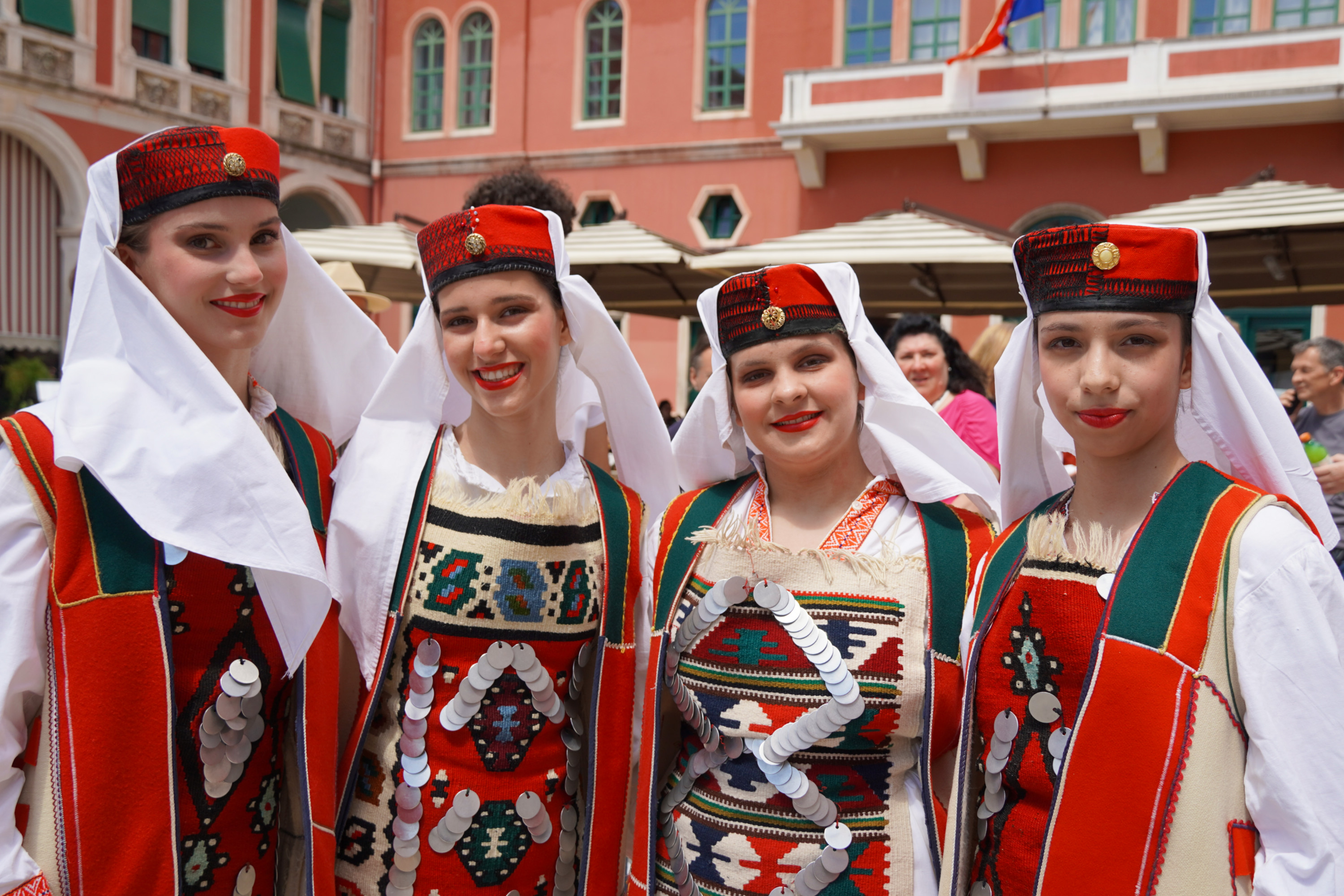
Start with the Split City Museum, tucked inside a Gothic-Renaissance palace just off Peristyle. It offers a quiet, elegant walkthrough of Split’s urban evolution, complete with maps, coins and everyday artifacts. Nearby, the Ethnographic Museum, partly housed within Diocletian’s former apartments, is an underrated gem –its exhibits of traditional clothing, tools and customs come alive in the very rooms once occupied by the emperor himself.
Art lovers shouldn’t miss the Meštrović Gallery, located west of the palace, at the foot of Marjan Hill. Dedicated to Ivan Meštrović, Croatia’s most celebrated sculptor, it’s both a museum and a work of art in itself, set in a villa he designed overlooking the sea. For a more contemporary lens, the Museum of Fine Arts near the National Theatre showcases Dalmatian and Croatian artists from the 14th century to today, in a peaceful, sunlit space perfect for escaping the midday heat.
Just a short walk north of the old town lies the Archaeological Museum, the oldest in Croatia, with an extraordinary collection of Roman, early Christian and medieval artifacts –many from nearby Salona. It’s easy to miss but well worth seeking out, especially if you want to see how Split fits into the wider tapestry of Dalmatian history.
And for something completely unconventional, visit Froggyland –yes, really– a bizarre collection of taxidermy frogs posed in scenes of early 20th-century life. Honestly, I’ve never been, but if you want something quirky, this is it.
For more advice about visiting Croatia, I’ve written a guide with the best Croatian travel tips from a local.

Best time to visit Split (and what to do in every season)
SPLIT IN WINTER
—When quiet takes over: indoor warmth, comfort food and a glass of rakija (or three)
Winter in Split isn’t what most people imagine when they think of the Dalmatian Coast. But it’s a breath of fresh air for locals and for travelers who seek a slower rhythm. The sea grows moody and silver, the stone alleys glow with the rain, and there are days when you can walk through Diocletian’s Palace without seeing another soul. The pigeons and gulls rule the squares, and cafés hum with the low murmur of locals rather than selfie sticks and tour groups.
This is when Split returns to itself. Life moves indoors: to smoky konobas (traditional Dalmatian restaurants) serving pašticada and red wine, to market stalls stacked with winter greens, and to long, unhurried coffee chats on the sunniest side of Riva –wrapped in jackets, facing the sea, soaking up every drop of light.
What to Do in Winter in Split
Wander the palace alone: This is the time to really see it –its uneven stones, carved lintels, lived-in windows.
Visit the markets: The green market (Pazar) still buzzes in the morning, but now it’s mostly locals shopping for leeks, cabbage, oranges, mandarins from the Neretva valley, and bundles of herbs for homemade rakija. Over at the fish market (Peškarija), steam rises in the cold air as fishmongers banter and gut squid.
Enjoy food like a local: This is hearty season. Look for daily specials like fažol (bean stew), bakalar (salted cod, especially around Christmas), and sarma (meat rolled in cabbage leaves). Small, family-run konobas often have better winter menus than summer ones.
Explore Marjan in crisp air: Winter walks are underrated. On clear days, the views from Marjan stretch forever. You’ll pass almost no one –and if you do, it’s likely retirees stretching their legs, a runner training for the marathon, or someone walking their dog.
Embrace fjaka, indoors: Read in a café, people-watch, or strike up a conversation with someone at a bar. Split’s social culture doesn’t stop for the cold –it just moves inside.
Events & Traditions in Split in Winter: Rites and Local Life in the Off-Season
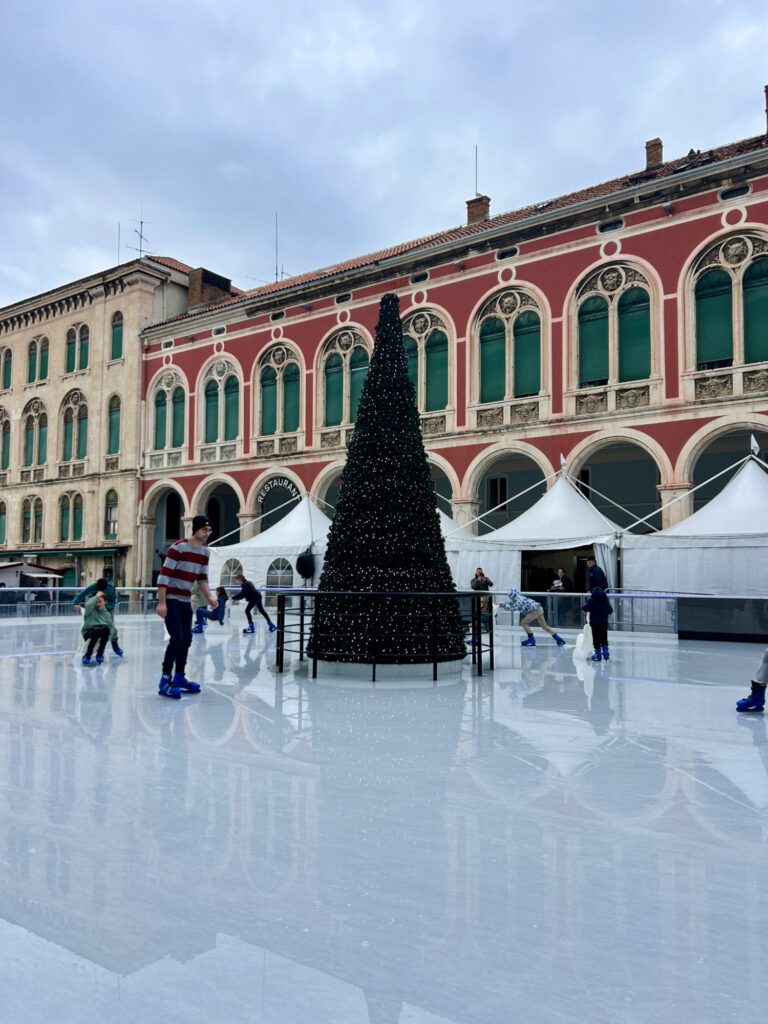
Advent: Split’s take on Christmas markets has grown in recent years, with festive stalls, concerts and mulled wine stands lighting up the waterfront and palace.
New Year’s Eve: The city hosts a free open-air concert on Riva. There are fireworks at midnight and plenty of rakija to go around.
Three Kings Day: January 6th officially marks the end of the holiday season. Decorations come down and Split settles into its quietest stretch –January and February are the slowest months.
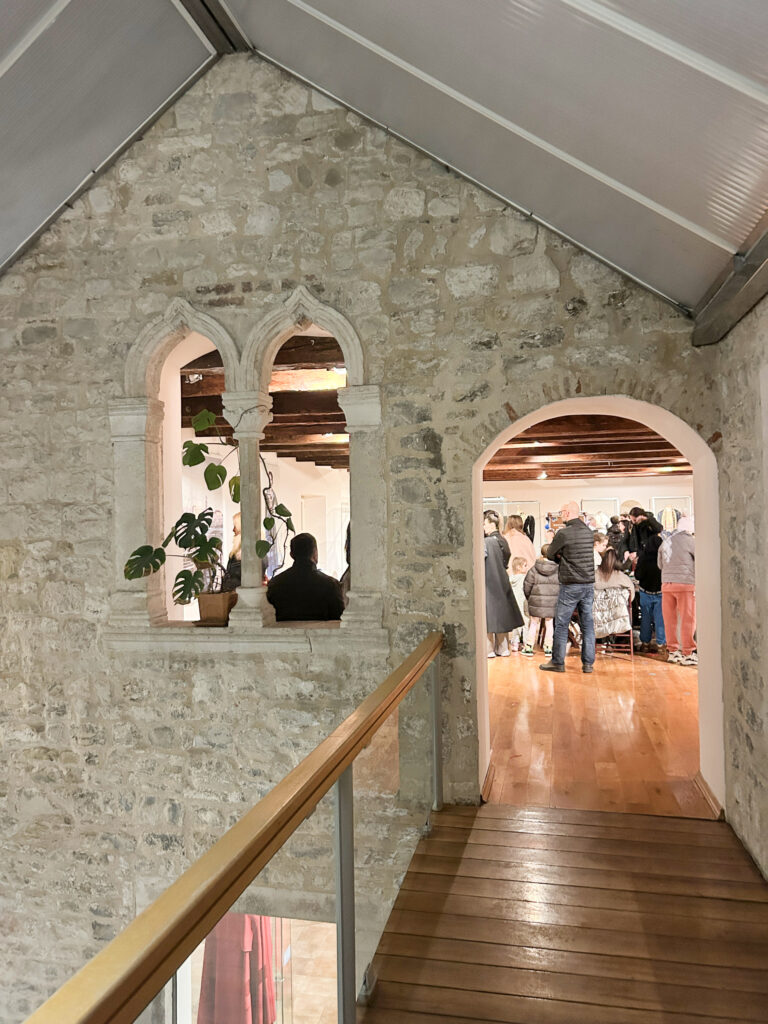
Noć Muzeja (Museum Night): On the last Friday in January, Split’s museums open their doors for free –from evening until midnight. Expect special exhibitions, performances and long lines of locals rediscovering their own history. It’s a surprisingly lively winter night, and a great way to see spaces like the City Museum or Galerija Meštrović through a different lens.
Festa svetog Vlaha (Saint Blaise’s Feast): While more prominent in Dubrovnik, the feast of February 3rd is still celebrated here, especially among older generations. You might spot candles in windows or traditional processions near local churches.
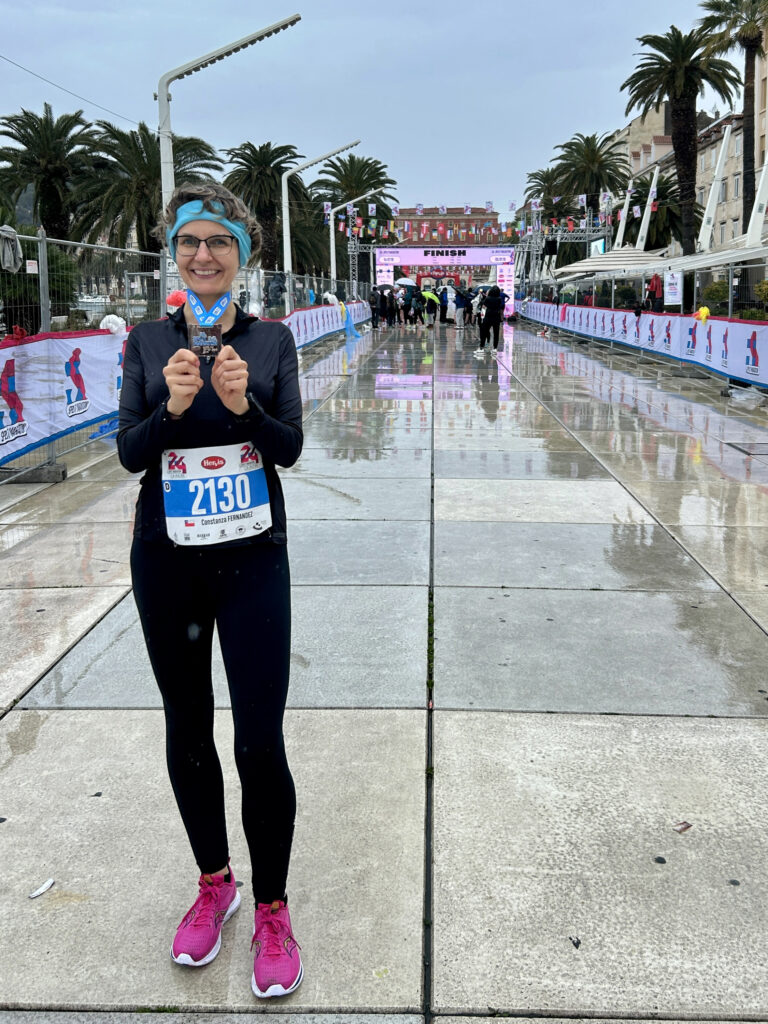
Split Marathon: When winter feels the longest, the city gets a surge of energy as thousands of runners take to the streets mid-February for the Split Marathon (with half, 10K, 5K and a kid’s race also available). The route winds through the palace, along Riva, around Marjan Hill, and out to scenic stretches of the coastline and towards the suburbs. Whether you join the race or cheer from the sidelines, it’s one of the few moments in winter when the city feels electric. Locals bundle up, grab coffee-to-go, and line the streets to support the runners with applause and music.
Splitski Krnjeval (Split Carnival): Just before Lent (February/March) a quirky and colorful celebration with masked parades, costumes and the ceremonial burning of “Krnje” (a symbolic scapegoat blamed for all the year’s misfortunes) takes over town. Locals dress up, satire is everywhere and it’s a surprisingly spirited event for the low season.
Tjedan Restorana (Restaurant Week): Occurs twice a year, usually in March and October. A delight for food lovers, this week-long event invites many of Split’s top restaurants to offer affordable fixed menus. It’s the perfect excuse to eat three courses for a fraction of the usual price and try somewhere new.
Fjaka & A Taste of Local Life
The Mediterranean sun still peeks through in wintertime, but locals lean into fjaka –that blissful Dalmatian blend of calm and contentment; a state of doing nothing, with purpose. You’ll hear “pomalo” everywhere –take it easy, slowly, no stress. It’s a season for comfort food and rich flavors. Alongside hearty stews like pašticada with gnocchi (slow-cooked beef in wine sauce), you’ll find winter favorites like soparnik (flaky pastry stuffed with Swiss chard and garlic), orahnjača (walnut roll), fritule (sugar-dusted fried dough balls), kroštule (crispy, sweet pastry), rafioli (almond-filled cookies), and the beloved Splitska torta (almond and dried fig cake). Wash it all down with a glass of local rakija or kuhano vino (mulled wine) –and enjoy the pleasure of doing absolutely nothing, like a local.
Why Winter is Special in Split
It’s Split at its most quiet: No queues, no overly inflated prices, no need to dodge group tours.
It’s affordable and spacious: Accommodations are cheaper, the restaurants that stay open have a (cheaper) winter menu, and the city feels airy.
It’s a time to connect: Locals are less stressed, more open, and actually curious why you’re here. It’s easier to make friends –or simply observe a city living at its own pace.
If you’re considering a winter trip, I’ve written a more detailed guide on visiting Croatia in winter.

SPLIT IN SPRING
—When everything comes back to life: the sea is still cold, but the air smells like rosemary, and life spills back into the streets
Spring in Split doesn’t arrive all at once, it slowly sneaks in. A longer slant of light. A fig tree leafing out near a crumbling wall. The first ferry full of day-trippers. Cafés begin setting up more tables outside, and the hum of conversations grows a little louder. It’s still too cold for most to swim, but someone always does –usually a tough local in a Speedo, emerging from the sea like nothing happened.
This is the in-between time: the season when Split feels balanced. Local life is still center stage, but the city is stretching, warming up. And it’s one of the most rewarding times to be here.
What to Do in Spring in Split
Walking and rock climbing in Marjan before the heat hits: The forest park explodes with color –wildflowers underfoot, birdsong above, and the scent of pine and wild herbs. Take the stairs from Varoš up to Vidilica for a coffee with a view, or walk the full loop for changing panoramas of sea, city and mountains.
Explore neighborhoods on foot: Varoš is a joy to wander in spring, when potted plants spill over stone balconies and cats nap in the sunshine. If you’re interested in Brutalism, you’re in for a treat. Look closely and you’ll see striking examples of Yugoslav-era architecture: the concrete sprawl of the residential complex Split 3, the bold lines of Koteks Gripe, or lesser-known buildings like Krstarica (battle cruiser), a brutalist residential block rising sharply against the hills, or Kineski zid (Chinese wall), a long concrete housing complex resembling a fortress wall –a testament to socialist-era planning and a favorite for urban explorers. These are as much part of the city’s DNA as the Roman stones.
Swim (if you dare): Go for a refreshing dip –locals say it’s good for your circulation–, or just lie on the warm rocks and watch the braver ones go in.
Go island-hopping, without the crowds: Ferries start filling up again, but Šolta, Brač, and even Hvar are still quiet this time of year.
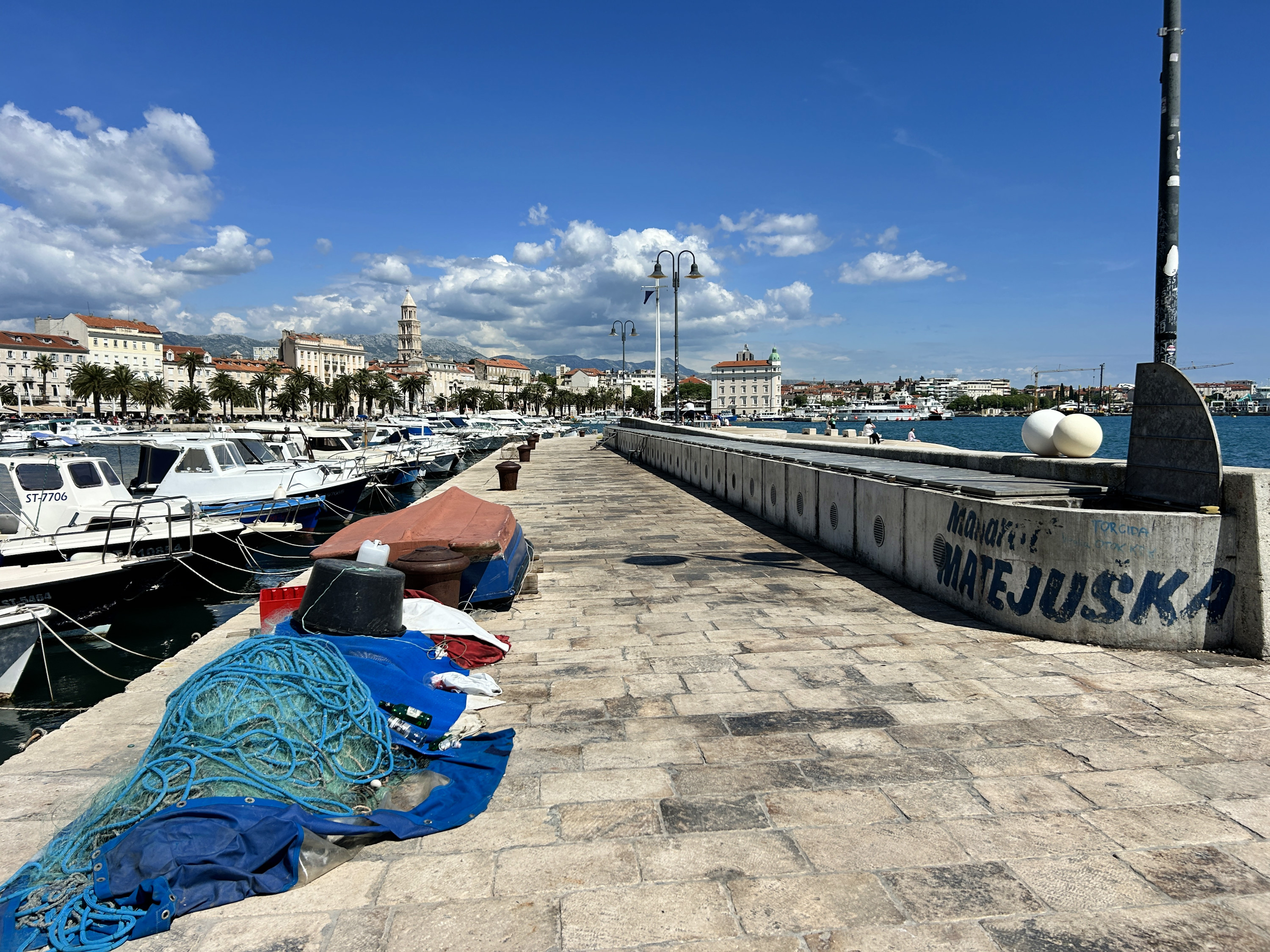
Drink with the locals: As days grow longer, evenings in Split spill outdoors. Grab a cold Karlovačko or Ožujsko from a nearby kiosk (the Little Beer Shop claims to have a thousand labels available) and head to Matejuška, the old fishing port where locals gather at sunset. There are no fancy bars here, just friends sitting on the pier, sharing stories and a drink or two as the light fades. It’s the city’s most unpretentious happy hour.
Eat fresh and seasonal: Markets brim with wild asparagus, broad beans and the first strawberries. Look for spring dishes like fritaja (egg scramble with seasonal greens), or grilled sardines eaten right by the sea.
A Seven-Course Sunset on Ancient Walls — A Slow Evening at ZOI
Perched directly on the ancient walls of Diocletian’s Palace, with the Adriatic stretching beyond the Riva below, the setting alone is unforgettable –especially as the light softens and the city gently transitions into the evening.
Seasonal Mediterranean ingredients are interpreted with creativity and precision. Some flavor combinations feel entirely new, others like pure Dalmatia –all beautifully presented. The wine pairing deserves special mention: thoughtful, generous and full of lesser-known Croatian labels alongside Italian classics. But what elevates the experience is the pacing. Nothing feels rushed. Each course arrives with care and detailed explanations, allowing the experience to unfold naturally.
ZOI is undeniably a splurge by Split standards, especially if you opt for a tasting menu with wine pairing. But for a special evening –one where the setting, service, atmosphere and food come together so seamlessly– it feels entirely justified. As the spring evenings grow longer, ZOI makes a compelling case for slowing down and simply lingering.
[Vegetarian options available, reservations and more info here]
Events & Traditions in Split in Spring: Flowers, Theater and Fireworks
Pričigin: Spring starts in late March with storytelling on a festival that gathers writers, journalists and performers sharing tales on themes ranging from nostalgic tributes to Hajduk Split to anecdotes about travel mishaps, the experiences of immigrants living in Dalmatia, or the region’s specific dialects and cultural eccentricities.
Praznik cvijeća (Festival of Flowers): Held in Diocletian’s Palace in March, this brief exhibition transforms ancient corners with floral installations.
Easter rituals: Dalmatian Easter traditions start with the elaborate Palm Sunday weavings made from olive branches. On Easter morning, families gather early for mass and later for a long, lamb-filled lunch.
Marulićevi dani (Days of Marko Marulić): In late April the National Theater opens its doors to a festival honoring the city’s most renowned Renaissance playwright which brings companies to showcase the best contemporary domestic drama and auteur theater from across the country.
Vinski Podrum (Wine Festival on the Basement): In late-April or early-May, local wineries take over the basement halls of Diocletian’s Palace for a spring wine festival. With stone-vaulted ceilings above and glasses in hand, visitors sample Plavac Mali, Pošip and other Croatian wines directly from the producers. It’s intimate, atmospheric and wonderfully unpretentious.
Prvi Maj (First of May): A workers’ holiday and unofficial barbecue day. Locals flock to the countryside for grilling, beer and accordion music.
Sudamja (Feast of Saint Domnius): May 7th is Split’s most beloved holiday, honoring the city’s patron saint with a mix of the sacred and the spirited. The day begins with a formal mass in the Peristyle and a procession through the old town, but it quickly becomes a full-blown local party –complete with klapa music, rowing regattas, grilled sardines on Riva and fireworks over the sea. It’s more than a religious celebration –it’s Split celebrating itself.
Fešta o’ Boba (Broad Bean Festival): In Kaštela, just a short ride from Split, spring means the celebration of bob –the humble broad bean. This quirky local festival held mid-May combines live music, cooking competitions, and big communal tables where people feast on broad bean stews and local beer and wine. It’s small-town Dalmatia at its best.
Art and outdoor culture: With the good weather, street performers return, galleries reopen with new shows, and impromptu theater or music events start popping up in courtyards and squares.
Coffee Culture
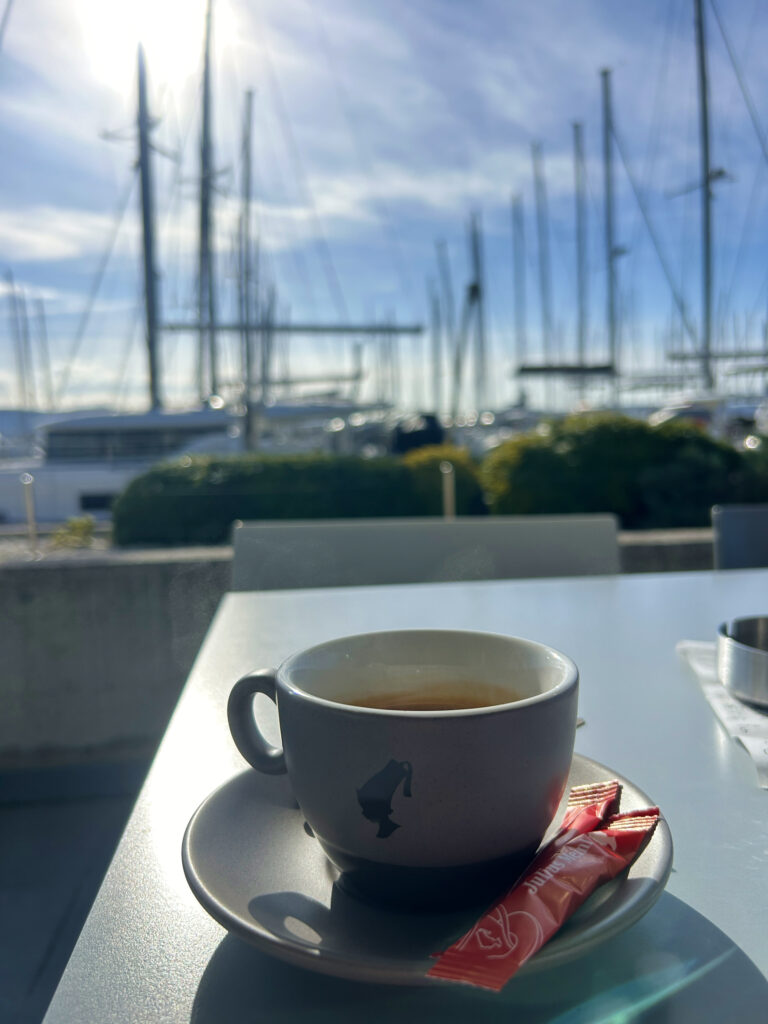
In Split, coffee is way more than a drink, it’s a ritual. And in spring, when the air softens and café terraces overflow, it becomes the city’s main stage. You’ll see people sitting for hours over a single espresso, talking, people-watching, or saying nothing at all. It’s not about the caffeine –it’s about catching up with friends, old or new. Whether you’re perched on Riva, tucked in a quiet square in Varoš, or making friends with grannies in Pazar, the unspoken rule is clear: you’re not in a hurry. Split runs on conversation, not clocks: coffee is the city’s slowest tradition. If a local tells you “ajmo na kavu” [let’s go for coffee], leave your watch at home, and enjoy being Dalmatian for a few hours.
Why Spring is Special in Split
It’s the season of balance: The city is fully awake but not yet overwhelmed. The days are long enough, the air is fresh and the Adriatic light is unbeatable.
The city still feels local: visitors haven’t outnumbered locals yet, and the rhythm of daily life hasn’t been overtaken by crowds.
It’s a time for movement: Hike, bike, rock climb, go rafting, ferry-hop, have a picnic, or simply walk through Riva without sweating. Everything’s open –but not yet overwhelming by crowds or heat.

SPLIT IN SUMMER
—When the crowds flood the city: hot, hectic and magnetic. But also overwhelming –unless you know where to go
Summer in Split is not subtle.
The stone streets radiate heat, the sea sparkles with the energy of hundreds of beach towels, and every alley seems to hum with life –or noise, depending on your mood. It’s the season when the city becomes a global stage, full of cruise passengers, backpackers, sun-chasers and festivalgoers. But behind the frenzy, Split still holds moments of stillness –if you know when and where to look.
For locals, summer is a paradox. It brings a welcome economic boost but also tests patience. Many escape to family homes on islands or villages in the hinterlands, returning only when the city breathes again. Those who stay become expert navigators –dodging crowds, swimming at sunset, slipping through backstreets.
How to Enjoy Split in Summer
Start early, rest often: Mornings are your friend. The palace is quietest before 8 AM, the sea calmest at dawn. Enjoy your coffee like a local –sitting, slowly. Come midday, head to a museum, or find shade in Đardin, Sustipan or Marjan Hill and embrace fjaka.
Swim smart: Bačvice is the most known beach, but it’s always packed. Try Kašjuni early in the morning, Ježinac or Obojena after 5 PM, or Firule and Žnjan for a quieter dip. If you’re adventurous, the rocks below the Institute of Oceanography (locals call it Institut) offer peaceful swimming right under the pine trees.
Check reviews before you eat: The palace is full of restaurants, many overpriced or forgettable. But there are some that showcase true quality ingredients and recipes that are worth seeking out.
Escape to Marjan: The best antidote to the summer crush is a walk or bike ride around Marjan Hill. The pine forest muffles the city noise, and the views from Telegrin are beautiful, especially near sunset.
Omiš & outdoor adventures: For the adrenaline-seekers, summer means heading to Omiš, just 25 km (15 mi) from Split. Here, the Cetina River carves a canyon perfect for rafting, canyoning or ziplining. After a day of thrills, cool off in the river or relax in the historic old town with views of the Adriatic.
From Garden to Table — Dalmatian Heritage at Makarun
Finding Makarun feels a bit like discovering a secret. Hidden in a quiet courtyard tucked behind palace alleyways, it somehow manages to feel removed from the crowds at the heart of Split’s old town. When the narrow streets outside are buzzing with visitors, the atmosphere is a welcome contrast: calm and intimate.
The food is excellent, beautifully presented and full of confidence, but what stayed with me most was the sense of heritage behind it. It’s a family-run restaurant, and that story permeates every detail: vegetables come from their own garden, pasta is rolled by their granny, many of the wines originate in the island of Korčula, where the family has its roots.
Local ingredients, traditions and recipes are showcased through a contemporary lens and quiet pride, with the service striking a balance between friendliness and knowledgeable professionalism. In a city that often feels overwhelmed by summer crowds, Makarun is a reminder that there are still places where you can pause, tune out the noise, and enjoy Split at its own pace.
[Vegan options available, reservations and more info here]
Events & Traditions in Split in Summer: Festivals, Cinema and Music
Mediterranean Film Festival (FMFS): In June, Bačvice’s open-air cinema transforms into a dreamy cultural escape, showcasing indie and arthouse films from across the Mediterranean. Watching a movie under the stars is one of summer’s most quietly perfect experiences. Bring a cushion and maybe a bottle of local wine.
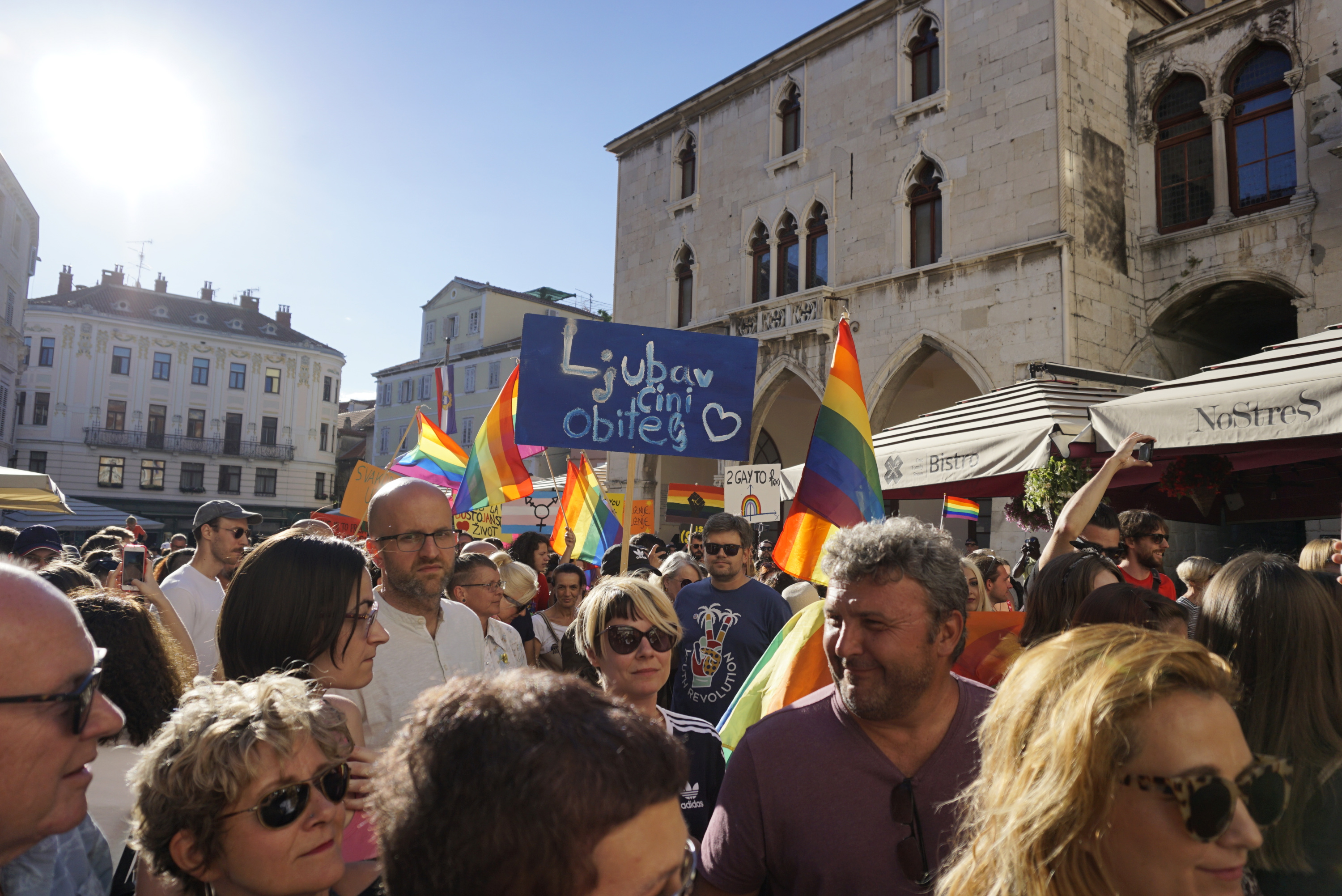
Split Pride: Mid-June greets one of the most genuinely warm events on the summer calendar. Croatia has made significant legal strides toward LGBTQ+ equality, but social acceptance is still uneven –homophobia hasn’t disappeared, particularly in more conservative and rural areas. Which makes Split Pride all the more meaningful: a joyful celebration that has earned its place in the city’s public life. The atmosphere is inclusive and family-friendly, with locals and visitors of all backgrounds joining in.
Split Summer Festival: Held from mid-July to mid-August, this long-running festival brings opera, drama and dance to open-air stages across the city –often in magical venues like the Peristyle, Đardin or Sustipan.
Klapa evenings: Throughout the summer, especially July and August, you’ll stumble upon klapa performances in squares, churches and along the waterfront. These traditional a cappella songs are the heartbeat of the Dalmatian identity –melancholic and full of harmony. Some events are spontaneous, others more formal (like Omiš famed Klapa Festival), but all are goosebump-inducing if you pause to really listen.
Ultra Europe: Love it or hate it, the giant electronic music festival transforms Split for one wild weekend in July. If you’re not attending, plan your visit around it –accommodation prices spike, and the party vibe takes over. If you are, it’s going to be one unforgettable crazy weekend.
Sinjska Alka (Sinj Knightly Games): A more than 300-year-old equestrian tournament commemorating the 1715 victory over Ottoman forces takes place the first two weekends of August in Sinj, just 30 km (19 mi) from Split. Knights ride horses at a full gallop and aim their lances at a small hanging metal ring known as alka. The tradition is on the UNESCO Intangible World Heritage List.
Ribarske Večeri (Fishermen’s Nights): These informal summery food-and-music nights pop up in nearby villages like Stobreč, Kaštela and Slatine. Expect grilled sardines, klapa music, plastic tables by the sea, and a lot of rakija. Pure Dalmatia.
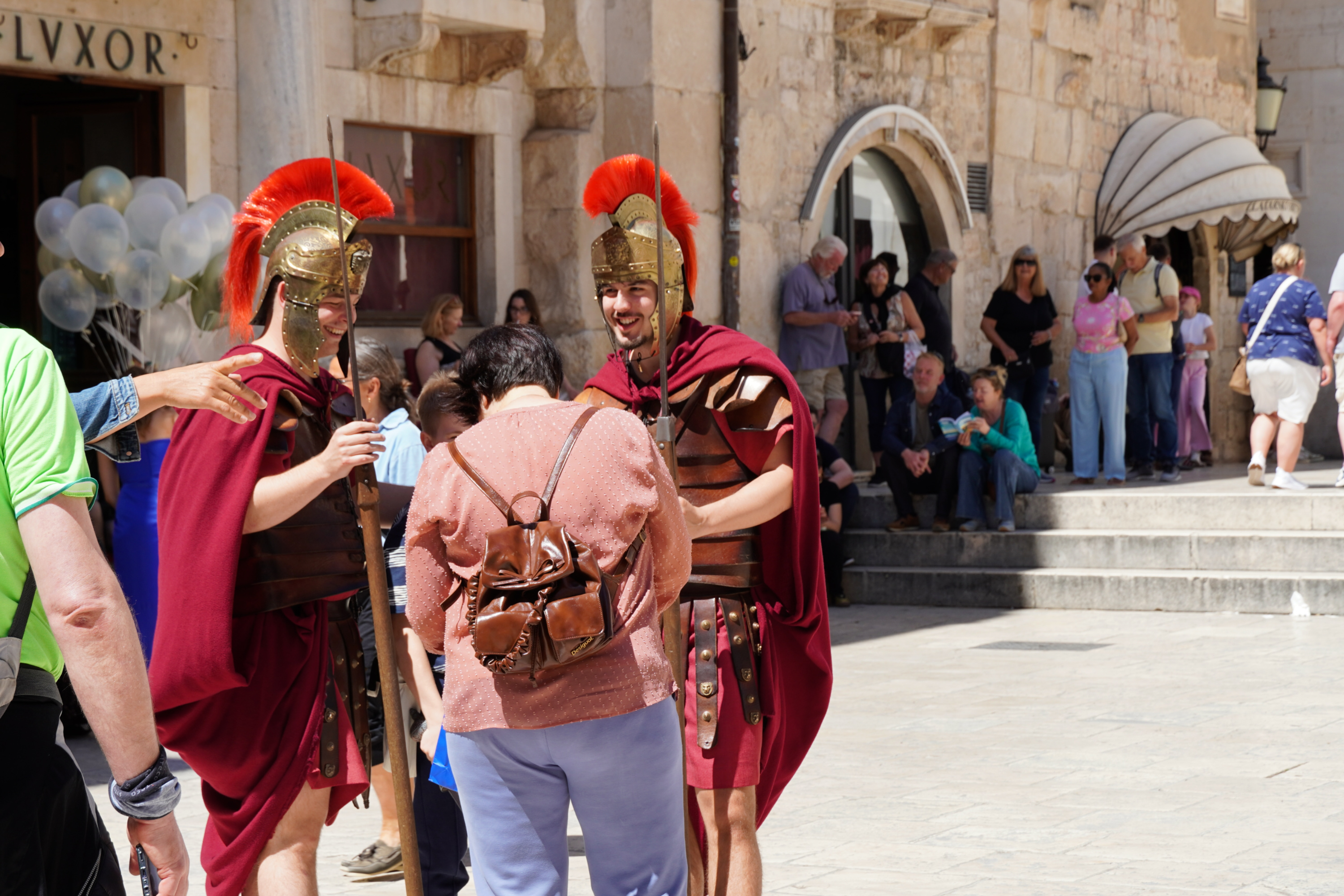
Days of Diocletian (Dani Dioklecijana): Held in late August to early September, this historical reenactment brings the Roman emperor “home”. Locals put on tunics and togas, a parade marches through the palace led by Diocletian himself, and ancient recipes, crafts and performances fill the squares. Sure, it’s theatrical –but with school kids in costume and homemade laurel crowns for sale, it’s a rare example of heritage playfully embraced by locals and visitors alike.
Hajduk and the passion of the city: If you’re brave enough to experience true Split passion, catch a Hajduk Split match at Poljud Stadium. The chants of Torcida, Europe’s oldest organized fan group, shake the stands. But even if you’re not into football, you’ll hear the emotion in bar debates, graffiti and t-shirts everywhere.
The Musical Heartbeat of the City
From traditional to Ultra Fest, music defines the city. Oliver Dragojević is the voice of the Dalmatian soul, his songs fill summer airwaves with bittersweet nostalgia. But the city has given Croatia even more iconic voices. There’s Dino Dvornik, the “King of Funk,” whose energetic beats and irreverent style are still celebrated in clubs and festivals. Josipa Lisac brought rock and theatrical flair, while newer voices like TBF mix hip-hop and Dalmatian dialect in fresh urban rhythms. And of course, the centuries-old tradition of klapa singing continues to bind communities, with its harmonies echoing in cafés, squares and seaside gatherings.
Why Summer is Special in Split
The energy is contagious: The sea is warm, the nights are long and there’s music in the air.
It’s beauty at full volume: Sure, it’s crowded –but it’s also stunning. Light bouncing off stone, cicadas buzzing, boats bobbing in the harbor, everyone alive with salt and sun.
There’s always a quieter corner: Even in July, Split still offers refuge –on a bench under a pine tree, in a side street of a smaller neighborhood, or on the rocks by the sea with nothing but the sound of waves.
A quick note on sustainability and overtourism
Split has been lived in, adapted and rebuilt for over 1,700 years. That’s what makes it so special: this isn’t a preserved old town, but a functioning one. However, in peak season the strain is visible.
The main issue is that Split, beyond being a destination, is a gateway. Ferries, airport, cruise ships, island-hopping routes: people arrive, pass through, move on. The streets, never designed for this volume, absorb a constant flow of short stays and quick visits. At the same time, homes inside the old town that once housed families are now rented to tourists at prices locals can no longer afford and sit empty outside summer.
And yet, this is also what sustains the city. Tourism isn’t separate from Split –it’s part of its present reality. The tension is felt throughout the whole Croatian coast, but here it’s concentrated: in a compact, living core that is both a home and a thoroughfare.
There’s no perfect solution. But there is a way to make your visit more thoughtful. Stay longer, if you can. Let Split be a base, not just a stop. Spend where it matters: buy your produce from the grannies at Pazar, pick up souvenirs from local artisans rather than imported stands, choose small, family-run places over tourist traps.
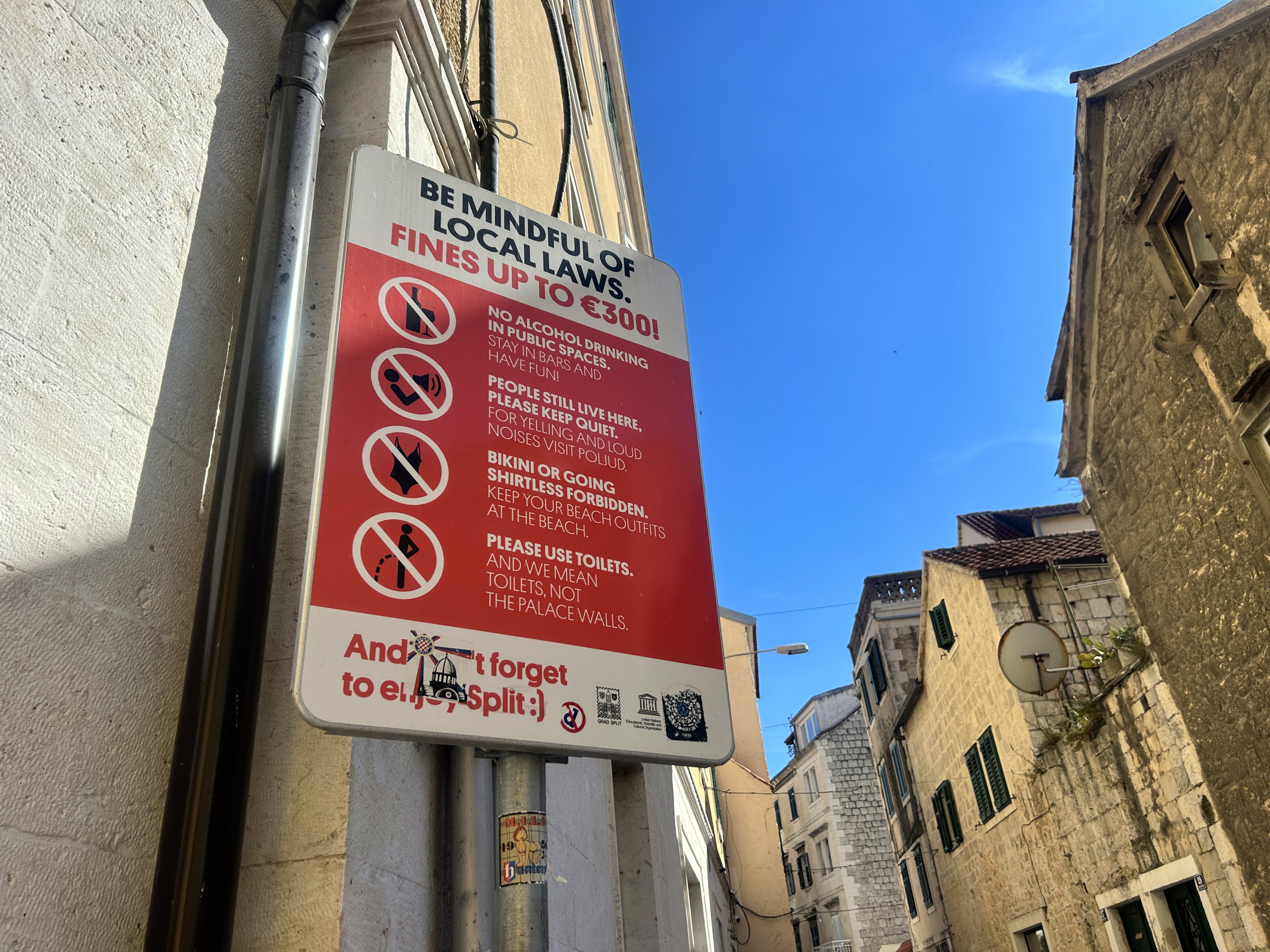
Beyond where you spend your money, there’s something even simpler: how you act. In recent years, the city has made it explicit through its behavior campaign “Respect & Enjoy”: dress properly, respect residential streets, keep the nightlife where it belongs. As a local, I’ve seen it all: visitors stepping into churches in swimwear, loud drunken groups echoing through residential streets at night, and much worse. But I truly believe you’ll enjoy Split more if you move through it with a little awareness –it makes the city better for everyone, residents and visitors alike.


SPLIT IN FALL
—The sweet spot: still warm enough to swim, and finally quiet enough to breathe
Autumn in Split feels like an exhale. The tourists thin out, the sea remains warm, and a golden light casts long shadows through the palace streets. The city regains its composure –still vibrant, but slower and softer.
This is the season when locals return from their island and countryside homes. Kids go back to school, fishermen to routine, and Split as a whole feels more like a city again. If you ask anyone who lives here, many will tell you that this is the best time to visit.
What to Do in Autumn in Split
Swim like a local: September swims are pure magic. The sea is still warm, the beaches less crowded, and sunsets stretch forever. Locals often keep swimming well into October.
Hike without the heat: Marjan’s trails are bliss in the cooler air. Or go further afield –Mosor, Perun and Kozjak offer panoramic hikes over Split and the sea. Autumn weather is often stable, perfect for full-day excursions.
Explore the palace: By late September, the palace quiets. You can once again hear your footsteps echo in the Vestibule or sit at Peristyle and watch locals stroll by, rather than groups being herded through.
Eat through the harvest season: Autumn brings grapes, squash, wild mushrooms, chestnuts, and the beginning of olive oil season.
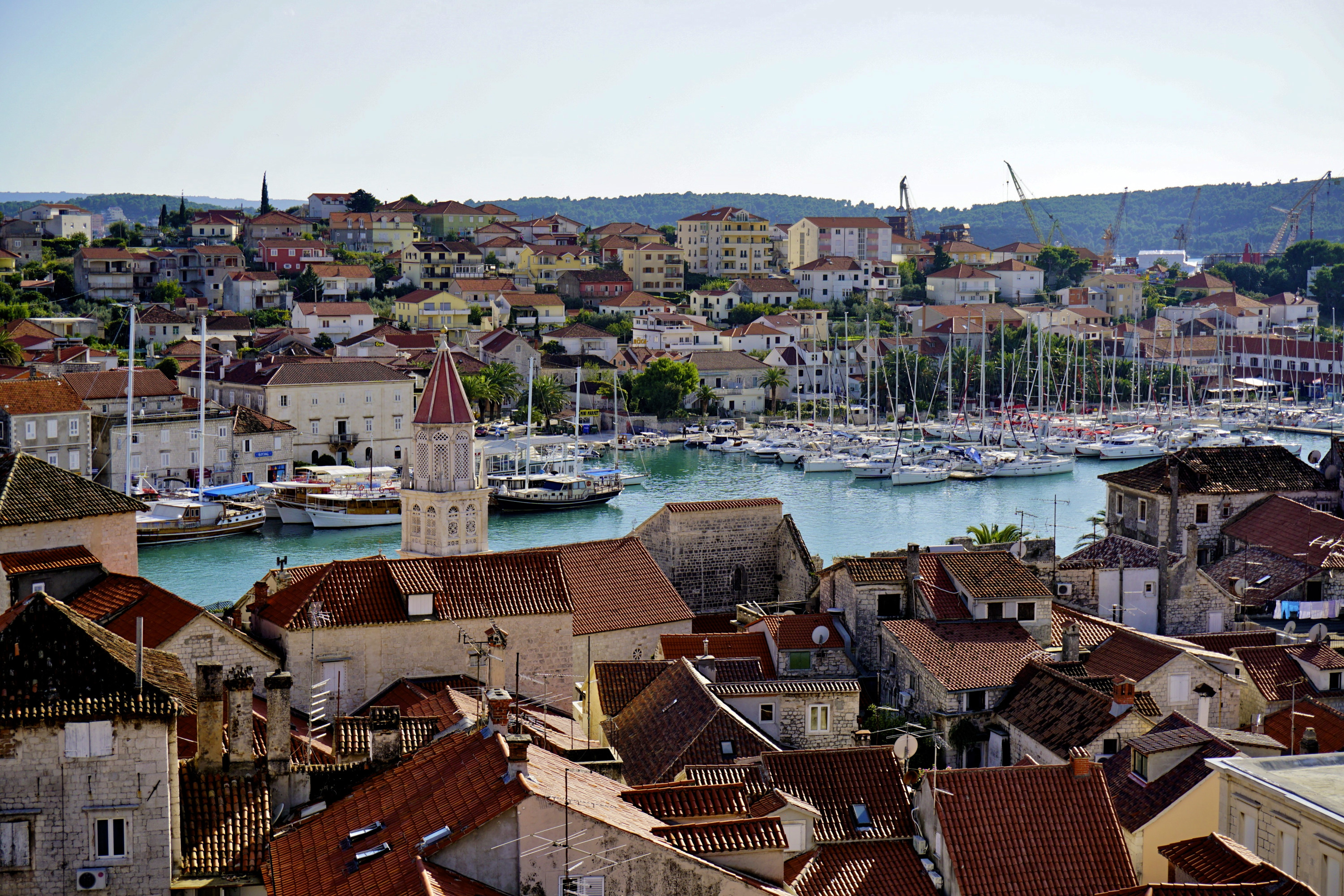
Historical treasures and quiet towns: Although these are year-round destinations, they’re more enjoyable as the heat fades. Wander to Salona, once a thriving Roman city larger than Split itself, whose ruins include an amphitheater, early Christian basilicas and necropolises, now wrapped in autumn’s golden light. Nearby, Klis Fortress stands guard over sweeping views, while the UNESCO-listed town of Trogir invites slow strolls through its Venetian streets –perfect for a peaceful autumn day trip.
Events & Traditions in Split in Autumn: Harvests, Films and Sailboats
Berba Grožđa (grape harvest): Head inland or towards nearby villages in early September and you might catch the grape harvest. Families gather to pick grapes and start the winemaking process –often accompanied by music and grilled meat.
Split Film Festival: Held during mid-September in Kinoteka Zlatna Vrata, it’s Croatia’s longest-running international film fest for independent and experimental cinema.
Mrduja Regatta: The first weekend of October greets one of the oldest sailing races in Europe, first held in 1927, running from Split to the islet of Mrduja and back.
Berba Maslina (olive picking): Mid-October is olive oil time. Many locals spend weekends in family groves –picking olives by hand, telling stories, and preparing the olives for pressing. If you know someone that has trees, you might get invited to help (and be fed gloriously for it).
Outdoor Life
Mild temperatures and clear skies make autumn ideal for exploring Split’s outdoors. Locals flock to Mosor, Perun and Kozjak for weekend hikes, coastal walks and casual climbs. Sport culture runs deep here –physical activity is tradition, not a trend. That might help explain why Split, despite its small size, has produced a long list of world-class athletes. From Goran Ivanišević and Toni Kukoč to Ivica Olić and Blanka Vlašić, the city’s competitive spirit is rooted in schoolyards, swim clubs and small-town pride.
Why Autumn is Special in Split (and the Locals’ Favorite)
The weather is ideal: Split’s Mediterranean climate means mild, sunny days well into November. You’ll still need sunscreen, but you can finally walk around without melting.
The city is generous again: Prices drop, tables open up, and the whole place feels more spacious. It’s easier to have conversations, get recommendations, and experience the city with less friction.
It’s a time of reflection: As nature slows down, so does the city. It’s a moment to sit with a glass of prošek on a quiet terrace and watch the world go by.

Final Thoughts
Split doesn’t always reveal itself all at once.
At first, it might feel like a postcard: sun-drenched stone, sparkling sea, palm trees and red roofs. Then you notice the cracks. The contrast between ancient walls and apartment blocks. Maybe a neighbor yells from a window. Maybe someone offers you a rakija at 10 AM. Maybe you linger, and the rhythm starts to change.
The seasons matter here, far beyond the weather. In summer, Split performs. In winter, it retreats. Spring is for waking up, and autumn is for fully enjoying. And in between the festivals, the hikes and the espresso cups are the quieter things that make this place a home.
I didn’t write this to give you an itinerary, but to share the rhythm of the place I’m lucky to call home. When you come, whether in the heat of summer or the quiet of winter, just slow down. Ask questions. Listen. Look for details. Taste. Swim. Let Split unfold at its own pace, and you’ll see why locals fervently sing “ništa kontra Splita” –there’s simply nothing quite like it.
FAQ / AT A GLANCE
Splurge: Heritage Hotel Santa Lucia or Heritage Hotel Cardo for palace luxury, Hotel Ambasador for seafront modern vibes; mid-range: Marvie Hotel or Art Hotel; budget: Hotel Elu Iris; backpackers: On Route Hostel.
Split is a year-round destination, but each season offers a different version of the city. Summer (June–August) is peak season: hot, lively and crowded, with festivals, beach days and long nights. Spring (April–May) and autumn (September–October) are ideal for most travelers: warm enough to swim, but calmer, greener and more local in feel. Winter (November–March) is the quietest time, when the city slows down. It’s not about beaches, but about atmosphere, food and experiencing Split as it really is.
You can see the highlights in 2 days, but that barely scratches the surface. 3–5 days gives you time to explore the city properly: wander the palace, enjoy the beaches, visit museums and take one day trip. If you travel slowly or want to include islands and nearby towns, I’d consider basing yourself here for at least 7 days.
At a minimum, don’t leave without getting lost inside Diocletian’s Palace, sipping coffee on Riva, walking around Marjan Hill, and swimming (at least once) in the Adriatic. Everything else is a bonus. These are the essentials.
A good introduction to the city is a walking tour (or an electric tuk-tuk tour). For a more hands-on experience, take a cooking class. As for day trips, the options are almost endless: rafting, canyoning or ziplining in Omiš, a 5-island tour to get a glimpse of life in the Adriatic, an excursion to Krka National Park, a day trip to Šibenik and the source of Cetina River, a walking tour of Trogir, and even a day trip to Mostar and Kravica in our neighboring Bosnia and Herzegovina.
Split Airport is about 25 km (15 mi) from the city center. The easiest option is the Airport Shuttle (10/15€ one way/return). It runs in sync with flights and drops you at the main bus station, across the ferry port, steps away from the old town. Between May and October you can also take a water taxi (Bura Line, 60 minutes, 10/5€ adults/children) for a scenic arrival by sea, but consider that the schedule is limited and not always timed with flights, so it’s more fun than a practical default option. For a more flexible alternative you can take an Uber/Bolt or taxi (~30 minutes, although it can easily double at peak hours, for ~25-55€) or book a transfer service, especially if it’s a bigger group. The cheapest option, but slower and less convenient if you have luggage, is to take public bus No. 2 or 37 just outside the airport (4€, paid in cash to the driver).
For special occasions, ZOI and Makarun stand out for their thoughtful tasting menus and atmospheric settings inside the palace –the kind of places where dinner becomes part of the experience of the city itself. They’re pricy, but worth the splurge for a memorable evening. Also at the higher end, Zrno Soli offers refined dining overlooking ACI marina, while Dvor seaside terraces are an oasis above Bačvice. For something more local in atmosphere, Konoba Fetivi and Villa Spiza are reliable favorites: no frills, just simple Dalmatian food. Corto Maltese offers a more relaxed vibe, and its plant-based sister restaurant Pandora Greenbox serves some of the best vegan food in town. If you’re looking to escape the crowds for a slower meal or coffee, Mokosh offers a peaceful terrace just a few minutes from the old town. For pizza, Bocamorra captivates with a playful and unexpected menu, while Basta offers classics right at the seaside. Budget but genuinely local is the legendary Fife, a Split institution that has been feeding locals and travelers for decades. And for wine, Bokeria or Zinfandel are solid choices.
Comfortable walking shoes (stone streets are beautiful, but unforgiving), swimwear (even outside peak summer you might still want a dip), water shoes (most beaches are rocky), sun protection (hat and sunscreen for the strong Dalmatian sun), a light jacket (evenings can be breezy, especially in spring and autumn), and a reusable water bottle (tap water is safe and of excellent quality).
Start with Mediterranean: A Cultural Landscape by Predrag Matvejević, a poetic and fragmented exploration of Mediterranean life that captures the essence of the region better than any itinerary ever could. For a deeper historical and geopolitical lens, Adriatic by Robert D. Kaplan traces the cultures and tensions of the Adriatic coast with sharp, narrative insight, while Black Lamb and Grey Falcon by Rebecca West remains a dense but fascinating classic on the Balkans’ complex past. On the fiction side, The Fortress by Meša Selimović offers a philosophical and deeply human reflection on life under shifting empires. For a more contemporary Croatian voice, Hotel Tito by Ivana Bodrožić explores memory, war and identity through a personal lens, while Cafe Europa by Slavenka Drakulić provides sharp, accessible essays on everyday life in post-socialist Europe. For something lighter Chasing a Croatian Girl by Cody McClain Brown offers a humorous outsider-insider perspective that captures the charm, contradictions and cultural nuances you’ll likely encounter along the coast. For basics of the language, grab Lonely Planet’s Croatian Phrasebook or their Mediterranean Europe Phrasebook if you’re country-hopping.
Continue planning your trip to Croatia
- Croatia Travel Tips from a Local: Expert Advice for an Unforgettable Experience
- Visit Croatia in Winter: Uncover the Treasures Beyond Sun and Beaches
- Dubrovnik Travel Guide: Places To Visit and How To Be Sustainable
- Wine tourism in Europe: the most underrated wine destinations
Liked it? Want to read it later? Pin it!
Enjoyed what you read? A lovely way to show appreciation is by buying me a coffee.
Your support keeps the stories, guides and geopolitical insights coming. Thank you so much!


I’m from Split. I usually hate bloggers’ guides that look like they all copy each other and they barely scratch the surface. The city is amazing and you truly captured its essence. Absolutely you deserve the right to call yourself a local 🙂
Awwwww, thank you so much, Ivana! What a delight to hear this from a true Splićanka! I’m so happy to be an honorary one 🙂
I was googling what to read about Croatia in preparation for my upcoming trip and I didn’t expect to find so much more. Thanks for the recommendations, I can’t wait to dig in the literature! And for everything else: I was happy about visiting Split, now I’m even more excited!
This is so cool, another bookworm! Enjoy the reads, and even more the trip itself!
Cool guide! I never thought about Split in winter, or even in autumn or spring, and now I’m browsing for tickets for September. Thank you for putting it on my radar beyond summertime.
You have no idea how glad I am about getting someone to decide to come to Split outside peak season! September, especially towards the end of the month, is a bliss here. Happy travels, Hans!
What a thoughtful guide, Coni! I ran into it in Instagram and now I’ve spent half the afternoon browsing through your content. I love the adventure meets politics angle, it’s so unique!
Back to Split, I’m arriving this weekend. Would you recommend reservations for Zoi? It sounds exactly like the kind of experience I want to have, to make food an extension of sightseeing, so I want to make sure we get a table.
I’m so glad to hear you’re enjoying my content! I do have a very particular angle, so make sure to come back, I’m uploading new posts as fast as I can properly write them 🙂
As for Split, it’s still not too crowded, so maybe you can get away just walking in into most restaurants, but I’d still recommend reservations for ZOI to be on the safe side. I hope you’ll thoroughly enjoy it, and the trip in general!
This is an incredible guide! I love that you’re taking me through the seasons, showing me different sides of a place mostly known for summer. I just return from a 3-day trip and I can’t wait to go back, at a different time of year. Thanks for writing something much beyond the typical guide. I can tell you love the place, and you’re making all your readers love it too even before they visit. Oh, and thanks for the honest recommendations of restaurants. Makarun was a perfect way to spend a spring evening and get to taste the flavors of Dalmatia, and Fife was a good contrast.
Thank you for your kind words, Heidi! I’m so happy to hear you enjoyed your visit, and even more that you want to come back! I honestly love the city, so it’s always heartwarming when I know visitors had a good time. I’m also really glad you liked the recommendations. Makarun changes ingredients with the seasons, so it’s absolutely worth going again when you return 🙂