
This article may contain affiliate or compensated links, and may feature complimentary or discounted experiences. All opinions are my own. Please read the Privacy Policy & Disclaimer for more info.
Western Sicily isn’t a place to visit –it’s a place to experience. With every bend of the road, a new vintage, a new story, a new corner of tradition. This isn’t a guidebook of must-dos. It’s a slow-poured journey through vineyards and villages, anchored by sun and salt, shaped by wind and work, and carried by the hands of those who remember how life is meant to be lived –patiently, passionately, and always with a glass in hand.
So let’s decant the wine roads of Western Sicily, one element at a time.
Disclaimer: This visit was part of a press trip organized by the West of Sicily Tourism Board. While the experience was hosted, all reflections, words, and opinions are entirely my own.
A journey decanted: slow sips through the West of Sicily
If you know only a little about me, you probably know I’m in love with Italy. It’s one of my favorite countries –so much so that I’ve lost count of how many times I’ve visited. From quick city escapades to long road trips through the countryside, I’ve spent months exploring northern and central Italy. But the south always eluded me.
So when I received an invitation from the West of Sicily Tourism Board to spend a week traveling between wine roads and bagli, I dropped everything and booked a ticket.
Even though the trip took place mid-October, it felt like I’d landed in the height of summer –and far from the chaotic images that often portray Sicily. Instead, a balmy breeze welcomed me to Palermo, and the grandeur of the buildings drew me in as I wandered, happily lost in the city’s corners.
Western Sicily offers something for everyone, from historical sites to natural wanders. You can walk into a Paleolithic cave and a marble quarry in Custonaci. Visit a salt museum in the Nubia Nature Reserve, where salt pans are still worked by hand. Explore a medieval hilltop town in Erice. Step back in time in a century-old mill in Valderice. Immerse yourself in contemporary art in Gibellina. And sunbathe on the world-class beaches of Favignana.
But on this piece I’ll take you along the wine roads –to narrate a different kind of story. Not only of varieties and labels, but of a way of life.
In Sicily the vine is more than agriculture –it’s memory. And this is not a guide –it’s a journey. A story poured slowly, shared generously, and best sipped under the Mediterranean sun.
I was told that there are five ingredients of wine –sun, terroir, wind, light and love. These are not only the elements that make great vino –they’re the essence of Sicily. Every corner of the island pays a silent homage to them. On your trip you’ll drink them all in. Through valleys, villages and vineyards, the road becomes a glass –each turn, a new taste.
Sicilian wine varieties you can’t miss
Among white wine, tryInzolia (also known as Ansonica) for a naturally tannic structure, Grillo for notes of citrus and peach, Catarratto for a taste of Mediterranean herbs, Damaschino for a floral and light-bodied profile, Grecanino for a steely and mineral touch, and Zibibbo for anaromatic option with hints of candied citrus and dried fruit.
As for red wines, the undisputed prince is fruit-driven and boldNero d’Avola (known elsewhere in Italy as Calabrese), but don’t miss Frappato for its light body with strawberry notes, Nerello Mascalese for a more tannic and mineral alternative, Perricone for notes of dark fruit and spices, and Alicante for earthy tones and dark chocolate hints.
And don’t forget about dessert wines! Marsala is a fortified wine (brandy added) with a range of expressions, from dry to sweet. Meanwhile, Passito di Pantelleria is a lusciously sweet wine made from sun-dried Zibibbo grapes grown on volcanic soil.
SUN | Where Salt Crystallizes and Citrus Blossoms
—Palermo, Trapani & Salt Pans
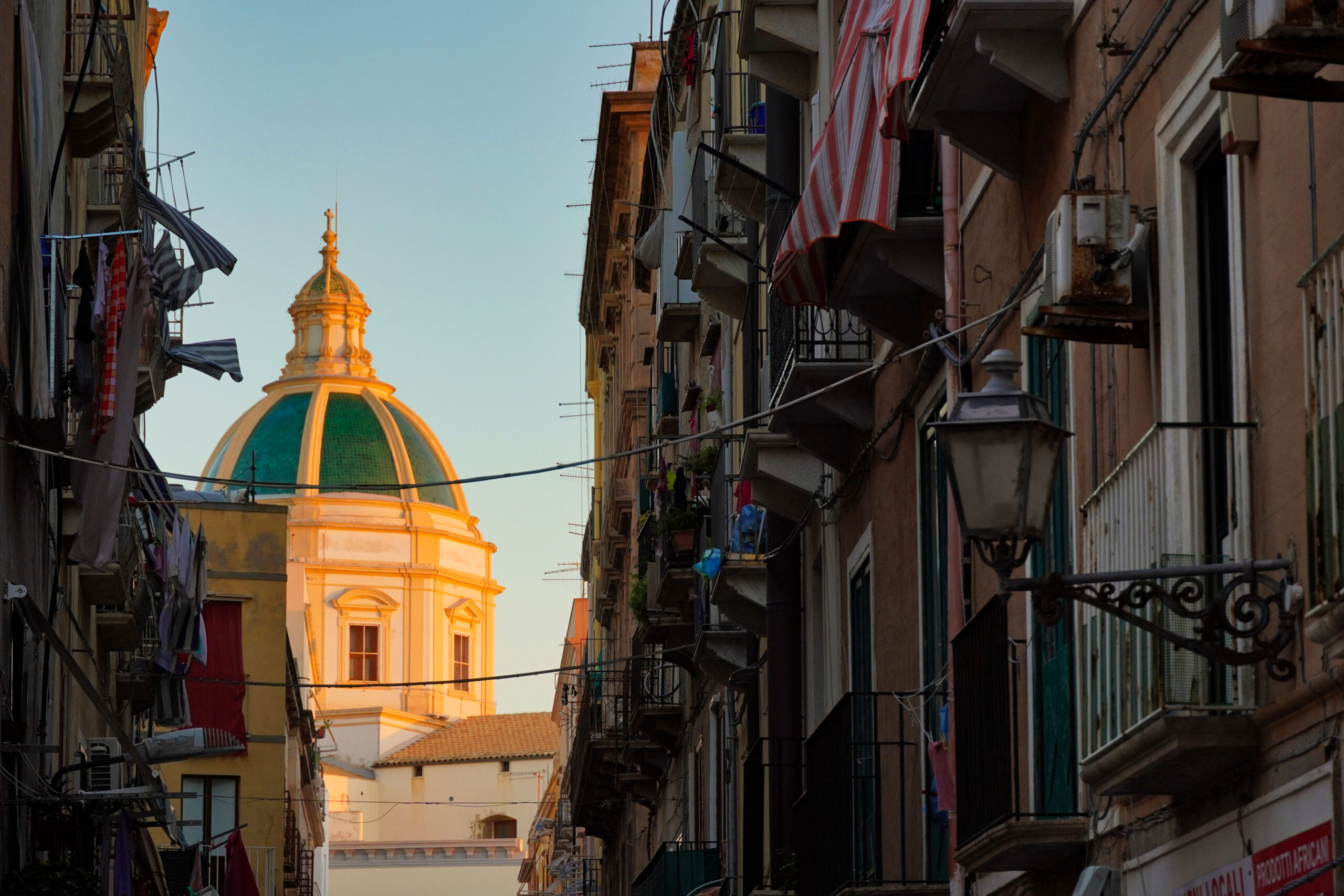
Sicily begins with the sun. It wakes up early in Palermo, spilling across rooftops, warming the stone of old piazzas, and dancing in the gold mosaics of the Palatine Chapel. Inside the Norman Palace, light flickers across centuries of empire –Arab, Norman, Byzantine– all layered like the island itself.
Outside the city hums –Palermo is noisy, colorful, alive. In the Ballarò, Capo and Vucciria markets, the sun filters through striped sunshades and lands on heaps of lemons, olives and fresh fish. You hear it in the shouted prices, the laughter, the clatter of carts. The smell of citrus and fried panelle floats in the air. This is where you feel Sicily’s heartbeat.
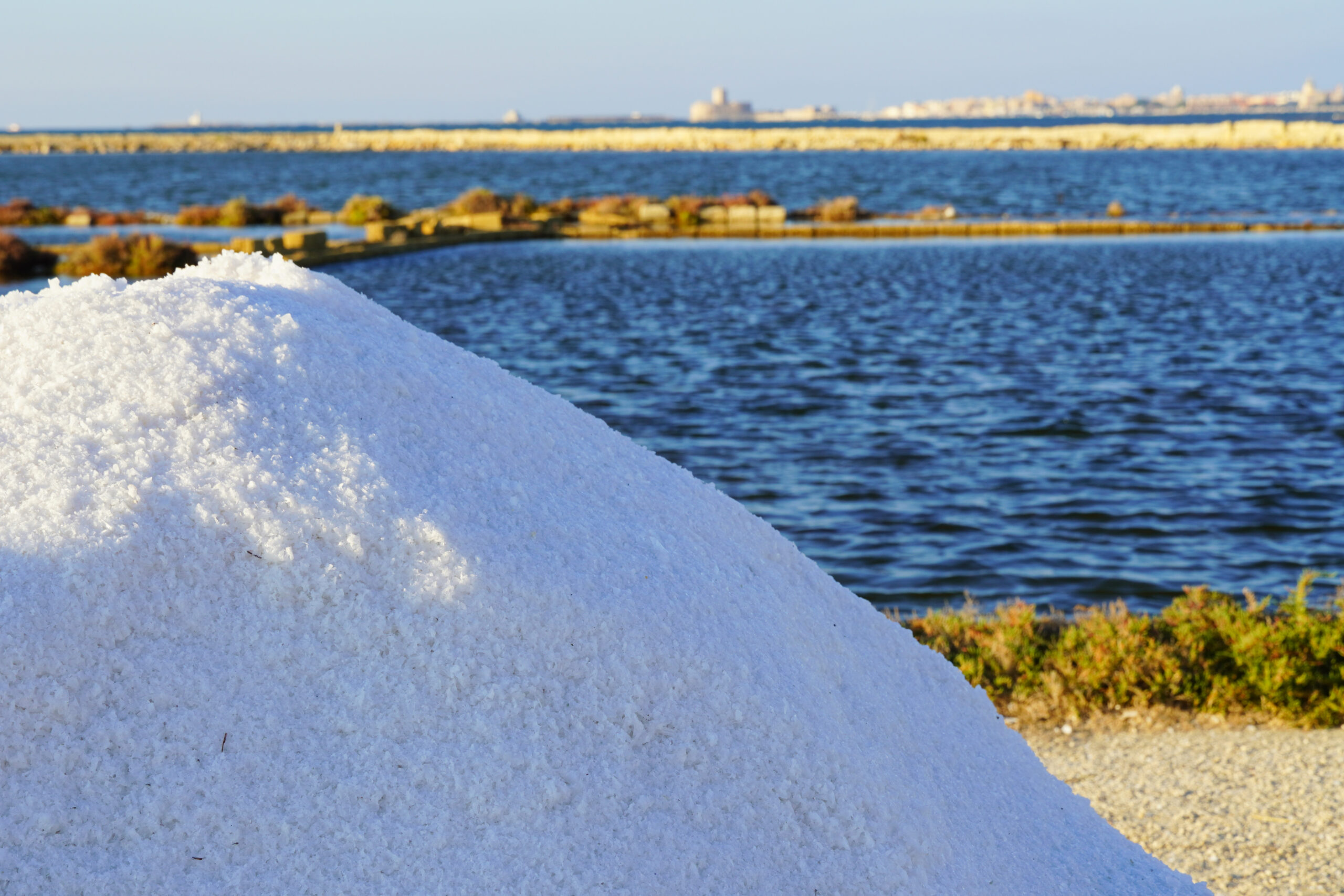
A little west of the city, past vineyards that stretch low against the heat, the road leads to Trapani, where the land meets the sea in wide salt flats and quiet lagoons. Here, the sun works slowly. It helps turn seawater into salt, drawing it out one crystal at a time. At the Nubia Salt Pans, shallow pools shimmer pink and silver. Mounds of white salt wait under terracotta tiles, protected from the wind. The old windmills, some still turning, look like they’ve been here forever.
In the Museo del Sale, an old mill tells the story of the people who lived by salt –generations who learned to read the sky, the wind, the rhythm of evaporation. That same patience lives in the local wines. A glass of Grillo, grown just inland from here, carries a little of this place: clean, dry, touched by citrus and sea air.
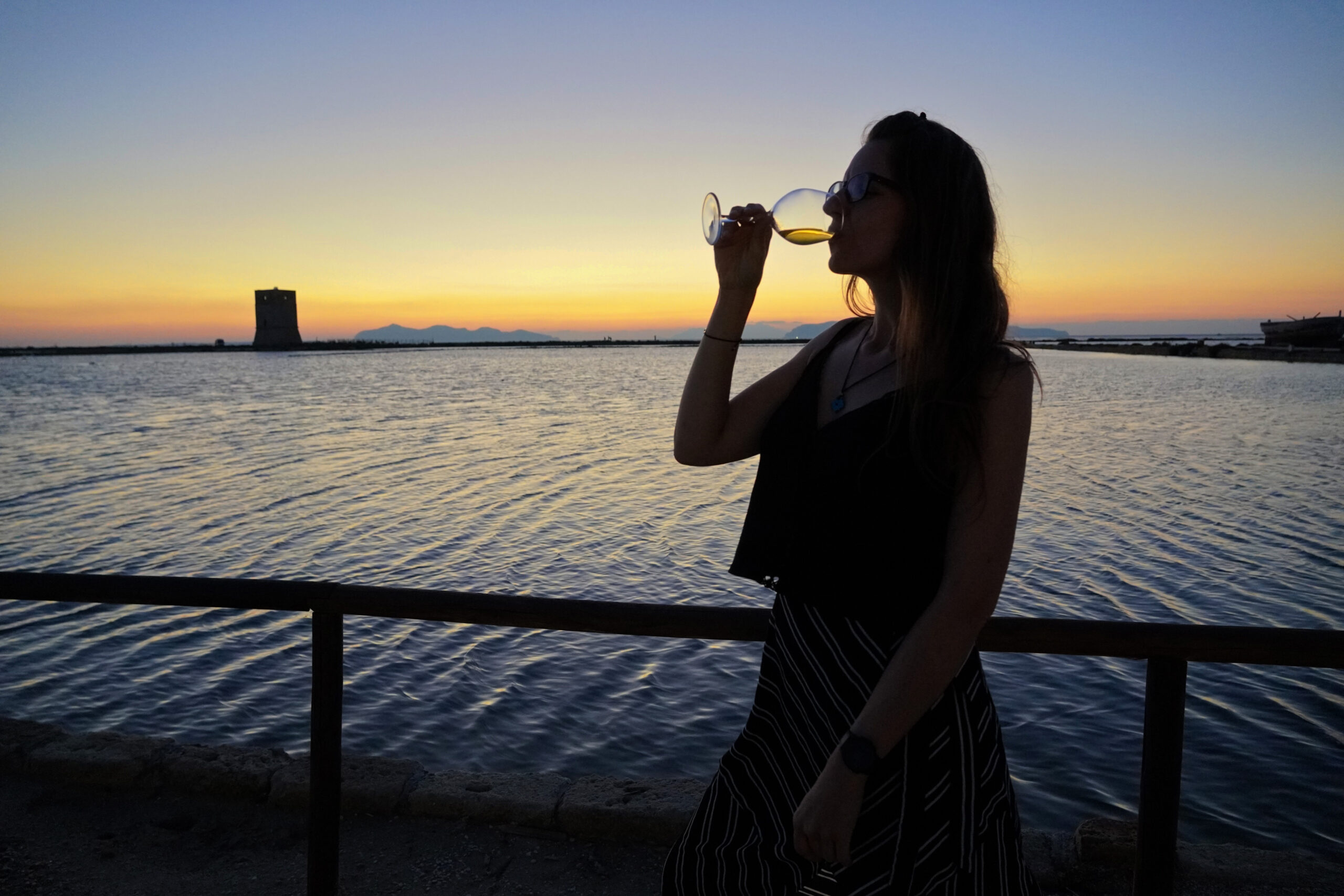
Trapani itself moves at an easy pace. Walk along the seafront as the sun sets and you’ll see the city glow. The historic center, with its faded palaces and narrow alleys, feels like it belongs to another time. Generations of craftsmanship adorn store windows. People gather on Via Garibaldi for aperitivo, and the breeze carries the scent of salt and orange blossoms. Follow that breeze toward the edge of the peninsula, and you’ll find the Torre di Ligny standing sentinel where the Tyrrhenian and Mediterranean seas meet. It’s a poetic place –two seas colliding beneath a sky turning gold. Walk the Mura di Tramontana, the old city wall, and join locals at Bastione Conca, where everyone seems to pause to watch the sun sink into the water. It’s not a show, exactly. It’s a ritual.
The Sicilian sun truly shines, and by doing so it shapes things –markets and mosaics, salt and wine, people and places. It’s the first ingredient in everything that follows.
Worth a stop – If you love jewelry or just want to appreciate beautiful artistry, visit RossoCorallo in Trapani, where Platimiro Fiorenza, one of the last coral craftsmen, makes highly refined creations. To pamper your sweet tooth, in Palermo go to I Segreti del Chiostro, where baked goods come from the hands of nuns, literally.
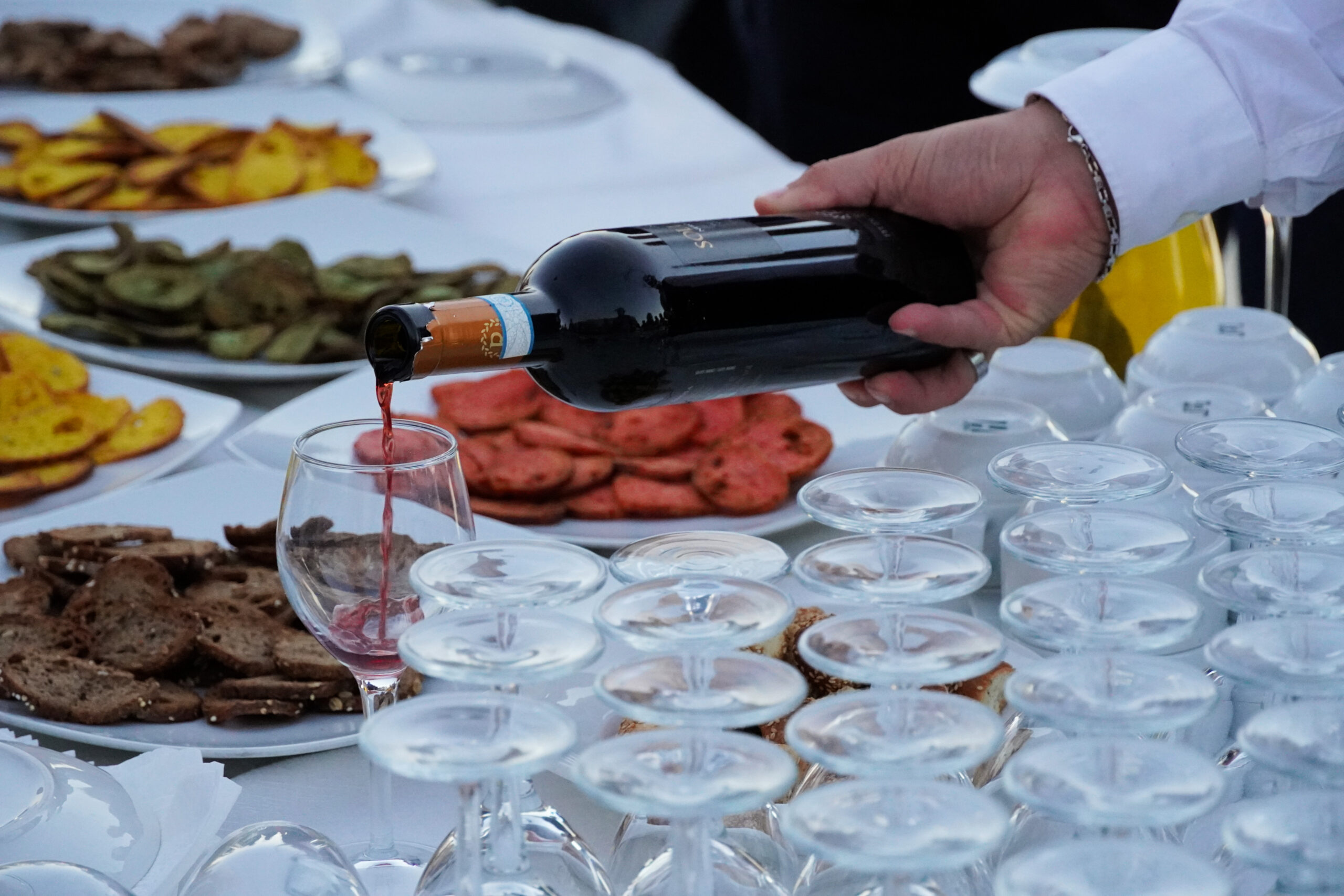
Wines to Try – Venture into nearby Alcamo DOC wines. The local white varieties –Inzolia, Grillo, Catarratto and Grecanino– stand on their own to create beautiful DOC (Denominazione di Origine Controllata), like Bianco d’Alcamo. They also nicely mix with international varieties like Chardonnay, Müller-Thurgau and Sauvignon Blanc. As for reds, Cabernet Sauvignon, Merlot and Cabernet Frank, meet local Frappato, Nerello Mascalese and Nero d’Avola. There are countless labels to try, but you’ll love Tenuta Rapitala’s Vigna Casalj, Rallo’s Beleda, Tonnino’s Nero d’Avola and Sergio Drago’s Rosa.
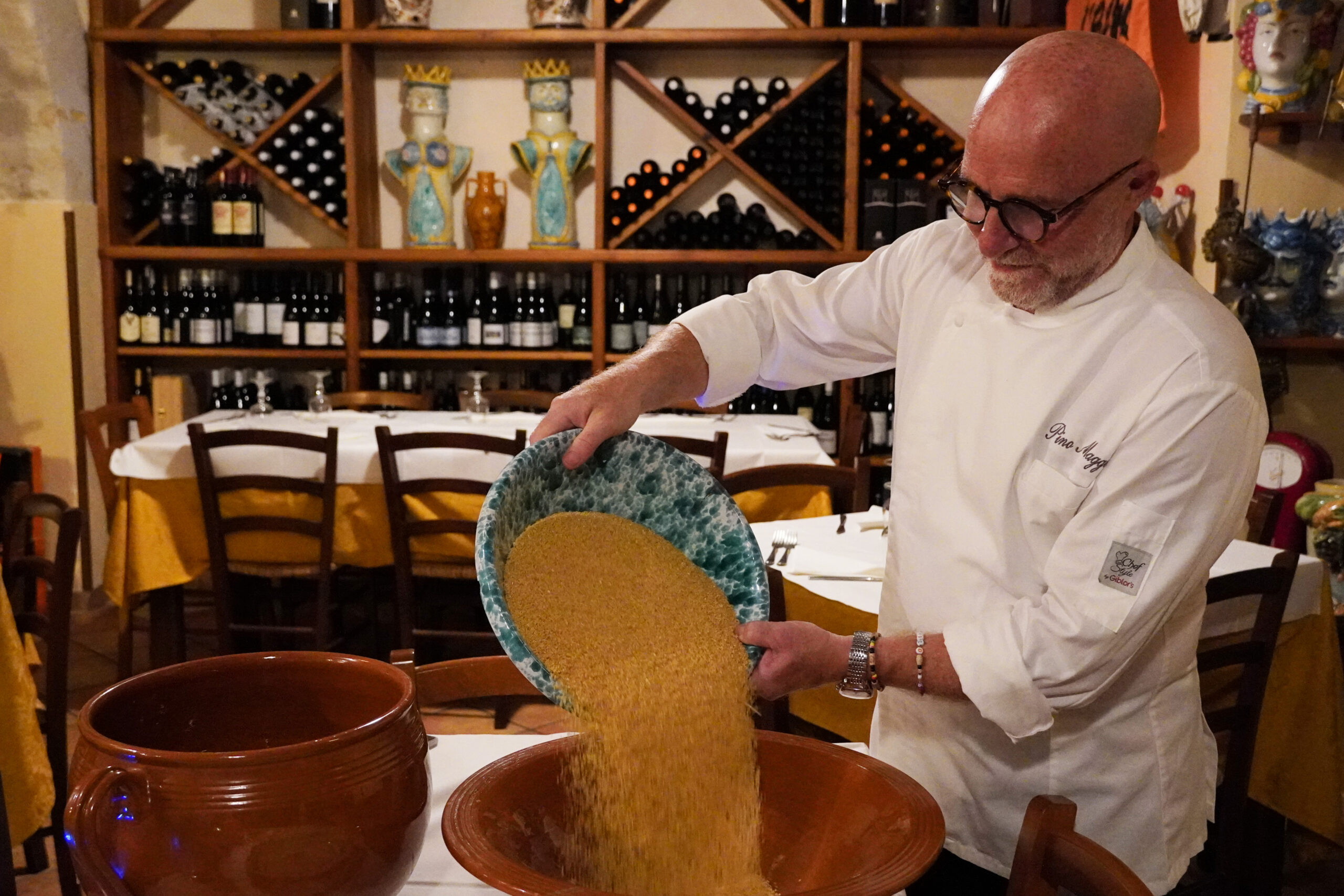
Where to drink and eat? – In Trapani, an amazing place to try the best couscous alla trapanese is enoteca & trattoria Cantina Siciliana. If you want to pair wine with a view, drive outside the city to Baglio Sorìa. In Palermo, the wine scene pulses in cozy, vibrant spots like Enoteca Picone, Osteria Ballarò, and CiCiccio Wine Bar; while flavor begins in the streets: Pani Cà Meusa andNni Franco U Vastiddaru are classics, Trattoria da Enzo delivers home-style cooking, and Osteria dei Vespri is a more upscale alternative.
Where to stay? – Palermo: Casa Nostra Boutique Hotel & Spa (luxury), Palazzo Natoli Boutique Hotel (premium), Hotel Trinacria (mid-range), Casa di Paola (budget). Trapani: WeLive Trapani (luxury), Hotel San Michele (mid-range), Residence Garibaldi (budget).
TERROIR | Earth That Remembers
—Valderice & Erice
Vines begins in the soil, and the soil here remembers everything.
In Valderice, vineyards spread out across rolling hills, their roots deep in clay and limestone that’s been farmed for centuries. This land is generous –with sun, with wind, with stories. Everything that grows here carries the memory of those who worked it before: farmers, shepherds, monks, winemakers. Grains were once its glory –wheat and semolina shaped the cuisine as surely as grapes now shape its wine. At Molino Excelsior San Marco, an old stone mill turned museum, you can still feel the rhythm of this past: the clatter of wheels, the scent of ground flour. Today, everything you taste –the bread, the marmalades, the olives, the cold cuts– begins with this earth.
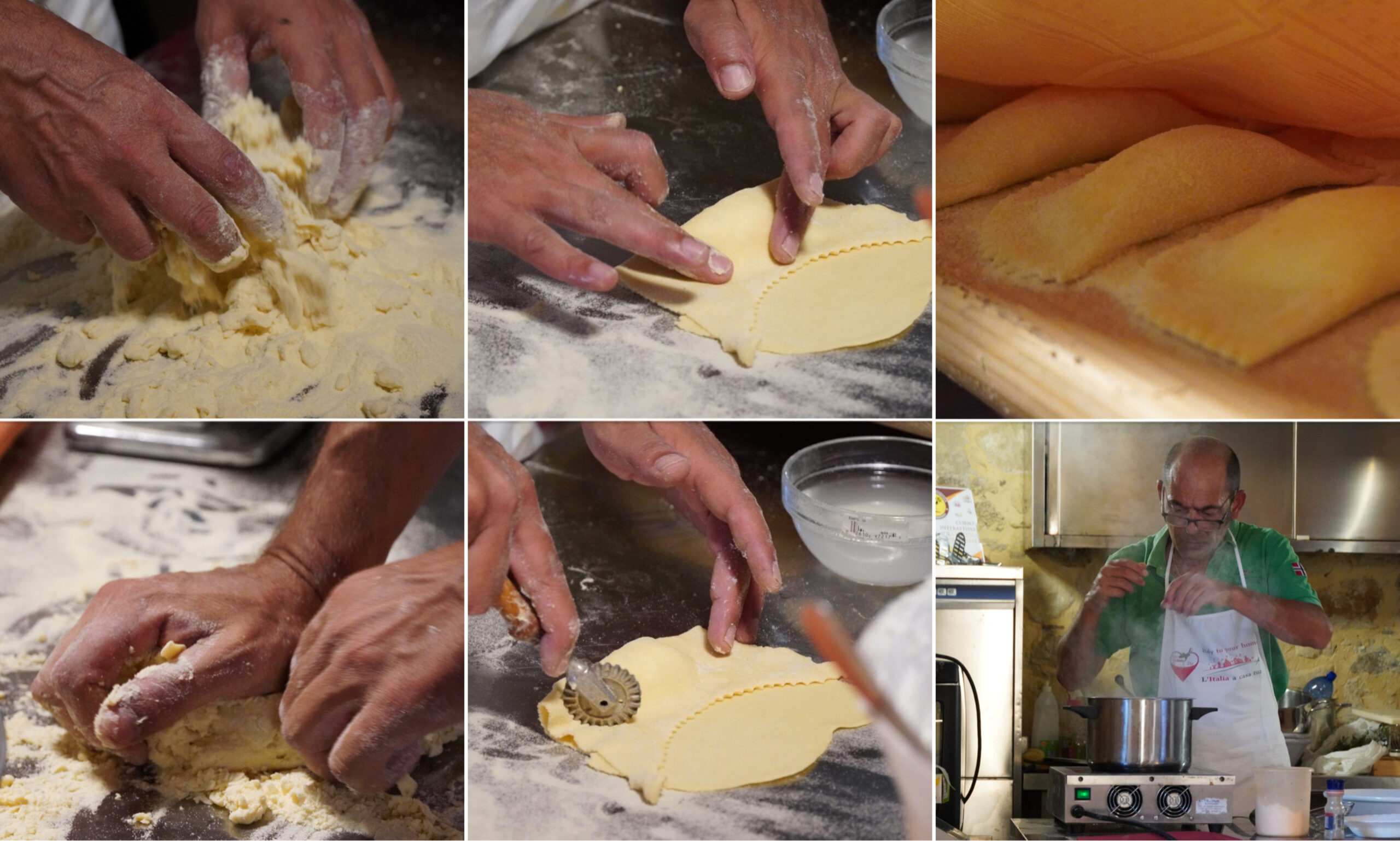
We were invited to lunch by the Caradonna family, the kind of experience that reminds you food is never just food in Sicily –it’s memory, generosity, and pride passed down through flour-dusted hands. With Like Italians Do, we joined a cassatelle masterclass in the family’s kitchen, learning about the delicate fold of pastry. It was way more than a meal –it was communion with a place and its people. Every bite tasted like home, even though it wasn’t ours.
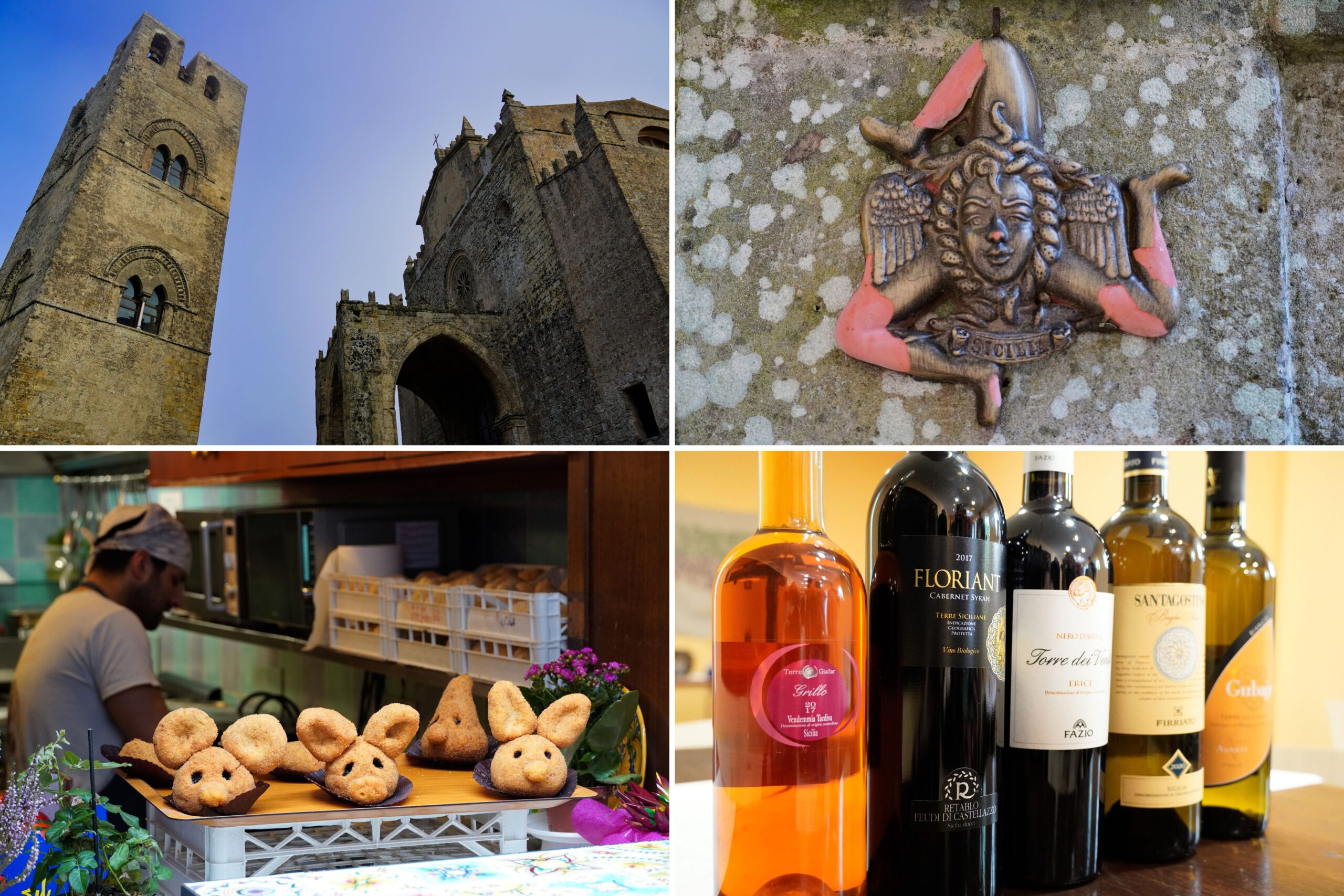
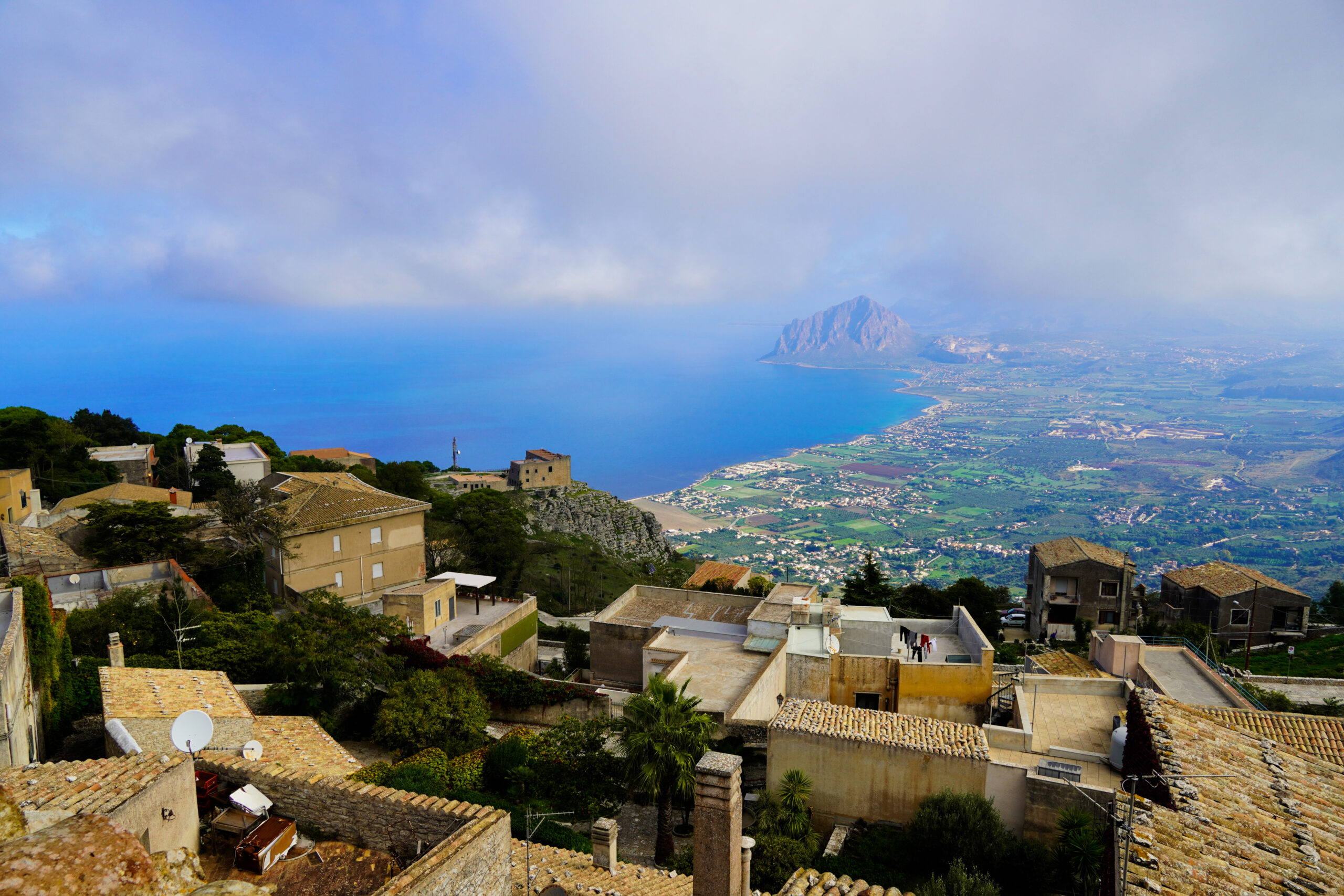
Rising toward Erice, vineyards give way to pines and mist. The medieval town sits on a peak above the clouds, wrapped often in fog –a gentle, magical embrace that locals say belongs to the goddess Venus. The road curves, the air cools, and suddenly you’re in another time. Touch the stones of the ancient city walls and you’ll feel it: three thousand years of history coming through your hands.
Here, myth and science live side by side. Erice has long been a place of worship –first to Venus, then to Mary, as Christians tried to tame pagan devotion. From the Castello di Venere, crosses look down over the sea, where legends and beliefs meet the sky. But it’s also a town of reason. At the Ettore Majorana Foundation, physicists from the United States and the Soviet Union met during the Cold War to imagine a path forward without nuclear weapons. Pope John Paul II visited, blessing this citadel of science as a beacon of peace.
And still peace reigns here –in the quiet alleys, the ceramic workshops, the smell of almond pastries and old wood. From the Giardino del Balio, the whole valley unfolds below: vineyards, groves, villages, sea. Everything feels close, still, sacred.
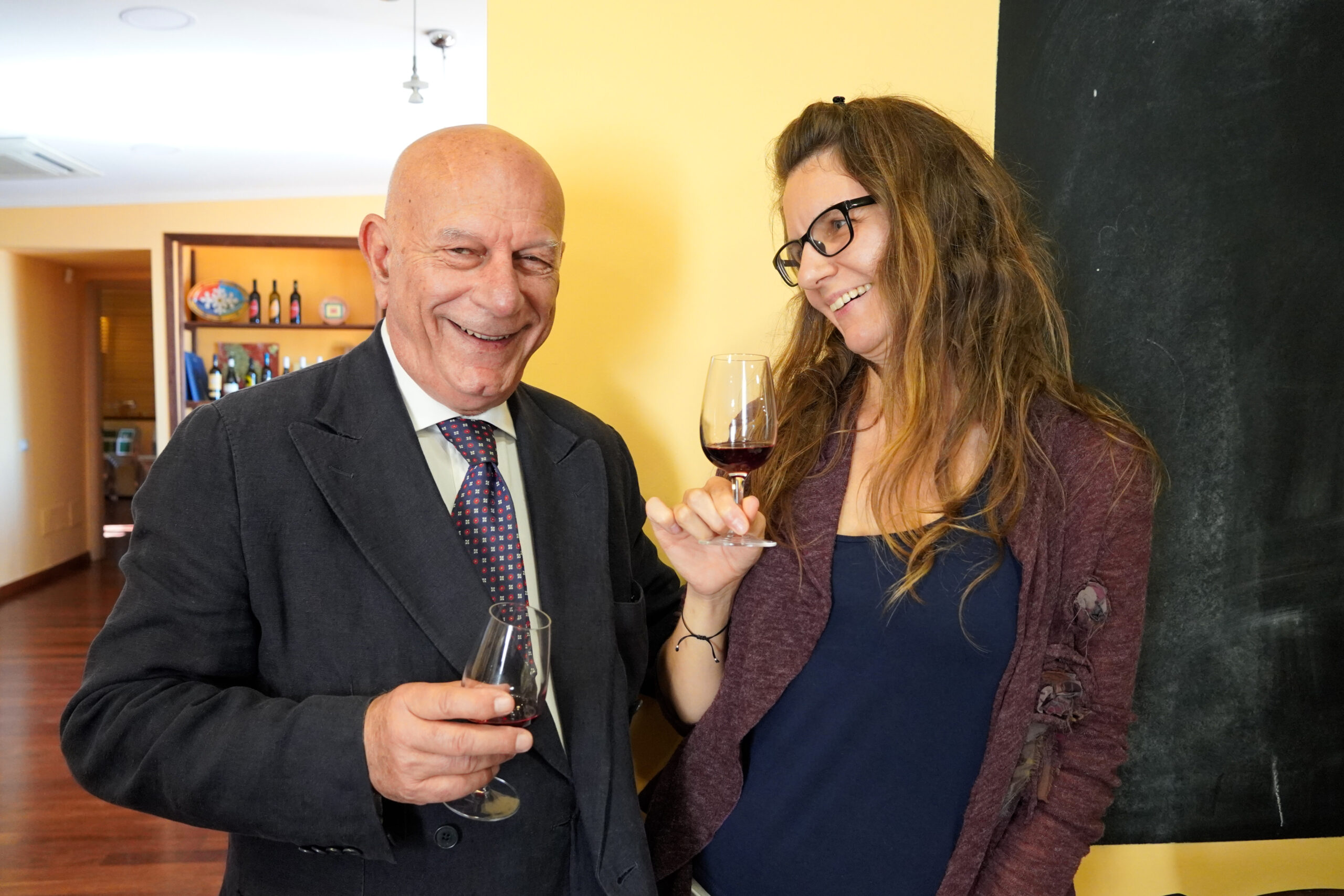
The terroir is about people, too. Winemakers along the Strada del Vino Erice DOC speak of balance between tradition and trust in the land. At a local tasting, we were introduced to the region’s best labels by none other than Salvino Craparotta, the “President of Wine” himself –a man whose title sounds like mythology, but whose passion is deeply rooted. He poured a bottle he’d produced himself, explaining the notes not as flavors but as memories of sun, soil and patience.
Travelling here is like tracing rings in old wood –from the medieval quiet of Erice down to an early 20th-century mill, where grains are still ground with care. Terroir is everywhere: in the wines, yes, but also in the bread, in the olive oil, in the people. Earth that remembers –and offers itself, again and again.
Worth a stop – Erice is known for its pastries. Pasticceria Grammatico and da Michele are classics, baking Genovesi Ericine (flaky short crust filled with lemony cream), Frutta di Martorana (fruit-shaped marzipan), and Cassatelle (deep-fried layers of dough with a sugary filling, enriched with Marsala). If you want a one-of-a-kind souvenir, head to Ledacrea for ceramic artisanry.
Wines to Try – Undertake the plentifulness of Erice DOC wines. Local whites include Inzolia, Catarratto, Grillo and Zibibbo, while reds feature Perricone, Frappato, and Nero d’Avola. I loved the President of Wine’s Feudi di Castellazzo’s Floriant, a Terre Siciliane IGP blend of Cabernet and Syrah; Torri di Venti’s Fazio Nero d’Avora; and Santagostino’s Firriato Catarratto.
Where to drink and eat? – For an immersive wine experience, follow the Strada del Vino Erice DOC –many producers along the route, like Fazio Wines and Tenute Adrà, offer tastings and cellar tours by appointment. In Erice itself you can visit its enoteca, where you can have a few glasses paired with some delicacies. You can also enjoy a glass at La Pentolaccia or Ristorante Monte San Giuliano, both offering hearty regional dishes in a charming medieval setting. For panoramic views paired with traditional cuisine, Ristorante Ulisse is a solid pick. In Valderice, head to Ristorante Antichi Sapori for fresh local specialties.
Where to stay? – There are several options inErice: Appartamenti Liberty (premium), Residence Erice Pietre Antiche (mid-range), Hotel Villa San Giovanni (budget). On the northern slope of Mount Erice, by the seaside, Azienda Agrituristica Tenuta Pizzolungo offers a mid-range alternative.
WIND | Whispers of Past and Future
—Salemi & Mazara del Vallo
The wind blows differently inland. It carries less salt, more dust. More memory. In Gibellina, it hums through concrete voids –modern art laid over the scar of a vanished town. From its stark beauty, we moved deeper into Sicily’s interior, toward Salemi, a place that speaks softly but carries the weight of history.
Salemi looks like a thousand other hill towns, until it doesn’t. This was the first capital of unified Italy –if only for a day. It’s where the 1€ house project began, long before headlines made it a trend. And it’s where Sicilian Mafia history is showcased. Museo della Mafia, calmly dismantles myths with facts. Here, you’ll learn that the Mafia wasn’t born in the shadows. It emerged to fill a vacuum of power, built on the values of kinship and loyalty. “Would you kill for your family’s honor?” one exhibit asks, not sensationally, but historically. Before the Mafia became an empire of crime, it was a system people trusted more than the state.
And yet, what stayed with me most was not power or politics, it was bread. In Borgo Salemi, we joined a group of local nonnas for a pani di San Giuseppe masterclass, watching their skillful hands shape bread into intricate sculptures –crosses, flowers, baskets. Then we were invited into their world. Patiently they explained how to make shapes with the delicate dough, and our hands embraced centuries of tradition. These breads are made each March to honor Saint Joseph, who protected Sicily from famine. A ritual of care, of sustenance, of defiance.
If Salemi is a whisper from the past, Mazara del Vallo is where it merges with the future. At golden hour, something shifts. Light floods the Kasbah, the old Arab quarter, and suddenly it feels like Alexandria. Like a border has blurred. Here, North Africa isn’t foreign –it’s familial. Islamic prayers echo from courtyards. Couscous simmers in kitchens. Tunisia is only a ferry ride away, but the cultural crossing happened centuries ago.
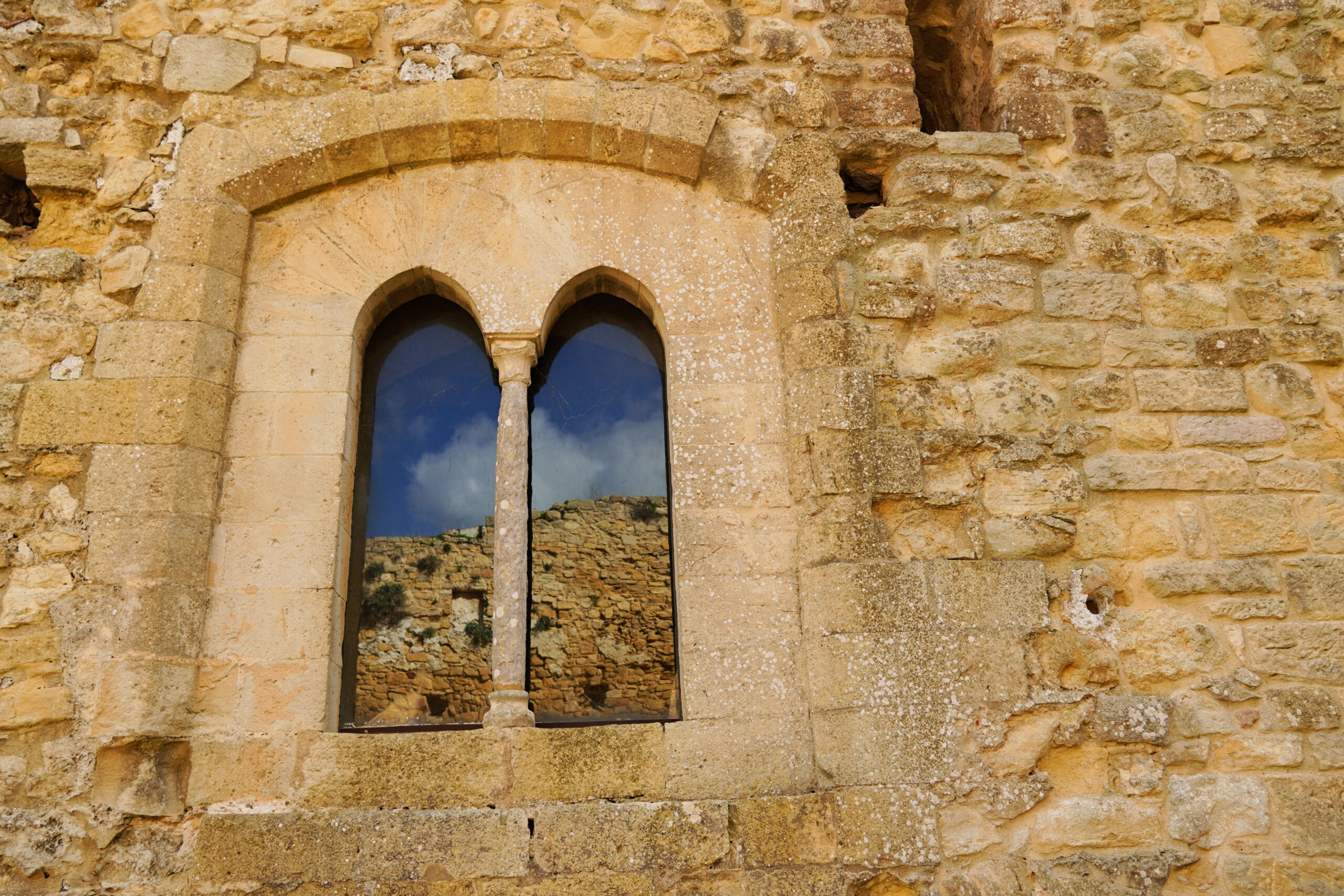
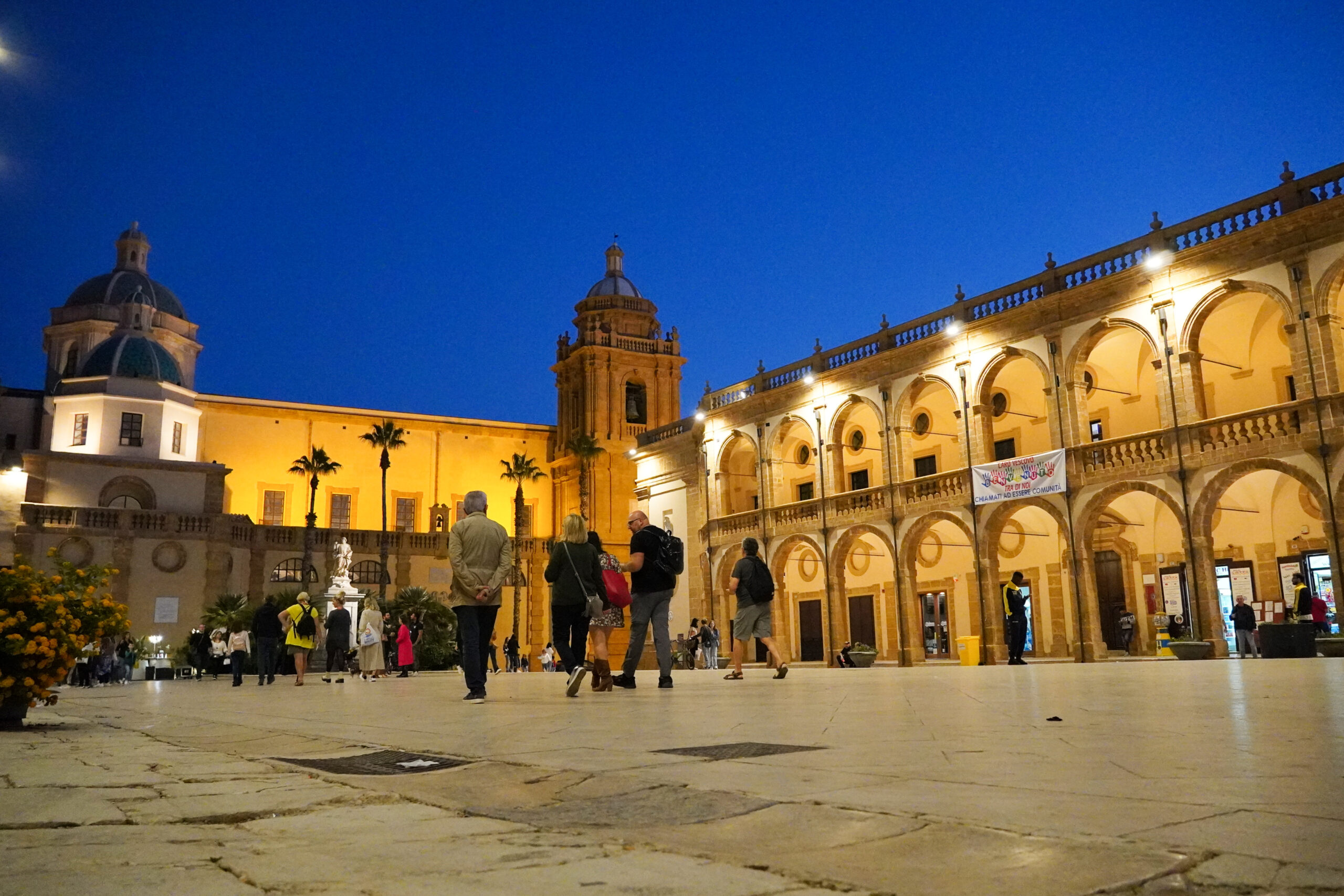
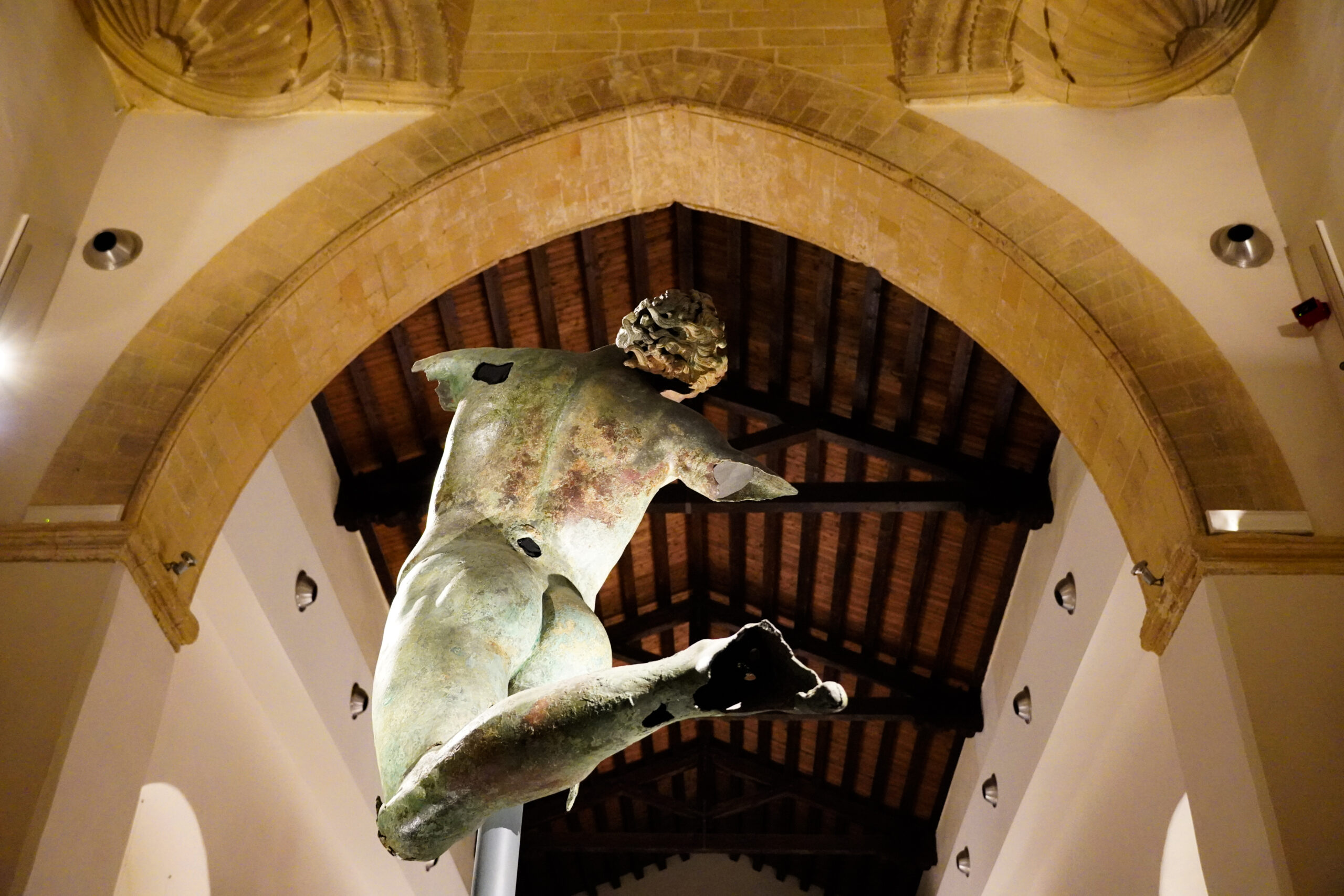
Wander through the magnificent Piazza della Repubblica, the nearby Norman Arch –the last remnant of a 12th-century castle– and visit the Dancing Satyr. Bronze and wild, mid-motion and mid-myth, it’s a relic of ancient Greece that washed up near Mazara’s coast in the 1990s. Today it’s housed in a former church, and it feels like it’s still moving –like he’s caught between worlds, just like the town that holds him.
Wines here speak of wind too. The Strada del Vino Val di Mazara threads through Salemi IGP and Delia Nivolelli DOC territory, where dry winds and coastal currents shape expressive reds and luminous whites. We were lucky to be introduced to them by none other than the “President of Wine” himself, Mario Tumbiolo. Each label was a map –migration in a bottle.
Here, the wind doesn’t erase. It reveals. What was once lost is spoken again –in wheat and wine, in bread and bronze, in languages braided across centuries.
Worth a stop – The Grande Cretto in Gibellina Vecchia is one of the most stunning sculptures you will ever see, while Contemporary Art takes over the new town. If your visit to Sicily happens to be in March, make sure you’re in Salemi on the 19th to join the local celebrations for the Feast of St. Joseph.
Wines to Try – There are several incredible wineries and labels from Delia Nivolelli DOC and Salemi IGP, as well as from nearby Menfi DOC. Reigning whites are Inzolia, Catarratto and Grillo, while reds are mainly made of Nero d’Avola and Alicante (known internationally as Grenache). Cantine Barbera andMandrarosso have fantastic labels, and do tastings and tours of the vineyards. Try Barbera’s Coda della Foce and Ammano, and Mandrarossa’s Bertolino Soprano and Cartagho.
Where to drink and eat? – Strada del Vino Val di Mazara has an enoteca in Mazara del Vallo, if you want to centralize your drinking. If you’re up for a bit of driving, the options are almost endless: Cantine Petrosino, Tenuta Gorghi Tondi, Tenuta Poggio Allegro and Catine Colomba Bianca, to name a few, organize visits and tasting by appointment. As for food, the best flavors and ambiance are in Ristorante L’Antica Sicilia.
Where to stay? – There are amazing mid-range options in every village –Gibellina: Mille e Una Notte; Salemi: Baglio Borgesati; Mazara del Vallo: Sant’Agostino Suites & Rooms.
LIGHT | Seaside Breeze and Island Glow
—San Vito Lo Capo & Favignana
There’s something about the light in this part of Sicily. It softens, flatters, beckons. In San Vito Lo Capo, the sun hangs lazily over an aquamarine bay, glinting off whitewashed buildings and golden sands. It’s a postcard that insists you slow down. Light is the tempo here, dictating when to move and when to rest. You feel it in the slow rhythm of the town, in the sizzle of couscous alle mandorle being prepared at a beachside stall, in the shadows cast long and low by late afternoon.
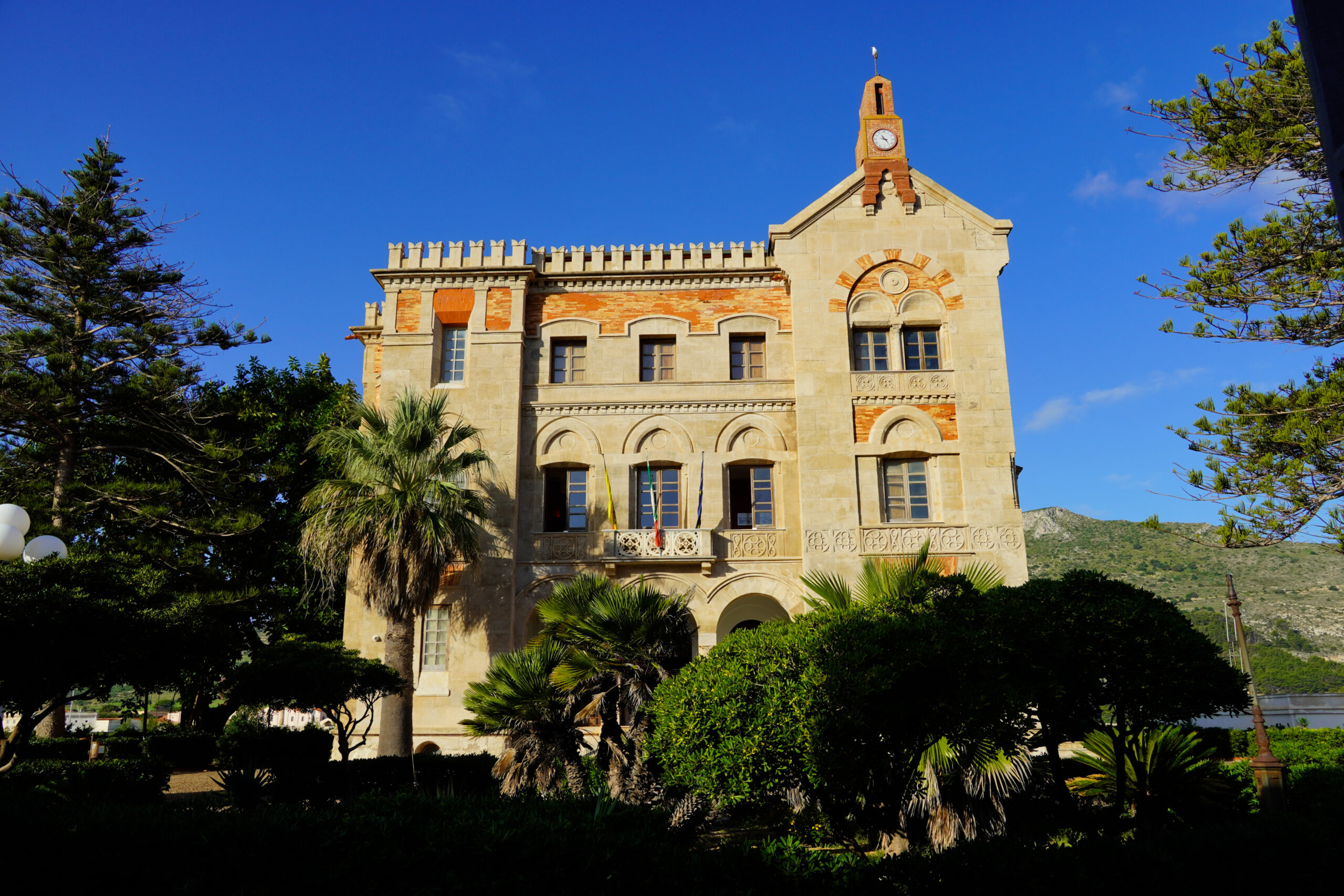
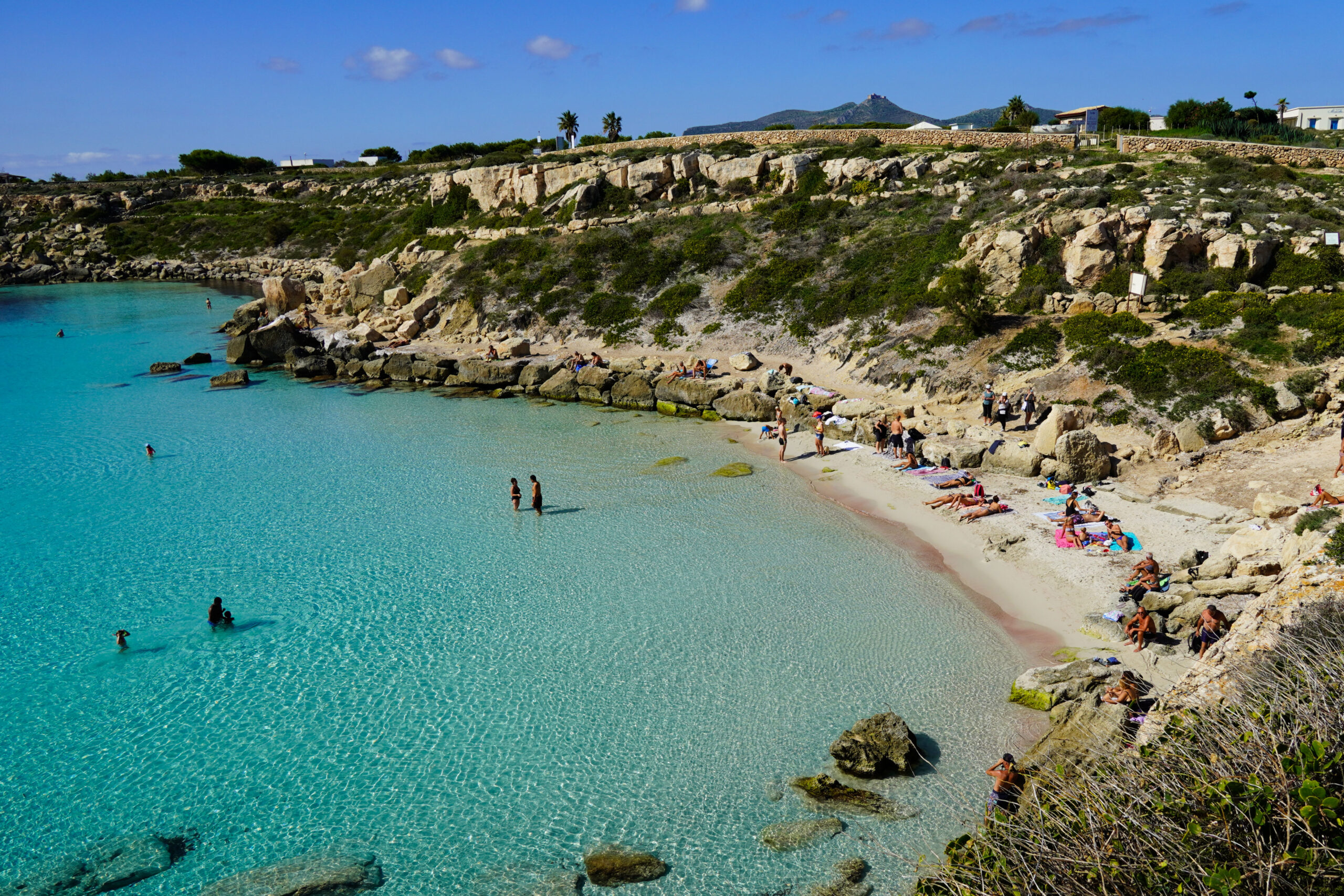
Favignana, the main of the Egadi Islands, just a short ferry ride from Trapani, offers another face of this Mediterranean glow –one that shimmers off limestone cliffs and dives deep into the cobalt sea. Here, light filters through history and heritage. The island was once the private dominion of the Florio family, whose Neo-Gothic summer home, the villino, still stands with its Liberty-style interiors and underground passageways. Their legacy, etched into stone and lion emblems, recalls Sicily’s role as a crossroads –a place of exchange, encounter and nourishment.
This stretch of coast and sea seems made for white wine. Locals often say the climate screams white, and it’s true: the brightness of the days, the salty breeze, the freshness of the food –all call for a chilled glass of Grillo, Zibibbo or Catarratto. These wines are luminous, just like the places that birthed them.
And then, there’s a different kind of light –the human kind. The then mayor of Favignana, Francesco Forgione, speaks of the island as a beacon in the Mediterranean. A point of encounter, not conflict. Where cultures should meet, not clash. Even today, locals pull migrants from the waters, adding acts of compassion to the long history of exchange that defines these shores.
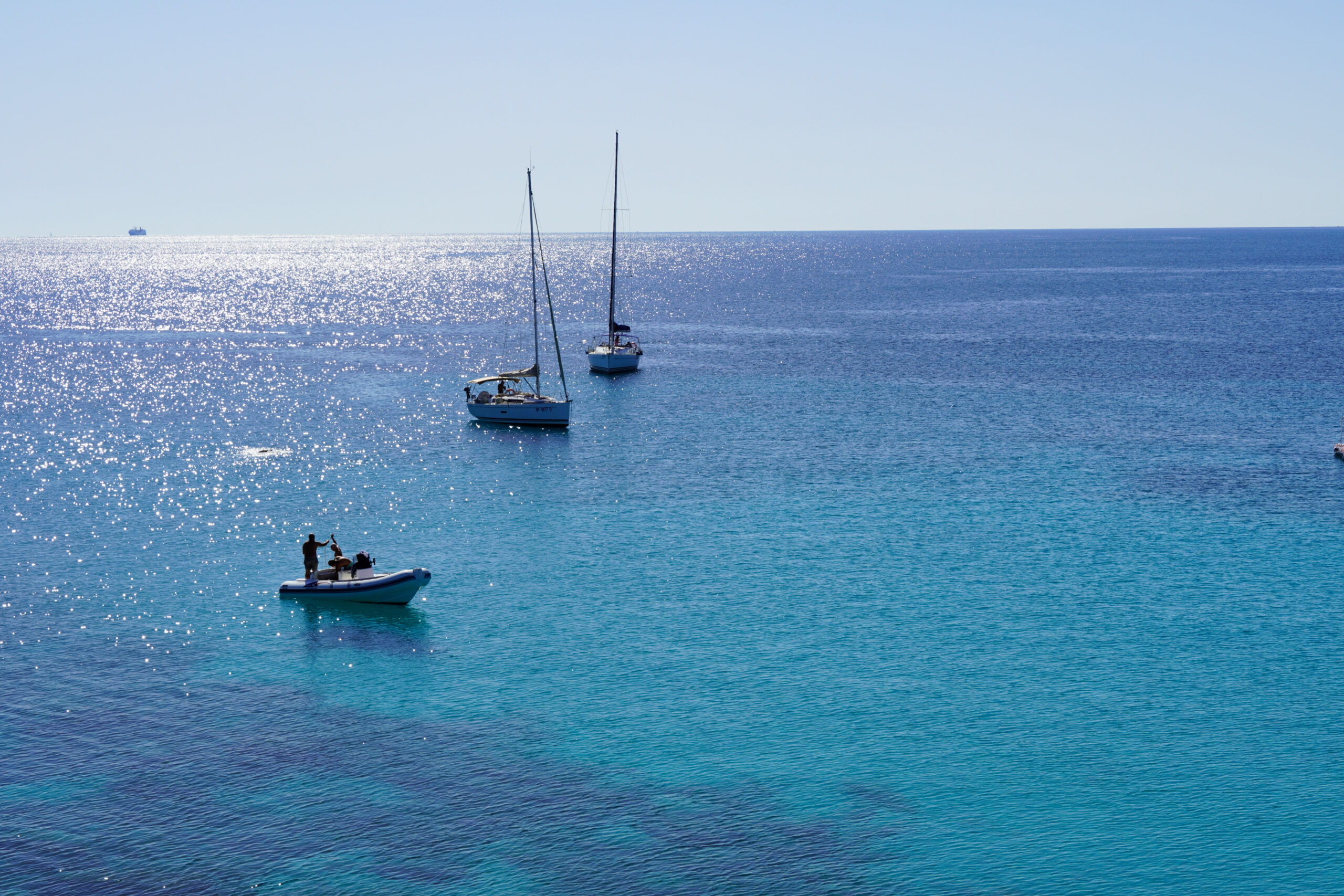
On an e-bike ride to Cala Azzurra, where the sea is impossibly clear and turquoise, it’s easy to forget the world beyond the horizon. But Favignana doesn’t let you. It invites you to rest, to reflect –to glow a little yourself.
In Sicily, light reveals what matters.
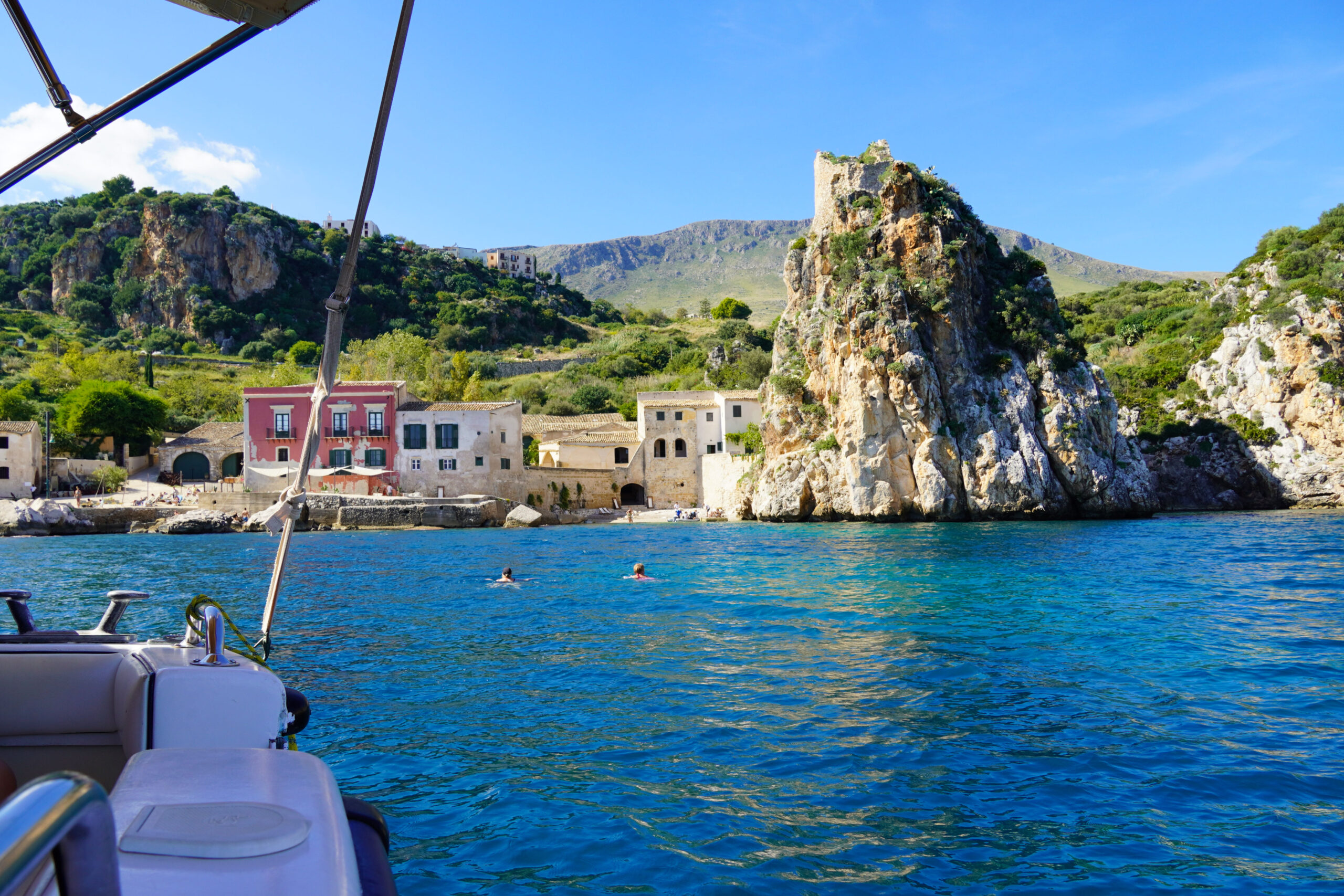
Worth a stop – If you want to see Sicily at its wildest, head to the Zingaro Nature Reserve. A great way to take it all in is from the sea –on a slow boat ride. Hippocampus Sea, a lovely local couple-run venture will provide a scenic ride, quiet swimming spots and stories carried on the breeze.
Wines to Try – The labels I recommend are Calamoni di Favignana’s La Muciara, Le Sciabiche and Passulè. The coastal towns are also the perfect spots to try Frizzante Ancestrale, an old-fashioned fermented-in-the-bottle elixir that feels like a middle ground between wine and beer. Locals say it’s the perfect pair for pizza. If you want something stronger, Favignana is venturing into high-end gin –Isola Di Favignana Gin is made with natural wild botanicals from the island. For another isle twist, try Passito di Pantelleria, an intensely aromatic sweet wine, bursting with notes of dried apricots, honey, and Mediterranean herbs, made from sun-dried Zibibbo grapes grown on the volcanic soil of the remote Pantelleria Island.
Where to drink and eat? – In San Vito Lo Capo, head to Allantica Osteria for traditional food and ambiance, or to Bottega Sugameli for finger food and a more relaxed vibe. You can enjoy a sunset aperitivo at Bar Vela, where local wines pair beautifully with caper-laced antipasti and warm pane cunzato. On Favignana, you can do a wine tasting at Calamoni di Favignana. For local cuisine go to La Porta Sul Mare, while Fontemare is perfect for a long lunch of handmade pasta with sweeping views. For an evening glass, Il Cappero is a humble bar tucked into the old town’s quiet streets.
Where to stay? – For luxury head to Scopello, either to Tonnara di Scopello or La casa del Rinoceronte. For a bit more down-to-earth alternatives, consider San Vito Lo Capo B&B Le Onde Del Mare or Room & Breakfast Aloe (mid-range). In Favignana the best options are Casa Turchese (premium) and Tra le Nuvole (mid-range).
LOVE | Of Family, Faith and the Fruits of Labor
—Castellammare del Golfo & Buseto Palizzolo
In the quiet hills of Buseto Palizzolo, the olive harvest isn’t a chore –it’s a ritual. At Oleificio Mazzara, a family-run olive press founded in 1860, the process of turning fruit into “green gold” is done with reverence. Every drop of oil carries a century and a half of history, devotion, and the scent of sun-soaked groves. Nearby, the Mustazza family winery bottles heritage –small-scale, award-winning vintages rooted in the soil they’ve tended for generations. Here, wine and olive oil are more than staples. They are stories of devotion –to land, to labor, to lineage.
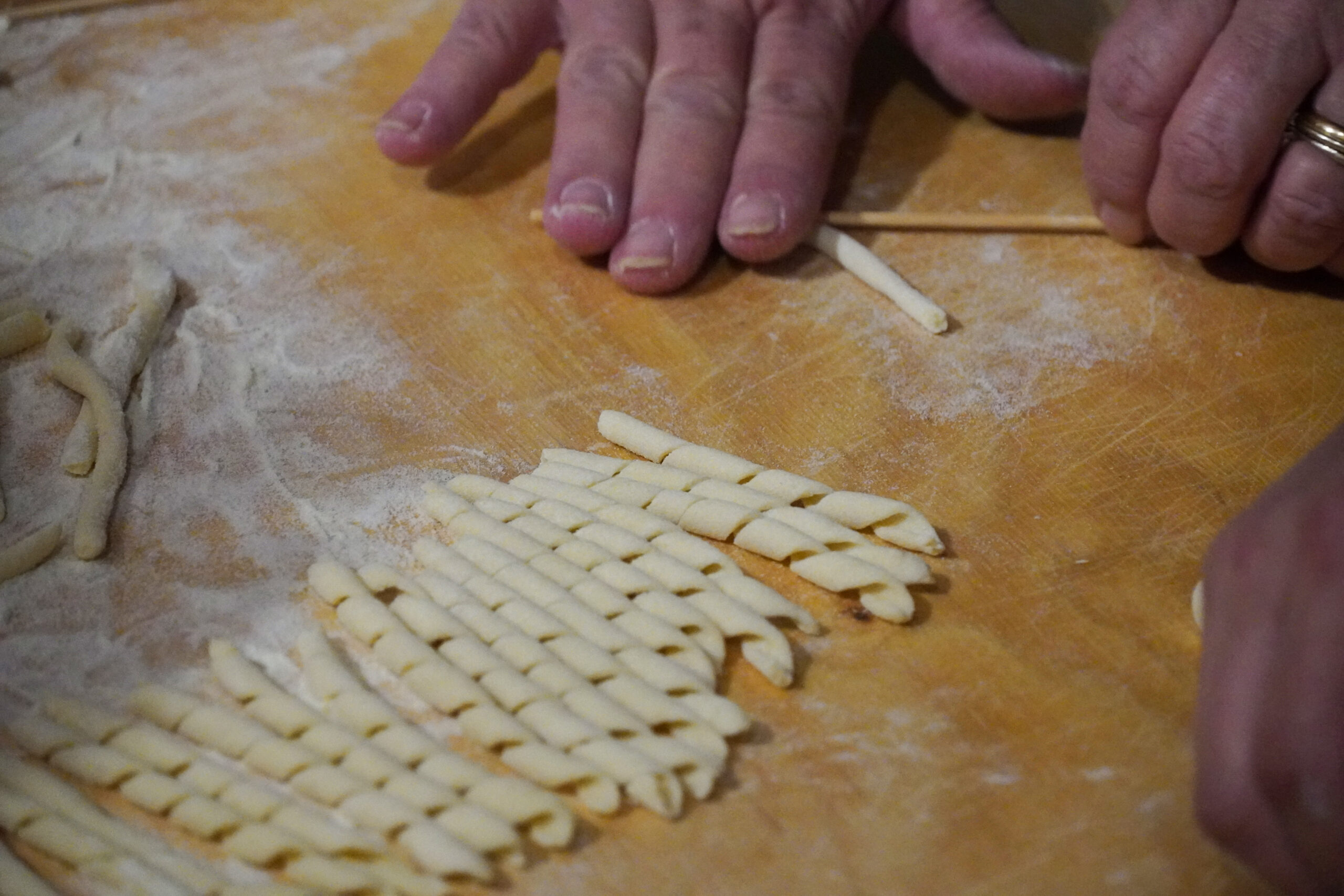
At Baglio Fontana, we were welcomed into the heart of a historic Sicilian estate. The baglio itself –from the Arabic bahal, meaning a walled courtyard– is a vestige of Sicily’s layered past, once a fortified agricultural hub, now a living museum of hospitality. We kneaded and rolled our own busiate pasta in a hands-on cooking class, learning not just how to make it, but why it matters. Food here is never separate from memory.
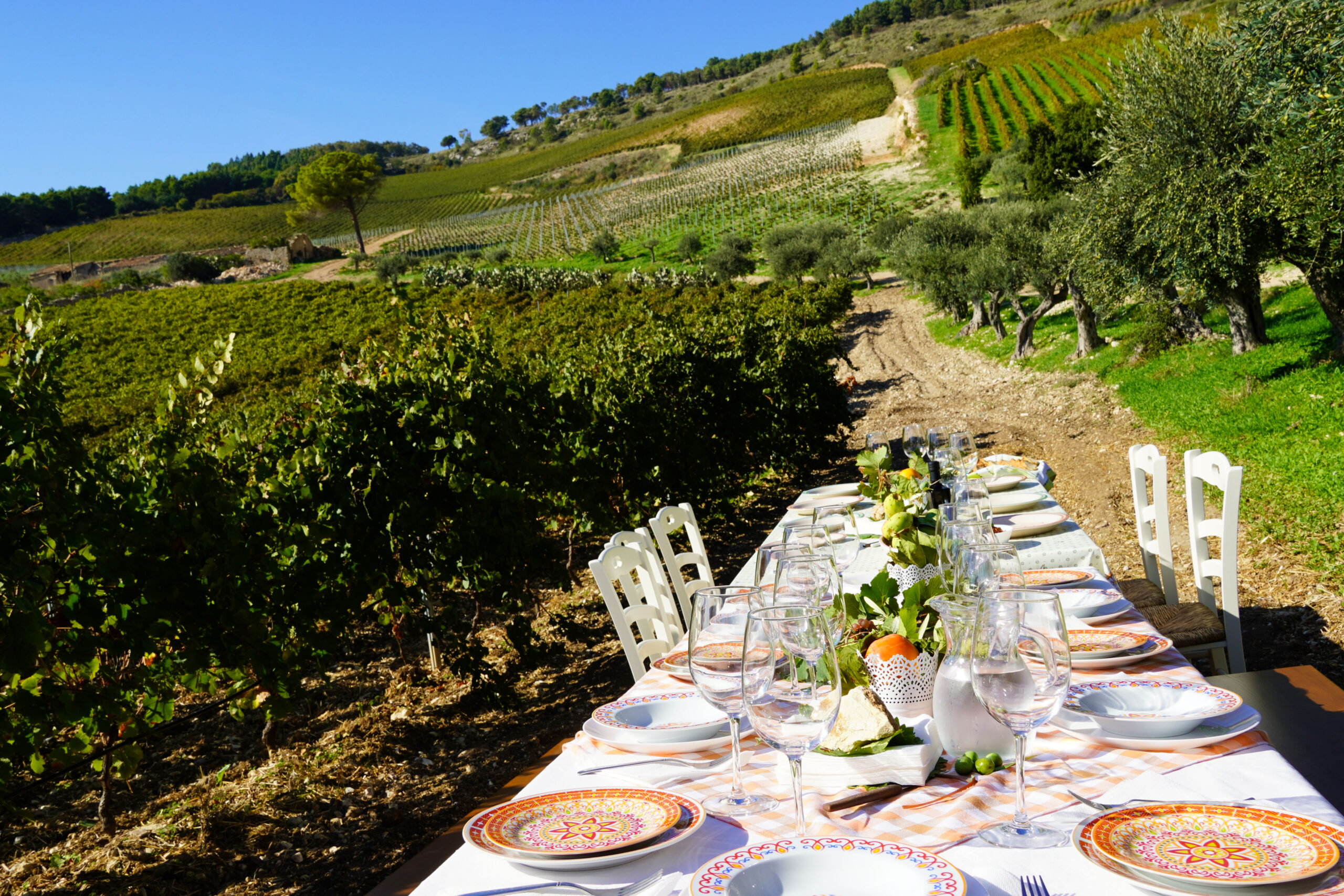
Then came Castello Inici, perched in the countryside like something from a dream. The approach itself felt like a portal –olive trees on one side, rows of grapevines on the other, the midday sun filtering through. A long table was set outdoors, beneath rustling trees, surrounded by nature’s quiet grandeur. It wasn’t the food alone that made the lunch unforgettable (though it was extraordinary). It was the setting: the laughter echoing through the fields, the passing of bottles from hand to hand, the sense that time had bent to allow for something sacred –a meal not eaten but shared, in every sense of the word. We drank wine grown just meters away, tasted bread still warm, oil pressed by hands we had just shaken. It was a celebration of place and people, of doing things slowly and doing them well.
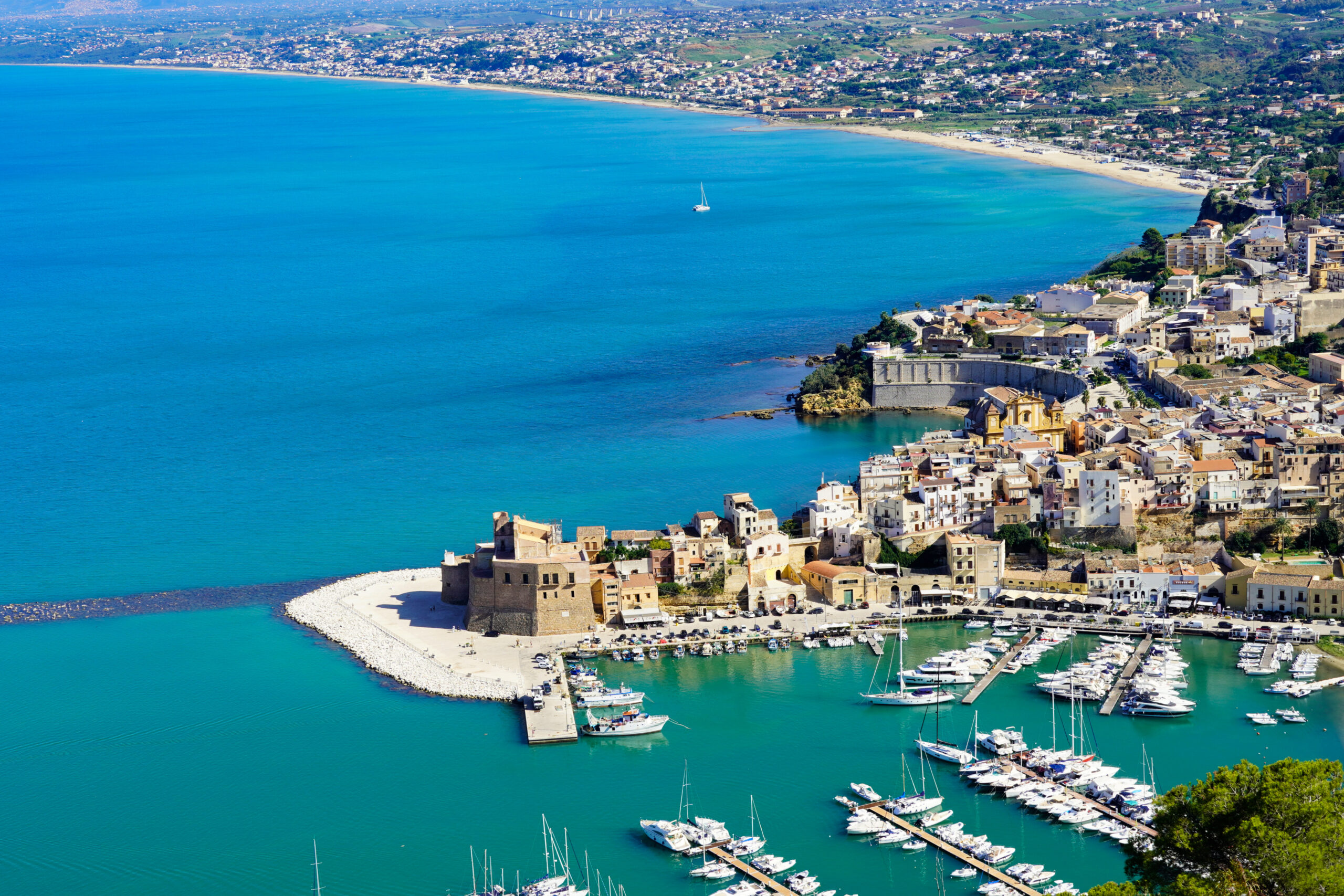
In Castellammare del Golfo, the tempo of coastal life sets the tone. The town stretches gently along the sea, anchored by the Arab-Norman castle that gives it its name. From the fortress’ walls, you can gaze across the curve of the bay, watching boats bob gently in the marina. The historic center hums with the clink of glasses and quiet conversations under balconies draped in laundry and flowers. Strolling along Via Giacomo Medici, you’ll pass churches, sun-bleached facades, and gelaterias that feel pulled from another century.
In the evening, we found ourselves in the Museo del Mare, a whimsical house-turned-museum packed with maritime memorabilia, hosted by the endlessly endearing Mr. and Mrs. Paradiso. Over simple dishes –pane cunzato, spaghetti aglio e olio, caponata– they spoke of storms and fish, of community and continuity. It was humble, heartfelt and profoundly Sicilian.
Across these places, slow travel becomes something more than a trend –it becomes an ethic. Even in a brief stay, you’re folded into a rhythm that values season, effort and memory. Wine and oil are sacred, not only in religion –though their Catholic symbolism is deeply felt– but in culture, family and work. This blend of sacro e profano is the soul of Sicilian heritage. As Thucydides once wrote, “the peoples of the Mediterranean began to emerge from barbarism when they learnt to cultivate the olive and the vine”. Here, that cultivation continues –lovingly, fervently, by hand.
Worth a stop –Just a short drive inland, the ancient Elymian city of Segesta offers one of Sicily’s most striking archaeological sites. The unfinished Doric temple, standing solitary in a golden valley, is as moving for its silence as for its grandeur, while the hilltop theatre, with views over the surrounding countryside, often hosts summer performances.
Wines to Try – The vast Marsala DOC area produces an array of varieties. Together with Grillo, Catarratto and Inzolia, here you’ll find easy-to-drink, floral Damaschino, while Nerello Mascalese and Perricone keep the prince, Nero d’Avola, company. For something unique try Mustazza’s Quasale Vino Ansestrale or go for a more classic glass of Beglio Oro’s Ceppibianchi. You also can’t go wrong with any of the labels from Castello Inici.
Where to drink and eat? – Castello Inici organizes the most beautiful lunches paired with wine, while Baglio Fontana’s restaurant serves family-style local cuisine with Arab influences. Elimi Vini, Quattrocieli, Augustali Azienda Agricola, Elios Vini Naturali andCantine Martinez offer estate tours and wine tasting. To satisfy your sweet tooth, or for a quick bite, in Castellammare you can go to old-school bakeryPanificio Cacioppo.
Where to stay? – Castellammare: L’ Arena Suite (premium), Porto Centro Storico Spiaggia (mid-range), Verdirooms158 (budget); Buseto Palizzolo: Agriturismo Baglio Fontana (premium to mid-range), B&B Baglio Ferlito (budget).
FAQ / AT A GLANCE
Palermo airport (PMO) is the main international gateway, with direct flights from several European cities (including London, Paris, Madrid, Berlin, Zurich and Vienna). Trapani–Birgi Airport (TPS) is smaller but convenient –it has limited international flights (mostly seasonal), but regular domestic ones. Ferries also connect the mainland (Naples, Rome and Genoa) to Palermo. These offer cabin accommodation and vehicle transport. From Trapani, frequent hydrofoils and ferries serve Favignana and the other Egadi Islands year-round.
Between buses, trains, cable cars and ferries, you can get almost everywhere. With that said, renting a car is recommended for flexibility.
If you want hassle-free experiences, the easiest way is to book tours. From Trapani you can do a Favignana and Levanzo Islands day cruise, a Salt Pans and Museum excursion, or an Old Town foodie tour; while from Palermo you can do a tour of San Vito lo Capo, Zingaro Nature Reserve and Scopello, a Segesta, Erice and Salt Pans full-day excursion or a street food walking tour.
Although it’s a year-round destination, I’d recommend April–June or September–October, when the weather is warm but not oppressive, and harvest or post-harvest energy fills the air.
7–10 days will give you time to wander unhurriedly, but even if you only have a few days it’s worth a trip.
The Leopard by Giuseppe Tomasi di Lampedusa, for timeless insight into Sicilian identity. On Persephone’s Island by Mary Taylor Simeti, a lyrical memoir of life and food in rural Sicily. Vino Italiano by Joseph Bastianich and David Lynch, an excellent introduction on Italian wines and regional varieties. And Lonely Planet for a fantastic Sicily guide, if you want to explore more of this amazing island.
Sicily is not a destination you conquer –it’s one you surrender to. You don’t just visit the West of the island. You are folded into it, like dough, like memory. You sip its sunlight in a glass of Grillo, taste its history in a spoonful of caponata, feel its devotion in a loaf of bread sculpted for a saint.
Whether you’re in a salt flat at sunset, a baglio kitchen kneading pasta, or sharing laughter in an olive grove, one thing becomes clear: Sicily grows grapes, but it mainly cultivates stories. And it’s waiting to share them –slowly, generously, like a good wine.
WHAT TO READ NEXT?
- Best wine destinations around the world
- From rubble to a canvas of absence: the artful afterlife of Gibellina, Sicily
- Italy off the beaten path destinations
- Wine tourism in Europe: the most underrated wine destinations
- Booming wine destinations around the world
- The ULTIMATE Travel Experiences Bucket List
Liked it? Want to read it later? Pin it!
Enjoyed what you read? A lovely way to show appreciation is by buying me a coffee.
Your support keeps the stories, guides and geopolitical insights coming. Thank you so much!


Very nicely written and informative post and beautiful photographs! I’ve been to Sicily and absolutely loved it. Reading this made me want to go back so bad!
Thank you so much, Emily! I’m so glad it brought back good memories —Sicily has that effect, doesn’t it? Hope you get to return and soak up even more of its magic!
I’m a huge fan of Italian wine and have explored many regions across Italy—Tuscany, Piedmont, Veneto, you name it! But Sicily has been high on my bucket list for years, and this post just made me want to go even more. I love how you describe the journey like a slow pour—it feels immersive and personal. Saving this for when I finally plan my Sicilian wine adventure!
Thank you so much, Agnes —your comment truly means a lot! With your love for Italian wine, I think you’ll find Sicily incredibly rewarding. It’s a region full of depth, surprises, and heart. I’m thrilled the post resonated with you —cheers to future adventures!
LOVE this guide – was considering Sicily and now I’m sold!
So happy to hear that, Samantha! Sicily is such a rich and flavorful destination —in every sense. I hope you get to sip your way through it soon!