
This article may contain compensated links. Please read the Privacy Policy & Disclaimer for more info.
*I visited Syria mid-2024. In December of that year finally the Assad regime was overthrown. Nowadays the situation is very different for travelers, who can wander the country independently. Still Syria is in a transitional period, so if you choose to visit, do so with every possible precaution. As for the story you’ll read here, I didn’t alter a word since I think it will help travelers to further understand a piece of the country’s history that fortunately is behind them.
“Are you crazy?” was the phrase I heard the most when telling people I was going to Syria. “Do I need to remind you that there’s a war there?” would often follow. Yet people seem to have forgotten about the millennia that happened before the war. Syria is one of the most interesting countries to visit in the world. Legendary sites like Palmyra, Bosra, Krak des Chevaliers, Aleppo and Damascus –to name a few– are reason enough to have Syria on anyone’s bucket list.
And, contrary to popular believe, I’m not *that* crazy. The war reached a stalemate years ago, and most of the country is completely safe to visit. So I went. Here’s a deep dive into what is really like travelling to Syria, plus insights on its history and political situation. It’s a long one, but I hope it helps you understand this vastly misunderstood country –and maybe inspire you to go as well!

Finalist of the 2024 Traverse Creator Awards – ‘Best Storytelling Piece’
A deep dive into traveling to Syria: the history and the situation under al-Assad
–Traveled between May and June 2024
Why visit Syria?
While I was in the middle of my cancer treatment, counting down the days until I could travel again, fantasizing about how epic my first trip should be, I got an email from NomadMania. “Wanna go to Syria?”, it casually read. I don’t do group tours, but I was sure this would be a curated collection of well-traveled people, and there’s no way of visiting Syria independently. So within two seconds I hit reply with “when do we leave?”. I mean, there are not that many places that would qualify as epic on my book, and Syria was definitely high up on the list.
In the months that led to this very much expected trip, I started pondering why it was so special to me. I remembered being at my desk while working at the Human Rights Department in the Ministry of Foreign Affairs in my native Chile in March 2011, when I read news about a revolution breaking down in Syria. It was amid the Arab Spring, when country after country in the Middle East and Northern Africa fought their establishment, in some cases successfully getting rid of their dictators. The Arab world was ready for much needed social change, and finally there was a collective nudge to start making it happen.
But none of the information that circulated back then was enough to make sense of the magnitude of the conflict. See, it was not just fed-up citizens looking for fair changes –they were just the initial excuse to start a proxy war that would destabilize the country and the neighborhood for years to come. There were so many fronts being fought, with so many external influences being shoved, that nobody truly understood how it got so nasty, and more so, nobody had an answer on how to put a stop to it. Or maybe nobody really wanted the war to end.
You’ll hear stories about the layout of a gas pipeline, with the United States advocating for a project to build a Qatar-Turkey line (passing through Saudi Arabia, Jordan and Syria), that would secure Europe’s gas without any dependency on Russia; while the Russians backed a Iran-Iraq-Syria proposal and blamed a covert CIA operation to remove Bashar al-Assad and install a pro-American president to sign off on the former deal. And stories about the martyr rebels that sacrifice their lives for a better tomorrow for their countrymen.
Some will blame it on the initial reaction of the governmental security forces, who violently suppressed any demonstration against al-Assad, with many of the protestors organizing into resistance militias across the country. Some others will say there was no discontent with the government, but it was unlucky circumstances –namely a 5-year drought that saw an increase in food prices and a mass migration of farming families to urban centers. Some will attribute it to al-Assad’s modernizing and secular policies that shook the core of the much more conservative people in the country, losing their support. Some will state that the Sunni majority had enough with an Alawite minority leading them.
The only thing that’s clear is that these many fronts created a vacuum for anyone to seize power. There was no united rebel group, but forces consisting of the Syrian National Army, the Free Syrian Army, the Syrian Salvation Government, the Revolutionary Commando Army (also known as the Syrian Free Army –zero confusing!– or Maghawir Al-Thawra), and the Syrian Democratic Forces, plus Jihadist organizations such as the al-Qaeda-branches Hurras al-Din and al-Nusra Front, and the Islamic State (ISIS/DAESH). Al-Assad forces were backed by Iran, Russia and Lebanese Hezbollah, while different rebel factions had the support of Turkey, Israel, and a United States-led coalition.
After 6.6 million of refugees, 6.7 million of internally displaced people, and hundreds of thousands of persons killed, along with the hopes and dreams of those who survived, this absolutely pointless war came to a stalemate by late 2018, with only small strongholds not controlled by al-Assad’s government.
Slowly the country is getting back on its feet. Reconstruction is ongoing in the bigger cities, and some refugees are returning. Even the borders opened for tourism –although almost no one is accepting the invitation. And that’s exactly why I wanted to visit. It’d be quite pedantic of me to pretend to understand what is happening in the country on a short 10-day visit, but I do believe that what I could first-handedly witness would be enough to debunk what the media tells us about the risks of visiting Syria. I wanted to go because my experience will contribute to showing how safe, beautiful and welcoming the country is. And maybe it will encourage more people to venture into traveling to Syria.
Quneitra and the Golan Heights (and the landing of the Assad dynasty)
I journeyed to Lebanon to start the tour from its capital city, Beirut. On a balmy May morning I met the group of travelers that would be my companions for the next 10 days, a team of very interesting and well-traveled people from different corners of the world. A bus picked us up to drive us straight to the Golan Heights –one of the most complicated places to visit in Syria. So much so that our trusted fixer said no one else has had a permit to visit this year. It even was the first time there for our guides. It felt like more than a bus, we stepped on a time machine that took us back to the 1970’s.
The delimitation of the border between Syria and Israel was fixed in the armistice agreements that followed the 1948 Arab-Israeli War. But during the Six-Day War, in June 1967, Israel captured roughly two thirds of the Golan Heights, including its main city, Quneitra. The resulting ceasefire line –called “Purple Line” because of the color used on UN’s maps– became the new effective border.
The Golan Heights were strategically important as a defense line because of their privileged position overseeing the valley that surrounds them, as well as being an agricultural heaven for the country. Thus, when Hafez al-Assad seized power through a coup d’état in November 1970, his policies had an emphasis on defeating Israel. The al-Assad dynasty was powerful, and the Syrian people placed their hopes into ‘the lion’ (literal translation of Arabic ‘al-Assad’) being able to fiercely rule.
With the objective of recovering the territories occupied by Israel in 1967, Syria and Egypt launched a surprise attack in 1973, starting the Yom Kippur War. But Israel pushed deeper into Syria and conquered territory beyond the Purple Line. The war promptly ended, just a few weeks later. A disengagement agreement was signed on May 1974, pulling the border back to the Purple Line, and setting up a 235 km2 United Nation’s buffer zone in Syrian-controlled territory, maned by the UN Disengagement Observer Force Zone (UNDOF).
Less than a month after the signing of the agreement, President Hafez al-Assad travelled to Quneitra, from where he pledged to return all the occupied territories to Syrian control, following his vision of Syrians being able to swim once more in the Sea of Galilee, as he did as a child.
From that day until that of my visit nothing seemed to have changed. Al-Assad arrived in a dynamited and bulldozed city that followed the same faith as over a hundred other villages and farms that were demolished. The Syrians decided to leave Quneitra untouched, as an open-air museum showcasing the condition the Israeli army left it in. So that’s exactly what we walked into. The Times on July 10th, 1974, ran an article called “Golan’s capital turns into heap of stones”, that read:
«Today the city is unrecognisable. The houses with their roofs lying on the ground look like gravestones. Parts of the rubble are covered with fresh earth furrowed by bulldozer tracks. Everywhere there are fragments of furniture, discarded kitchen utensils, Hebrew newspapers dating from the first week of June; here a ripped-up mattress, there the springs of an old sofa. On the few sections of wall still standing, Hebrew inscriptions proclaim: “There’ll be another round”; “You want Quneitra, you’ll have it destroyed”.»
Sans the fragments of furniture and discarded kitchen utensils, what we witnessed is well described by the newspaper. Few things stand out from a sea of flattened buildings. The towers of a wrecked church that miraculously survived, giving a sense of actual life existing there, even if once upon a time. A former caravanserai that housed the fatefully named “Liberated Quneitra Museum”. And not much else. “It’s like a mini Gaza”, my guide whispered to me as we left –both of our hearts were breaking.
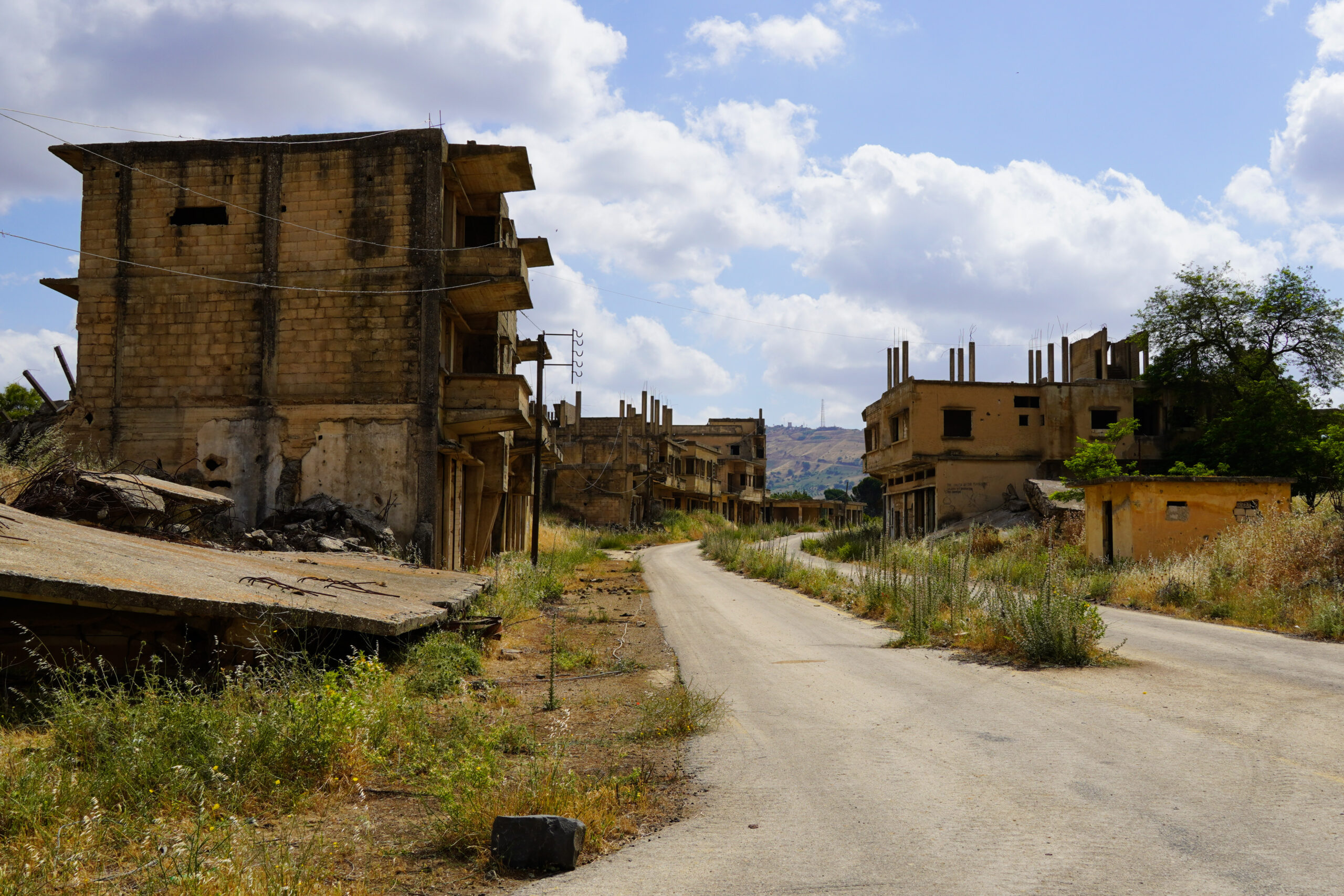

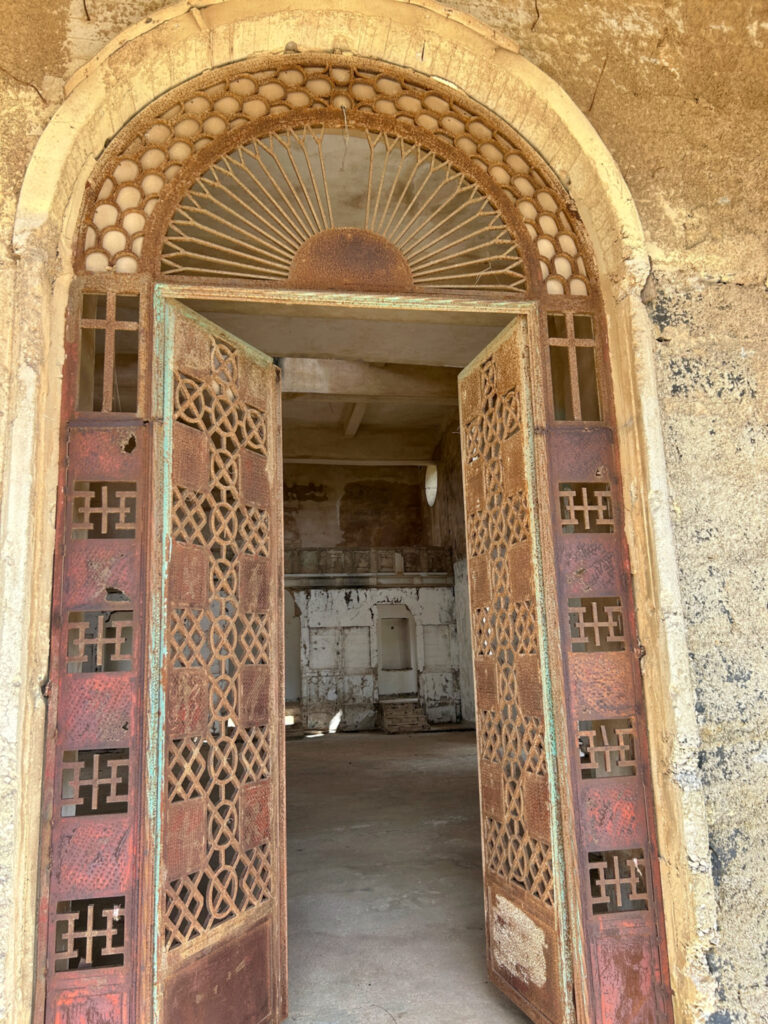

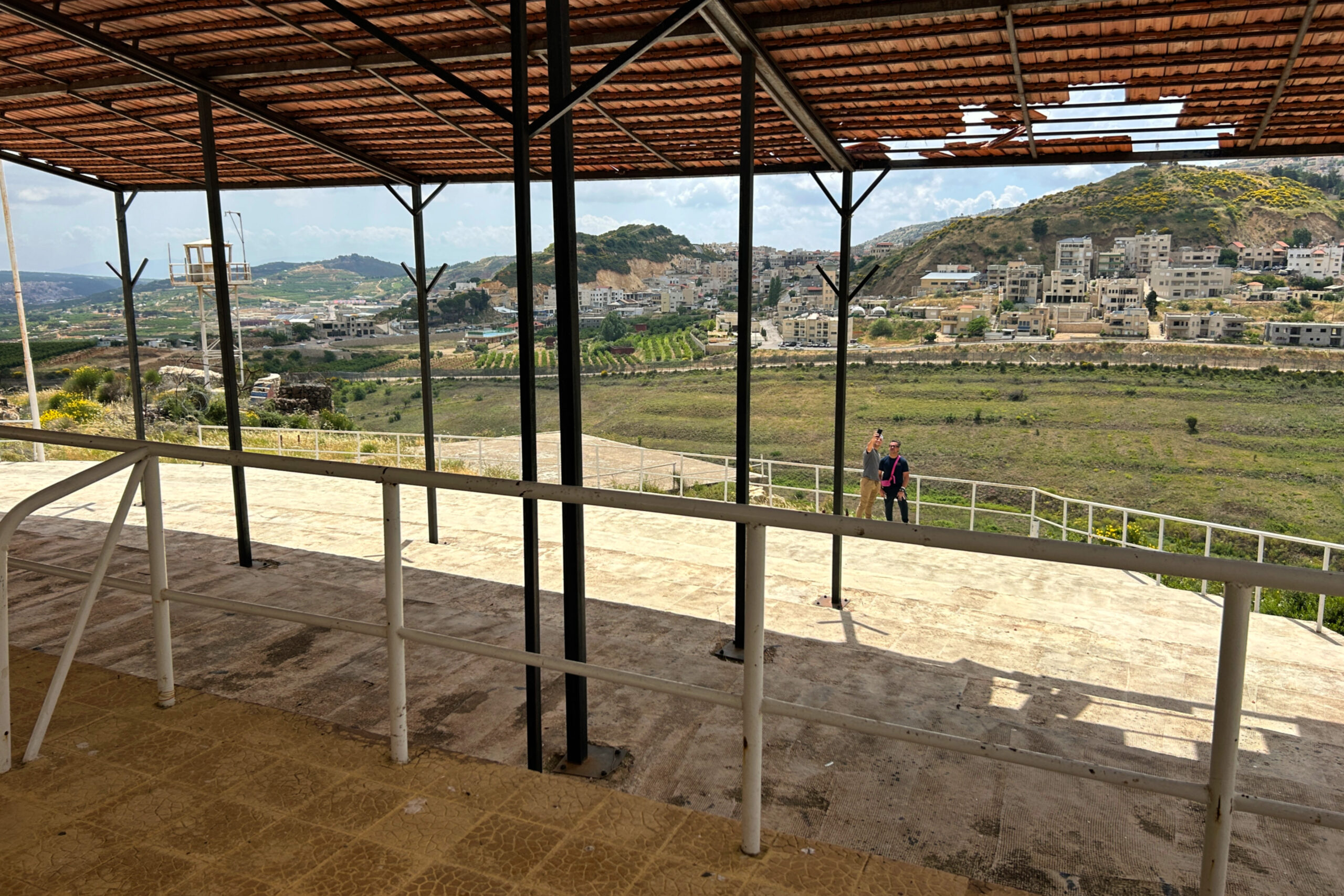
We had some time to freely wander around the rubble before we went to the most surreal spot I saw in the entire trip. Right across from Majdal Shams on the occupied side, on the actual Purple Line, the Syrians built an observation platform. The fence that separates both sides of the Golan is only a few meters away, and the atmosphere is eerie. It’s a simple concrete stage constructed to witness life on the other side, to never forget, even if the status quo has been maintained for decades.
Israel passed a law in 1981 effectively annexing the occupied territories, which has been only recognized by the United States, and condemn by the international community through the United Nations. Until this day some of the inhabitants of Majdal Shams and other towns refuse to integrate to Israel –although the new generations have never stepped foot on Syrian-controlled soil, in their hearts they are still Syrian. One of our guides has family on the other side, so all of us screamed her cousin’s name. That was the first somewhat physical contact they’d had in years. It was incredibly touching to be part of such an intimate family moment, even though it took me some time to fully grasp what I had witnessed.
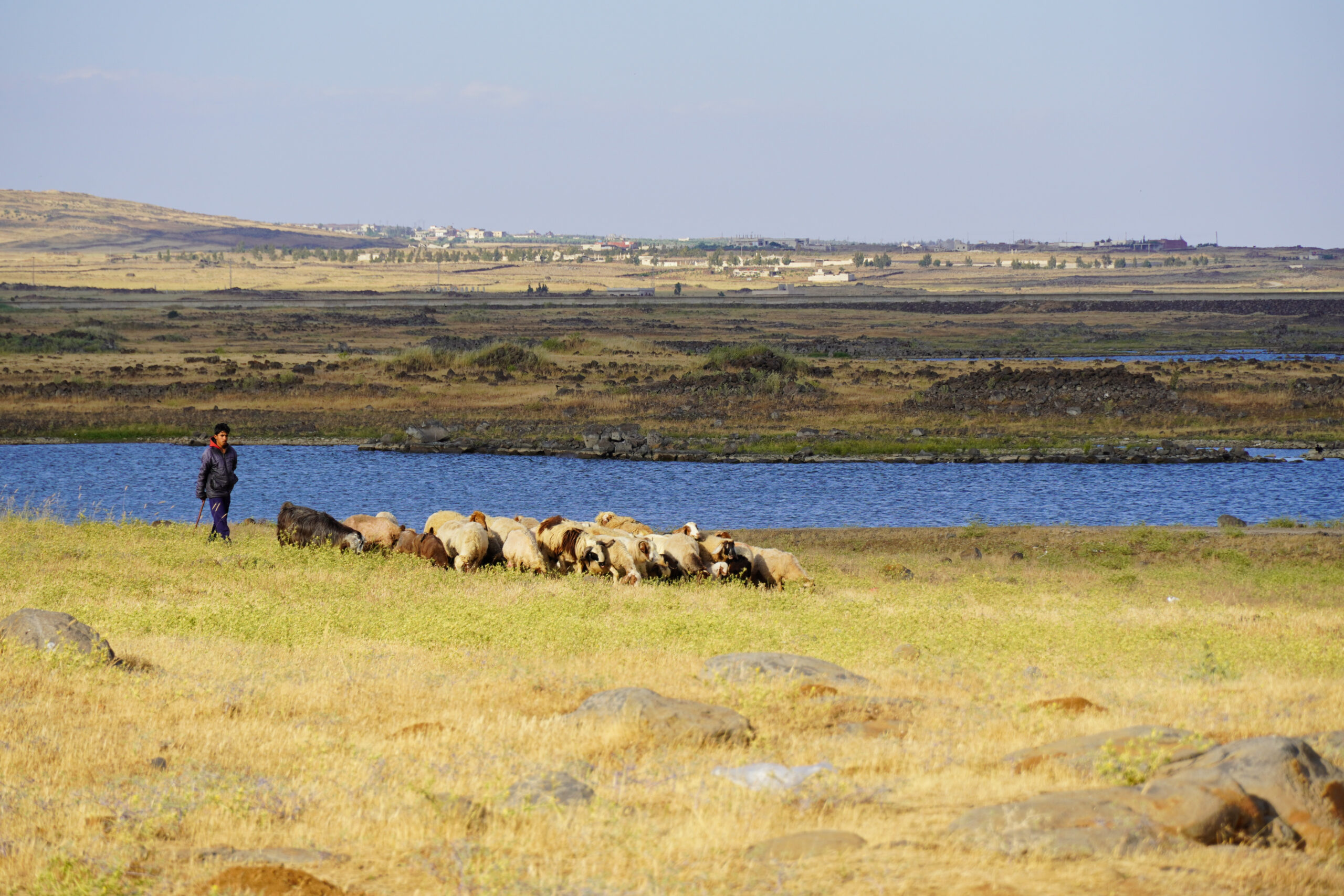
Quneitra was reconstructed a few kilometers away. And although permits to visit the region are very hard to get even for Syrians, there are early plans to encourage tourism in the region: we stopped for lunch in a newly constructed restaurant in the shores of the al-Mantara Dam, where the manager proudly offered us local produce. As we drove out, I felt a moment of relief. Life continues, no matter what the universe throws your way. What a first day!

Bosra (and the Romans)
Ok, so starting the trip in such an extraordinary place meant to start the story from the middle. Let me backtrack. To keep this already long post readable, and fully acknowledging how much more I could have backtracked to Assyrian or Babylonian times, I’ll go back only to the Romans.
After visiting the Golan Heights, we spent the night in Damascus. We would see the city at the end of the tour, so there was only enough time for first impressions. And the one that stood out the most, from the moment we crossed the border, was the ever-present flags and pictures of President Bashar al-Assad. They are displayed at every single one of the hundreds of checkpoints, on billboards along the roads, even in most houses. You can see the flag painted in garage doors, or a faded photo of al-Assad hanging from a window, making it obvious that people wanted to showcase who they supported during the war.
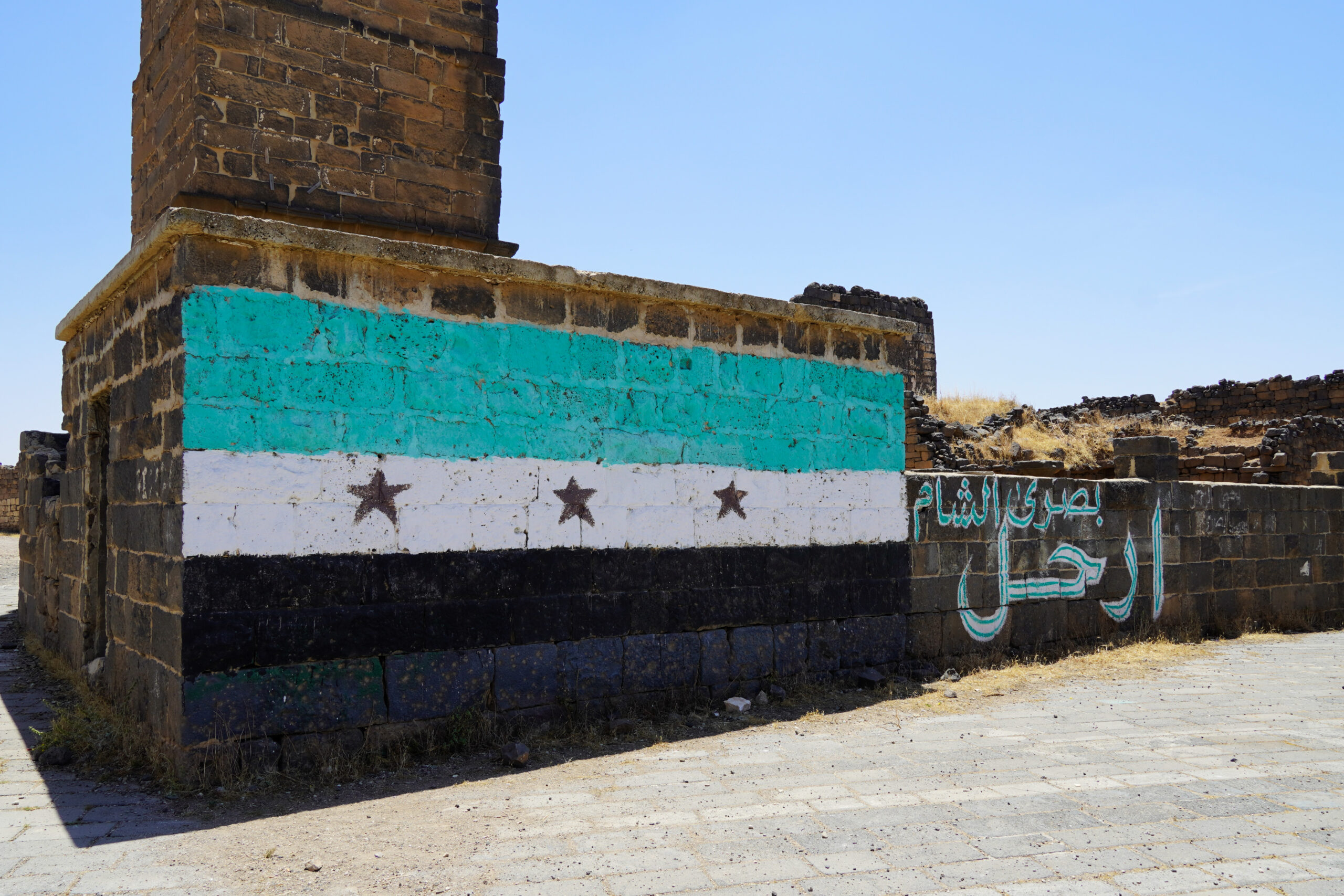
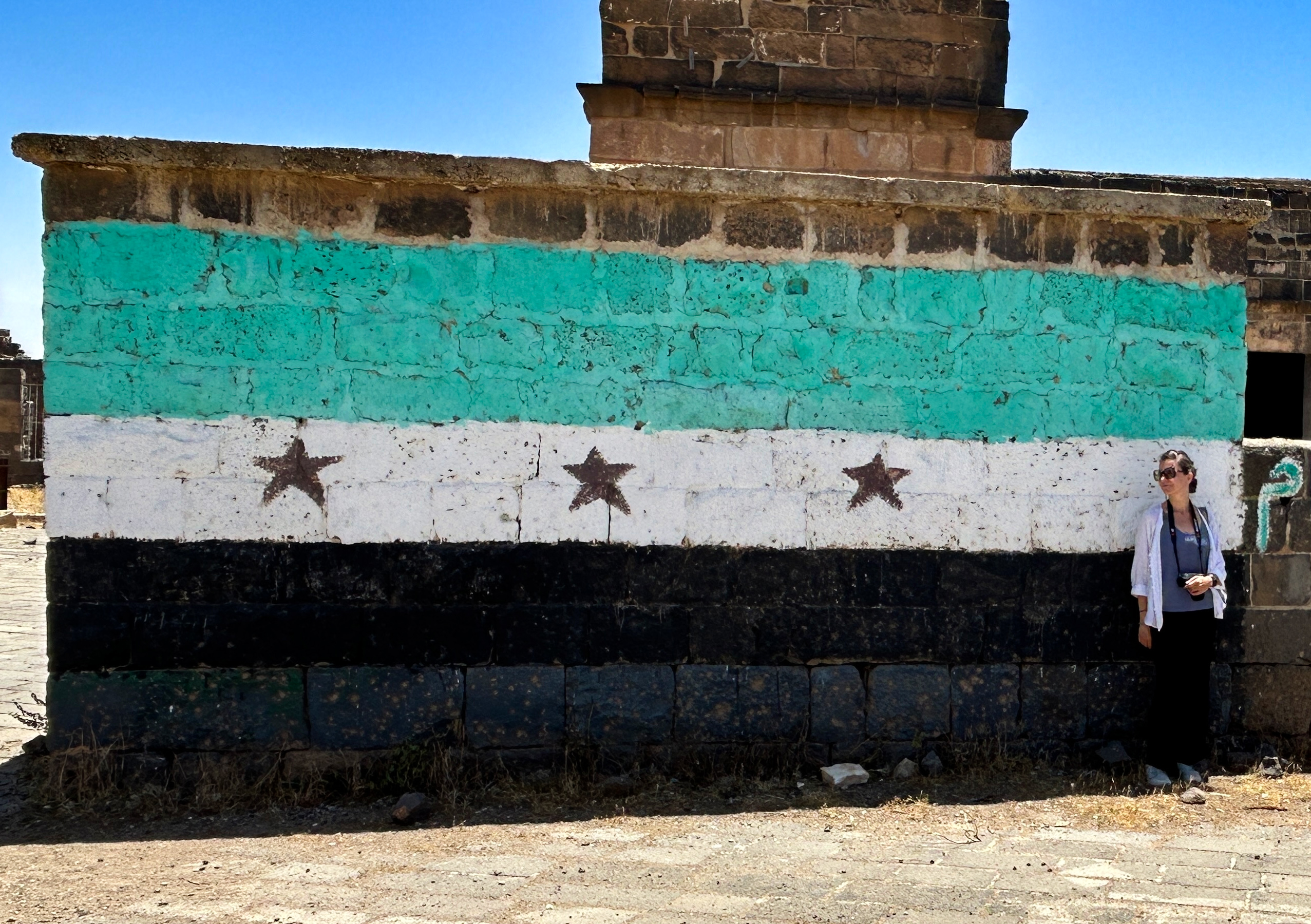
But on the second day behind were left the ubiquitous posters of Al-Assad, and two stars gave way to three. We entered a territory still controlled by the Free Syrian Army, one of the rebel groups. In all honesty, if it wasn’t for the lack of the beloved leader’s face missing, I wouldn’t have been able to tell. We had to go through a checkpoint to enter the occupied/liberated region that looked exactly the same as the other countless checkpoints we passed during the trip. The people were kind and hospitable, like everywhere else in the country.
Maybe the biggest palpable difference was the pushiness of the street vendors. These people used to make a living out of tourism, and now they’re lucky if they get a handful of visitors. We got a knickknack or two, left politics aside, and stepped back into Roman times.
A vast, fairly well-preserved city was displayed before our eyes. A Roman temple turned into a Christian church, turned into Syria’s (allegedly) first mosque. Roman baths turned into hammams. Assorted columns and arches. A baptistery. All the works. To the level of having been inscribed as a UNESCO World Heritage Site. Although the Romans were obviously not the first ones to inhabit Syrian land, they seem to have been a steppingstone in the country’s history. Every dweller that followed built upon Roman cities.
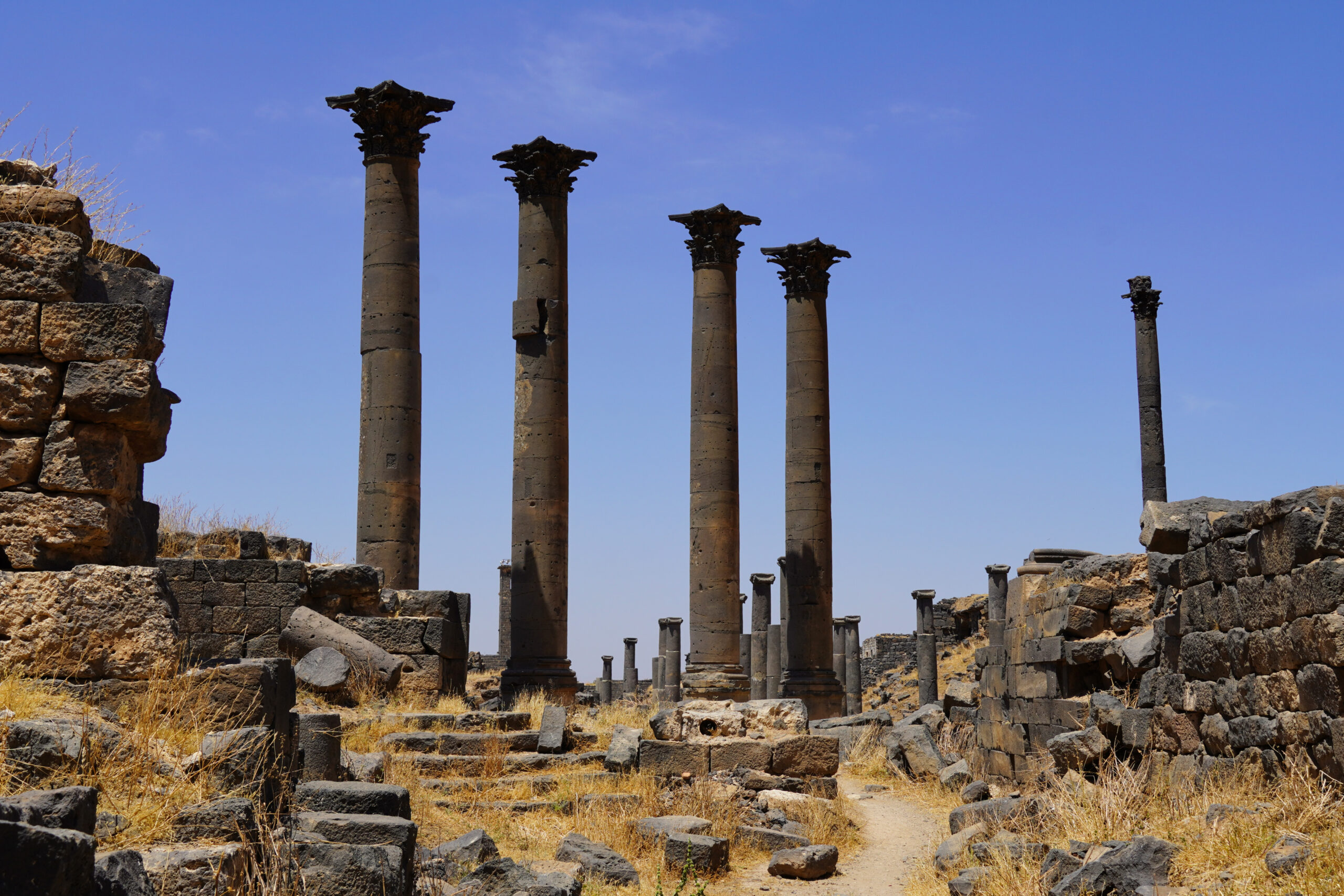
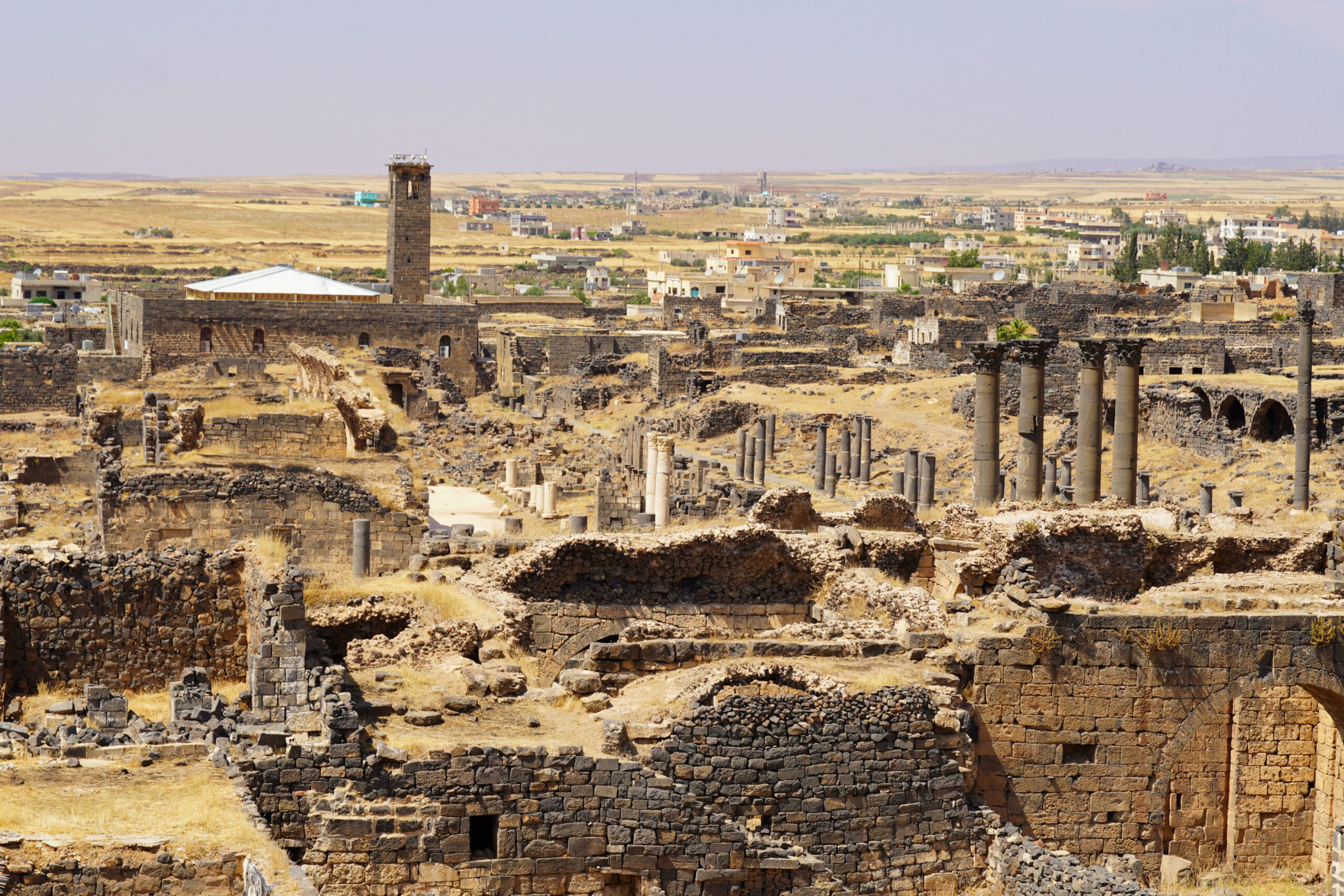
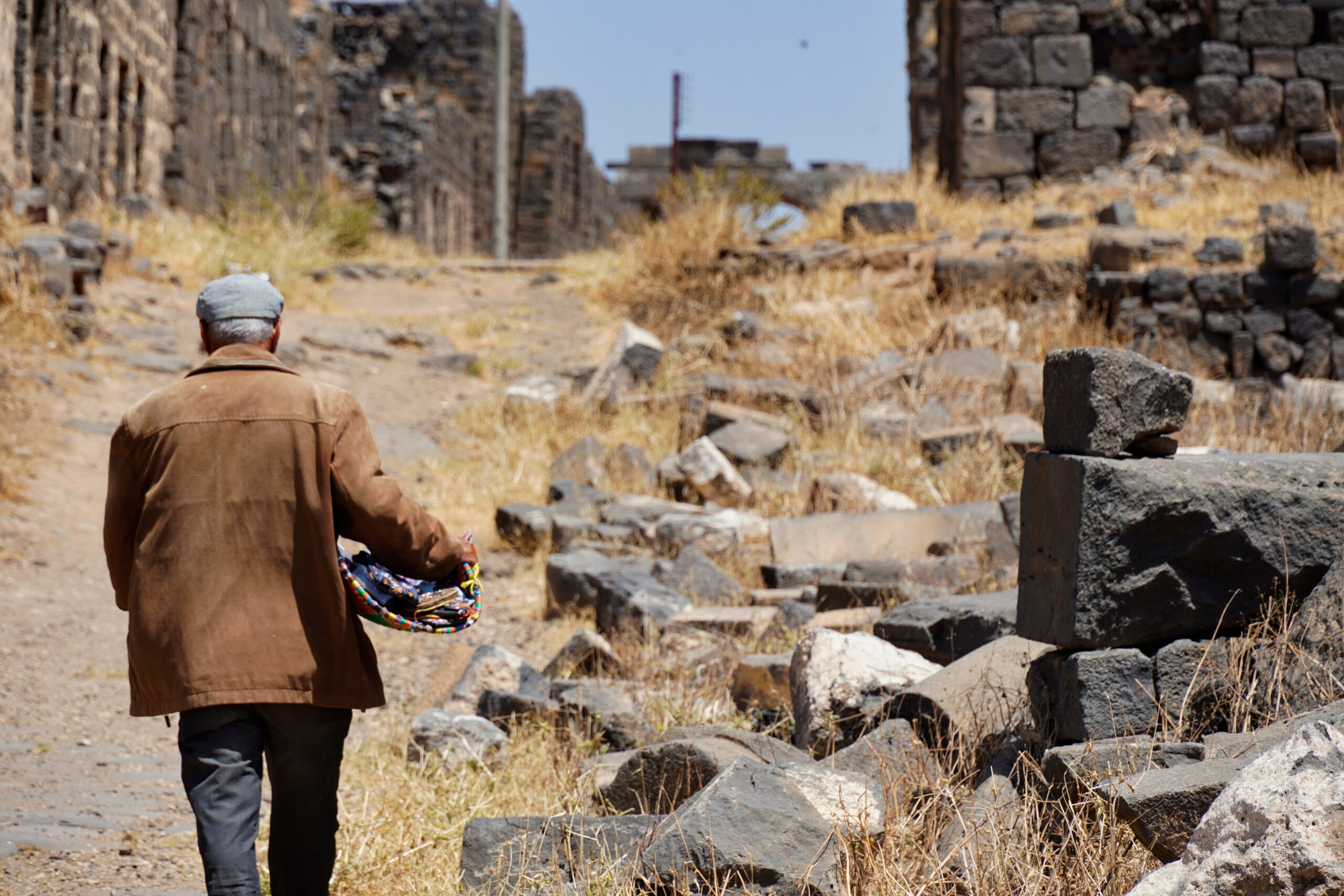
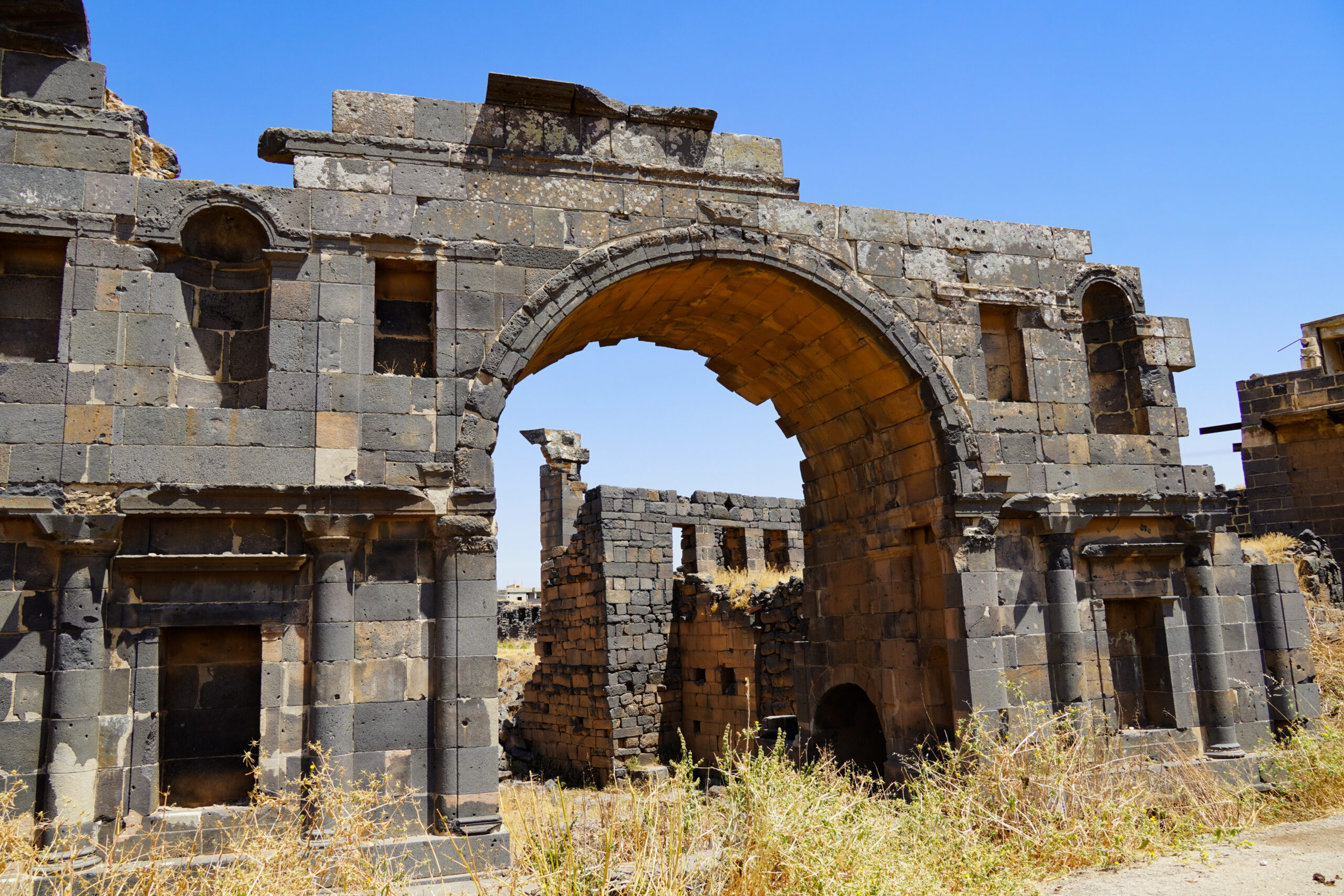
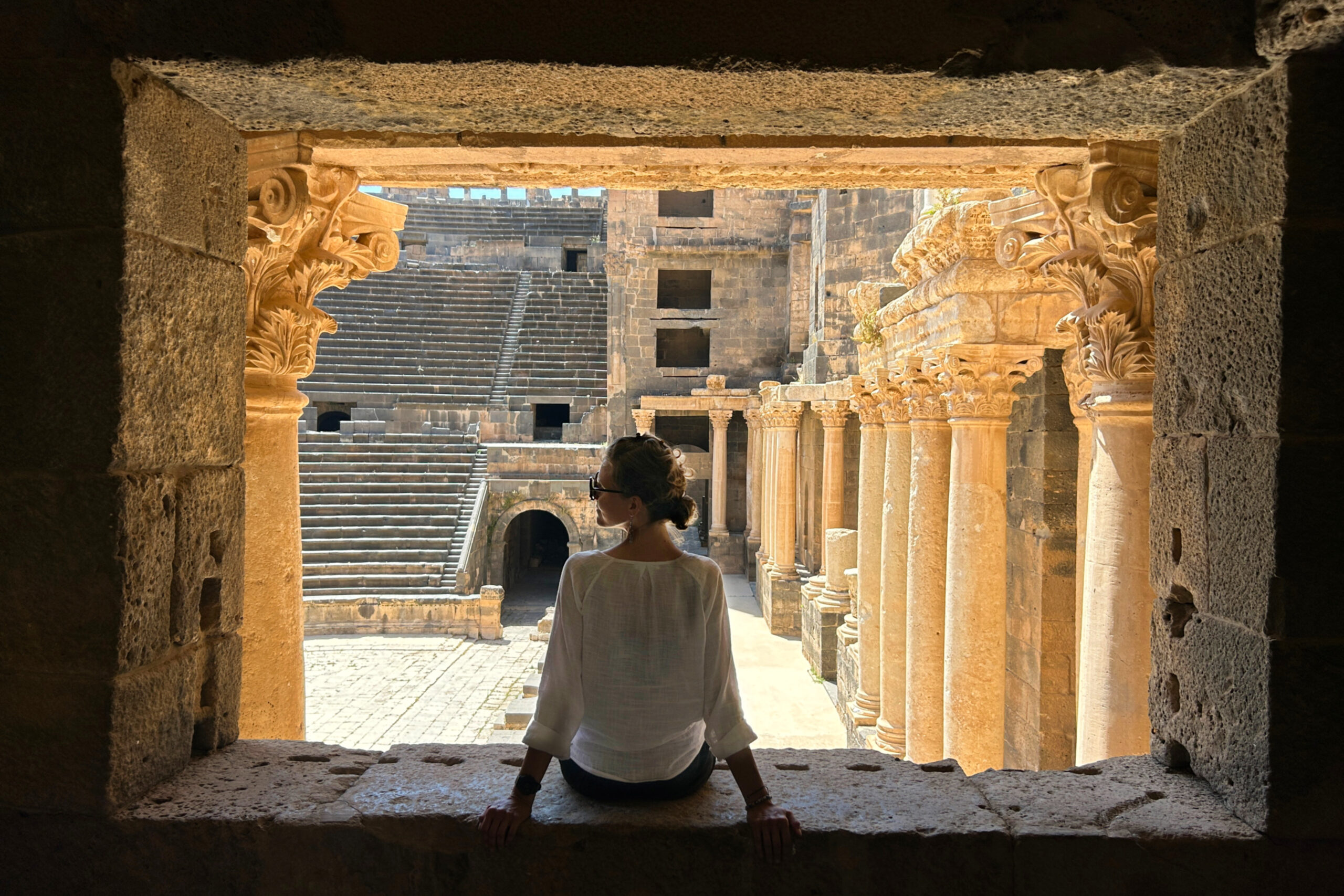
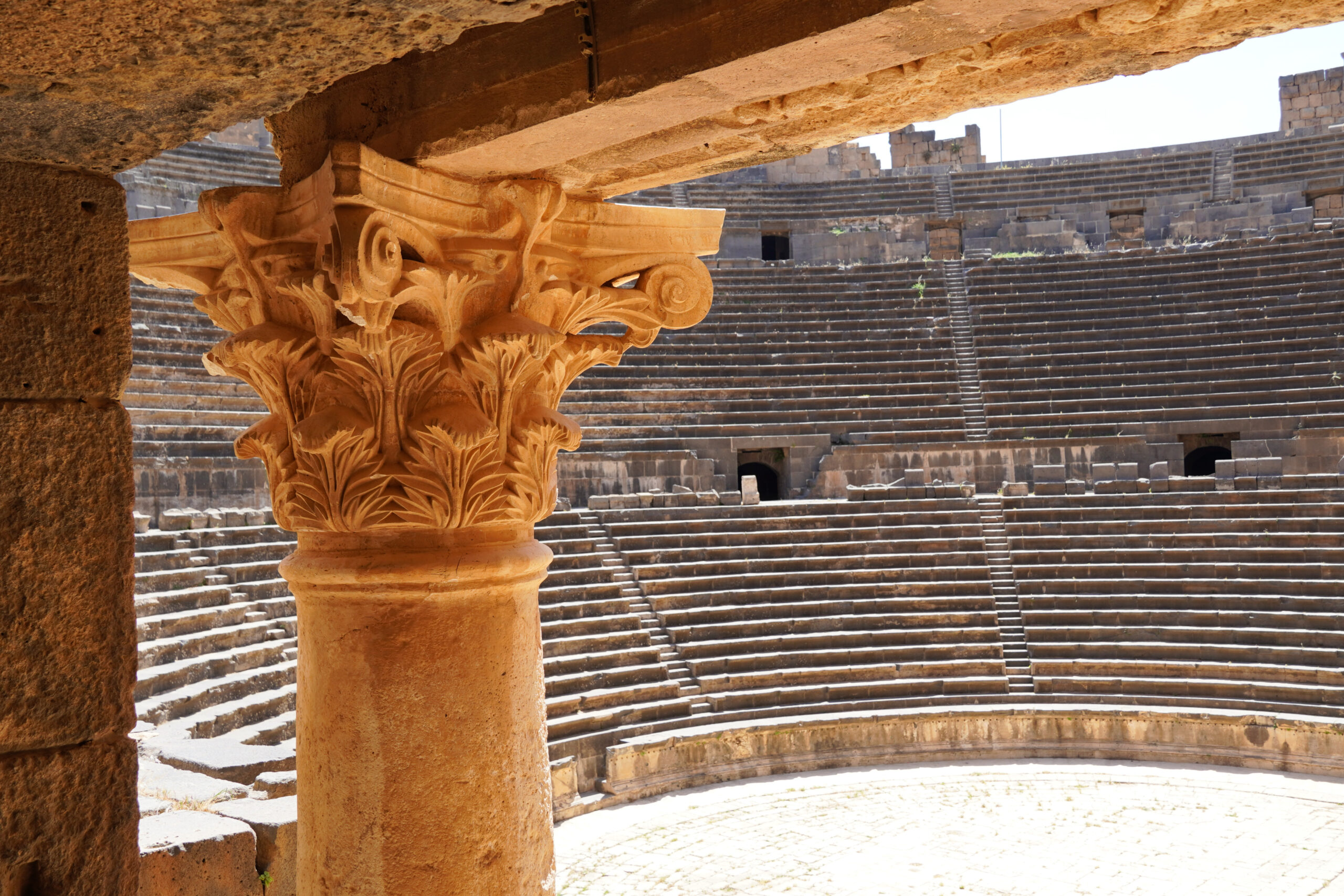
There were no other visitors to share the site with. And no fences of any kind. People –locals and visitors alike– are left to wander free: step on everything and go everywhere. Considering the lack of conservation efforts and the war that was fought in the ruins’ backyard, it’s incredibly wonderful that it’s preserved as well as it is. Oh, and our smart guide left the highlight for the end. The crème de la crème of Roman ruins. Especially considering that this was not in ruins at all. We climbed a few floors of narrow steps and were asked to close our eyes. I slowly tilted my head up to see the most impressive Roman theater, among the best preserved in the world. Just wow. The secret of its conservation is that in the 13th century a fortress was built around it, inadvertently saving it from time, pillaging and war.
With time to explore, up and down I went, checking out every nook and cranny. A local –I couldn’t tell if a caretaker, or a rebel spy– was shadowing us and pointing out where we could go. I kept thanking him for showing us the way, until he asked me “up?”. I had no idea what he meant, but it could only be a good thing (well, unless he meant up to Allah), so I nodded, and obediently followed him through a locked door to which he possessed the key, upstairs, through a window, to the upper part of the theater’s stage. What a view. What a privilege. Not only to be in Syria, and in Bosra, and enjoying the sight of this stunning theatre, but to have a point of view that even my guide said she’s never seen before. Being nice pays off : )

Fun(?) fact: In the entirety of the Syrian controlled Golan Heights until the outskirts of Damascus, and in Bosra, along the Jordanian border, the GPS on our phones showed us in the tarmac of Beirut airport. We were told it’s the Israelis messing with it. Although I’m not one to buy into conspiracy–y theories, this one sounded very much plausible. Actually, in certain areas of Jordan this also happened, with my GPS showing me in Cairo. The Jordanians also blame the Israelis. What a neighborhood!
Palmyra (and the Silk Road)
Our trip would take us through other Roman cities, but the one that defied the power of Rome and established itself as one of the most important trade and cultural centers of the ancient world, in the heart of the Silk Road, deserves a more detailed account. Visiting the great merchant city of Palmyra was on my bucket list, so I wrote a specific post about it:
→ Palmyra: the rise, fall and survival of Syria’s desert jewel
Ma’aloula, Al-Mishtaya, Rabah and Muhradah (and Christianity in Syria)
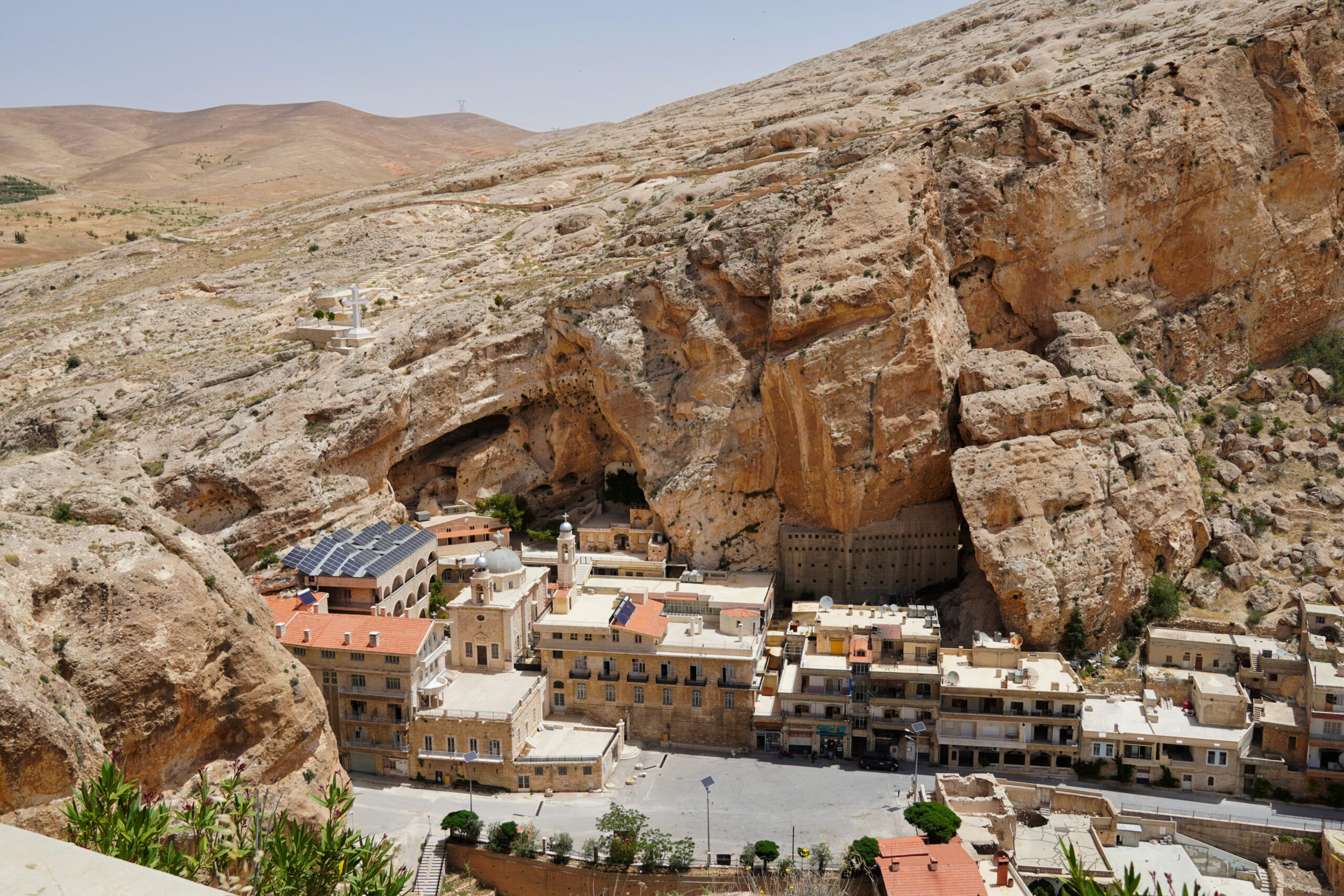
Even though I’m sure you think of Islam when picturing Syria –and you’re not wrong, since the country houses an 87% of Muslim population– the Byzantine Empire left a lot more than a subheading in history books. Around 10% of Syrians are Orthodox Christians, and they inhabit entire towns. One of the most notable ones is Ma’aloula.
What makes this village stand out is that its residents still speak Aramaic, the language of Jesus, nowadays considered endangered.
We visited the Saint Sarkis Monastic Complex –which dates back to the 5th century, making it one of the oldest surviving monasteries in the country; and the Convent of Saint Thecla, beautifully carved out of the mountainside. Then we moved to “The Valley of Christians” –Wadi al-Nasara– to explore the Monastery of Saint George, in Al-Mishtaya, a three-level complex built in layers on the 6th, 12th, and 16th centuries.

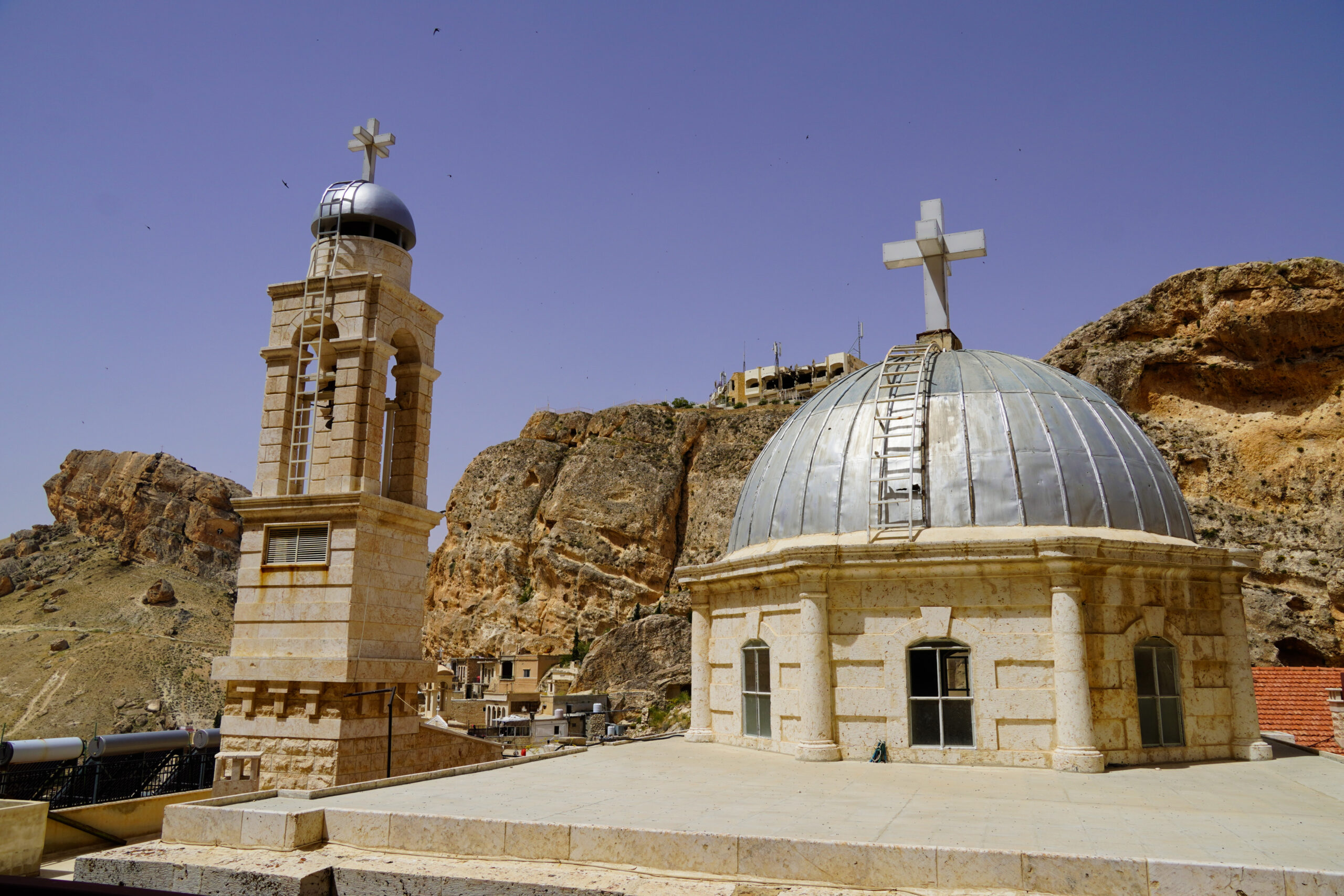
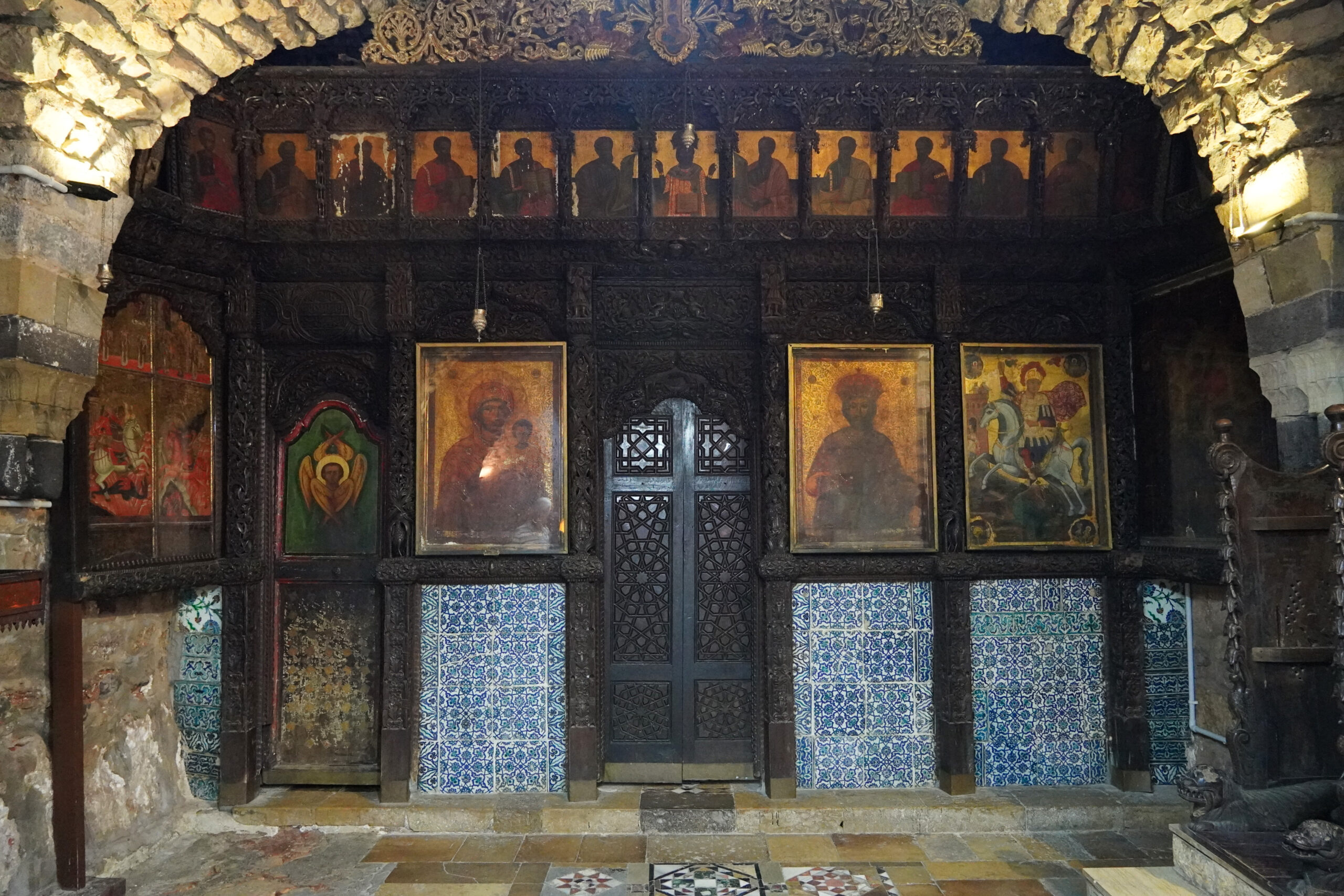
Without meaning to take credit from the monasteries, the next stop was something I was really looking forward to. The Kefraya wine and arak factory. I wasn’t sure what to expect about Syrian wine, and the visit did not disappoint. I mean, the wine was borderline undrinkable, but it was super interesting to go back in time to small-scale, handcrafted production. When you’re under international sanctions I guess you have to make it all, if you know what you’re doing, or if you don’t have a clue –which is the unfortunate case with winemaking. The arak, on the other hand, was the smoothest one I tried. 50/50 is not too bad, right?
After tasting and buying bottles, we were off to the most beautiful stop of the Christian section of the trip: Rabah.
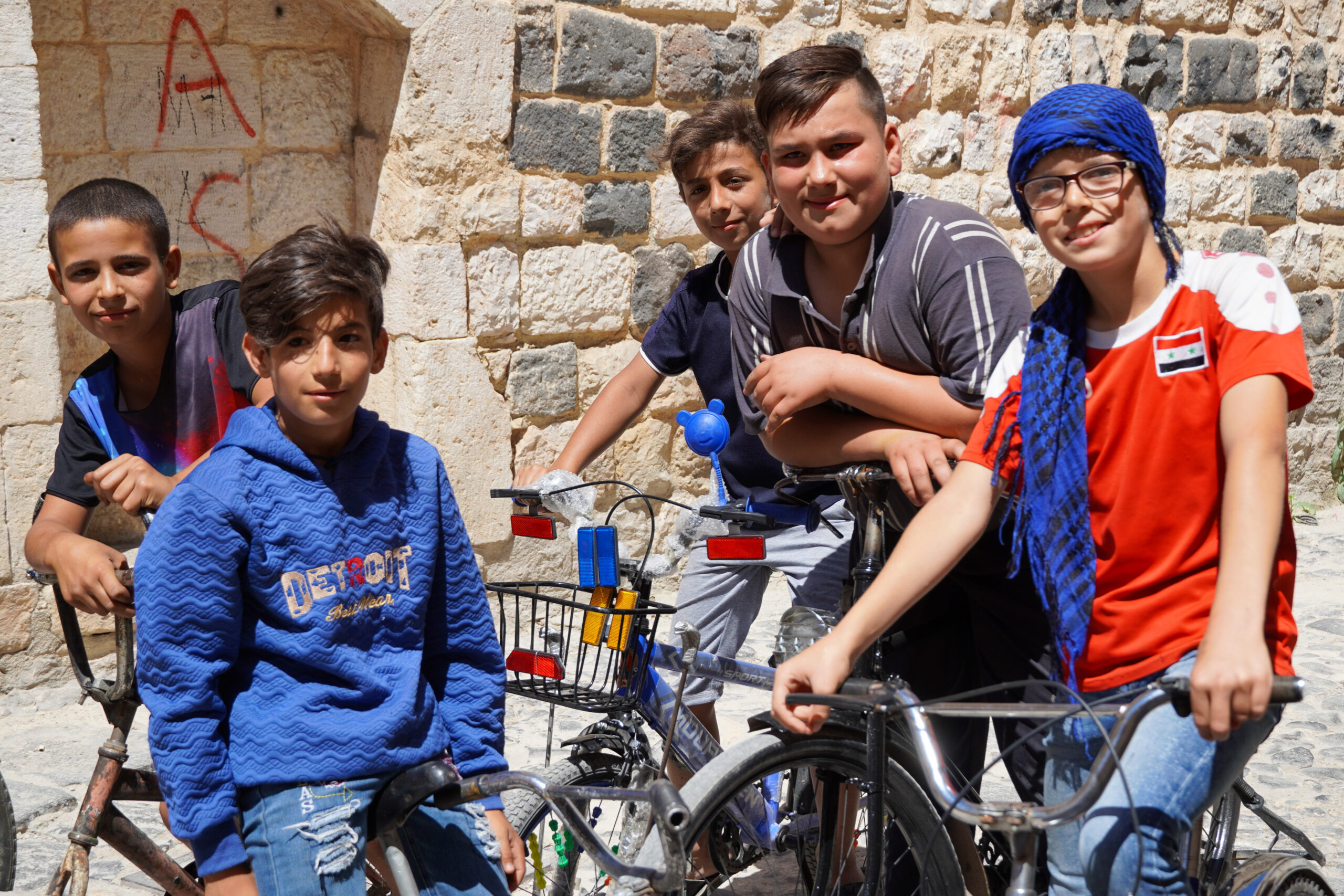
A sleepy village in a valley surrounded by lush hills is home to around 2,000 beautiful souls, including the family of Fadi, our fixer. We were greeted by every single kid in town, all eager to chat with us. And although the conversations consisted of “what’s your name” and “thank you”, it was such a heartwarming experience. They showed us around the village, while the parents and grandparents waved through their windows when we passed by. Every young person that spoke some English also joined us on our stroll, just as curious as the kids about the foreigners visiting. This is not a touristy place at all. There’s literally nothing that would bring people in. Unless you know a local. Then it transforms into the most special place in the country. We were invited into Fadi’s family home, where his dad welcomed us with arak, and his mom prepared us a homecooked feast.
I’m not a group tour kind of person, especially because I don’t like missing out on the experience of meeting local people and seeing how they truly live. So this evening was a true highlight for me.

A few nights later we stopped in Muhradah, the last predominantly Christian town we’d visit, for another dinner with a local family. After a barbeque and many rounds of arak, we went for a walk around town and, again, were treated like celebrities. A quick stop in a small ice cream shop turned into a few hours of posing for pictures with the local kids and talking to every adult that spoke two words of English. How I love small town tourism!
A logical step in this chronological sequence would be to take you to the Islamic Caliphates that ruled the Arab world from the 7th century. The Third Caliphate, the Abbasid period, ruled from Iraq, from 750 to 1258, and then from Egypt, from 1261 to the Ottoman conquest in 1517. From a 21st century tourist perspective, this means that there’s not much to be seen or said about the Empire. On the other hand, their predecessors, the Umayyad Dynasty –or Second Caliphate– although they ruled only from 661 to 750, having governed from Damascus meant leaving behind a much richer heritage, such as the stunning Umayyad Mosque in the country’s capital.
Krak des Chevalier (and the Middle Ages)
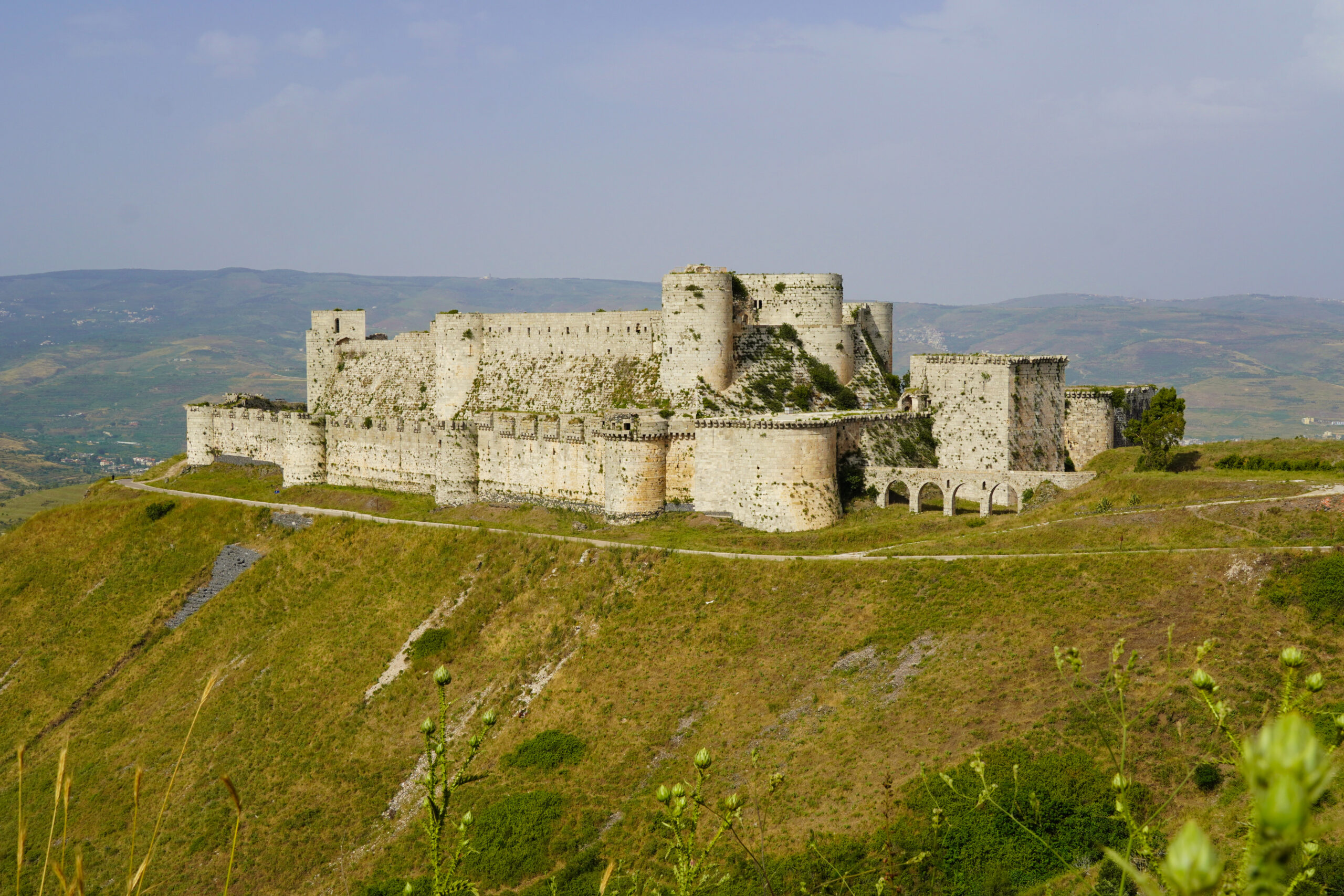
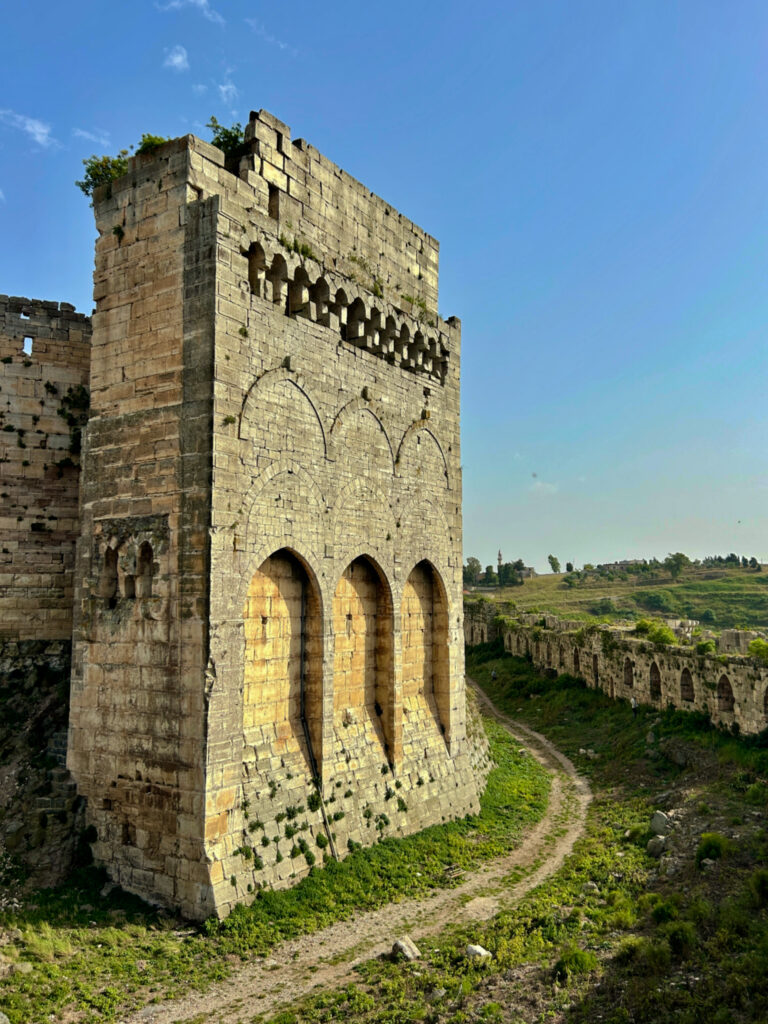
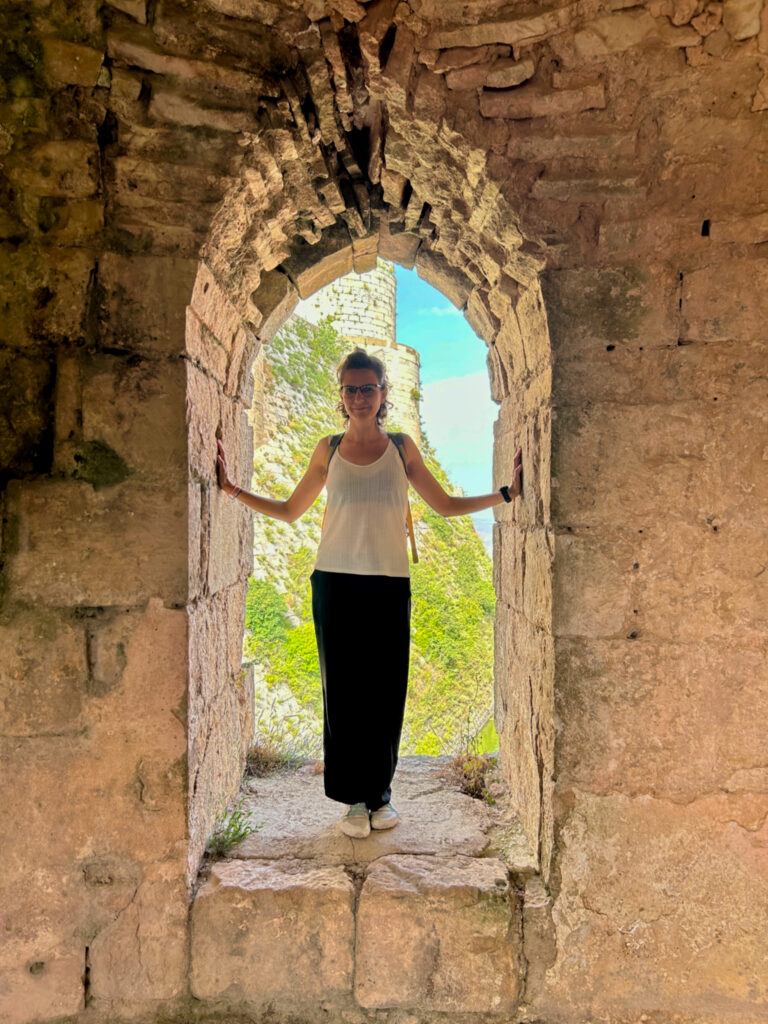
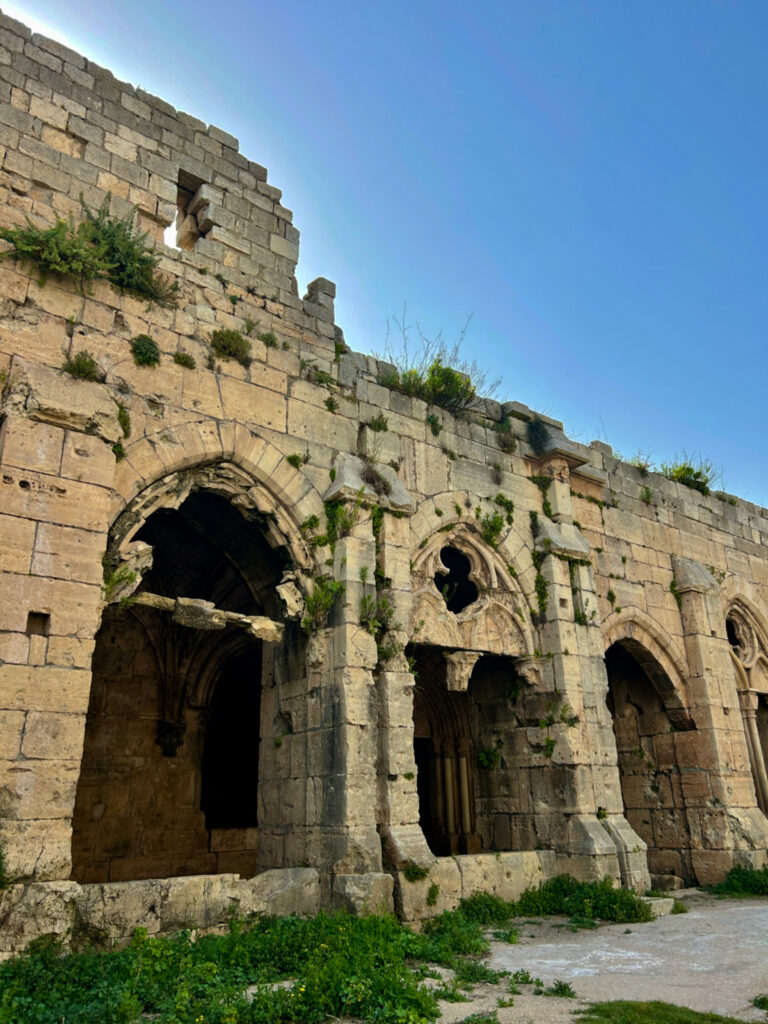
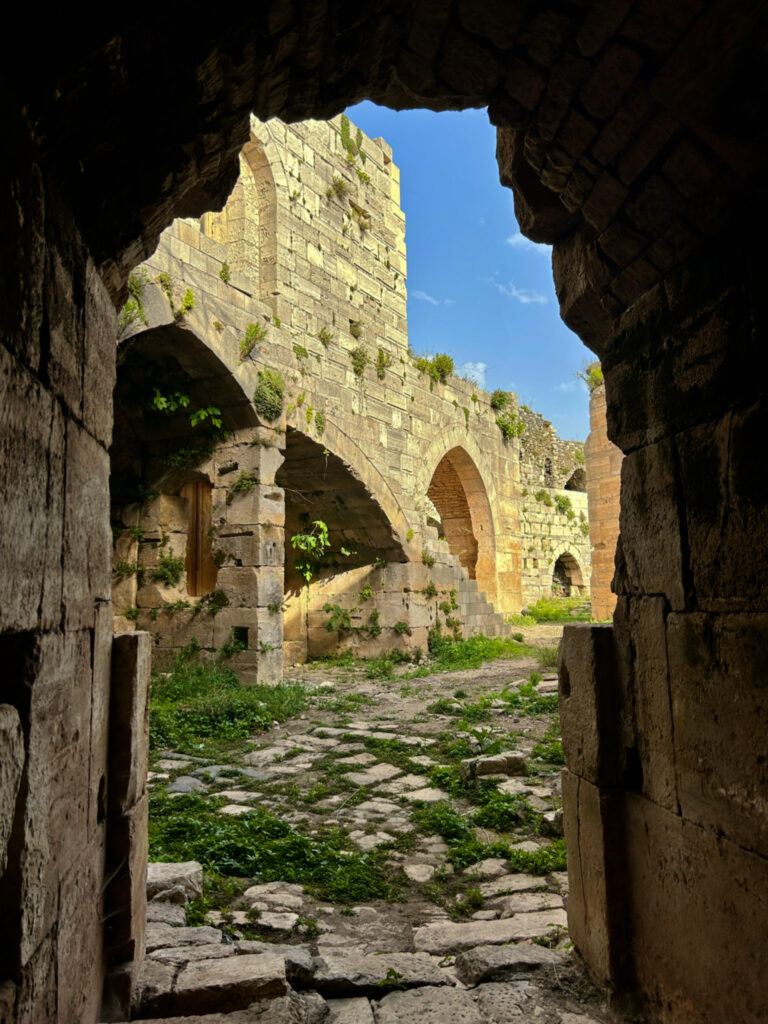
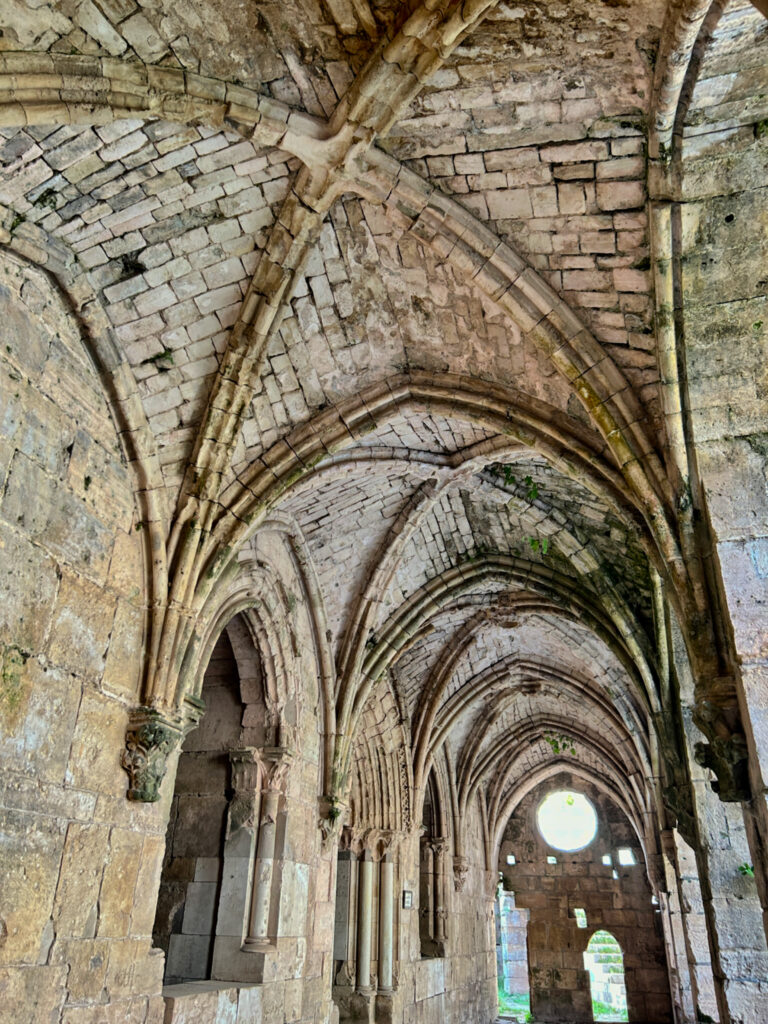
Close your eyes and imagine a Crusader’s castle. What do you see? I can bet your imagination depicted the exact sight of Krak des Chevalier. This castle within a castle sturdily stands on top of a hill, bursting with pride for never having been taken by force. The impressive walls that you see from the distance are only an outside defense line. Inside lays a moat that protects the actual castle. These Crusaders were quite clever!
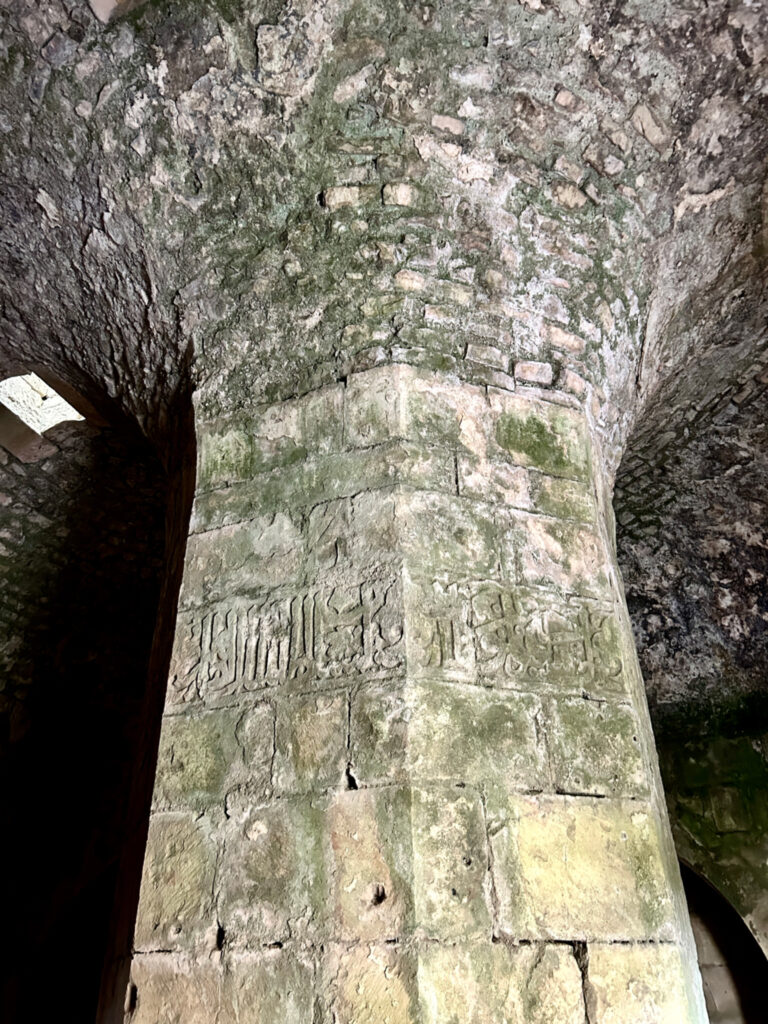
Its construction started in the 11th century, while a second phase gave it the look it keeps to these days. By the 13th century it was deemed as one of the most important Crusader’s castles, and it served as a military base and an administrative center, housing a garrison of 2,000. That should put its colossal size in perspective.
Legend has it that the knights surrendered the castle, when presented with a forged letter, to the Muslim army of the Mamluk Sultanate. From them it peacefully went into Ottoman hands, losing its notability over the centuries. In 2006 it was included on the UNESCO’s World Heritage Site list. Although it received a lot of shelling during the latest war, it still stands tall, and nowadays is open to the public as a museum.
Unfortunately, on the day of our visit to this magnificent structure I was half-dying from food poisoning, so I couldn’t catch as many details from our guides as I would have liked to. I did force myself to go around, and I took a ridiculous amount of pictures to make sure I wouldn’t miss a detail –even if I could only appreciate them when returning home.
When the Ottoman Empire lost World War I, the infamous Sykes-Picot agreement followed. The United Kingdom and France drew a line on the map, dividing the territory of the fallen Ottomans amongst themselves, allocating Syria, Lebanon and Turkey to the French; and Palestine, Jordan and Iraq to the British. The French Mandate over the Levant States would last until their independence in 1946. Failed Pan-Arabic dreams, a myriad of coup d’états, and a bloody war against Israel marked the decades to follow, until the Assad dynasty took power.
RELATED POST → Geopolitics of Travel: insights beyond what the media portrays
Hama (and the true colors of Hafez)
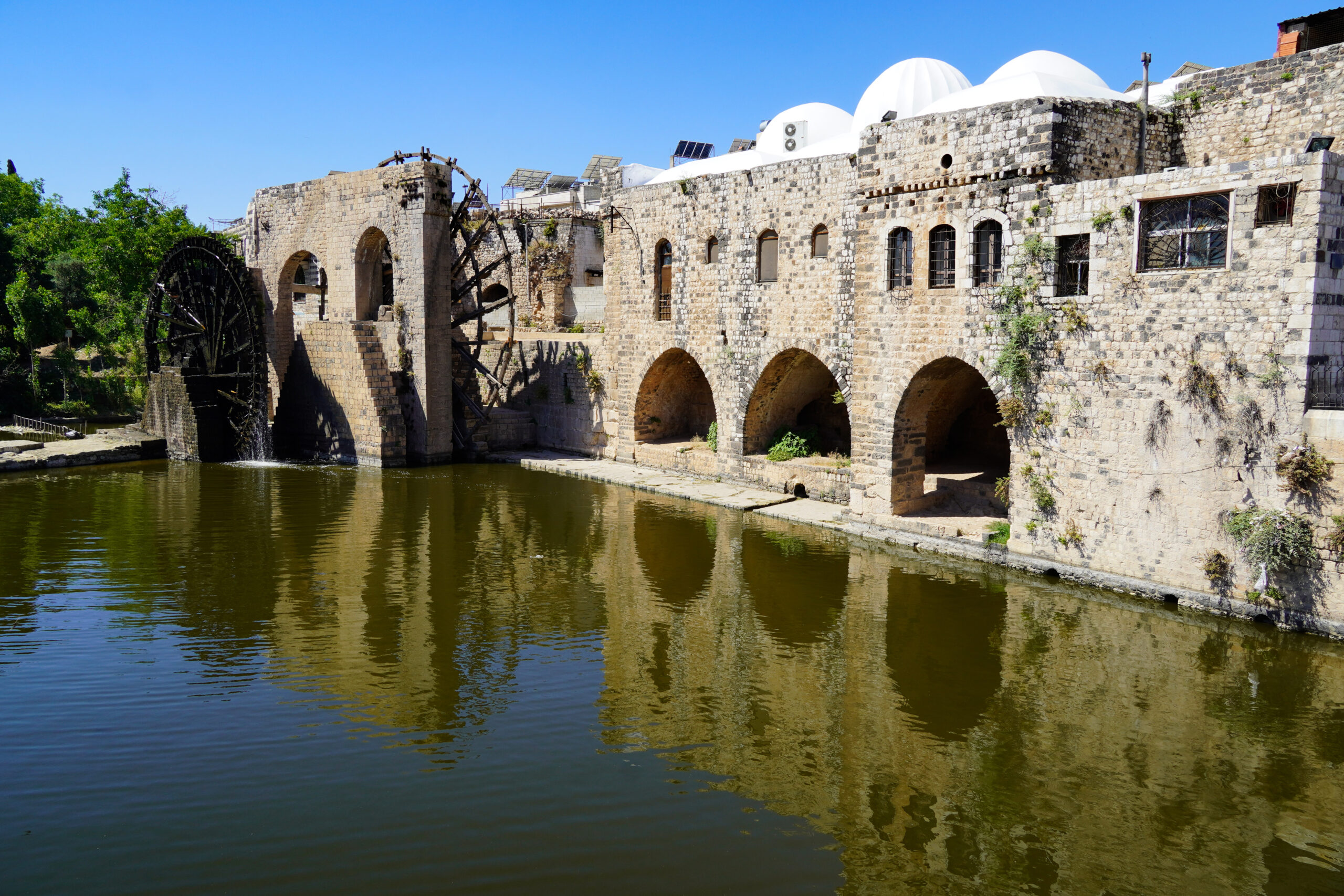
My first impression of Hama was of one of calmness. It seems like the town has not seen time pass by. Although it’s home to around one million people, making it the fourth largest city in the country, it has the feel of a quiet settlement, focused on agriculture and sheep husbandry. Its location on the banks of the Orontes River gives it its main feature: a collection of historical water wheels, 17 to be precise. They were used to bring water from the river to the houses, and then for irrigation purposes. Today they’re just adorning the landscape, contributing to the stillness atmosphere of the town.
We arrived late in the evening at the Orient House hotel, a beautiful 1800’s Ottoman residence that is attempting to stand tall despite the obvious passing of time. Its proud manager offered to take us to see the city the next morning, and we happily embraced another set of ears for our incessant questions. Under his guidance we managed to go into one of the main water wheels to see how it works up close, and we heard stories of the uniqueness of the river –flowing south to north, from Lebanon through Syria to Turkey–, of the importance of the local dairy industry, and of the many mosques that dot the city –so many that they became points of reference to identify different neighborhoods.
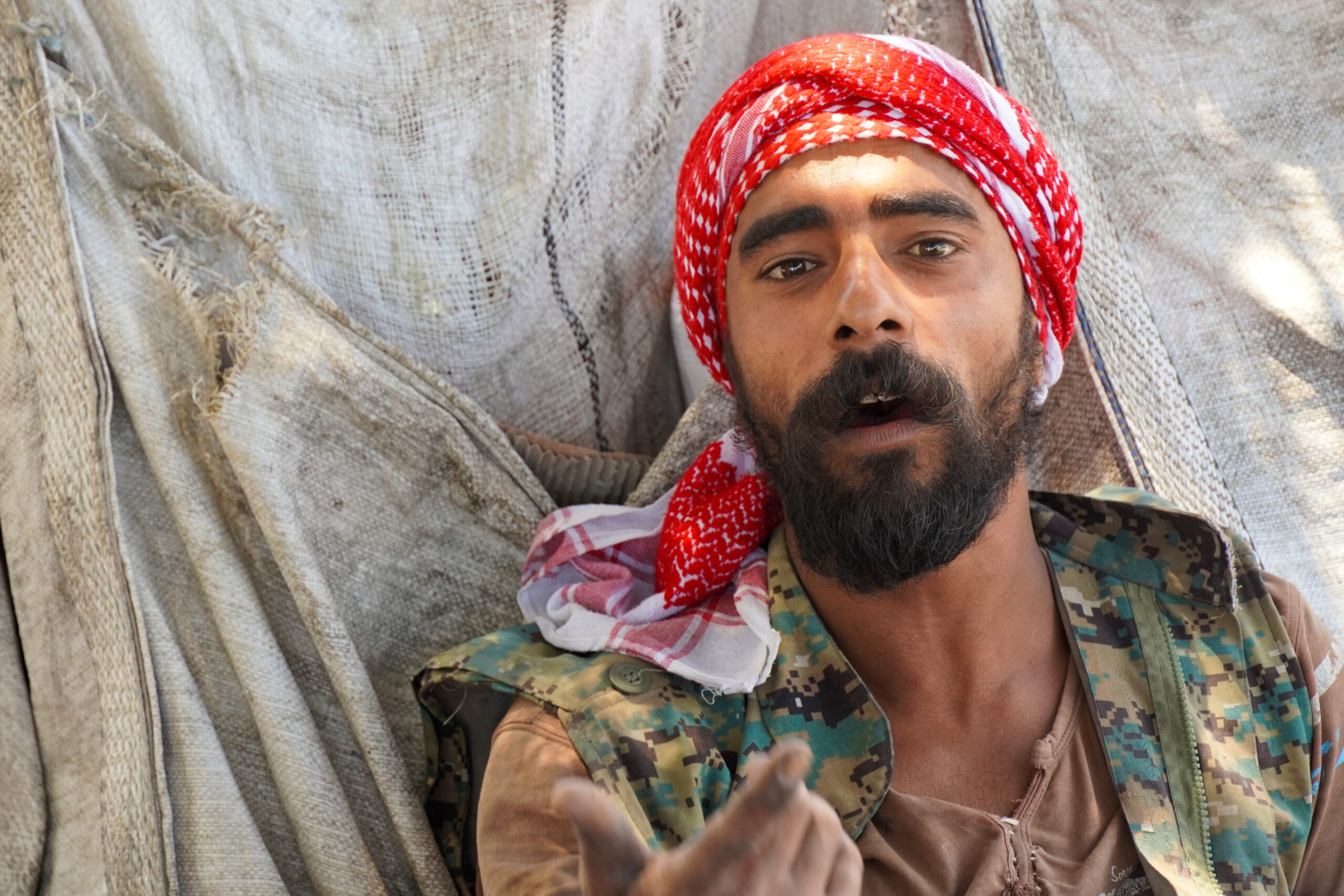
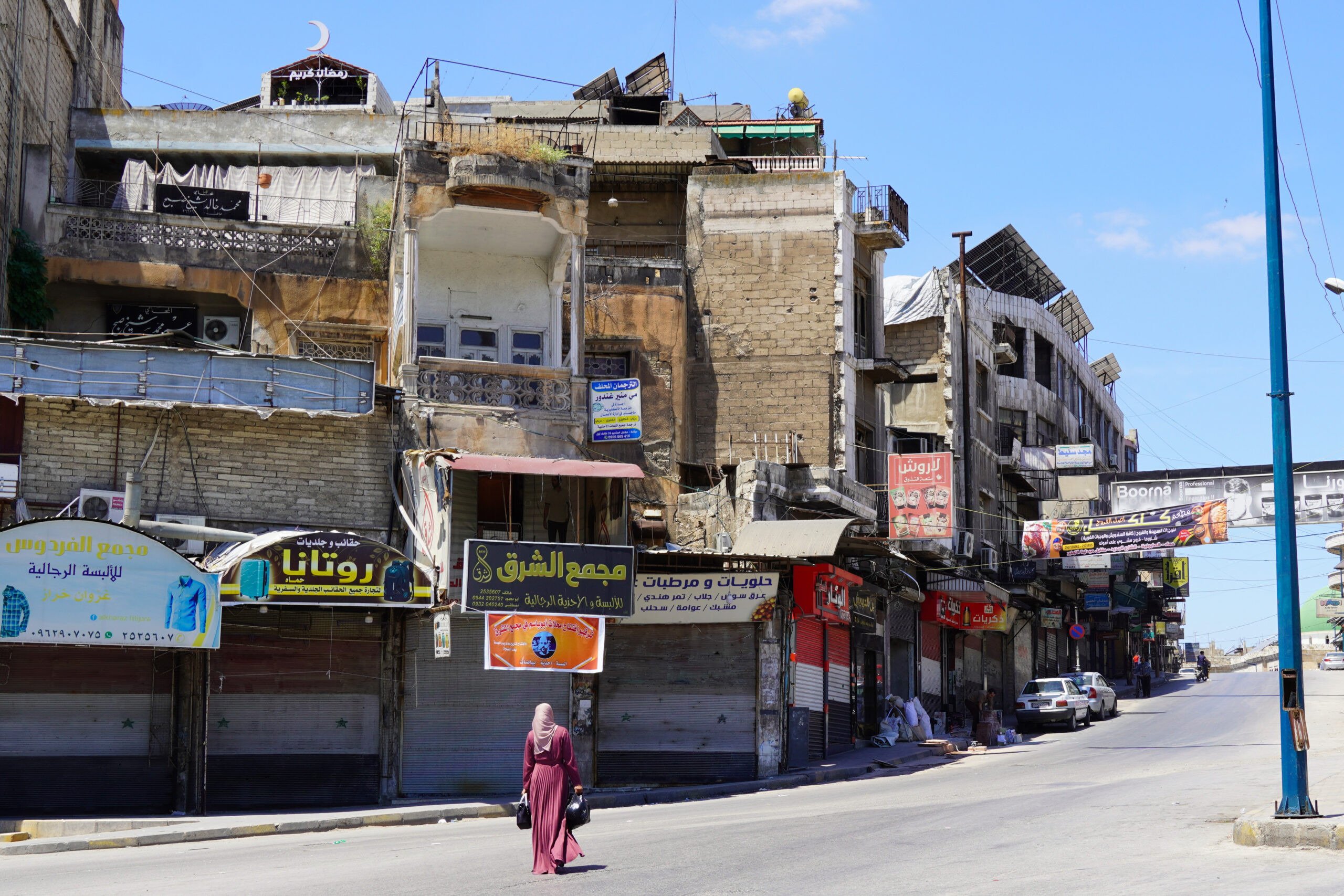
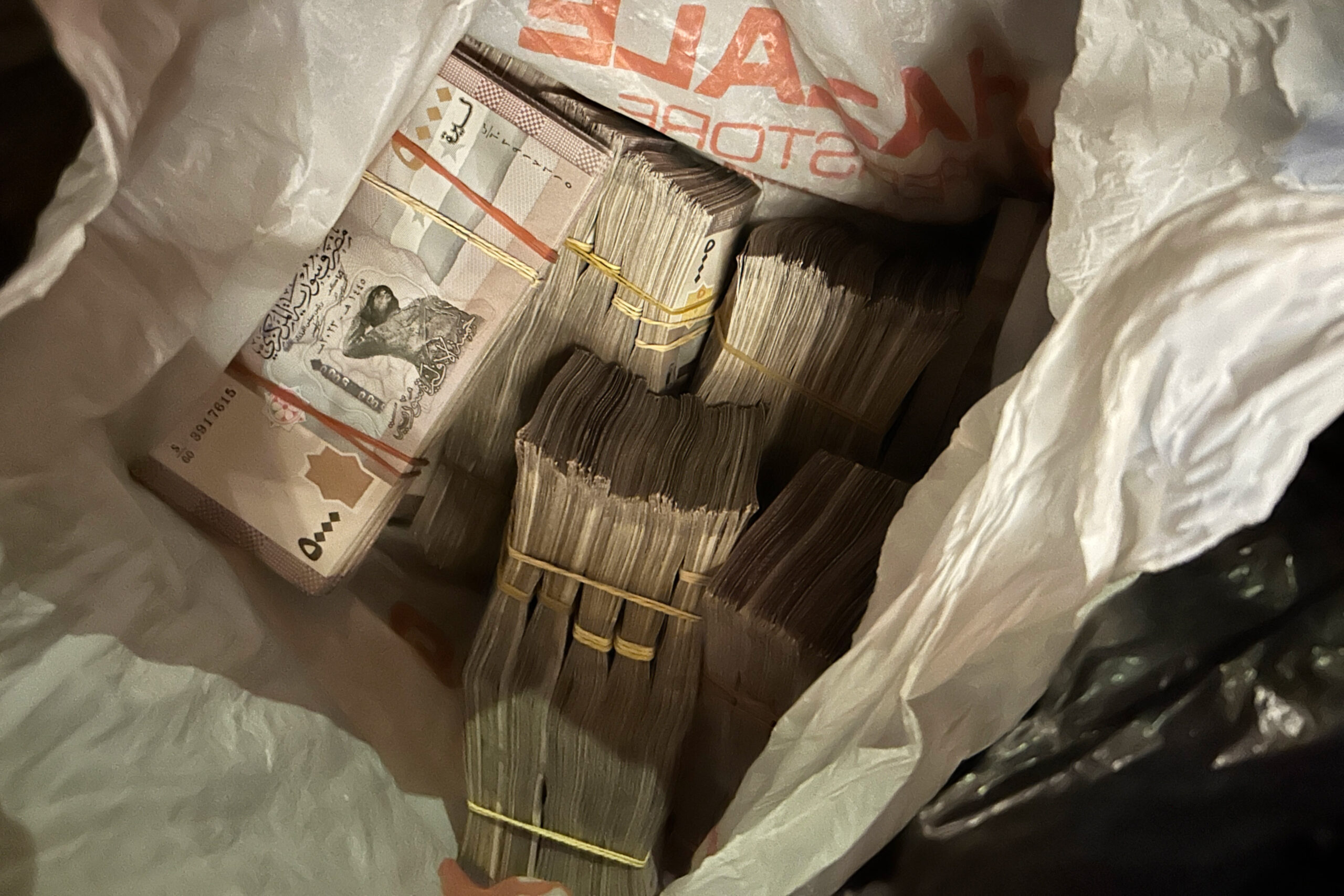
We were set free to explore on our own for a little while, but considering that it was Friday (so the museums and mosques were closed to visitors), and there’s not much more to see than the little bits of the Old City that have not been destroyed, I chose to stay asking question. I eased in inquiring about the current situation. There are many empty houses in town, so I asked if they’re seeing any refugees come back. He told me that the main issue was the salaries. That some of his own family members that live in Europe can make hundreds of euros, while wages in Syria don’t surpass 30 USD for governmental employees, managerial positions, and the military. This obliges most to work two or three jobs to make ends meet. There’s no minimum wage, so people work for whatever they can get, and do miracles with what little they have. Our guides jumped in to say that is not uncommon for people to work for around 200,000 Syrian pounds, which is just little over 2 USD. Incredibly, with all of that said, everyone agreed that they wouldn’t like to live anywhere else in the world.
And I take that as a window to go to the hard questions. Let’s talk about Hafez. Hama was in the headlines of newspapers in February of 1982 after a massacre that left thousands of casualties. The city has had a history of political insurgency led by conservative Sunni forces. There was an uprising against the French Mandate in 1925, and then against the policies of al-Assad’s Ba’ath party in 1967. These unrests boasted new strength from 1976, with the Muslim Brotherhood aiming to oust the Assad dynasty and establish an Islamic Republic in the country. But that fateful February saw pure terror. President al-Assad ordered to besiege the town, and for 27 days Sunni forces were brutally crashed. The militias were led personally by Hafez’s brother, Rifaat, in what has been deemed as “the single deadliest act by any Arab government against its own people in the modern Middle East”. More than half of the city was destroyed, and the casualties are estimated between 10,000 and over 40,000, depending on who’s counting.
But all I hear is that the Muslim Brotherhood is to blame, that people loved Hafez and the Army forces were only there to defend the citizens from unwanted change. And it feels like they might actually believe the propaganda they have been programmed to repeat.
With that answer the current state of affairs started to make sense in my head…
Homs (and Bashar’s ‘Civil War’)
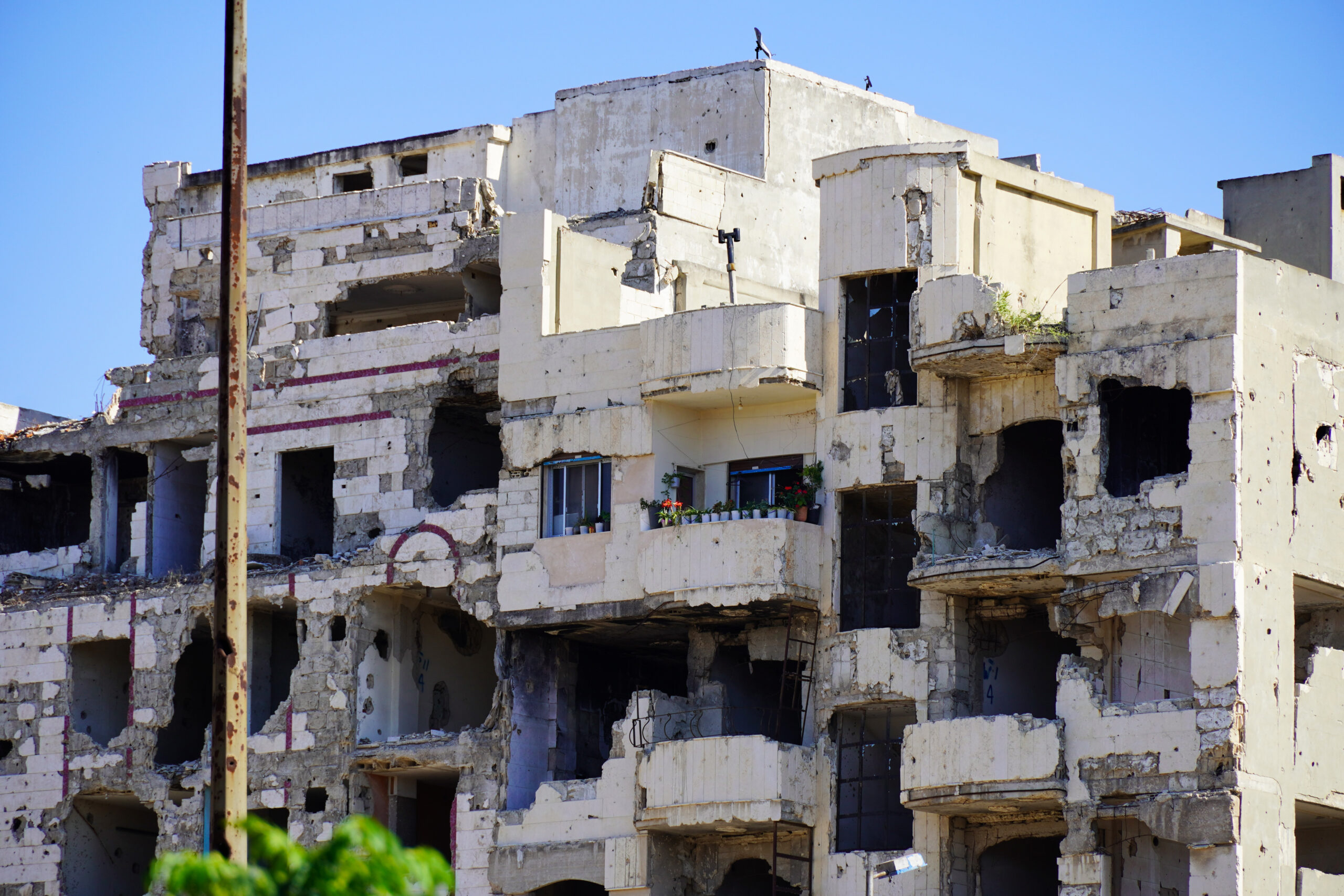
As in Hama, there’s little to see in Homs –both cities being a literal shell of what they used to be. The destruction in Homs, though, comes from the 2011 War. Following the Assad’s guidebook, as Hafez’s brother Rifaat did in Hama, Bashar’s brother Maher oversaw the annihilation of Homs. The official story goes like this: there were demonstrations against the mayor in March 2011 and terrorists founded by Turkey, Qatar and/or Saudi Arabia started shooting. The police was unjustly blamed. And it developed into a religious conflict between Sunnis and Alawites. It escalated so much that it became the worst conflict of the country.
Although not even a word of that story seemed plausible, the consequences of the confrontations were for sure vicious. But let’s go back a little. In 2000, after Hafez died, Parliament chose his son Bashar as the candidate for the presidency. He won the election with 99.74% of the votes. Or, we can just say that the al-Assad dynasty continued, with the son of a dictator taking power, becoming the new dictator. Whatever version seems more believable to you, from the year 2000 Syria has been ruled by Bashar. And he has no intention of letting his power go.
So when demonstrations started in the southern city of Daraa in 2011, Bashar made use of his family’s old methods and crushed the dissidents. The protests quickly spread nationwide. And so did the “shoot-to-kill” orders.
“The people want the fall of the regime” and “Down with Bashar!”, read the street graffiti as people led mass pro-democratic rallies. Communities continued uprising, and the regime continued with their brutal crackdown until mid-2012, when the revolution became a full-blown war. As I described at the beginning of this post, the conflict turned into a multi-angle warfare, with countless different internal factions and external backings –a civil war, a proxy war and international intervention mixed into one hideous conflict.
Although the worst of the war lasted until 2018, with a sort of stalemate being reached then, a walk around Homs today gives you a clear window into the mass destruction the country endured.
Yet, when asked about Bashar, as I saw in Hama about Hafez, people perpetuate the propaganda.
Assad is a good person, told me one of my guides with confidence. I even asked if she felt she needed to say such things, if there was any security threat if she said anything against the government. After all, she knew I’d write about this visit, so I wouldn’t have blamed her if her answers came from self-preservation instead of honesty. Or if she would have asked for anonymity around our conversations. But she wholeheartedly told me that there’s nothing that could stop her from speaking her truth. That she believes that al-Assad really cares for his people and is a good President. The country was thriving and there were low levels of poverty before the war. And now that the government has control over most of it, things are starting to look better. There are subsidies for basic foods for those that need it, reconstruction is a slow but steady endeavor, there are efforts to open the country up for tourism…
Although she sounded very much sincere, I couldn’t believe my ears. I’ve seen the reports on the atrocities committed by the regime. Yet one after another, almost every Syrian person I asked about their government were telling me that they actually support al-Assad.
What’s more, the only real threat to security for foreigners, and the reason why we must be chaperoned by a guide, is the rebels. A hurt tourist would further damage the international image of the government, I was told, so the guides make sure we don’t go anywhere that could be dangerous.
Still not convinced, I kept enquiring about any potential justification for the atrocities committed by the regime. And I always got the same answer: this was a proxy war. The problem was Saudi Arabia, Turkey, Qatar and the West playing for their own interests when supporting the rebels. The government was just defending the population.
They went as far as to tell me that during the worst of the war, if you lived in areas controlled by the regime, it was very safe. And that today the Western sanctions are the main problem. “Getting rid of the dictator”, as I’ve heard so much in Western media, is not something in the minds of the Syrian population, or so they say.
Are they just naïve? Or maybe I’m the naïve one thinking their words are not coming out of fear?
I asked about the war, the current situation and the government to anyone that would talk to me. And people seem very open about it. Yet in Homs the keeper of a church, that said spoke no English, overheard a conversation and demanded to know our names. How dare we ask such questions, he told our guide. She handled it beautifully, but it let me thinking. He proved the point I’ve been trying to make about how much propaganda has been ingrained in the minds of the Syrians that stayed. But he also made me realize that people will sing any song to avoid going through what they went through.
Whether you genuinely agree with al-Assad or praise him out of survival instincts, the only thing that matters is the country started recovering and people can live in peace. Every single person in Syria after 2011 had lived through hell. Everyone has witnessed horrors. They have all lost someone. No matter which side they supported or how much they tried to avoid politics, their suffering is unfathomable. So I can’t blame anyone for consciously choosing to turn a blind eye. For saying what needs to be said, whether they believe in al-Assad or are completely disgusted by him.
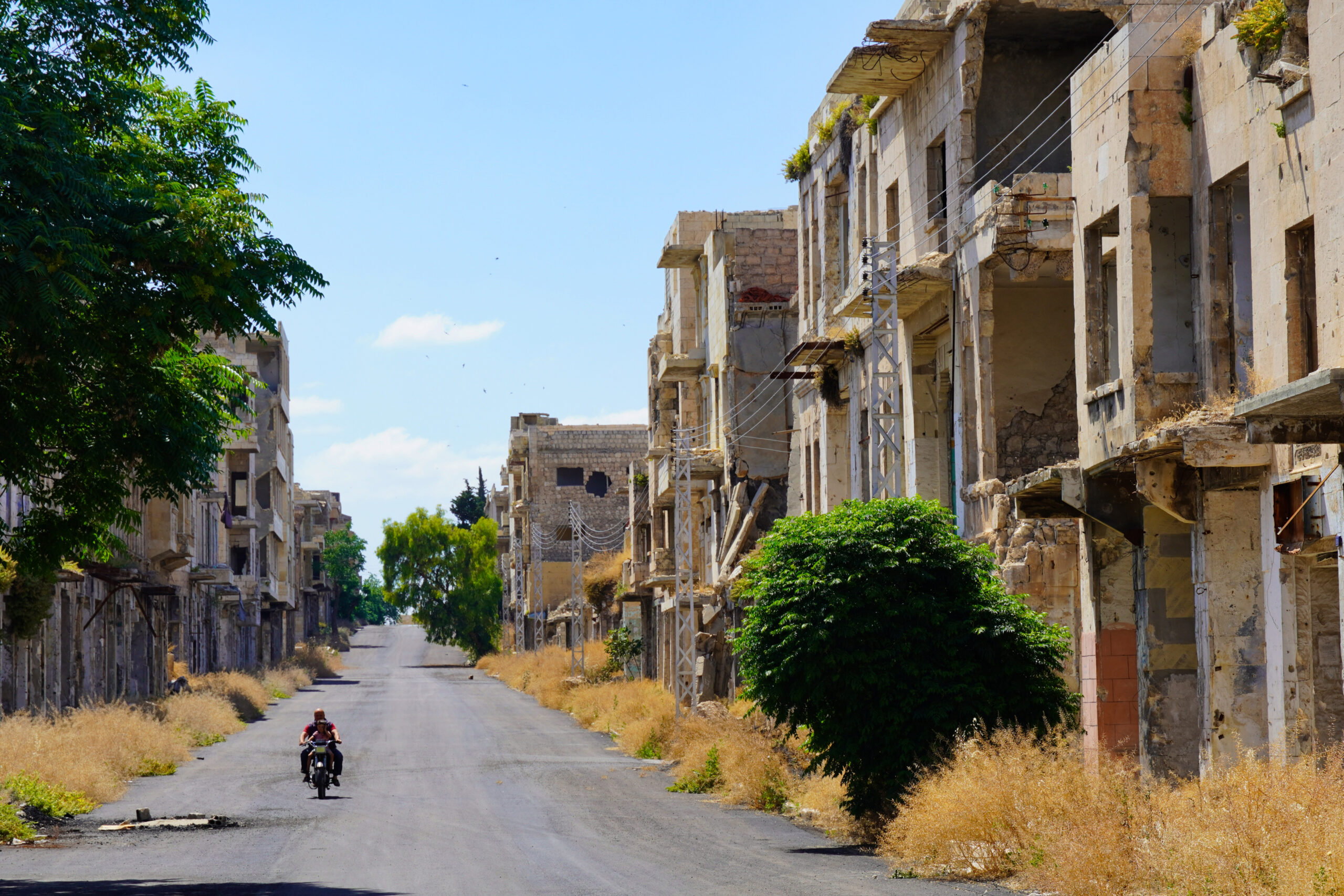
It will take decades, and a generation that didn’t witness the atrocities committed, to be able to make the structural changes that the country so desperately needs. But at least reconstruction is on-going. Collapsed buildings coexist with completely rebuilt ones. The strangest are the ones that are mixed. Most of the building is a shell, yet an apartment or two have been renovated. It’s a very welcome sight, though. It gives hope, and it allows the visitors to imagine what it once was. A little bit of light amongst the darkness.
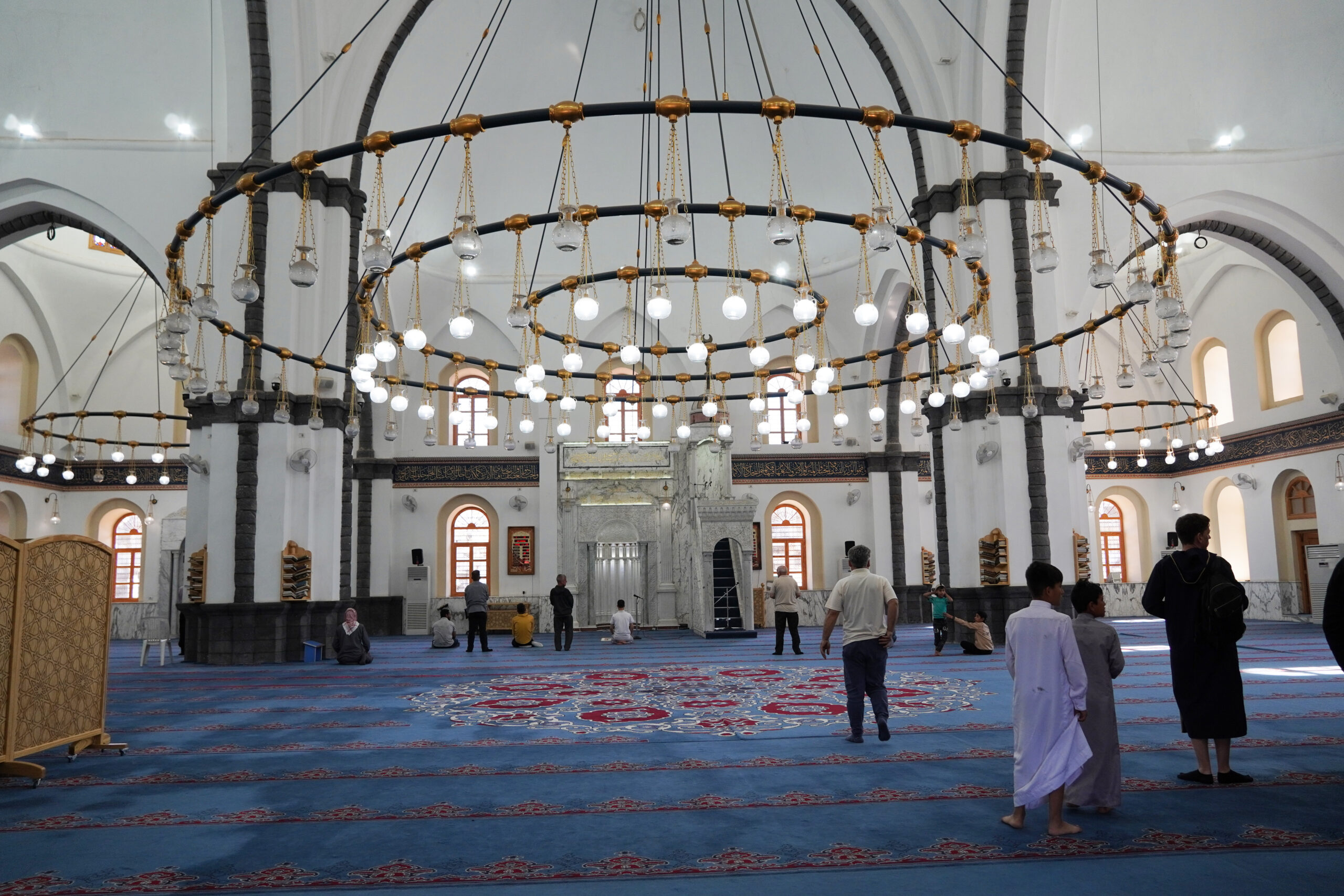
To no one’s surprise, the roads and the mosques/churches were the first ones to be restored. I wonder how long it’ll take for the rest of the city to have the same luck. I’d say that decades, if it ever goes back to its former glory. In Homs, dubbed the “capital of the Revolution”, one of the first cities to start what should have been a Syrian spring, feels like winter has lingered the longest.
The road to Aleppo –plus the inaccessible Idlib and Kurdistan (and the rebels)
The road approaching Aleppo is dotted with pistachio trees, pink flowers, checkpoints, and flattened buildings. You get mesmerized by the landscape battling the hostile desert, but quickly go back to reality witnessing the devastation. As we passed entire towns completely wiped out, we heard pistachio harvesting stories. I’m not sure if the guides were just trying to focus on the positives, if they were turning a blind eye on the desolation, or if they were making a subconscious political statement. But instead of learning about the fate of all these wretched towns, we all agreed to go back one day in autumn to be part of the harvest, since one magical night all the shells of the pistachios open, serenading those who camp on the field waiting for the event.
As much as I would have liked to let my mind concentrate on charming tales about nuts, as we approached the exit of the motorway towards the rebel-controlled city of Idlib, the destruction becomes a constant, and Iranian flags get mixed up with Syrian ones.
The Iranian Quds Force –a branch of Iran’s Army specializing in unconventional warfare and military intelligence operations– was particularly active in this region, using tactics like those of al-Assad: wreck everything. Although they helped the government to take Aleppo back, the Idlib governorate managed to resist.
The city is off limits to visitors, as clearly shown by the big checkpoints on each side of the road, manned by grim-looking soldiers armed to their teeth.
Not that anyone would want to go under current conditions. I didn’t meet any of the inhabitants of the region to hear their perspective, but I’ve read about the rebels negotiating with al-Qaeda’s al-Nusra, implementing Sharia Law, closing Universities, and overall restricting rights. Beyond how obviously awful this must be for the city’s dwellers, selfishly I’m sorry we cannot visit. The area is home to the ‘Dead Cities’, over 700 Byzantine ghost towns, prophetically renamed in 2008 the ‘Forgotten Cities’. These ancient villages date from the 1st to 7th centuries, and were abandoned between the 8th and 10th centuries. In 2011 they were inscribed as a UNESCO World Heritage Site.
News reports say that many of them have been repurposed by internally displaced people, looking for refuge in the already obliterated-by-time settlements.
Another region I would have loved to see is the Syrian Kurdistan, in the northeast of the country. I’ve been to their Iranian counterpart, and it became one of my favorite places, home to the most welcoming people on earth. Hopefully I’ll be able to get there when I return for the pistachios –if this post doesn’t close the door to ever returning.
From the government’s perspective everyone that’s not with them is a terrorist –from the peaceful early protesters to the most extreme of jihadists, including every single rebel. As I mentioned at the beginning, there’s not one “Rebel Army”, but several branches that are in constant conflict with each other. In Idlib the rulers are the Syrian Salvation Government, while the Kurdish region bordering Turkey in controlled by the Autonomous Administration of North and East Syria (also known as Rojava). There are also pockets around the country controlled by rebels that gave up their arms in a ceasefire with the government in exchange of autonomy, like the one in Bosra, controlled by the Free Syrian Army. And, the most frightening of all, some black-bannered still controlled towns by the likes of ISIS. But more on them later.
Aleppo, Ma’arat al–Nu’man and Apamea (and the unimaginable cruelties of war)
Aleppo
‘How many pictures can we take of the bombed buildings?’, I asked my travel companions –trying to begin to comprehend what we were witnessing. If the road was hard to stomach, entering Aleppo was soul crashing. There’s so much destruction that your mind cannot grasp what you’re looking at. How are humans capable of such evilness?
You probably remember the infamous picture of Omran Daqneesh, a five-year-old boy injured in 2016 after an air strike in Aleppo. The photo was on the cover of every newspaper, as was the one of the terrible death of 3-year-old Aylan Kurdi, whose lifeless body was washed up on a Turkish beach in 2015. These moments of horror brought attention to a conflict that was beginning to be forgotten by the world, offering a window into the savagery that Syria had suffered for years.
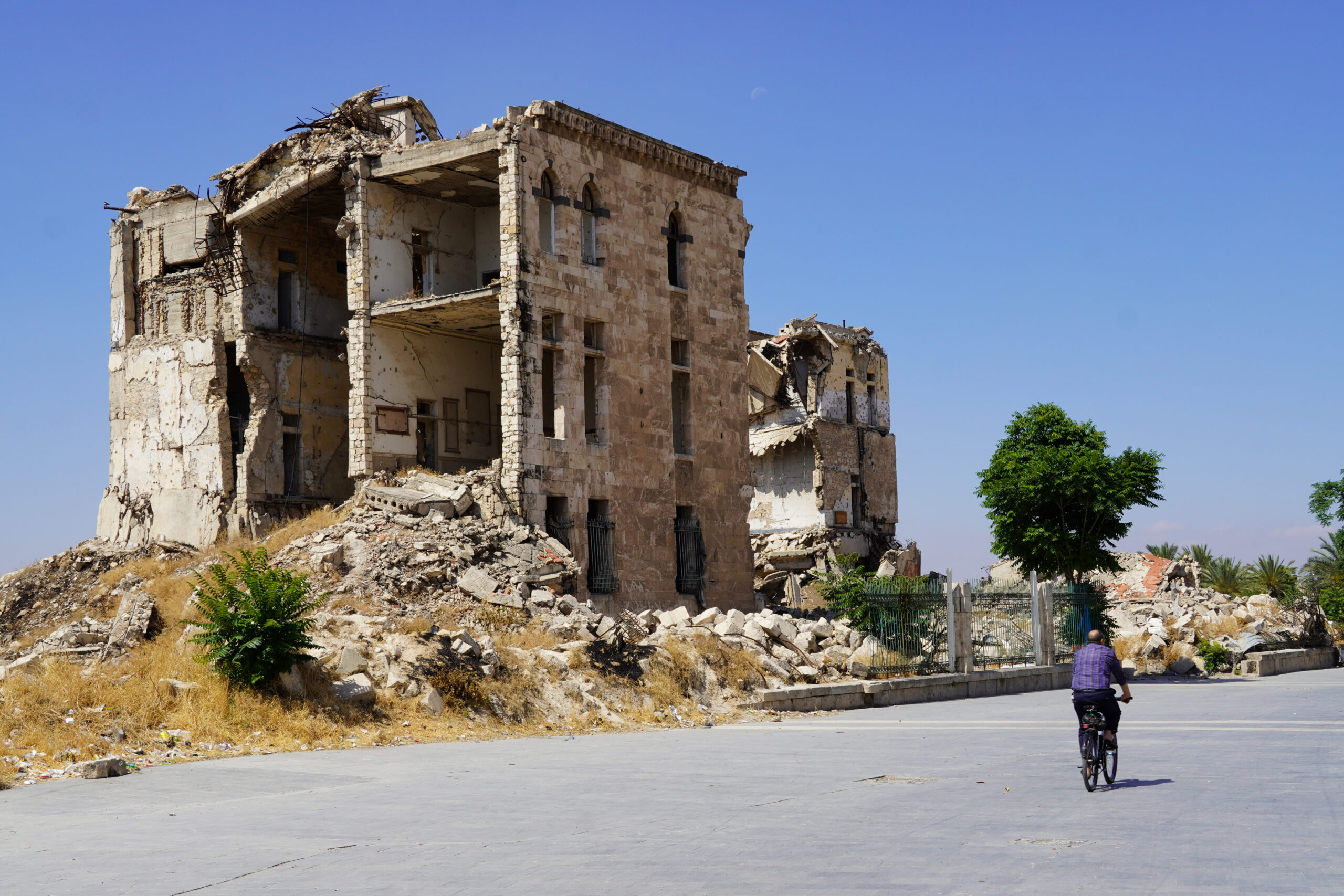
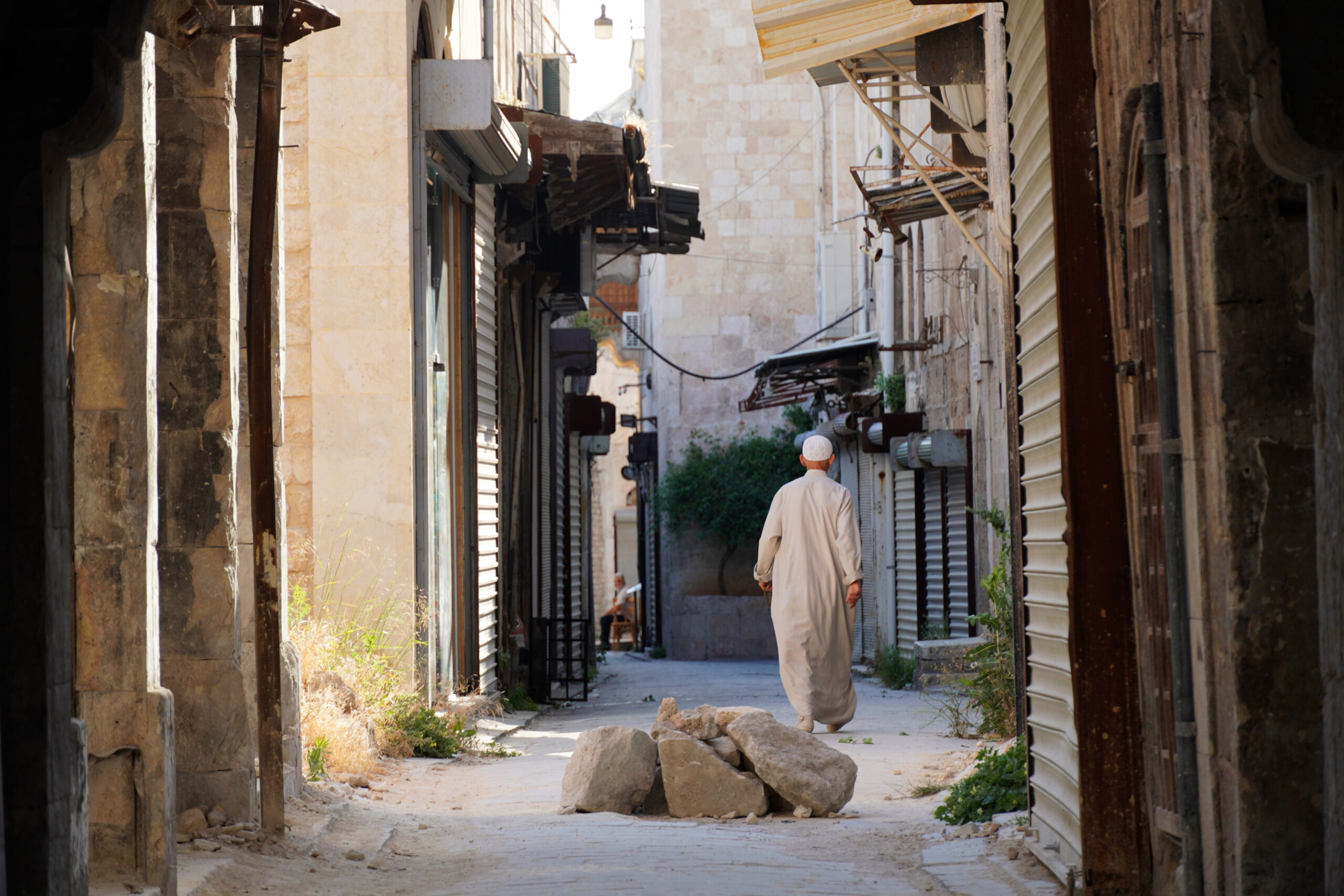
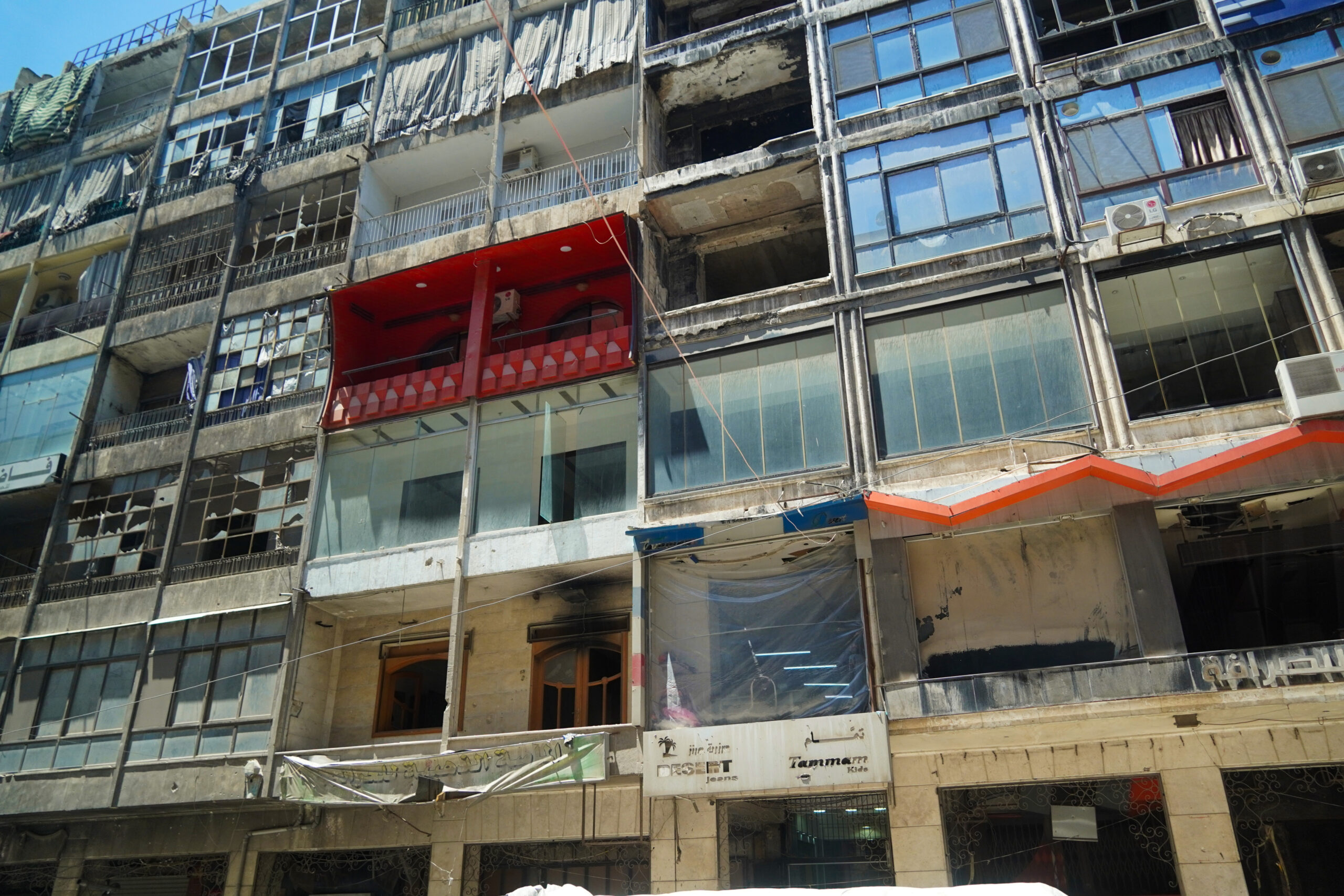
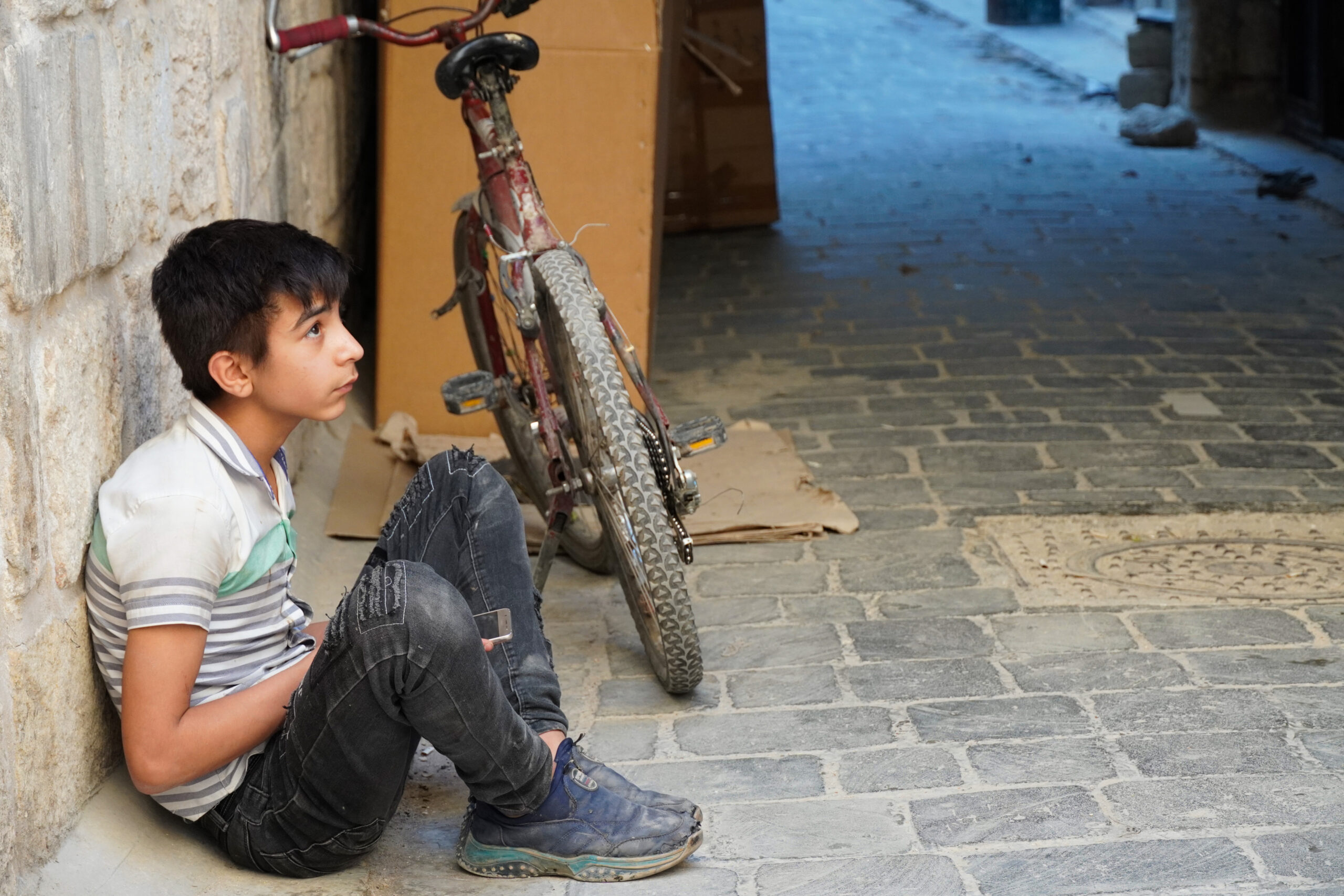
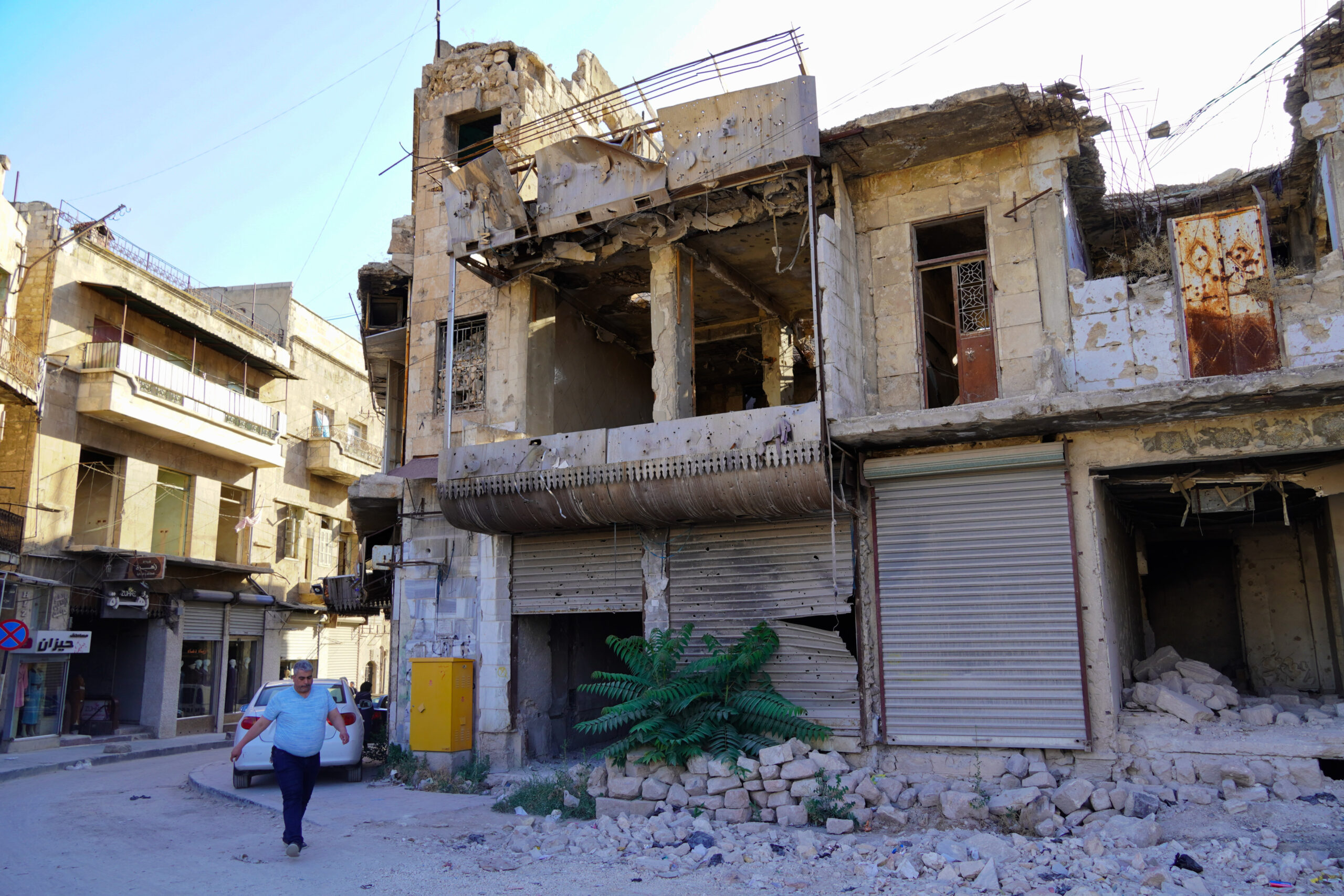
Dubbed as “the mother of battles” and “Syria’s Stalingrad”, the Battle of Aleppo witnessed one war crime after the next, by every side, for four long years. Civilians were intentionally targeted. So were hospitals and schools. Indiscriminate air strikes and shelling were mixed with chemical weapons, barrel bombs, and air-dropped cluster bombs. Double-tap strikes became commonplace, aimed at those responding to the first strike. The United Nations High Commissioner for Human Rights called it “a slaughterhouse –a gruesome locus of pain and fear” and denounced “crimes of historic proportions”.
The levels of utter annihilation that we saw match the description. The government blamed the rebels, the rebels blamed the government. What I can tell you is that lives and heritage seem to have been expendable for both sides.
Although by that point in the trip I knew I wouldn’t get an unbiased account, I asked about al-Assad’s involvement in the crimes committed in Aleppo. “The government never bombed anything in Aleppo, there were street fights, but the damage was done by the rebels and ISIS”, I was told. “Until mid-2012 nothing happened in the city, the people supported the government. But then it was attacked by terrorists supported by Qatar and Turkey. They stole the riches of Aleppo, which was the economic capital of the country. They looted everything they could, and burned what remained”. But you know, I added, in western media the headlines showcased al-Assad using chemical weapons against the rebels. “No, no, no, there have never been chemical weapons in Syria, that’s impossible”.
The use of chemical weapons (in the form of sarin gas, chlorine and sulfur mustard), was not precisely hidden by al-Assad’s forces. In a move to appease the West in 2013, the government agreed to the destruction of their arsenal, and the Organization for the Prohibition of Chemical Weapons oversaw it. It wasn’t a real deterrence, though, since most of the attacks using such weapons were carried out after the alleged destruction. But it goes to show –one more time– how much propaganda Syrians had been forced to believe.
As if Aleppo didn’t have enough with the devastation of the war, the 2023 earthquake in Turkey and Syria continued with the obliteration. The jewel of the city, Aleppo’s citadel, had managed to survive the war, but nature took what weapons didn’t.
Aleppo –Ḥalab in Arabic– is one of the oldest continuously inhabited cities in the world. And the layers of history are palpable. The citadel is deemed one of the oldest and largest castles in the world, and it’s a perfect example of the many dwellers the city has had –usage of the site dates back to the 3rd millennium BCE. The structure we see today, though, originates from the Ayyubid period.
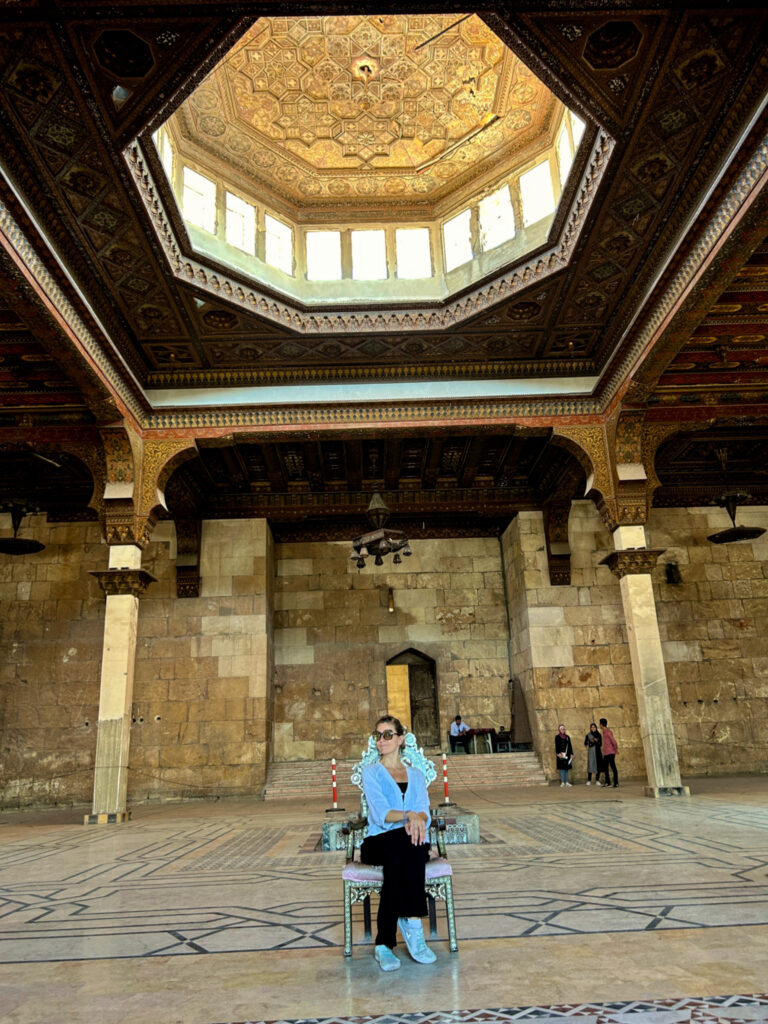
The Temple of Hadad –the storm and rain god of ancient Mesopotamian religions– lives among Byzantine churches turned mosques, Ayyubid palaces, baths and shrines, Mamluk towers, and Ottoman barracks. The most impressive site is the Throne Hall, so grand that it’s effortless to visualize the Mamluk sultans ruling from it.
The whole core of the town –the Ancient City of Aleppo– is a UNESCO World Heritage Site. So, after the devastation of the earthquake (and un-admittedly of the war), efforts were quickly implemented to restore the citadel, the Grand Mosque, the museum and the souks. Main highways, parks and religious sites –to no one’s surprise– are always the first ones to be reconstructed, in this case giving parts of the city center an undamaged and lively appearance.
The only exception was the main souk. From the citadel we walked through the utterly obliterated remains, making our way in the dust through busy construction workers, until we reached the fully refurbished area. Knowing what was to come, while waking pass the wiped-out remnants, I was trying to picture millennia of merchants exchanging goods in its alleyways –I could already smell the spices, feel the softness of the silks, visualize the iwans of the caravanserais that sheltered the traders. But I arrived in a soulless version of what it used to be. The place looks beautiful, but the liveliness is gone. Don’t get me wrong, people do go, locals and visitors alike, but among the knickknacks being sold, I felt no character, no charm. Just hope that when the overall economic situation improves, the Chinese junk will be replaced by the handcrafted goods that once made Aleppo world-renowned.
Our itinerary included a stop in a soap factory, but time was not enough, so we hurriedly bought some of the famous product, and made a quick stop in the Aleppo National Museum instead –only one room was opened, showcasing what was salvaged, which turned out to be a glimpse of what was awaiting us on the next stop.


Ma’arat al–Nu’man Mosaic Museum
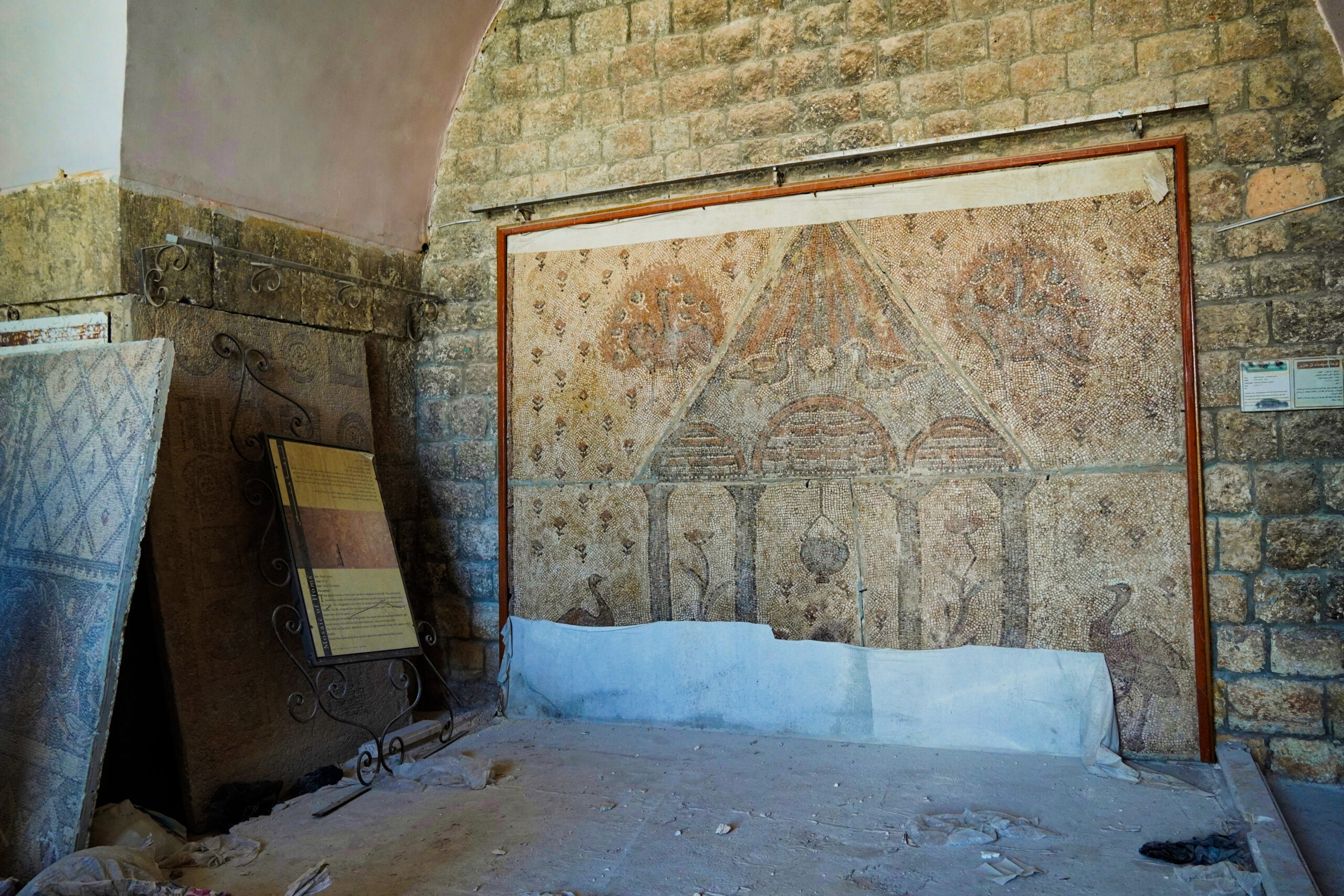
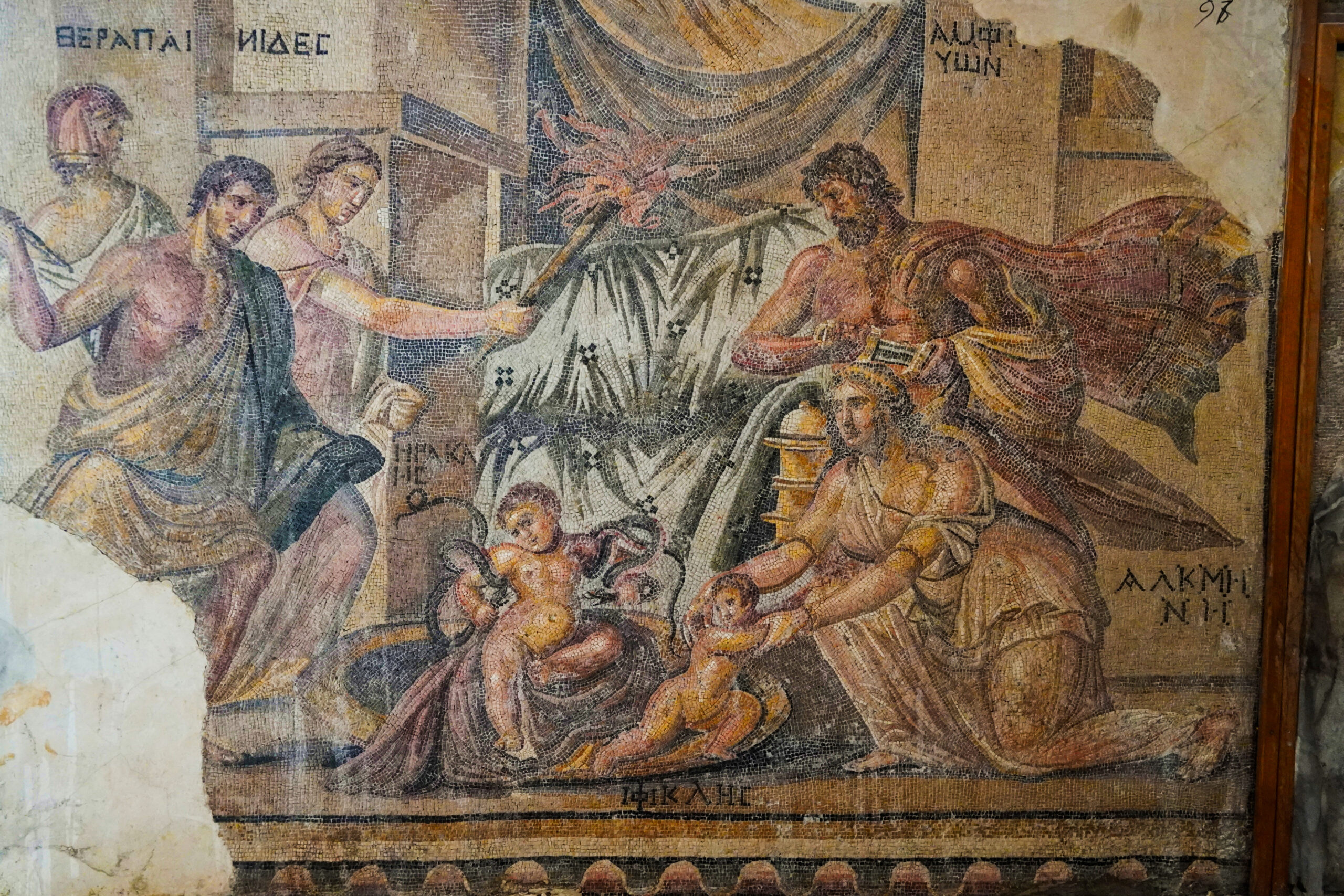
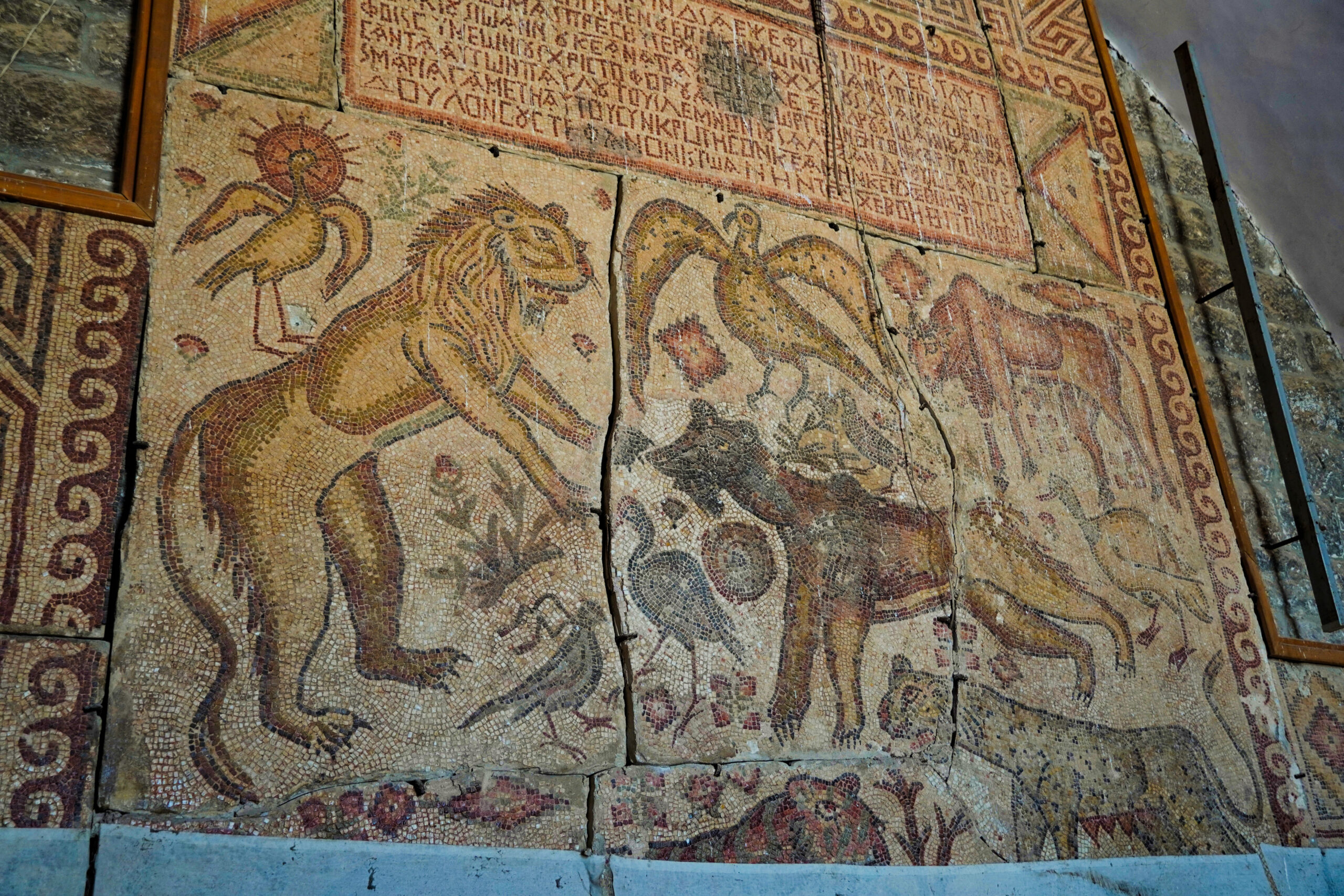
We left Aleppo behind and drove about an hour back south to Ma’arat al–Nu’man, to see its gem (or what’s left of it): the Mosaic Museum. Built in 1565, the Murad Pasha caravanserai was converted into a museum in 1987 to house a collection of mosaics from the nearby Roman and Byzantine-era Dead Cities. Just as I did in Aleppo’s souk, before trying to absorb what was really in front of me, I closed my eyes and imagined how it was before the war. Endless colorful mosaics adorning lighted halls, vaulted arches revealing the museum’s past function, small crowds admiring the historical treasure that was preserved in those walls. The silence was suddenly interrupted by our guides telling us about how all of what I was imagining had vanished.
Al-Qaeda forces took the city of Ma’arat al–Nu’man and completely obliterated it. People fled their homes, but the curators of the museum decided to try to save their heritage. They covered the mosaics with a sticky fabric and poured cement over them, in hopes that the terrorist would not bother destroying them.
And it worked. Al-Qaeda didn’t pay much attention to what was behind the newly laid cement. They focused their attention on digging tunnels under the museum, both for shelter and as a potential way out –as they had seen the inhabitants of Ma’aloula escape through their ancient tunnels. They kept their position for 4 years.
Today the museum is waiting for funds to be refurbished, but locals are trying to make sure no further harm is done. They are removing the cement from the mosaics and assessing the structural damage the tunnels caused. The caretakers even took some of the fabric from one of the mosaics and splash it with water so the colors are more vibrant for our photos. We’re told it’s still not open to the public, but we can carefully wander around.
After admiring the superb, detailed work of the centuries’ old mosaics, we’re allowed to go down the tunnels. As I walked through the dark alleys created by al-Qaeda I had a heavy heart. I was disgusted by the lack of care. Of history, of life. Disgust gave way to sadness. Profound sadness. How many lives were lost because of a stupid ideology. How much the survivors lost. And how much humanity has been deprived of. How someone can be so closed-minded as to not see the importance of heritage. How someone can be so evil as to not value life.
Shame on me for not knowing more about this location beforehand. After returning from the trip, I read that the museum was looted by opposition forces, damaged by Syrian Army airstrikes, and further damaged by Russian aerial bombardment. And that American-funded ‘Safeguarding the Heritage of Syria and Iraq Project’, according to the Smithsonian’s news portal, “aimed to secure the mosaics from further harm during the conflict. After consultation with experts in mosaic conservation, the Syrian team applied a layer of glue and cloth designed to fortify and keep the tesserae (individual tiles in a mosaic) together. Several truckloads of sandbags were then laid out to protect the mosaics from further damage. Altogether, some 1,600 square feet of mosaics were protected. Holes in the roof were also repaired to prevent further deterioration and possible collapse”.
Then again, regardless of who is to blame, or who you choose to believe, this place is a precious stop, and I’m glad to have seen even a glimpse of what it holds. I’m especially grateful to have been considered VIP enough to have the place opened for us.
Apamea
After exploring Bosra, and knowing that we would visit Palmyra, I thought any other Roman site would feel underwhelming. Yet the Romans keep surprising me. And what a comforting surprise it was, after all the heartbreaks of the day.
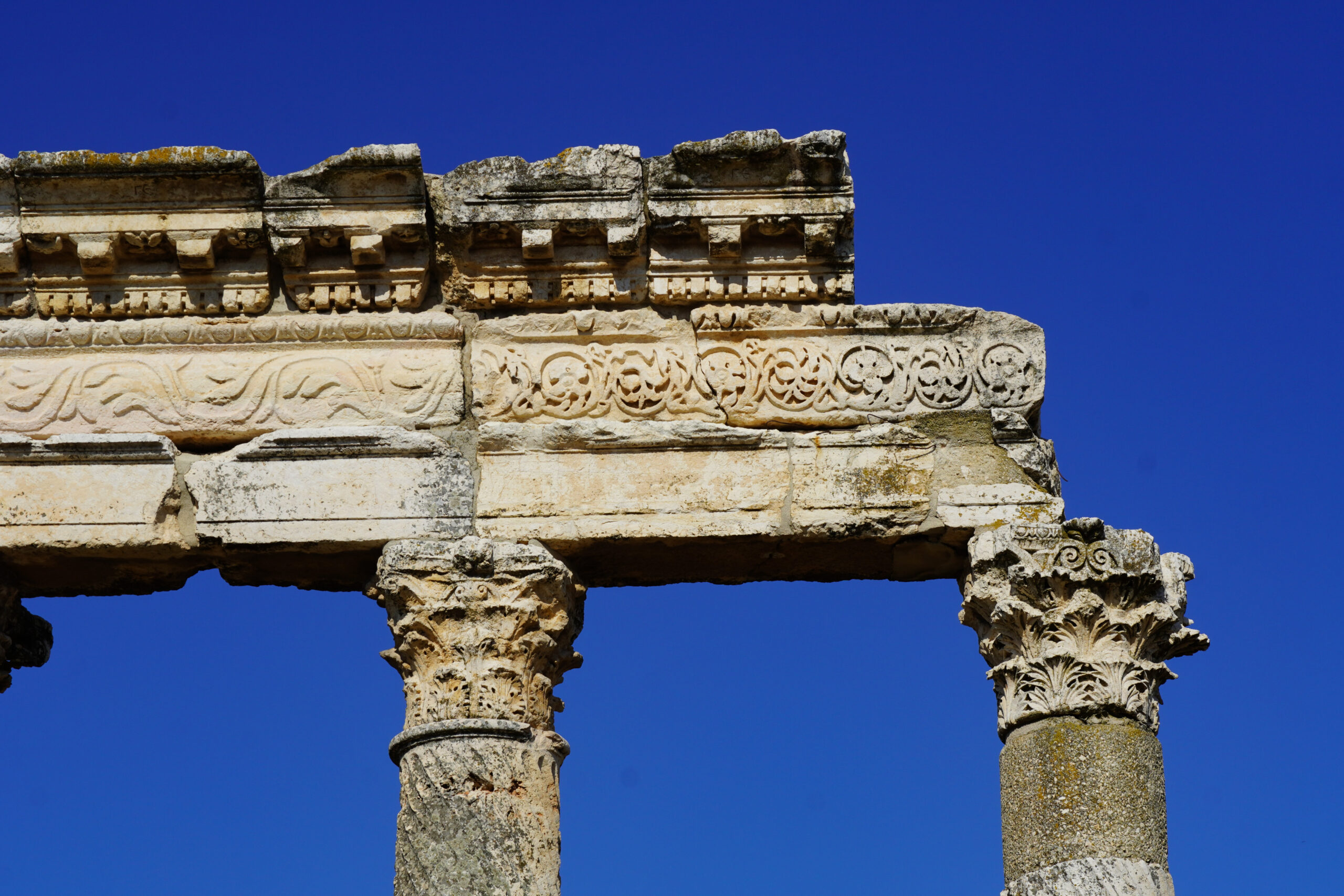
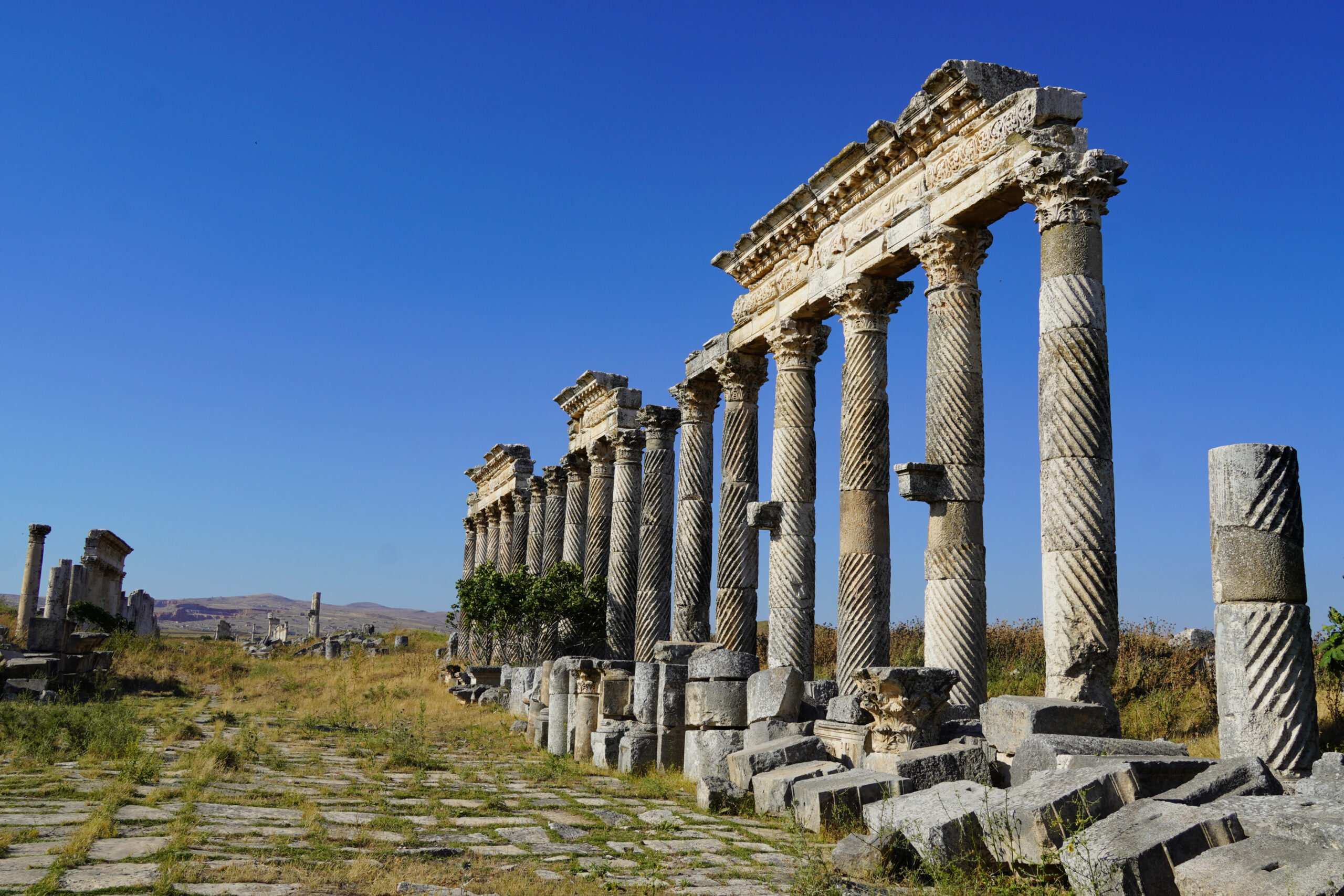
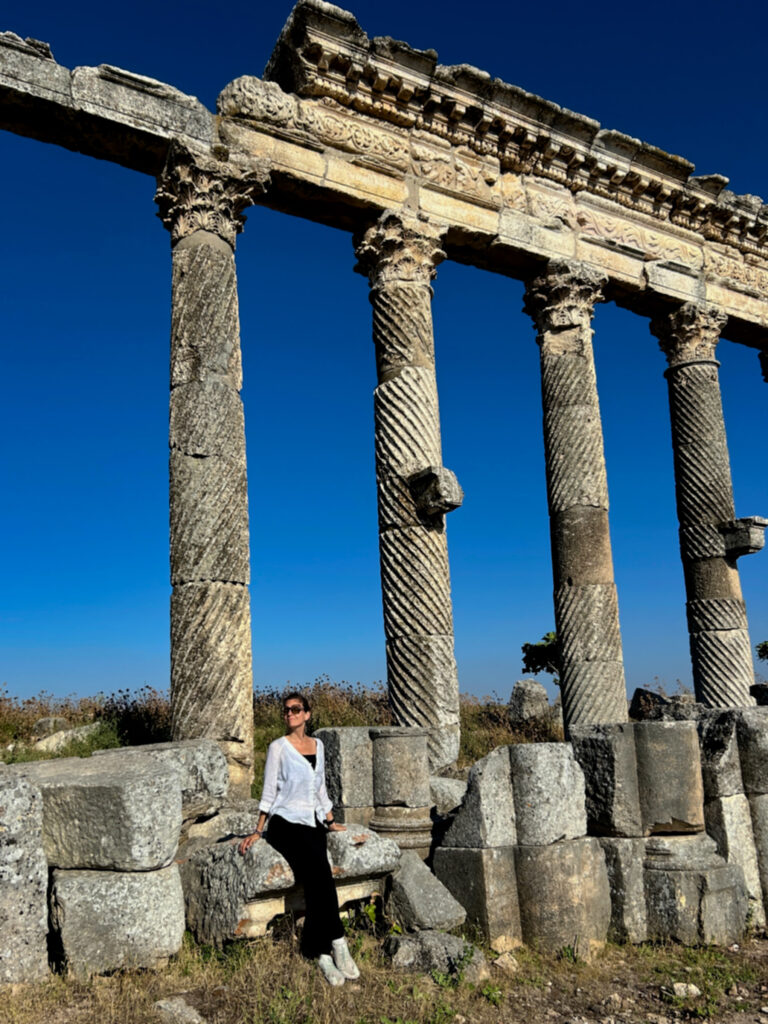
Turns out that Apamea boasts one of the longest cardo maximus of the Roman Empire, an avenue that runs for about 2 km (1.2 mi), with hundreds and hundreds of columns encompassing it. The Great Colonnade was sized for the large, cosmopolitan metropolis that Apamea once was, which is believe to have housed up to half a million people. Its theater was also substantial, with seating capacity of 20,000.
The latter didn’t survive the passage of time –most of its stones were used to build houses, which is still visible in the village that surrounds the site. The former did manage to survive, but everything that the road connected –baths, houses, markets, temples, tombs– was ransacked during the war, to the point that it was described “a lunar landscape of looters’ holes”.
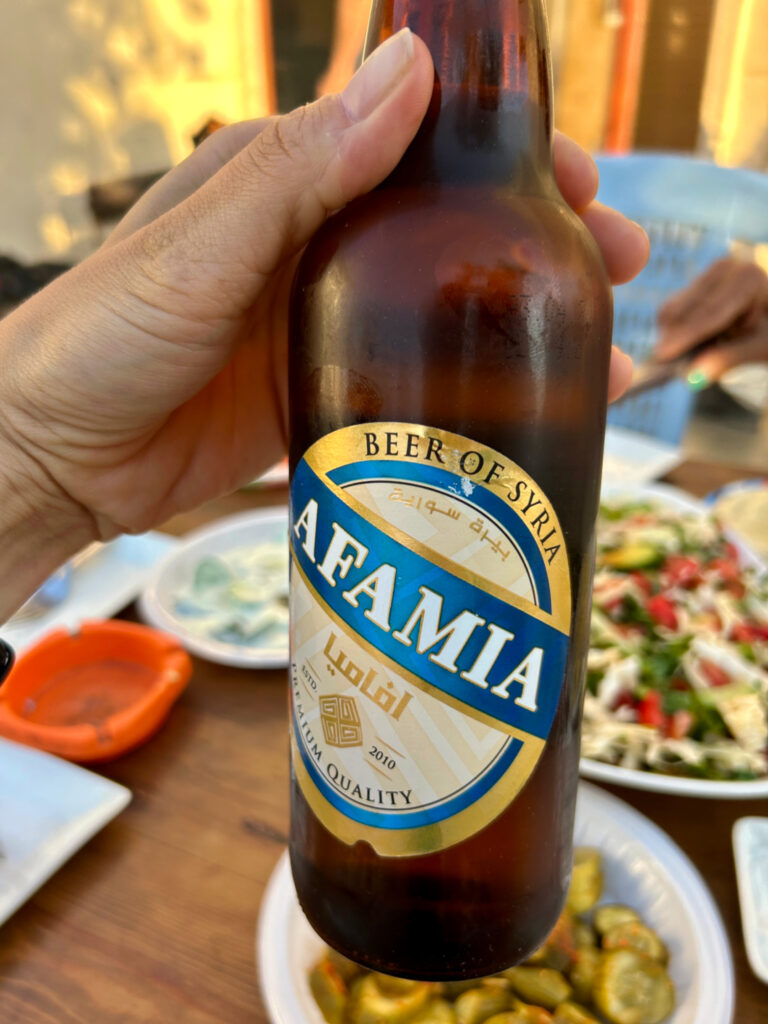
But let’s not dwell on the past. Apamea is still a magnificent site and, fun fact, so important it is to the Syrians, that they named their premium brand of beer after it, in its Arabic name: Afamia.


Damascus (and the future of Syria)
My first encounter with a local in Damascus was meters from our hotel. We crossed a crowded street and paused to take photos, unaware that we were stopping traffic. Instead of honking, the person in the car patiently waited until we moved and passed by us slowly enough to tell us “welcome to Syria”.
During the months before the trip, this is exactly what I expected to find –friendly, hospitable, open-hearted people that have been dealt a hard set of cards in life, but had managed to come on the other side without bitterness. Yet, the level of liveliness in the city surprised me. My expectations grew bigger!
Although we spent the first two nights of the trip in Damascus, we left time to explore it at the end. It felt a tad unconventional to see the rest of the country without properly seeing the capital, but it turned out to be ideal –the city was the perfect place to get a full-circle vision of Syria. I’ve seen the life and work of Romans, Palmyrenes, Byzantines, Umayyads, Abbasids, Crusaders, Mamluks, Ottomans, French, and many in between. And so has Damascus.
Deemed as the oldest inhabited city in the world –continuously populated for at least 10,000 years– the city has seen it all. Mark Twain, in his book ‘The Innocents Abroad’, beautifully defines it:
«To Damascus, years are only moments, decades are only flitting trifles of time. She measures time, not by days and months and years, but by the empires she has seen rise, and prosper and crumble to ruin. She is a type of immortality. She saw the foundations of Baalbec, and Thebes, and Ephesus laid; she saw these villages grow into mighty cities, and amaze the world with their grandeur –and she has lived to see them desolate, deserted, and given over to the owls and the bats. She saw the Israelitish empire exalted, and she saw it annihilated. She saw Greece rise, and flourish two thousand years, and die. In her old age she saw Rome built; she saw it overshadow the world with its power; she saw it perish. The few hundreds of years of Genoese and Venetian might and splendor were, to grave old Damascus, only a trifling scintillation hardly worth remembering. Damascus has seen all that has ever occurred on earth, and still she lives. She has looked upon the dry bones of a thousand empires, and will see the tombs of a thousand more before she dies. Though another claims the name, old Damascus is by right the Eternal City.»
As if being ‘eternal’ was not enough, Damascus has also been dubbed the ‘City of Tolerance’. And rightly so. Although the official name of the country is Syrian Arab Republic –emphasis on Arab–, it’s easy to mistake it for an Islamic nation. The Assads crafted the country into a police state, yet the feeling of freedom I felt in Syria absolutely stood out from its neighbors from the Gulf and their BFF Iran. It’s not easy to describe ‘a vibe’, but it was palpable, for example in the way people dress –women in chadors among others in crop tops. No one judges, or even cares about what others are wearing. Lingerie is openly sold in the souks. Women drink and smoke shisha in the same places that man do.
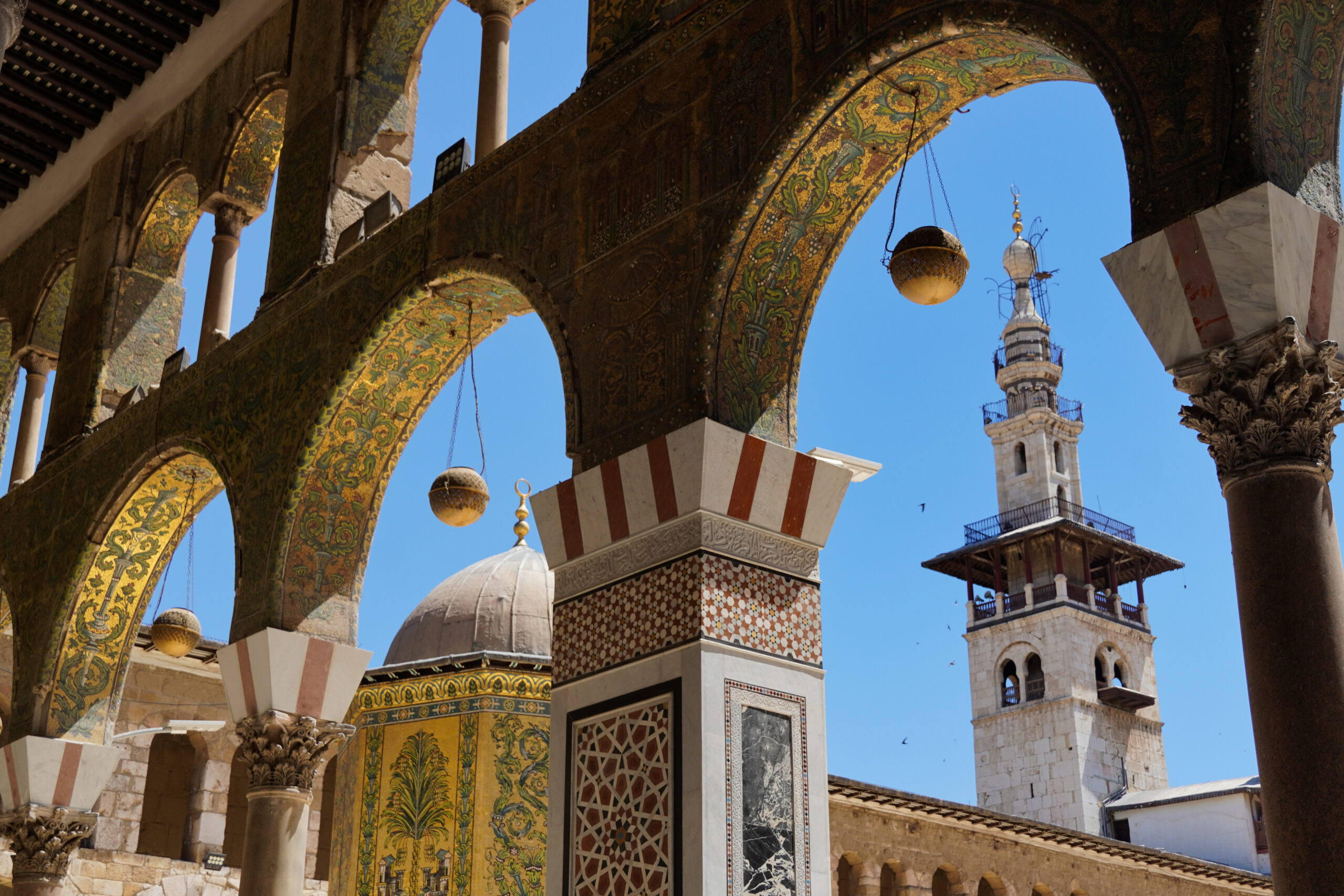
The sense of tolerance leaps into religion too. Churches’ bell towers adorn the skyline between mosques’ minarets. There was no need to destroy or isolate what previous dwellers built. Damascenes have always understood that the city is made of layers. So on the site of the Aramean Temple of Hadad, the Romans built a Temple for Jupiter, then the Byzantines converted it to the Cathedral of John the Baptist, which later the Umayyads transformed into a stunning Grand Mosque. And today all the layers are there, untouched, honoring the city’s history.
Sunnis, Shias and Alawites live together, amongst Christians, Druzes, and Yazidis. Not too long ago even Jews inhabited Damascus. Everyone is welcomed, everyone feels at home. This was literal for British author Diana Darke, who bought and refurbished an Ottoman building in the heart of the city, and wrote an interesting book about the early years of the war from the perspective of her home –My House in Damascus: An Inside View of the Syrian Crisis. She wonderfully describes this communion:
«The two religions learnt to live together and still today there are some 20 mosques and 13 churches within the walled Old City. On Sunday mornings church bells ring out together with the call to prayers in that effortless blend of cultures which has long been Syria’s hallmark, predating the Assad regime by centuries»
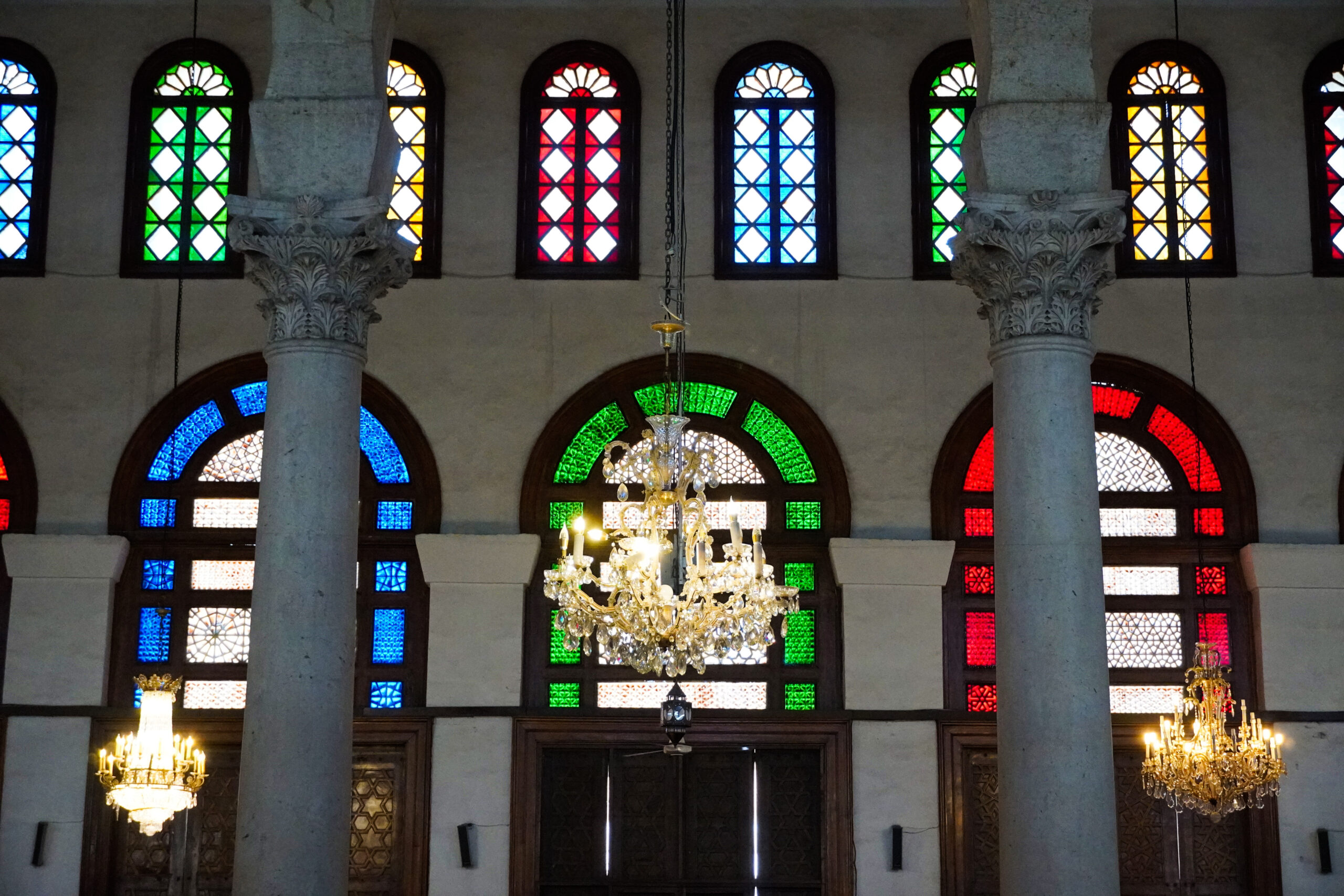
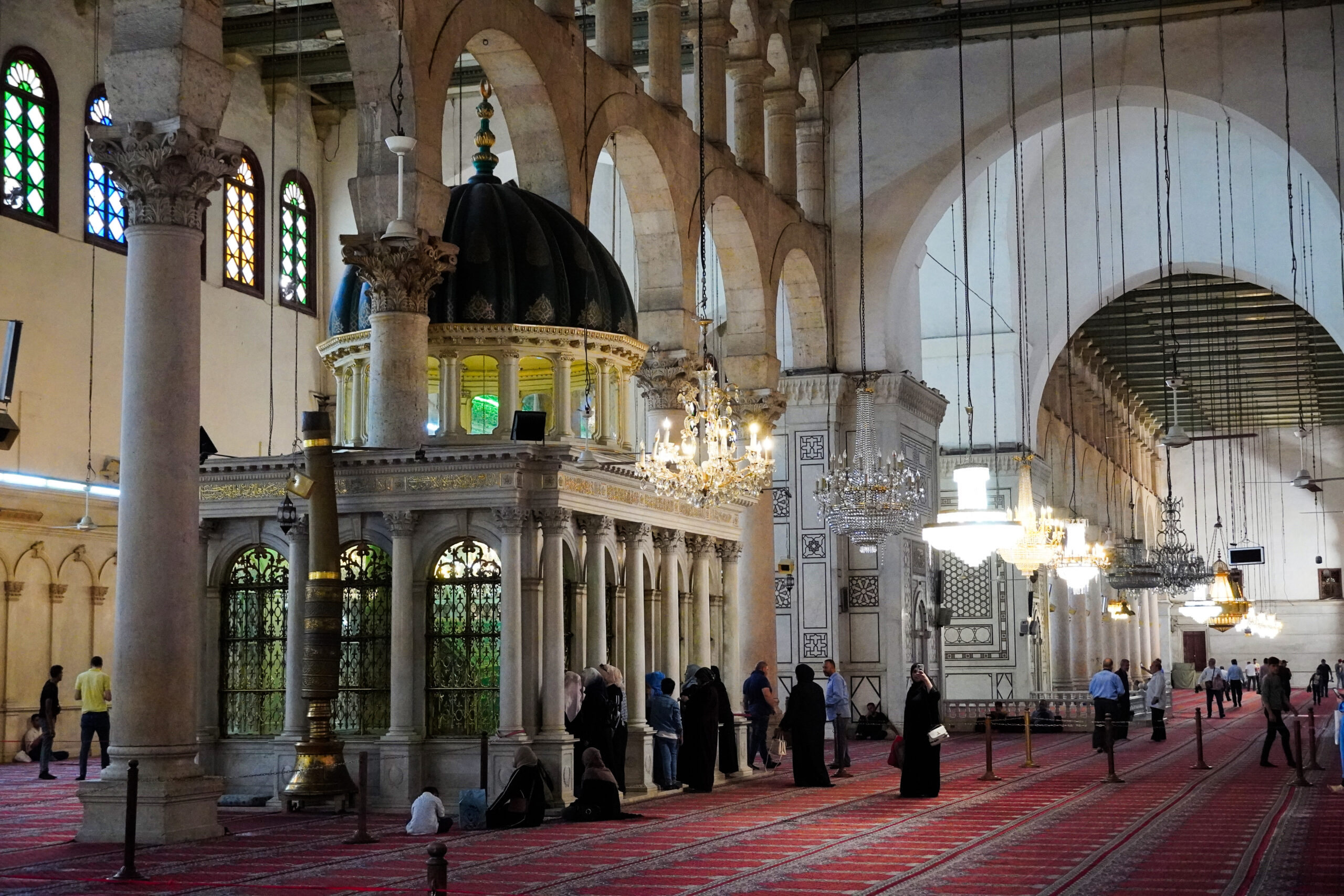
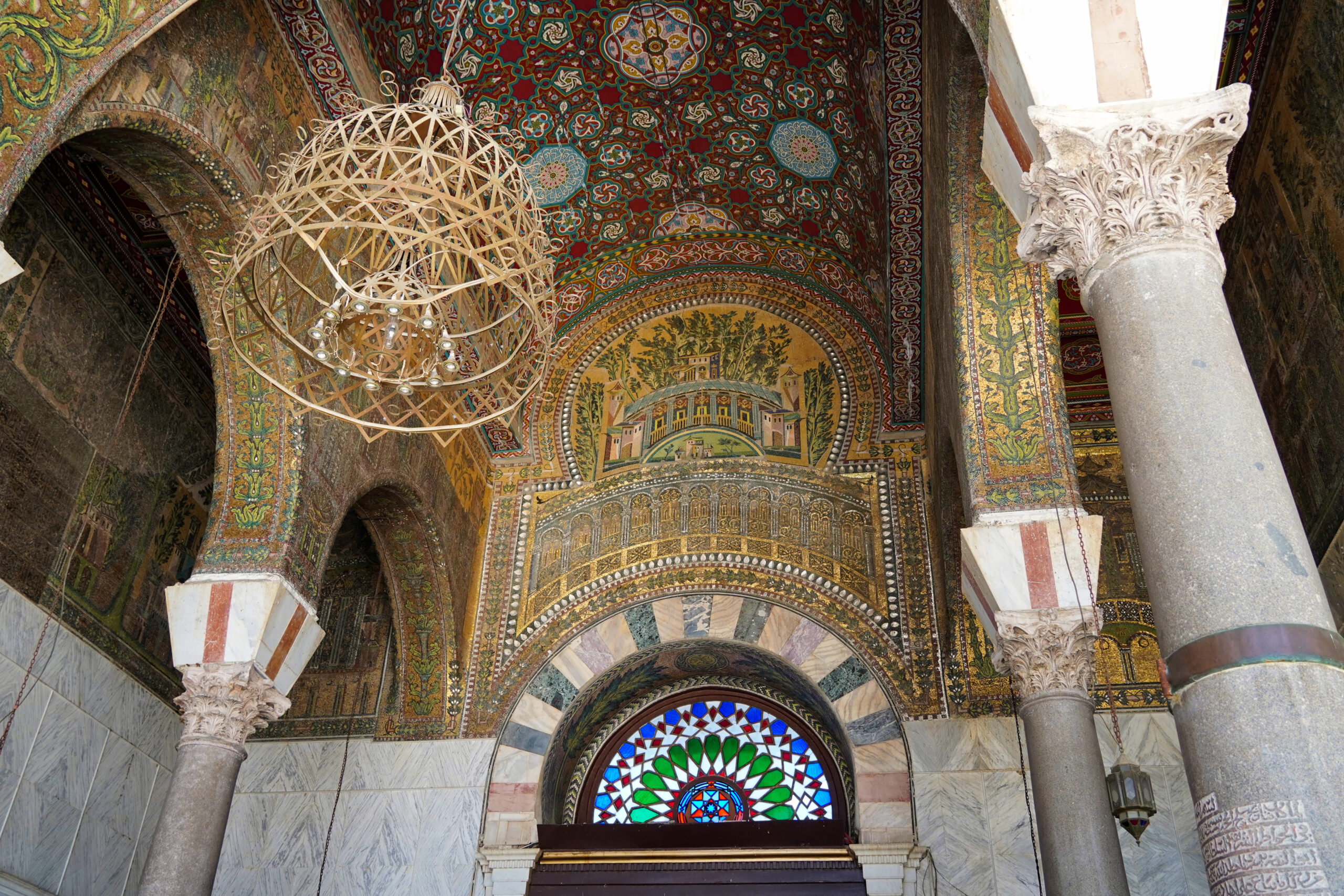
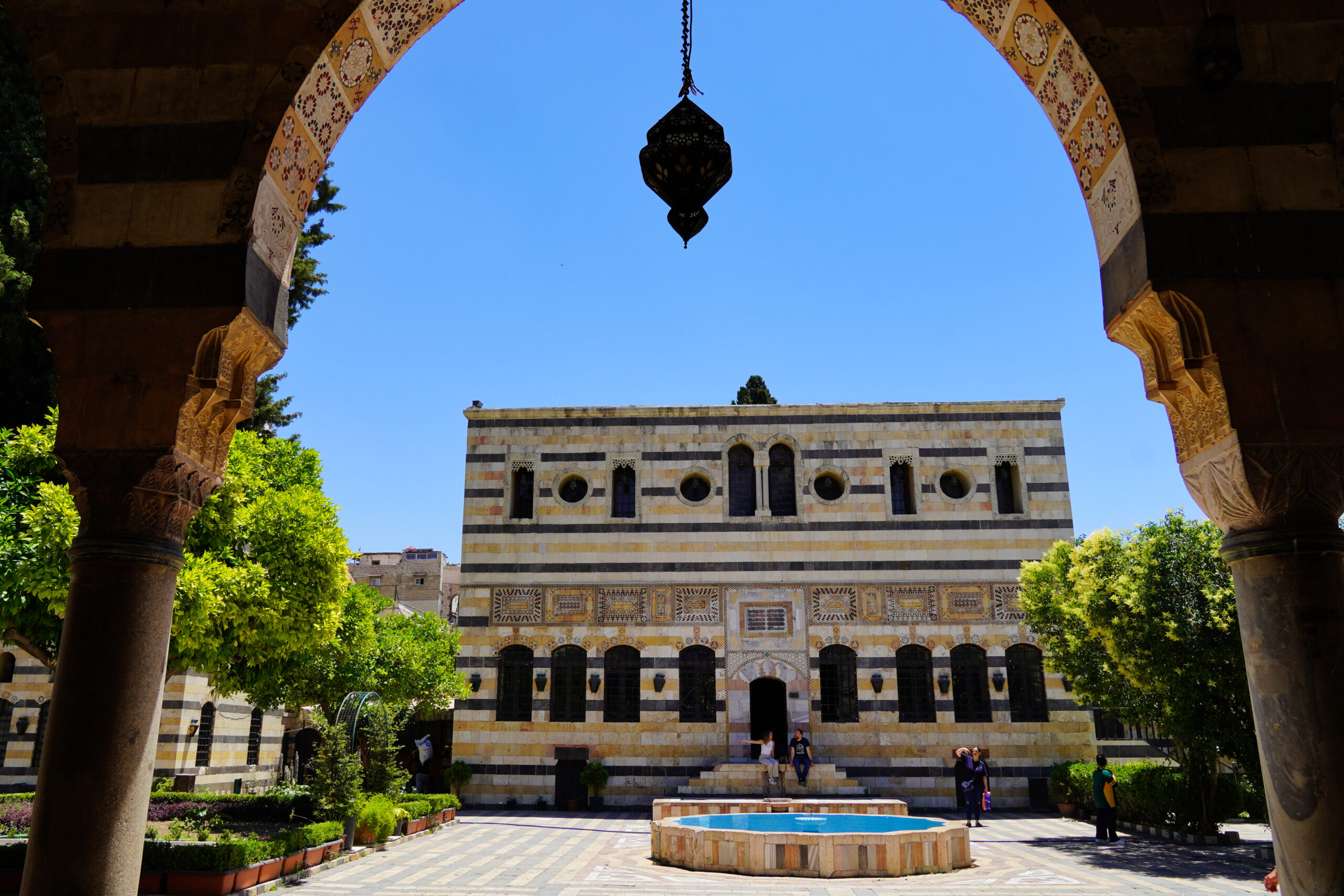
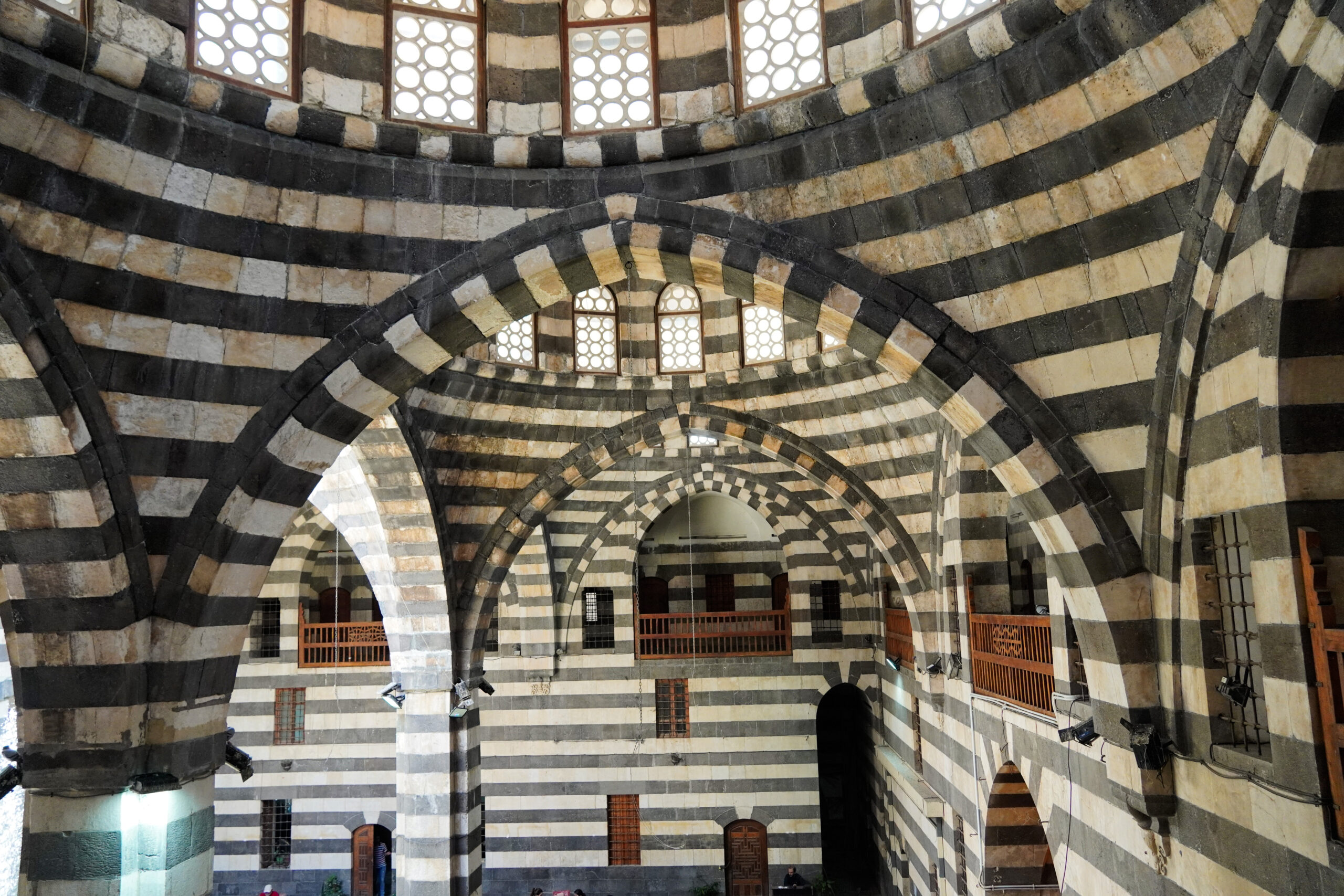
Damascus’ unutterable charm is, most often than not, concealed to the naked eye. Although mainly what you see are nondescript alleyways, they often hide treasures. Humble doors open up to mansions. We stayed in the Talisman hotel, a 600-year-old Damascene house with a beautifully refurbished courtyard in Mamluk style, where you can spend hours having a drink and admiring the ablaq walls –alternating rows of black basalt and light limestone– in the shade of a tree or in the swimming pool.
I’m told that this is commonplace in Damascus –unless you’re invited into someone’s house, you have no idea if inside you’ll find a grand or a modest place. Diana Darke explains it as:
«The expression ‘behind closed doors’ took on a whole new meaning in Damascus. Princes and Paupers lived side by side. Down a narrow street, along a shadowy alley, the approach from the outside was always the same, as if it were a maze. But behind each door might lie a tiny humble dwelling or a sumptuous palace»
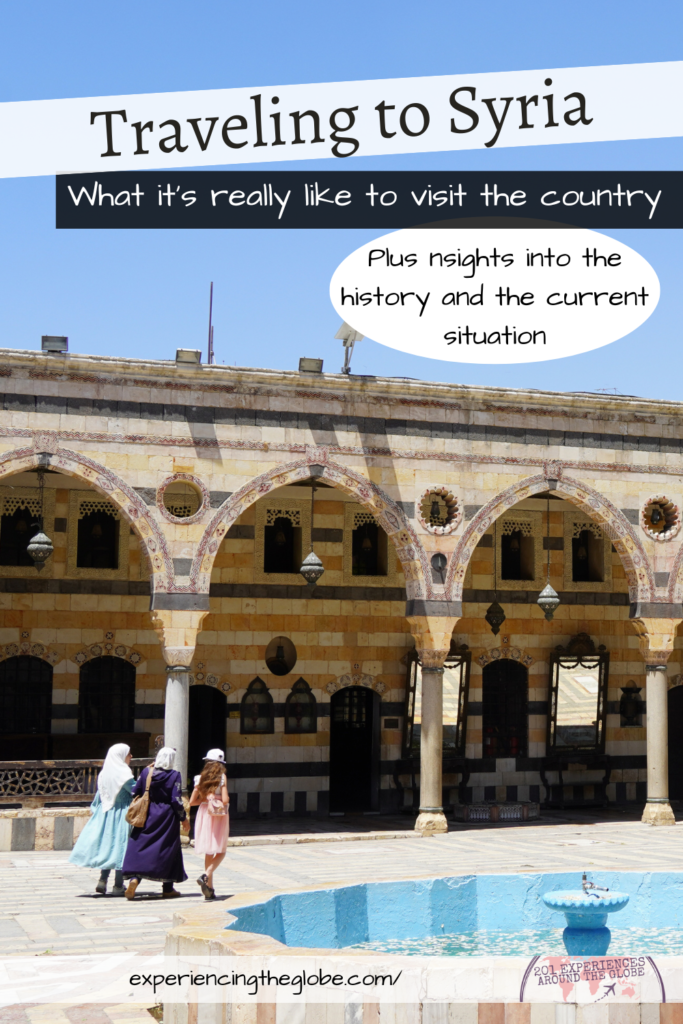
The entrance to one of the most magnificent places in Damascus, the Azem Palace, is unremarkable, yet the 18th century Ottoman residence is a lavish example of a traditional Damascene home, featuring the most exquisite ablaq masonry. Today is houses the Museum of Arts and Popular Traditions.
Similarly, without a pompous entrance hides the stunning As’ad Pasha Khan –not only the largest caravanserai in Damascus, but one of the most beautiful I’ve ever seen. While the upper floor is currently deserted, the ground floor was converted into a café, making it a perfect spot to escape the lively souk that surrounds the building.


This long tradition of tolerance developed into a very special sense of community. On our last day our group divided into genders to take part in a very traditional activity: visiting a hammam. Our guide skillfully navigated souks and alleys until we reached one of the few baths that only caters women. After a revitalizing sauna, scrub and massage (all for less than 3USD!), and some time wordless bonding with the other attendees, we sat at a local eatery. We ordered drinks there, but our guide suggested to get food from a place down the street instead. She went to arrange it, and it was delivered to our table. I immediately ask if that’s even allowed –we were in a restaurant after all. She simply replied that there’s no problem, they all want each other to succeed. This way both places get some business. “We grow together”, she concluded.
What a superb perspective! I was puzzled throughout my whole stay in Syria on how it is possible that such kind people that not only welcomed us with opened arms, but have coexisted amongst dozens of different religions, ethnicities and backgrounds for millennia, were capable of such a nasty civil war.
It became evident that the only area where tolerance hasn’t flourished is in politics. When the “Immortal Leader”, papa Hafez, died, Bashar was dubbed the “Hope of the People”. The “Young Leader” was expected to lead the country into the 21st century, yet he fell extremely short. Shamefully, his attempt to modernize the country was quickly followed by the revival of his dad’s old tactics.
Hafez decided to keep Quneitra the way the Israelis left it to show the evilness of foreign powers. Are the collapsed buildings –and entire towns– Bashar’s way of reminding his people of what happens when they’re not on his side?
After all the devastation, people are reminiscing about ‘how good things were’. But nostalgia is a dangerous thing –it makes people lose sight of why they started the revolution in the first place. Nobody wanted, or even imagined, the full-blown war that would unravel, but the revolution did start out of legitimate discontent. It’s hard to imagine Bashar, the Al-Assad dynasty, or the Alawites giving power up, but if they want to rule over a peaceful country, even if more than a decade too late, they will have to start listening. People had suffered too much to think of another revolution, but it will only take a generation to make the horrors look distant enough to start all over.
As the people living in the occupied Golan, Syrian refugees will always feel Syrian, even if integrated into Lebanon, Jordan, Turkey or Germany. And their nationalism could be the spark for the next revolution.
I don’t have answers to all the questions I started the trip with. In fact, I have even more questions. But I also have a sense of clarity that fills my thoughts every time I visit a place with a… let’s say ‘complicated political situation’. Screwed over by the know-it-all, pedantic West, governments are the least affected by sanctions and warnings against travel –citizens are the ones that suffer. We need to be able to see beyond who’s leading the country and think of its people. And we can help by visiting.

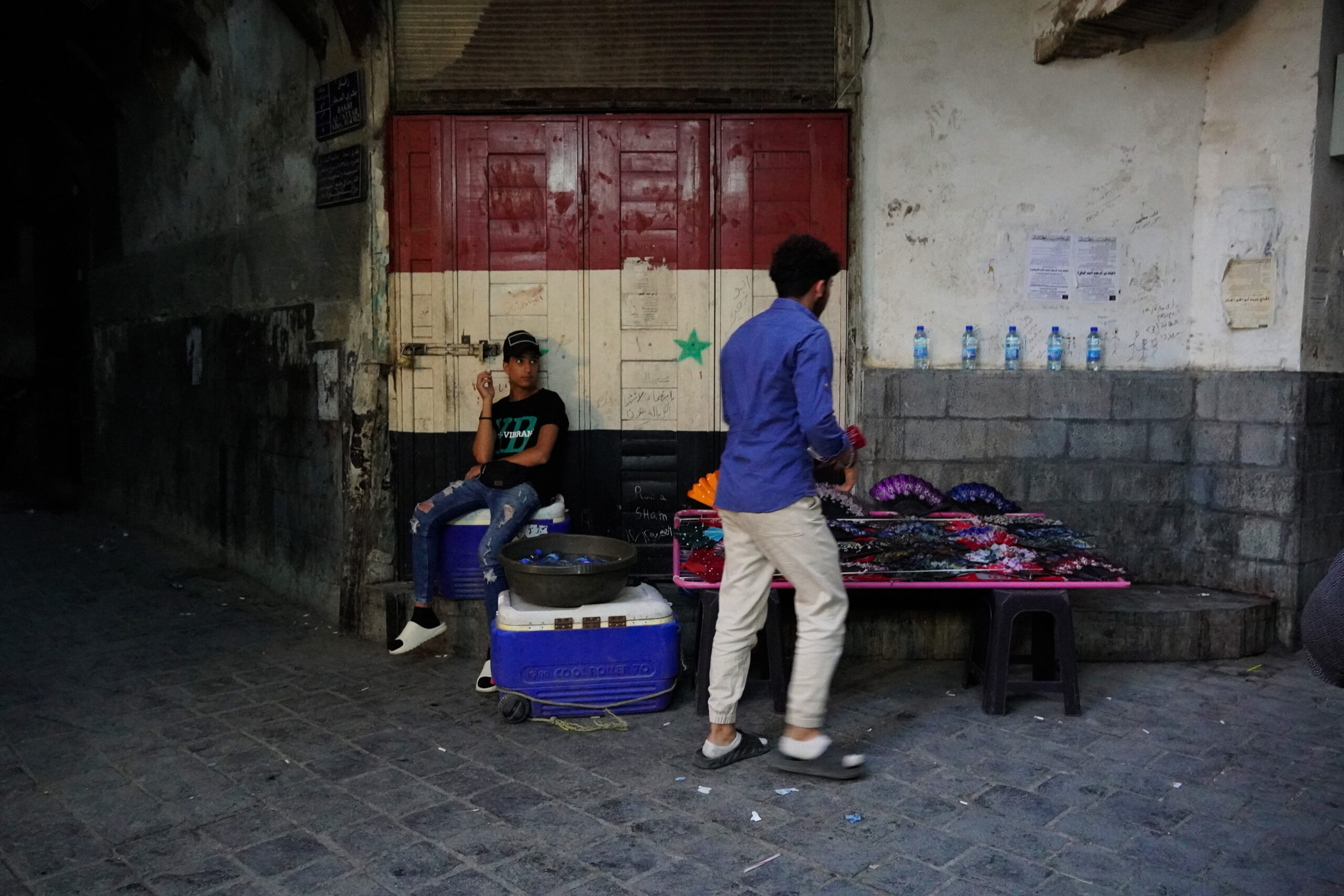
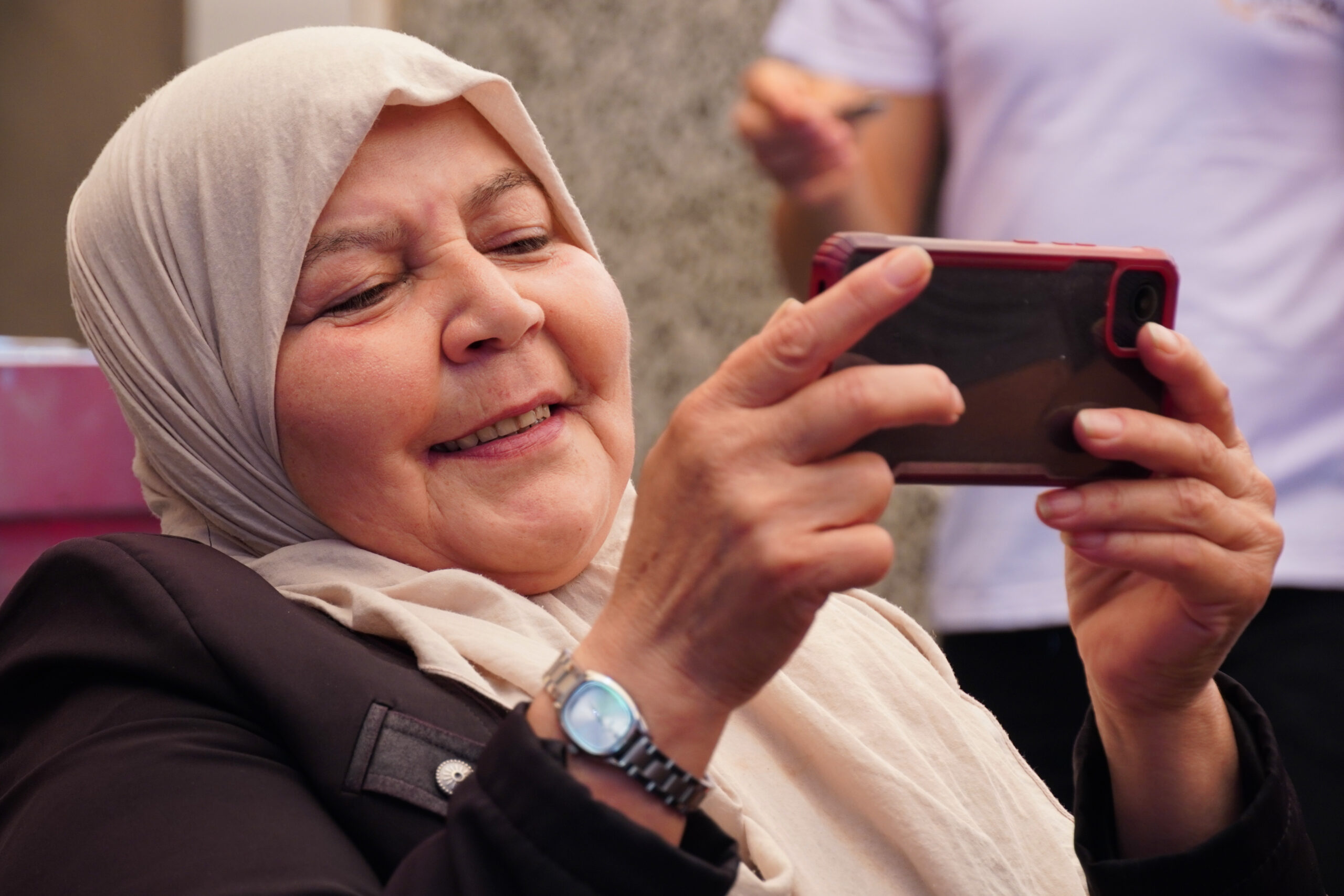
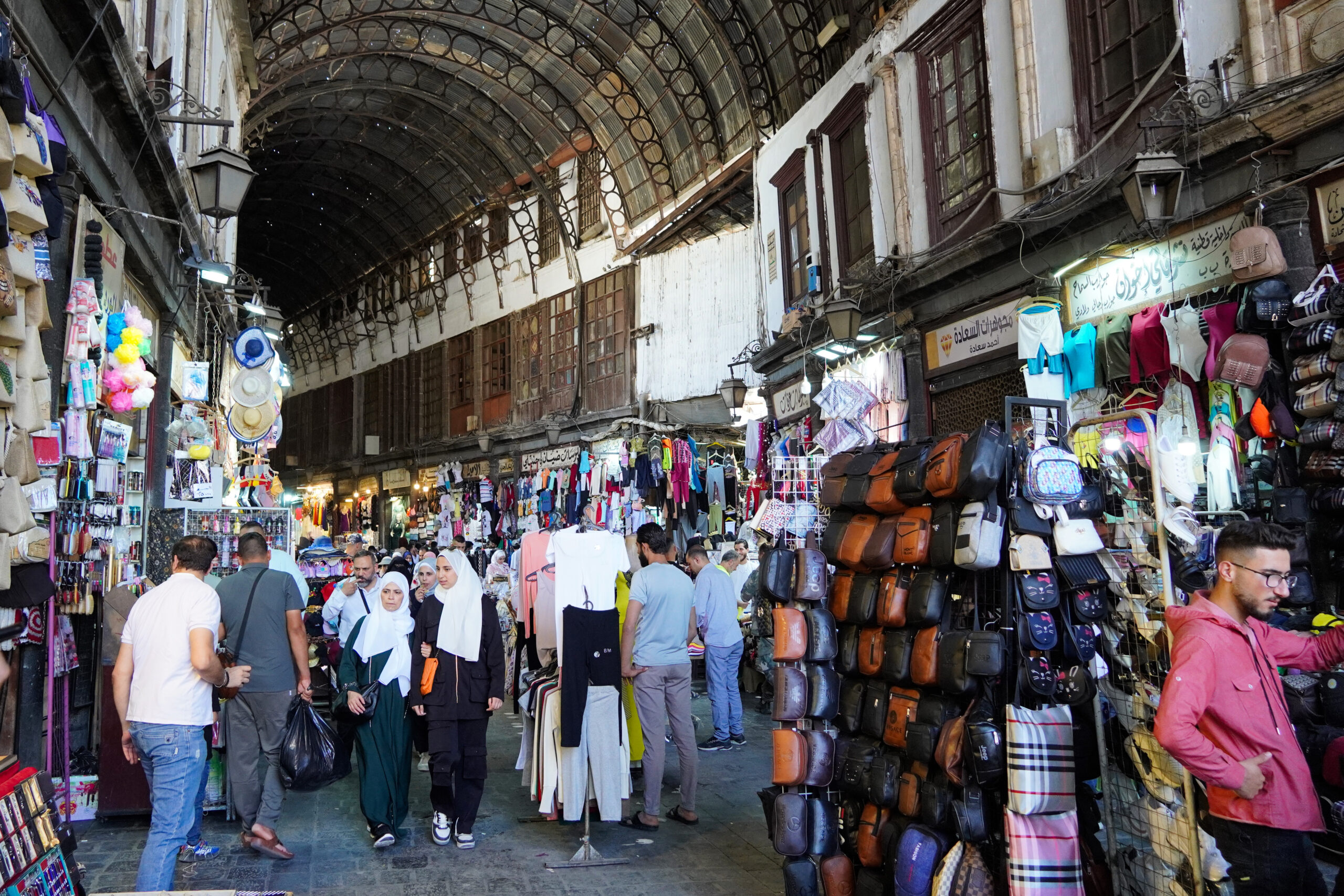
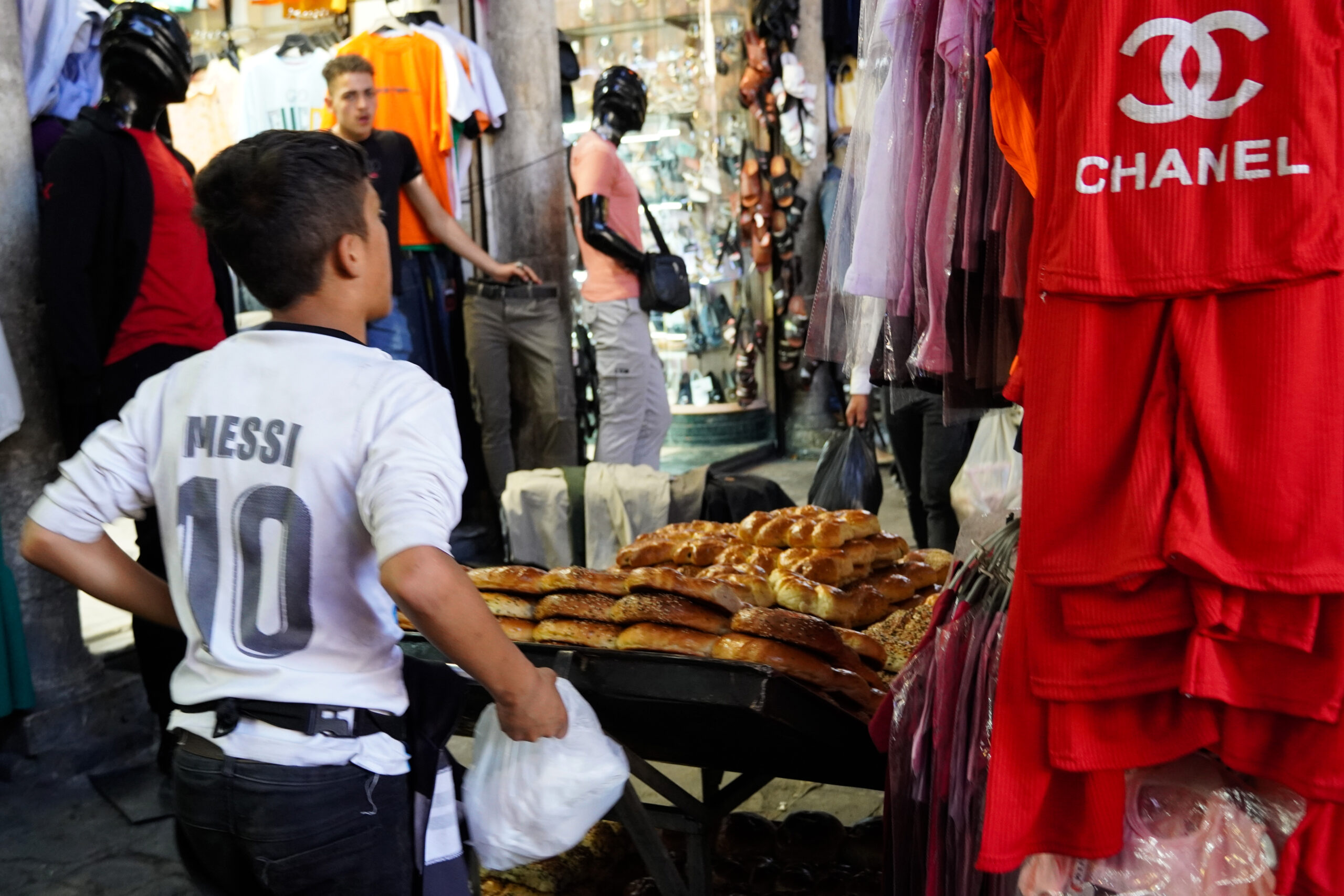
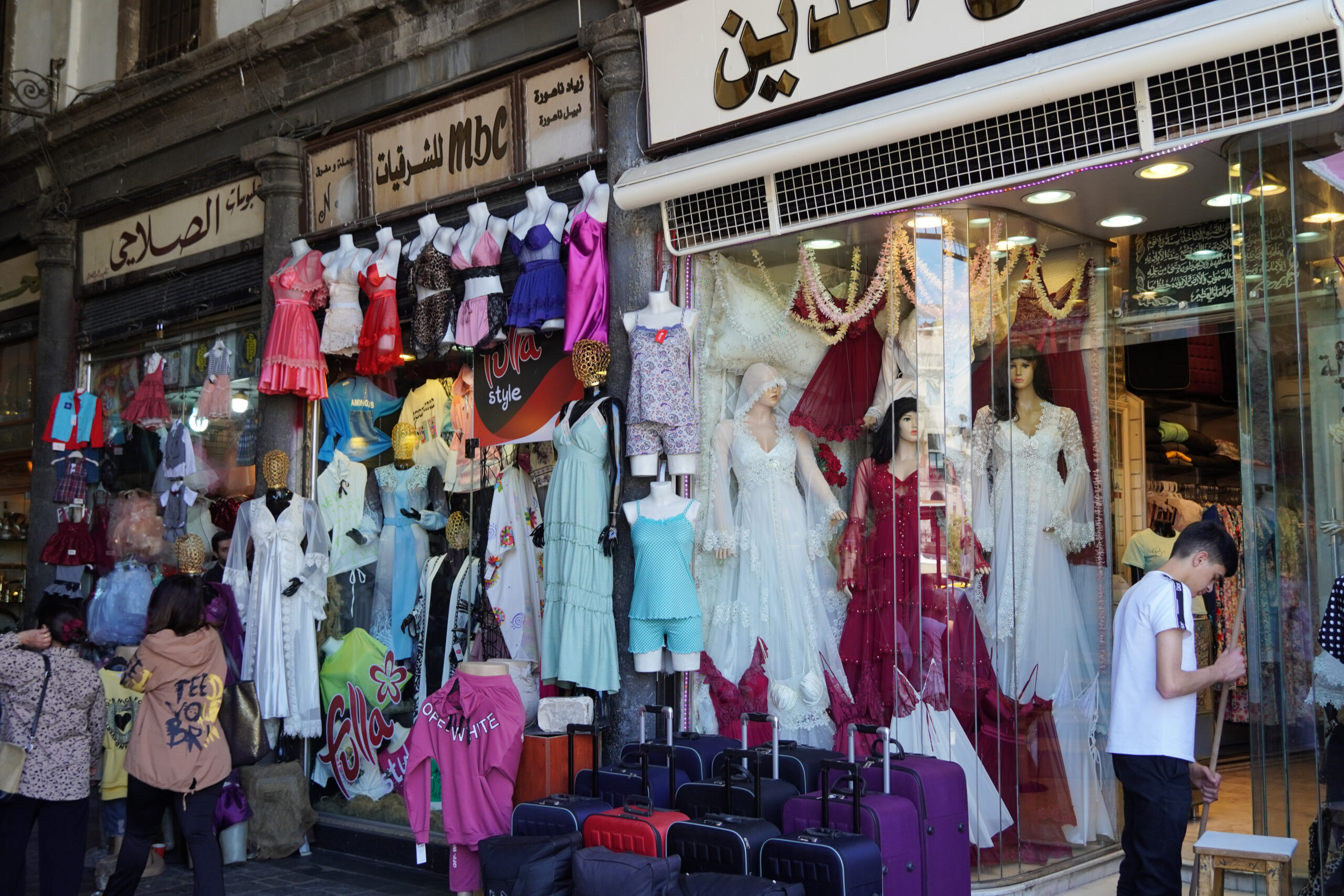
While purposefully getting lost in a souk in Damascus I went into a woodcraft store. The proud shopkeeper took the time to show me his skillful work while chatting in the otherwise deserted store. I asked who his main costumers are, locals or tourists. “Tourists?”, he inquired, “we forgot about this word more than 10 years ago”, he sorrowfully said, yet with a hit of hope in his words. After all, I was a tourist in his shop.
There’s an old Arab proverb that says “grieve for the living, not for the dead”. And that’s exactly what I witnessed on this trip. A focus on the future, not the past.
In the valleys people were back to business. Agriculture seemed to be thriving, and that comes with reconstruction. It’s a small pleasure in a sea of heartbreak to see vast planted lands, men –and women– at work, and an occasional completely refurbished house, with solar panels feeding it. I’m told that the government is allocating money for reconstruction, enough to cover 70% of the cost. Which in theory sounds great. I only wonder who, under these conditions, has the other 30% to ask for governmental aid.
The cities, and especially Damascus, are also getting back on their feet. Although scars of the war are still very vivid, hence impossible to overlook, what stuck me the most was the resilience of the people. That silent majority that are neither activists nor regime supporters. Those that have an indelible smile on their faces, even after seeing hell on earth. From the darkest of times comes a sense of humor that’s hard to grasp. A recurrent joke during the war said: “A man returns home with a live chicken for dinner… His wife tells him the family no longer has a knife to slaughter the bird, nor do they have gas to cook it with. Upon hearing the news, the chicken begins clucking: ‘Long live Bashar! Long live Bashar!’”.
Damascus has seen it all, yet it proudly stands. That’s the role model Syrians uphold. There is no government, foreign intervention or jihadist group that can bring them down. Empires might rise and fall, but Damascus –the Eternal City– will remain.

Liked it? Want to read it later? Pin it!
Enjoyed what you read? A lovely way to show appreciation is by buying me a coffee.
Your support keeps the stories, guides and geopolitical insights coming. Thank you so much!


Hard to tell how much of the experience is actually authentic versus just what the regime wants you to see.
I’d say it was 100% what the regime wanted us to see. There was no other way. That’s why I did lots of research and asked lots of questions, so I could make my own mind. That doesn’t make the experience “not authentic”, but set on that specific context. Yet I’m sure visiting after the fall of the regime is a completely different experience.
hard to imagine navigating all those checkpoints without being constantly on edge
Actually, I felt very safe the whole time. That’s the absolutely unfair privilege of being a tourist, especially when local people don’t have that freedom. I’d love to go back, though, and see a different angle. Hopefully one day.
Coni, your background as a human rights lawyer shines through brilliantly in this post. So much of the mainstream discussion around dark tourism or traveling to autocratic regimes lacks this exact nuance. You managed to balance the immense ethical responsibility of visiting Syria under the former regime with the reality that meeting local people on the ground breaks down the political narratives we’re fed at home. The way you highlighted the distinction between supporting a regime and supporting local teahouse owners and drivers is a crucial distinction every conscious traveler needs to read. Thank you for writing such a grounded, analytical piece!
Thank you for such a kind comment, Chandra. That balance was exactly what I hoped to explore, and I’m really glad it came across. These aren’t easy topics, but I believe travel can help us understand places and people beyond the headlines while still asking difficult ethical questions.
Thank you for sharing such a thoughtful and balanced perspective. Syria is a destination that many people know only through headlines, so it’s valuable to read firsthand experiences that explore the realities of traveling there while acknowledging the country’s complex political and historical context. I appreciate the honest insights and respectful approach throughout the article. It’s an informative read that encourages readers to think more deeply about travel, culture, and responsible tourism.
Thank you so much for your kind words, Joshep!
What an incredible and eye-opening post! Thank you for sharing such a thoughtful and well-researched perspective on Syria. It’s so powerful to see both the challenges and the beauty of the country and its people presented with such balance and care. I really appreciate how informative and engaging every section is it truly makes you see things in a new light. This has definitely inspired me to learn more and step outside my comfort zone.
This is exactly why I love writing about places that most people wouldn’t consider to travel to. Getting out of your comfort zone makes for truly rewarding travel experiences. I hope your curiosity will get you to visit Syria and many other off the beaten path destinations, Edward!
Thanks for such a thoughtful and eye-opening account of your journey through Syria — your firsthand experiences give a nuanced, human perspective that goes well beyond the typical headlines about the country. The way you weave rich historical treasures like Bosra, Palmyra, and Krak des Chevaliers with reflections on culture and resilience really makes the destination come alive. I appreciate how honest and respectful your writing is — it’s not just a travel story but a meaningful glimpse into a place full of history, complexity, and welcoming people.
I’m glad you enjoyed the read, in all its layers. And I hope it inspired you to visit Syria yourself one day!
Syria has always been really high on my wish list and I have been to Lebanon, Jordan, Egypt, Israel and Palestine. I actually checked earlier this year, and it is still really difficult to find flights due to the ongoing conflict in the region. I wish I’d gone to Damascus and Aleppo when we visited Lebanon in 2001, it must have been very different then, and it was actually quite a bone fide touristy destination then. I really would like to visit Damascus now, but I would probably travel with some Syrian contact, just to be safe.
I really wish I could have seen the country before 2011 too -I know it would have been a completely different experience.
Nowadays the options to visit are only overland from either Jordan or Lebanon. If you decide to go, I’d be happy to put you in contact with my guide, she’s an awesome human!
This is such an interesting read! I’ve always wondered about safety and local experiences in Syria today. How do locals feel about foreign tourists visiting, and what’s the general atmosphere like on the ground?
I’m so glad you found it interesting! Safety in Syria is a complicated topic, it really depends on where you go and how you travel. Some areas are relatively stable, while others remain a gamble due to political tensions. With that said, after al-Assad was overthrown I’ve gotten only good reports of people traveling around the country, even independently!
As for how locals feel about foreign visitors, I found that they were incredibly welcoming. There’s a strong sense of hospitality, and many Syrians appreciate travelers who make the effort to understand their country beyond the news headlines.
If you’re considering visiting, it’s important to do thorough research, stay informed, and be mindful of the realities on the ground. Let me know if you have any other questions, I’d be happy to share more!
Thank you so much for sharing this incredible journey to Syria. Your firsthand account offers such a refreshing and insightful perspective, especially given the complexities surrounding the country’s history and current situation. I deeply appreciate how you’ve highlighted the resilience of the people and the beauty of the sites, despite the challenges they’ve faced. Your words have definitely sparked my curiosity and redefined my perception of Syria as a travel destination. It’s clear that your experience goes far beyond a simple vacation—it’s a meaningful exploration of history, culture, and human connection. I’m truly grateful for the opportunity to read your post!
Thank you so much for your kind and thoughtful words, Jessie! Syria is such a complex and multifaceted place, and I’m really grateful that my experience could offer a different perspective. The resilience of its people and the beauty of its history left a deep impact on me, and I wanted to share that side of the country, beyond the headlines. It means a lot to hear that my journey sparked your curiosity and reshaped your perception of Syria as a travel destination. I truly appreciate you taking the time to read and engage with my story!
Thank you for sharing this incredible account of your journey through Syria. Your detailed reflections on the history, the sites, and the current state of the country offer a unique and invaluable perspective. It’s inspiring to see how your travels not only deepened your understanding of Syria but also helped break down misconceptions about the region. Your experience truly highlights the resilience and beauty of Syria amidst the challenges it faces. Thank you for taking the time to share such a powerful and eye-opening story.
Thank you so much for your thoughtful comment, Dhu! It means a lot to know that my reflections on Syria resonated with you. Traveling there was an incredibly complex experience –equal parts awe-inspiring and heartbreaking– but I believe it’s important to share these stories beyond the usual narratives. Syria’s history, culture, and resilience deserve to be seen and understood, and if my journey helped challenge misconceptions in any way, then I’m truly grateful. I appreciate you taking the time to read and engage with my experience!
This account of traveling to Syria is incredibly moving and thought-provoking. Thank you for providing such a nuanced and heartfelt perspective on the country’s history, resilience, and cultural treasures. Your experience challenges preconceived notions and highlights the enduring spirit of Syria. Grateful for the courage and detail you brought to this narrative, it’s truly inspiring!
Thank you so much for your kind words, Pra! It truly means a lot to know that my experience resonated with you. Syria is a place of deep history, resilience, and complexity, and I wanted to share a perspective that goes beyond the usual narratives. Your support and open-mindedness in engaging with these stories mean the world, thank you for reading!
Such an insightful and informative post about a country and people I don’t feel we hear enough about. I would love to visit the Roman ruins–your photos and description of Bosra are incredible. Adding this to a wish list, though I am not sure if I have the courage to visit myself.
Thank you so much for your kind words, Sonia! Syria’s history and culture deserve to be talked about more, beyond just the headlines of war and conflict. The Roman ruins –especially places like Bosra and Palmyra– are truly breathtaking, and I’m glad my post could give you a glimpse of them.
I completely understand your hesitation about visiting. Traveling to Syria is not a decision to take lightly, and it’s definitely not for everyone. But if you ever do decide to go, I hope you find it as eye-opening and historically fascinating as I did. In the meantime, I’m happy to share these stories so more people can appreciate Syria’s rich heritage from afar!
This is the kind of travel story after my own heart. I regretted not going to Syria when I had the chance, although I don’t regret going to Venice either. Little did I know that Venice would still be around today, but Syria has collapsed.
I always assumed that when the ISIS marauders arrived, that was when Syrians might have experienced a perspective adjustment with regard to Bashar Al Assad. And perhaps nearly losing the whole country and having to fight ISIS for it, also adjusted Al Assad’s attitude, and that’s why it seems like the government now does more for its people. I don’t know whether that’s true. But traumatic events change people, and their opinions.
Ultimately, the future of a country is born from what its people believes. Perhaps, beyond temporary reasons of whether they remember things accurately, or self-preservation in a dictatorship, the mass consciousness of the Syrian people is just instinctively converging to agree on common beliefs on which their nation could be re-built as they knew it before. And perhaps, in human beings, those beliefs don’t necessarily have to be 100% real. Hopefully for Syria, the part that isn’t, wouldn’t cause problems down the line.
Thank you so much for your thoughtful comment, Teja! Syria’s collapse has indeed been one of the great tragedies of our time, and the long-term consequences –both for its people and the region– are still unfolding.
Your assumption about how Syrians viewed Bashar al-Assad during the war is an interesting one, but the reality is more nuanced. While ISIS was certainly an existential threat, many Syrians had already suffered under Assad’s regime before its rise. The early uprisings of 2011 weren’t about choosing between Assad and ISIS –they were calls for change, democracy, and freedom from oppression. By the time ISIS emerged as a dominant force, many Syrians were caught in an impossible situation, with Assad’s forces, ISIS, and other factions all committing atrocities. Some did shift their perspective, seeing Assad as the lesser evil compared to ISIS, but others remained deeply opposed to his rule, even as they opposed ISIS as well.
As for Assad’s attitude, there’s little evidence to suggest he has fundamentally changed. The government still controls Syria through repression, and while some areas have seen reconstruction efforts, they are often politically motivated –favoring regime loyalists while marginalizing those who opposed him. The Syrian economy is in ruins, corruption is rampant, and millions remain displaced. If there’s a new “mass consciousness” in Syria, it may be less about rebuilding the nation as it was before and more about survival and navigating a future where many feel they have no good options.
You’re absolutely right that national identity is shaped by collective memory, and sometimes that memory is imperfect. How Syrians reconcile their past with their present will shape their future, but whether that future leads to genuine recovery or just a continuation of authoritarian rule remains to be seen.
What an amazing post. I have learned so much from your blog. I never thought about a trip to Syria as a place I would want to visit, but you changed my mind. Thanks for the info.
That’s so nice to hear, Angela! Thanks for your nice words. I hope you manage to visit soon!
Thank you for such an insightful post on Syria. You made me travel all around. Loved every bit of your write-up.
Thank you so much for your lovely words, Anukrati! Few things make me happier than when my storytelling transports people 🥰
Hi Coni,
I just wanted to take a quick moment to send a big Thank You 😊 Your blog is an absolute gem, and the effort you put into your travel stories really shines. 🌟
Keep up the amazing work—your adventures are truly something special. 🌍✈️
Awww, thank you so much for your lovely words, Martins! 🥰
Thank you for sharing such a powerful and insightful account of traveling to Syria. It’s eye-opening to see the country from a perspective that goes beyond the headlines, highlighting both its rich history and the resilience of its people. Your reflections on the complexities of travel in a place marked by conflict are deeply moving. It’s a reminder of the importance of responsible and empathetic travel, and how visiting places like Syria can challenge preconceptions while offering a deeper understanding of the world. Your words are a beautiful blend of caution, hope, and respect for the region. Looking forward to reading more of your unique and meaningful travel experiences.
What a thoughtful comment, thank you so much, Helena! I’m truly making an effort to write an unbiased account (as much as my perspective/context/education allows me to), and I’m so happy it reads that way. There’s plenty more of the same voice on other destinations, and plenty more to come, so make sure you come back 🙂
Woman, you really have some balls! I wouldn’t have even considered going to Syria! Crazy is the least people can tell you! Now, with that said, I have to definitely praise you! This post is both enlightening and inspiring. It’s refreshing to see such a balanced and thoughtful perspective on a destination that’s often misunderstood. The way you navigate the complexities of Syria’s history, while also highlighting its rich cultural heritage, shows a deep respect for the country and its people. Your experiences offer a rare glimpse into a place that many might hesitate to explore, and it’s clear that your journey was about more than just sightseeing—it was about truly understanding the soul of the land. Thanks for sharing your insights and reminding us that travel is a powerful tool for connection and understanding.
Wow, Dani, that’s such a lovely comment. Thanks for taking the time to write it, and for being interested in a country that truly deserves more attention than it gets from tourists. Whether you visit yourself or not, I´m really glad you feel like you have a better picture now of Syria 🥰
Quiero viajar me podías dar el contacto del guía que te ayudo
Hola Carmen! Encantada te paso el contacto de mi guía. Su nombre es Lujain y este es su Instagram: https://www.instagram.com/lujainfayomi/
What an amazing in-depth post! Thanks so much for showing me a side I never thought existed in Syria. Before reading this I would have never considered going, and now all I want is to visit! I’m glad to see that you can be critical of the regime while still showcase the beauty of the country and its people. And I love how well researched and educational every section is. Thank you for motivating me to get out of my comfort zone, and for putting Syria on my radar!
Thanks so much for your kind words, Alex! I’m so happy you’re considering visiting Syria. It’s a true gem! I hope you get to go soon. Don’t hesitate to reach out if you have any questions, and happy travels!