
This article may contain affiliate or compensated links, and may feature complimentary or discounted experiences. All opinions are my own. Please read the Privacy Policy & Disclaimer for more info.
Wine travel is changing. It’s no longer just about Bordeaux or Tuscany –it’s about discovering emerging regions, smaller producers, and places where wine is deeply tied to culture and landscape. In this guide, we explore some of the world’s most overlooked wine destinations, places that are quietly producing incredible wines but haven’t yet made it onto the global map. If you’re looking to go beyond the classics, these are the booming wine destinations to watch.
Booming wine destinations from around the world
When you think of wine, countries like France and Italy probably come to mind. Dig a little deeper, and you might add the United States, Chile or Australia to the list, and for good reason. These are some of the best wine destinations around the world.
If you’re more into wine, you might already know a few lesser-known regions, like Croatia, Georgia or Moldova, or any other of the underrated wine destinations in Europe, places that are gaining recognition but still feel relatively under the radar. But wine travel is evolving.
Today, it’s increasingly about discovering destinations where the quality is rising, tourism is slowly developing, and the experience still feels authentic. The kind of travel that goes beyond just ticking places off a list and that you want to visit before everyone else catches on.
So what if I told you there’s high-quality wine being produced in the Dominican Republic? Or that Canada is known for its ice wine? Or that parts of the Middle East have a long and fascinating winemaking tradition?
For this article, I brought together travel bloggers from around the world to share their insights on some of the most unexpected yet up-and-coming wine destinations. From emerging regions to truly off-the-beaten-path countries, this guide explores where to go, what to try, and why these places deserve a spot on the wine map.
Wine from Lebanon
I wanted to open this list with Lebanon because no country on it surprised me more. After spending a couple of weeks traveling the country and tasting more labels than I can comfortably admit, I left convinced that Lebanese wine deserves far more recognition than it gets. This is a country that has been making wine for millennia and somehow still flies under the radar, and that, to me, is reason enough to put it first.
Overview of Lebanese Wine
Lebanon might not be the first country that comes to mind when you think of wine, but its winemaking history stretches back over 5,000 years, making it one of the oldest wine-producing regions in the world. Thanks to its Mediterranean climate –hot summers balanced by cool nights– the country offers ideal conditions for growing grapes. And despite periods of conflict, the wine industry has not only survived but continued to evolve.
What makes Lebanese wine particularly interesting is the blend of old and new. Ancient traditions coexist with modern techniques, and indigenous grapes like Obeidy and Merwah are often combined with international varietals such as Cabernet Sauvignon and Syrah. Today, although production remains relatively small, Lebanese wines are gaining increasing international recognition for their depth, complexity and strong sense of terroir.
Best Regions and Wineries in Lebanon
For such a small country, Lebanon offers an impressive number of wineries, and a surprising high level of quality.
The Bekaa Valley, in the east, is the heart of Lebanese wine production. This high-altitude plateau benefits from fertile soils and a climate of long, hot summers followed by cooler, wetter winters, creating ideal growing conditions. Some of the country’s most renowned wineries are located here, including Château Ksara (the oldest in Lebanon) and Château Musar, internationally celebrated for its complex, age-worthy reds. Other notable names include Domaine Wardy, Massaya, and Château Kefraya, while smaller producers like Château St. Thomas are gaining attention for their more artisanal approach.
The region can easily be explored as part of a road trip, combined with a visit to Baalbek if you’re driving (I recommend staying in a homestay outside of Zahlé, like with this lovely family), or simply book a tour from Beirut (like this one).
Further north, near Batroun, another wine region is emerging. Here, vineyards sit at lower altitudes on limestone and clay soils, producing fresher, more mineral-driven wines with a subtle coastal influence. Ixsir is the standout winery in the area, known for its commitment to sustainability and its beautifully designed estate, which makes for a rewarding half-day visit from Beirut (or a short taxi ride from Batroun).
It’s also worth noting that smaller, up-and-coming wineries are appearing in regions like Jezzine and Mount Lebanon, where producers are experimenting with altitude and grape varieties. Wineries such as Karam and Adyar are part of this new wave.
Lebanese Wines to Try
Château Musar is a must-try, particularly its full-bodied reds, which have earned a near cult following among wine enthusiasts. Château Ksara’s Réserve du Couvent is another excellent introduction, offering a well-balanced blend of Cabernet Franc, Syrah and Merlot. Ixsir’s Grand Reserve range also stands out for its quality and value, while Massaya Blanc is a great option for white wine lovers, with its fresh, citrus-forward profile. Domaine Wardy’s Muscat is another highlight, known for its aromatic intensity and floral notes.
My personal favorites, however, come from Château St. Thomas: its refreshing Obeidy is perfect for a hot afternoon, Noor El Ain is rosé at its best, and their flagship red Château St. Thomas offers a true expression of Lebanese terroir.

Wine from Bolivia
Bolivia earns its place for the quiet audacity of what it’s doing: growing grapes at altitudes that shouldn’t work, in a country nobody associates with wine, and producing bottles with genuine character and identity. I explored its emerging wine regions firsthand, and left with the kind of quiet conviction that only comes from unexpected discovery. This one is worth watching.
Overview of Bolivian Wine
Bolivia is rarely mentioned in conversations about wine –but that’s exactly what makes it so interesting. The country is home to some of the highest vineyards in the world, particularly in the southern region of Tarija, where vines grow at altitudes of around 2,000 meters (6,500 ft) above sea level. These extreme conditions –intense sunlight, cool nights, and mineral-rich soils– produce wines with bold character and surprising elegance.
Although Bolivia’s wine industry is still relatively small and largely under the radar, it has been gaining momentum in recent years, with improving quality and a growing sense of identity, with wine tasting quietly earning its place among the most interesting things to do in Bolivia.
Best regions and wineries in Bolivia
Tarija is the center of Bolivia’s wine production and the best place to explore the country’s emerging wine scene. Unlike neighboring heavyweights like Argentina and Chile, wineries here tend to be smaller and often family-run, which makes the experience feel more personal and less commercial. Visiting them is about connecting with a young and evolving industry.
Some of the best-known wineries include Campos de Solana and Kohlberg, both offering more structured tastings, while smaller producers like Casa Grande and La Concepción provide a more intimate and authentic experience. Spending a day touring a few bodegas is one of the highlights of visiting Tarija, and a great way to understand what makes this region so unique.
If you want to go even further off the beaten path, head to Samaipata, a small valley in the foothills of the Andes that’s quietly emerging as Bolivia’s most exciting new wine area. This is where you’ll find Viña Uvairenda 1750, one of the pioneers of high-altitude winemaking in the region. At 1,750 meters (5,741 ft) above sea level, the winery produces small-batch wines shaped by intense sun exposure, cool nights and slow ripening. The result is wines with vibrant acidity, complex aromas and remarkable balance.
Visiting feels worlds away from more established wine regions: tastings are intimate, often led by the winemakers themselves, and the setting, with vineyards framed by the Andes, is hard to beat. A handful of smaller producers, like Bodega Landsuá and El Rancho, are also contributing to Samaipata’s growing reputation.
Bolivian wines to try
For whites, Campos de Solana’s Torrontés is a reliable and widely available introduction to Bolivia’s aromatic style: crisp, floral and lifted by the high-altitude acidity that makes Tarija’s whites distinctive. From Samaipata, Uvairenda’s Torrontés offers a more boutique take on the same variety, with a mineral edge that reflects its terraced hillside origins.
For reds, Kohlberg’s 200 Años Gran Reserva –a blend of Cabernet Sauvignon, Malbec and Syrah– is one of the region’s most celebrated bottles and a good benchmark for Tarija’s style. But the wine that best captures Bolivia’s identity is undoubtedly Campos de Solana’s Único, a Decanter Platinum award-winning Malbec that has done more than any other label to put Bolivian wine on the international map.
For the most adventurous, seek out a Tannat from La Concepción or Campos de Solana –bold, dark and structured, it’s the grape that thrives most naturally at these altitudes, and the one that gives Bolivian wine its most distinctive voice.

Wine from Morocco
Morocco deserves a place here for the paradox it embodies: a country where most people don’t drink, producing wines that are genuinely worth seeking out. I’ve wandered its medinas, sipped its mint tea, and fallen for its contradictions. The wine is just one more layer of a country that never quite fits the story you expect. If you find yourself near Meknes or Essaouira, do not skip the wineries.
Overview of Moroccan Wine
Morocco is a country that surprises. Known for its souks, medinas and mint tea, wine is not what most visitors expect to find. And yet Morocco has been producing wine since the Phoenicians first planted vines here, continued through Roman colonization, expanded dramatically under the French Protectorate between 1912 and 1956, and is now experiencing a genuine revival driven by quality-focused producers and growing wine tourism. The tension between a predominantly Muslim country and a thriving wine industry is exactly what makes it so fascinating.
Morocco is considered to have the best natural potential for quality wine in North Africa, due to its high mountains and the cooling influence of the Atlantic, which offset the risk of overly hot vineyards. The result is wines of surprising structure and elegance, particularly from the Atlas foothills around Meknes.
Best regions and wineries in Morocco
Meknes is Morocco’s undisputed wine capital, often referred to as the “Bordeaux of Morocco”, benefiting from a continental climate moderated by the Atlas Mountains. It is home to Les Celliers de Meknes, the country’s largest producer, and its flagship estate Château Roslane, the first winery in Morocco permitted to use the Château designation, offering tours, tastings and beautiful gardens worth a half-day visit.
Domaine de la Zouina, also in the Meknes foothills at 800 metres (2,600 ft) above sea level, is smaller and more intimate, producing its wines under the Volubilia and Epicuria labels. The estate sits near the Roman ruins of Volubilis, making for a remarkable combination of ancient history and living wine culture.
Near Casablanca, Domaine Ouled Thaleb, founded in 1923, is one of Morocco’s oldest producers and a pioneer of the 1990’s revival, working with both international and indigenous varieties.
For the most adventurous, Domaine du Val d’Argan near Essaouira produces organic and biodynamic wines in a completely different coastal microclimate, a world apart from the Atlas foothills.
Moroccan wines to try
Morocco’s signature style is its vin gris, a pale, dry rosé made primarily from Cinsault that is deeply embedded in the country’s wine culture and pairs beautifully with local classics like tagine. The Gris de Boulaouane is the most widely available and a good introduction, though for something more refined, seek out the Domaine de la Zouina’s Volubilia Gris.
For reds, the Château Roslane Premier Cru, a blend of Cabernet Sauvignon, Merlot and Syrah, is the country’s most prestigious bottle and a genuine benchmark for Moroccan quality. And for those who want something truly exceptional, Syrocco by renowned Rhône winemaker Alain Graillot is a Moroccan Syrah that has turned international heads, proof that this country’s terroir can produce wines that compete well beyond its borders.

Wine from Japan
Japan makes the list because it represents something genuinely rare in the wine world: a country with its own ancient grape varieties, its own aesthetic of precision, and a wine culture that has quietly earned international respect without trying to imitate anyone else.
Overview of Japanese Wine
Sake, whisky and beer tend to steal the spotlight when you think of spirits from Japan. But its wine industry has been quietly evolving for over a century, and it’s now producing bottles that are earning serious international attention. Winemaking in Yamanashi began in 1877, when pioneers brought home techniques from Europe during the Meiji period, making it the birthplace of Japanese commercial wine. Today, the industry spans from the subtropical south to the cool northern reaches of Hokkaido, with a growing emphasis on quality over volume.
What makes Japanese wine particularly fascinating is its relationship with the country’s own grape varieties: Koshu, a native grape grown in Yamanashi for over a thousand years, and the soft, berry-rich Muscat Bailey A.
Best regions and wineries in Japan
Hokkaido, Nagano and Yamanashi form the core of Japanese wine today, each with a distinct character worth exploring.
Yamanashi, nestled at the foot of Mount Fuji and just 90 minutes from Tokyo, is the natural starting point. Home to nearly a third of Japan’s wineries, its mountain-sheltered basin and well-drained volcanic soils make it ideal for Koshu. Château Mercian is the region’s historic anchor, offering English-language winery tours, while Grace Winery has become one of the most internationally recognized producers, with multiple Decanter World Wine awards to its name.
Hokkaido, Japan’s northernmost island, is an exciting frontier. Its cool climate and long growing season produce elegant Pinot Noir and Chardonnay that are beginning to appear on wine lists internationally. Domaine Takahiko in Yoichi has made quite a splash in recent years, with wines winning prizes at international competitions. NIKI Hills Winery, opened in 2014 on revitalized farmland, offers an immersive experience combining vineyard tours, dining and accommodation. The Furano area, inland and surrounded by lavender fields and rolling farmland, adds yet another dimension to Hokkaido’s wine scene: its Furano Wine label, produced by the local cooperative since the 1970s, is one of the region’s most charming and characterful expressions.
Nagano, high in the Japanese Alps, rounds out the picture with structured whites and complex reds shaped by significant temperature swings between day and night.
Japanese wines to try
Start with a Grace Winery Cuvée Misawa Koshu, the label that has done more than any other to put Japanese white wine on the international map, with a signature mineral freshness that reflects its Yamanashi origins perfectly. For reds, Domaine Takahiko’s Nouveau Pivo Pinot Noir from Hokkaido is a revelation: light, precise and unmistakably cool-climate. If you want to explore Japan’s own grape identity more deeply, seek out a Muscat Bailey A from any Yamanashi producer: fruity, soft and unlike anything you’ll find anywhere else in the world.

Wine from Mexico
Mexico earns its place here precisely because the wine story is so unexpected in a country already famous for tequila and mezcal. Valle de Guadalupe alone is worth the trip: a desert valley producing wines that rival far more celebrated New World regions, with a culinary scene to match. It’s the kind of destination that makes you wonder why it took so long to find it.
Thanks to Katja from Globetotting for her take on Mexican wine.
Overview of Mexican Wine
Mexico might be best known for its tequila and mezcal, but the country also produces high quality wine. Grapes were first planted in Mexico by the Spanish during the 16th century, and today there are a handful of regions where viticulture is thriving. The main red wine grapes include the five Bordeaux varietals as well as Syrah, Petite Syrah, Dolcetto, Tempranillo and Grenache, while white grapes include Chenin Blanc, Sauvignon Blanc, Viognier and Chardonnay.
Best regions and wineries in Mexico
There are three main areas where wine is grown in Mexico. In the north, there are the states of Baja and Sonora. La Laguna includes the states of Chihuahua, Coahuila and Durango. And the central region –also known as the Bajio region– is made up of the states of Queretaro, Guanajuato, Aguascalientes and Zacateca.
The majority of Mexican wine production takes place in the state of Baja California, a dry arid region that benefits from the cooling breezes of the Pacific Ocean. There are over 150 wineries on the Baja peninsula and the major winemaking regions are Valle de Guadalupe, Valle de Calafia, Valle de San Vincente and Valle de Santo Tomás.
Of these, Valle de Guadalupe is undeniably the most famous. Dubbed the ‘Napa Valley of Mexico’, it’s home to boutique wineries, hip hotels (make sure to stay at Bruma while you’re here) and excellent restaurants. Located just 90 minutes from the California border, near the seaside port of Ensenada, it’s a popular destination for a weekend getaway, or a day tour. The parched, reddish-gold terrain is home to around 100 wine producers and grows some of the country’s best wine.
Mexican wines to try
As mentioned, some of the most popular wines are those that come from Valle de Guadalupe. These include both big name brands such as L.A. Cetto, and smaller, more boutique names like Vinas de Garza, Monte Xanic, Finca La Carodilla, and Vena Cava.
From La Laguna region, Casa Madero is the wine to try. Officially the oldest winery in the Americas (dating back to 1597), it has received numerous medals for its wine and, in 2012, they were the first certified organic vineyard in Mexico. Aim for Casa Madero 3V.
In the Bajio region there’s Dos Buhos, a winery located just outside San Miguel de Allende. Their wine appears on the menu of some of the country’s best restaurants. Make sure to try the Vino Tinto Tempranillo and the Grenache Rosado.
Wine from India
India makes the list because it represents one of the most counterintuitive wine stories in the world: a country of 1.4 billion people with a wine industry that barely existed 40 years ago, now producing bottles that are finding their way onto international lists. The Nashik Valley alone is worth the detour for any wine traveler curious about what emerges when ancient culture meets modern viticulture.
Thanks to Trisha from TryWanderingMore for her take on Indian wine.
Overview of Indian Wine
India’s first winery was established in the 1980’s, with more serious and known wineries appearing only at the start of the 2000’s. It’s interesting, however, that historical sources trace wine in India all the way back to the 13th century BC.
What sets the Indian wine industry apart is that most wineries don’t own the land in which the grapes grow. Instead, grapes are sourced from contracted farmers and are often supervised by a foreign winemaker, being common to find French or Italian influences in the wine.
The major grape varieties produced by the country are Cabernet Sauvignon, Sauvignon Blanc and Chenin Blanc. Other grape varieties grown extensively are Zinfandel, Merlot, Shiraz, Chardonnay and Riesling.
Best regions and wineries in India
Most of India’s wine regions are in the south-western part of the country, primarily in the states of Maharashtra and Karnataka.
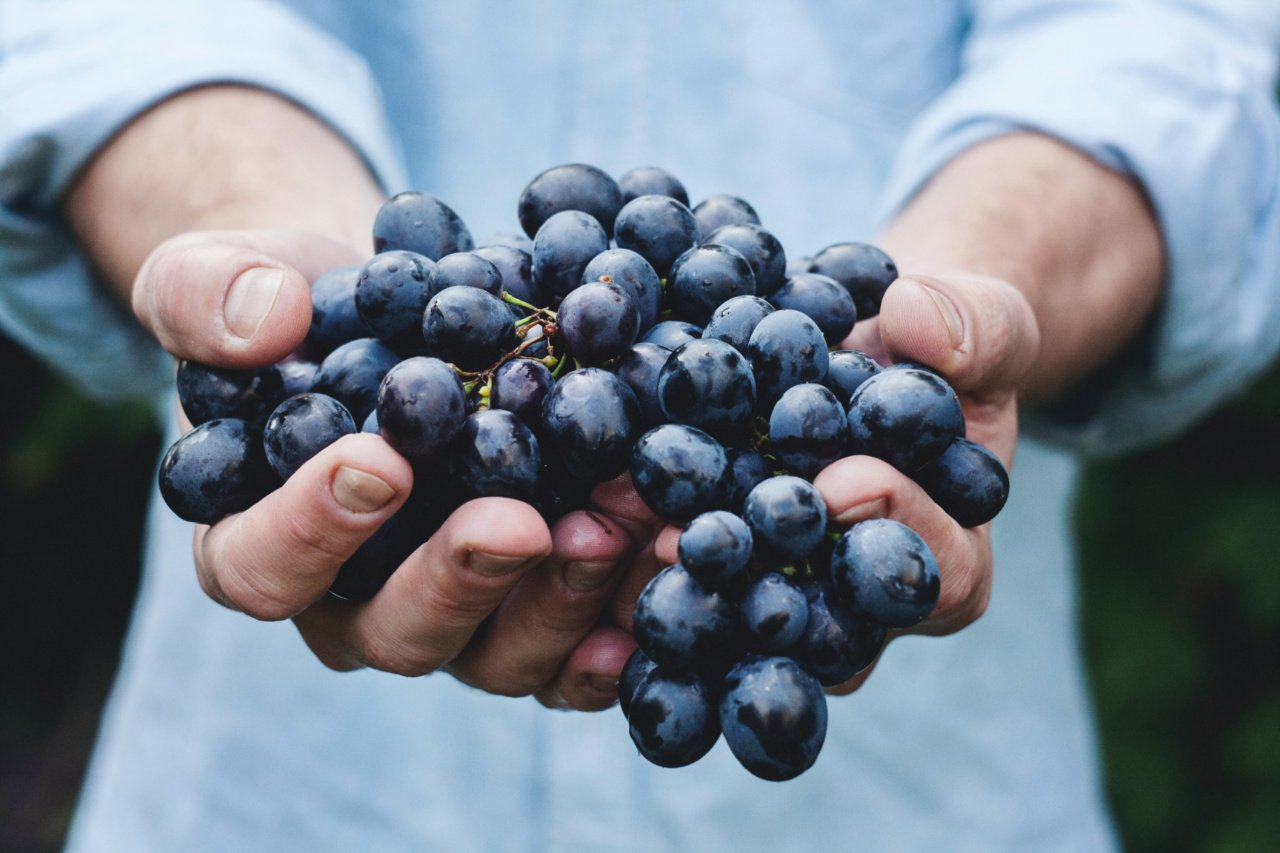
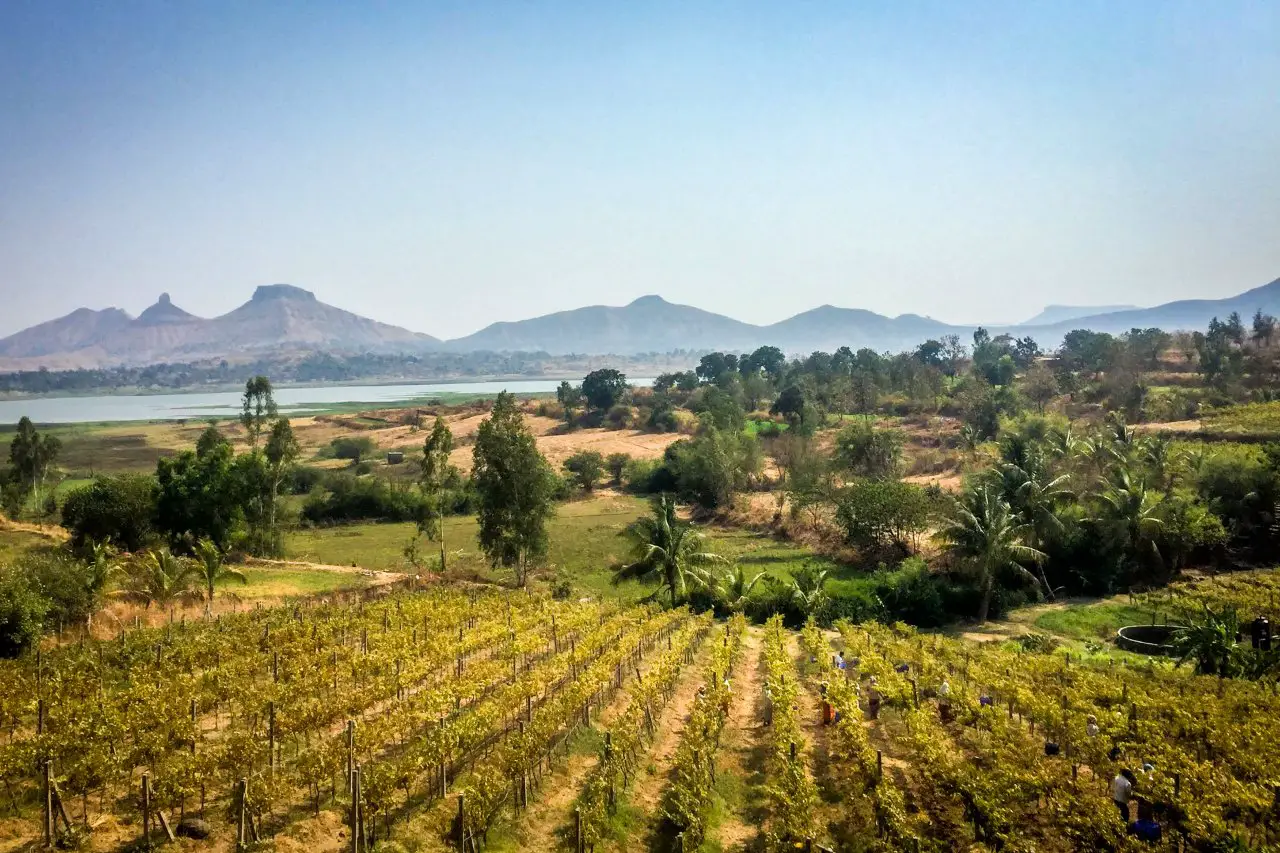
Nashik district in Maharashtra is known as the wine capital of India, since the region produces 80% of the country’s wine. Be sure to visit Sula Vineyards, the largest wine producer in the country (you can book a guided tour), and Vallone Vineyards, a small but charming boutique winery, a 3.5-hour drive from Mumbai, that can be reached by taxi or bus. You can stay at the many hotels in the city or go for an immersive experience by staying around the vineyards. The Source at Sula and Beyond by Sula are particularly famous.
The more accessible and newer vineyards –including the Sula (Kadu Winery), Grover Zampa and Big Banyan– are located just an hour’s drive from Bangalore in Karnataka, so it’s easy to take a day trip by cab.
Indian wines to try
The most popular Indian wine labels that are available at every Indian bar and restaurant are Sula, Grover and Fratelli. Make sure to try Sette by Fratelli and La Reserve by Grover Zampa. Some boutique wineries labels to sample are Vallone Viognier Reserve, KRSMA Sangiovese, and Reveilo Cabernet Sauvignon.
Wine from the Dominican Republic
The Dominican Republic deserves a spot precisely because of how singular it is: one winery, one microclimate, one improbable story of grapes growing in the Caribbean. Ocoa Bay is not trying to compete with Bordeaux. It’s doing something entirely its own, and that kind of quiet originality is exactly what this list is about.
Thanks to Chris from Punta Cana Travel Blog for his take on Dominican wine.
Overview of Dominican wine
The Dominican Republic is usually known for endless beaches and wonderful excursions –but not for wine. Though, there is exactly one winery in the Dominican Republic, one of the only native wineries in the Caribbean. This is what should be called a booming wine destination!
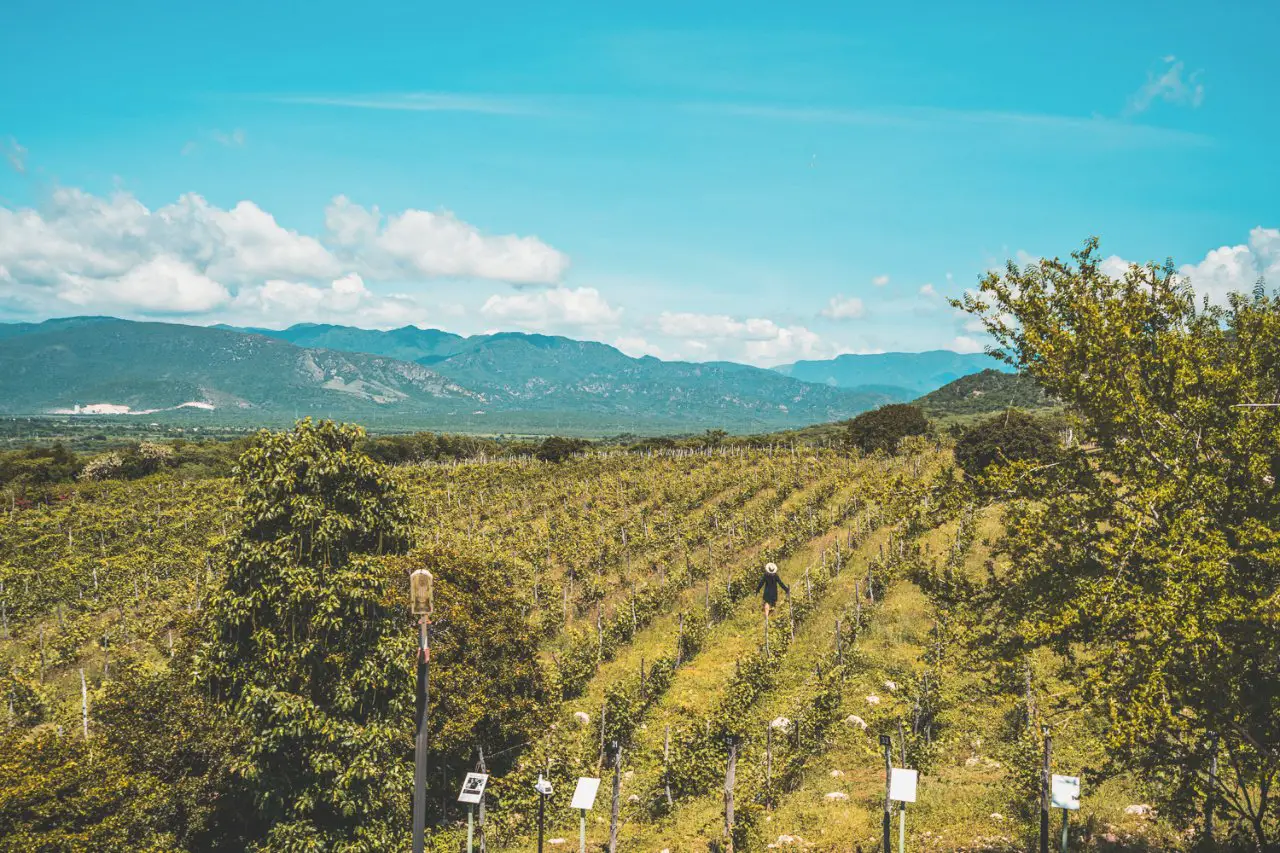
While grapes need dry weather with a certain mix of sunshine and cooler temperatures, the tropical Caribbean climate usually can’t provide these characteristics. However, thanks to a specific microclimate between the mountainous area of Azua and the Caribbean Sea, the first winery of the Dominican Republic opened its doors in 2013.
Records are showing that already 500 years ago the first grapes were planted in the Azua region and later passed to Mexico. Now, half a millennium later, they are back in the Dominican Republic.
Best regions and wineries in the Dominican Republic
As mentioned, there is only one winery in the Dominican Republic, called Ocoa Bay. It’s in the Azua area, a bit less than 2 hours away from Santo Domingo and 5 hours from Punta Cana.
The area is completely off the beaten path. Compared to other places in the Dominican Republic, there is hardly any touristic infrastructure in Ocoa Bay, except some oceanfront villas from local Dominicans. The best place to stay in the area (approx. 30 kilometers away) is the boutique hotel Sava Salinas opposite of the famous dunes of Baní, the only desert in the Northern Caribbean.
When visiting Ocoa Bay, you can take part in a winery tour, taste the local wines, and have an organic meal at the winery’s restaurant.
Dominican wines to try
Ocoa Bay produces a fine selection of wine consisting of French Colombard (white), Moscato (rosé) and Tempranillo (red), just catering for the local upscale market. All wines are organic and influenced by the tropical climate. They are also producing a delicious mango-passionfruit drink.
Wine from Canada
Canada earns its place for sheer diversity and ambition. From the Niagara Peninsula’s ice wines to Okanagan Valley’s elegant whites, this is a wine country that has reinvented itself in a single generation, and is still evolving. For travelers who think they know what New World wine looks like, Canada will change the picture.
Thanks to Claire from ClairePinsTravel for her take on Canadian wine.
Overview of Canadian wine
Canadian wine has exploded in popularity over the last forty years, since producers largely shifted from using native grape species to better quality wine grapes in the 1980’s.
Significant geographic and climate diversity across the country results in the production of a wide variety of wines in different styles and the relatively new industry pushes producers to experiment and create wines that stand out. The cooler Canadian climate supports the production of lighter, aromatic white wines.
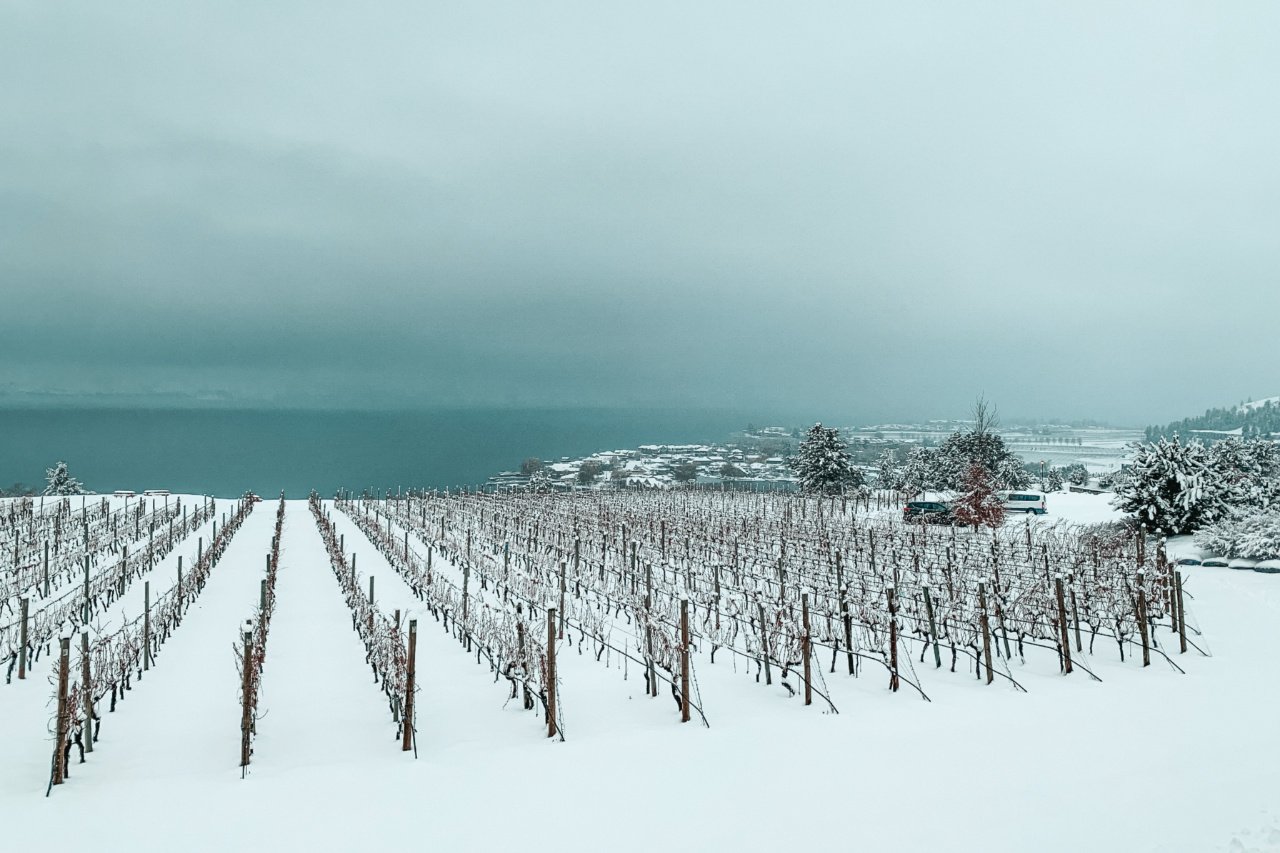
The country’s most unique contribution to the wine world is ice wine: made from grapes that freeze naturally on the vine before being harvested. The result is a rich, concentrated dessert wine with a perfect balance of sweetness and acidity.
Canadian wines are regulated by the Vintners Quality Alliance which guarantees authenticity and controls the appellation system in the country.
Best regions and wineries in Canada
Canada’s most well-known wine region is the Niagara Peninsula, which is located only an hour and a half drive from downtown Toronto, or about thirty minutes from Niagara Falls. The Niagara region is known for Pinot Noir and ”Ice Wine”, and it’s home to over fifty wineries. Stay overnight in the charming town of Niagara-on-the-lake to easily visit recommended producers like Peller Estates Winery, Konzelmann Estate Winery, and Reif Estate Winery, or take a day tour to sample them all!
A more up and coming wine region located around two hours’ drive north east of Toronto is Prince Edward County, which offers many boutique inns and bed and breakfast style accommodation. Known for Chardonnay, Pinot Noir and sparkling options, recommended producers include Sandbanks Estate Winery, Closson Chase Winery and Rosehall Run Vineyards.
A favorite region for many Canadian wine lovers is the Okanagan Valley in British Columbia. Located four-hour drive east of Vancouver, in the interior of the province, you can stay in the lakeside city of Kelowna for easy access to several well-regarded wineries such as Quail’s Gate Winery, Mission Hill Estate and Sumac Ridge Estate. Known for Chardonnay, Pinot Gris and Riesling, the short growing season also produces some excellent sparkling wines.
Canadian wines to try
Inniskillin is the name most people associate with Canadian wine, and its Ice wine is a must-try: rich, concentrated and beautifully balanced. Another standout is Peller Estates Icewine, which offers a slightly fresher, more citrus-driven profile while still delivering that signature sweetness.
For whites, Mission Hill Family Estate’s Reserve Chardonnay is a great introduction to the Okanagan Valley, with a balance of fruit, oak and freshness. Tawse Winery’s Quarry Road Organic Riesling is another excellent choice, known for its precision, minerality and vibrant acidity.
Red wines are also gaining ground. Burrowing Owl’s Meritage is one of the country’s most recognized blends, offering structure and depth, while Jackson-Triggs’ Grand Reserve Shiraz delivers a more approachable, fruit-forward style.
If you’re exploring smaller producers, keep an eye out for Norman Hardie’s County Pinot Noir:elegant, complex, and often considered one of Canada’s best expressions of the grape.
Wine from Peru
Peru belongs here because it’s one of South America’s most overlooked wine stories, quietly producing bottles in the desert while its neighbors Argentina and Chile take all the attention. Ica Valley rewards the curious traveler with something genuinely distinctive: wines shaped by extreme conditions that taste like nowhere else.
Thanks to Dani from No Hurry To Get Home for her take on Peruvian wine.
Overview of Peruvian Wine
Peru is not the first South American country that comes to mind when you think of wine –since it’s undoubtedly better known for pisco– but it has recently become a player in the global wine scene for all the right reasons. A true booming wine destination.
The most important thing to note is that Peruvian wine is produced in the desert under an extremely harsh climate, which makes for a distinct sweet flavor that might catch you off-guard on your first wine tasting session.
The grapes used in Peruvian wine are usually those that do well in hot climates, including Grenache, Petit Bouschet and Cabernet Sauvignon.
Best regions and wineries in Peru
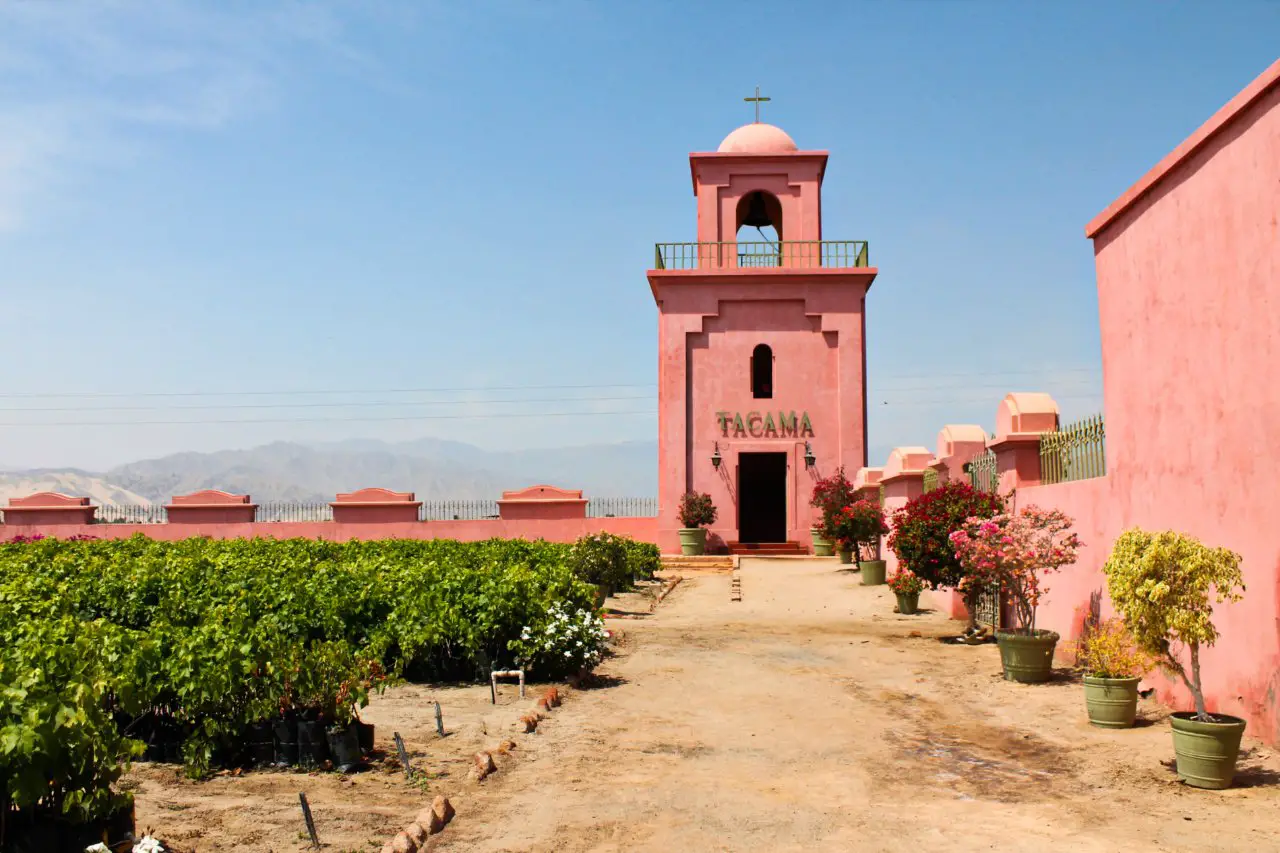
For the ultimate wine experience, the Ica Valley is the place to go. Its desert location and harsh climate makes the wine growing capital of Peru. A must-visit is Hacienda Tacama, which just happens to be the oldest vineyard in South America.
Ica is located a short drive away from Lima, as well as a close distance from the famous Nazca lines. You can drive here, take a shuttle bus or join a guided tour.
Peruvian wines to try
Tacama is a great place to start: its Selección Especial blends are well-balanced and widely available, while its Gran Tinto offers a more structured, full-bodied option.
Santiago Queirolo is another key name, with its Intipalka range standing out for both quality and value. Their Reserva Malbec is a solid introduction, while the Intipalka No. 1 (a Bordeaux-style blend) shows the country’s potential for more complex wines.
For something a bit different, look for Tabernero’s Gran Tinto Fina Reserva, a reliable choice with good depth.
Wine from Indonesia
Indonesia makes the list as perhaps the most unexpected entry of all: a tropical archipelago where winemaking shouldn’t work by any conventional logic, and yet does. Bali’s small but growing wine scene is part of what makes the island so endlessly surprising, and reason enough to look beyond the beach on your next visit.
Thanks to Victoria from Guide your Travel for her take on Indonesian wine.
Overview of Indonesian Wine
Indonesia has a small but growing number of wineries that produce local and unique blends. Hatten Wines is the most well-known winery in Indonesia and it’s located in Ubud, Bali. Originally it only produced rice wine but in the early 1990’s, the owners decided to tackle the art of growing grapes and making them into traditional wines.
The most common grape varieties are Belgia Muscat and Alphonse Lavallee, which are unique varieties adapted to the hot climate of Indonesia. While the production there is still quite local, the wineries are constantly expanding and opening new locations.
Best regions and wineries in Indonesia
Ubud is definitely Indonesia’s most well-known wine region. In the past years, a growing number of tourists have gone to the local wineries for tastings and guided tours about the winemaking process in such a hot climate. This is not like anything you’ve experienced before.
If you are going to Bali for the wine, you should definitely stay in Ubud or close by. There are many great options for small hotels in this area. You’ll get to experience the local nature and the beauty of Bali.
Indonesian wines to try
Definitely make sure to try the Hatten Wine Aga White, which is one of the most interesting wines Indonesia has to offer. While it might not be like anything you’ve tried before, it’s a unique blend and it shouldn’t be missed. There is also the Reserve Red from the Sababay Winery. This is an unusual blend that will surprise you over and over again.

Wine from Israel
Disclaimer: The Golan Heights were captured from Syria and occupied by Israel during the 1967 Six-Day War. The territory has been administered as part of Israel since 1981, despite the condemnation of the annexation by the United Nations Security Council. However, as Israel currently exercises control over the area, it’s being included in this guide as part of it.
It’s also worth noting that the Palestinian territories, particularly around Bethlehem, have their own small but fascinating wine tradition. Cremisan Cellars, a winery run by Salesian monks in Beit Jala, produces wines that have earned genuine international recognition, a story that deserves attention entirely on its own terms.
Israel earns its place for the sheer depth and complexity of its wine story: a country where wine appears 140 times in its oldest texts, and where today’s producers are coaxing remarkable bottles from desert soils and ancient terroir. Few wine destinations carry this much history in every glass.
Thanks to Erez from Hike Israel for his take on Israeli wine.
Overview of Israeli wine
The Golan Heights are among the most ancient spots on the globe where wine has been produced. The word ‘wine’ appears 140 times in the Hebrew Bible, first mentioned when Noah planted a vineyard after the great flood. Today this heritage is continued with a flourishing wine industry. Several larger established wineries produce millions of bottles a year, the most famous being the Golan Heights Winery.
However, the local wine scene is characterized by over 100 small boutique wineries scattered across the countryside. Another unique aspect of Israeli wine is the wide variety of climates, from the Golan Heights’ basalt soil in the north, to the harsh and dry Negev desert in the south.
Best regions and wineries in Israel
The Golan Height in the northern edge is a beautiful rural mountain ridge with plenty of natural and historical sites. Don’t miss a visit to the ‘younger’ Wineries Asaf and Chateau Golan, but also the established Golan Heights Winery.
The richest wine area in Israel is the foothills of the Judean mountains, west of Jerusalem. Dozens of wineries of all sizes are scattered around. It’s also the most geographically convenient area for wine tourism, located in the center, half an hour drive from both Tel-Aviv and Jerusalem. Don’t miss a visit to the Teperberg Winery. It’s a historic establishment founded in 1870 in the old Jewish quarter in Jerusalem during the Ottoman rule. The tradition was passed from one generation to the next and they produced some of the country’s most distinguished bottles.
Another unique area to check out wineries is the Negev desert. One does not expect that this dry area could be suitable to plant vineyards, however, several pioneers proved otherwise. The central ridge, at an altitude of 800-1,000 m (2,600-3,300 ft), provides excellent conditions for groves. A great way to experience the desert atmosphere is to visit the tiny settlement of Kadesh Barnea and taste some local wine Ramat Hanegev wineries.
Israeli wines to try
I recommend trying at least one wine from each distinctive region. Teperberg Providence’s mix of 52% Cabernet Sauvignon, 42% Petit Verdot, and 6% Syrah is the distinguished winery’s flagship product. Yatir Forest is considered the best wine from the Negev Desert. A mix of 55% Cabernet Sauvignon, 25% Petit Verdot, and 20% Malbec yields a fruity taste with deep purple hues. From the Golan Height, try their famous Sauvignon Blanc from the Jordan series.
What makes a wine destination worth visiting today? Wine travel is no longer just about ticking off the world’s most famous regions. More and more, it’s about discovering places where wine still feels connected to the land, the people and the stories behind each bottle. Whether you’re drawn to emerging destinations or simply looking to experience wine in a more meaningful way, these regions offer a glimpse into where wine tourism is heading –less polished, more personal, and far more rewarding.
WHAT TO READ NEXT?
- The best wine destinations around the world
- Wine tourism in Europe: the most underrated wine destinations
- The Ultimate Travel Experiences Bucket List
- Travel resources: the best travel tips and tricks
Liked it? Want to read it later? Pin it!


Enjoyed what you read? A lovely way to show appreciation is by buying me a coffee.
Your support keeps the stories, guides and geopolitical insights coming. Thank you so much!


Wine from the Caribbean? Or from the desert? I mean, ice wine? Who knew! Love this post, it filled me with new bucket list ideas. Thank you!
Seriously, who knew! There’re amazing off the beaten path wine destinations all over the world!