

This article may contain affiliate or compensated links, and may feature complimentary or discounted experiences. All opinions are my own. Please read the Privacy Policy & Disclaimer for more info.
Chernobyl is a place shrouded in mystery. We probably won’t fully grasp the real consequences of the disaster that struck on April 26th, 1986, at least not in our lifetime. But by traveling to Chernobyl, especially by walking around what’s left of Pripyat, we can get a glimpse into what life was like in the USSR, and that, to me, is incredible.
I’m sure you have tons of questions: ‘Can you visit without a guide?’, ‘Is it safe to go to Chernobyl?’, ‘What does it look like today?’. You’ll find all the answers here, along with my personal insights into one of the world’s most fascinating and haunting destinations.
Important note: visiting Chernobyl today is possible, but not without risks
Before diving into the story of my trip, it’s important to acknowledge that Ukraine is still at war. Following Russia’s full-scale invasion in February 2022, Chernobyl and the surrounding Exclusion Zone were occupied by Russian troops, who dug trenches in radioactive soil, looted facilities, and disrupted decades of careful containment work.
Today, limited visits have resumed, but the situation remains unstable. While some tour operators are offering trips again, conditions can change quickly, and safety –both in terms of radiation and the ongoing conflict– is not guaranteed. If you’re considering going, do so with extreme caution, and only with up-to-date, local guidance.
Why did I want to travel to Chernobyl?
While I was in grad school in London I had the opportunity to join a study trip to Ukraine. It took me exactly half a second to jump in. It was only a year after Euromaidan, the revolution that overthrew the Ukrainian government, and it meant having a chance to meet some of the new authorities, and have a first hand look at what was going on in the country. Actually, it was less than half a second. Without thinking about it, I was getting my ticket to Kyiv. Well, in the process I realized that it was cheaper to fly to Moscow (so another unexpected trip happened! –more on that on a later post). This left me with limited time, but it gave me the excuse to go to a place that had always captured my attention: Chernobyl. I mean, who wouldn’t want to go to one of the most radioactive places on earth?
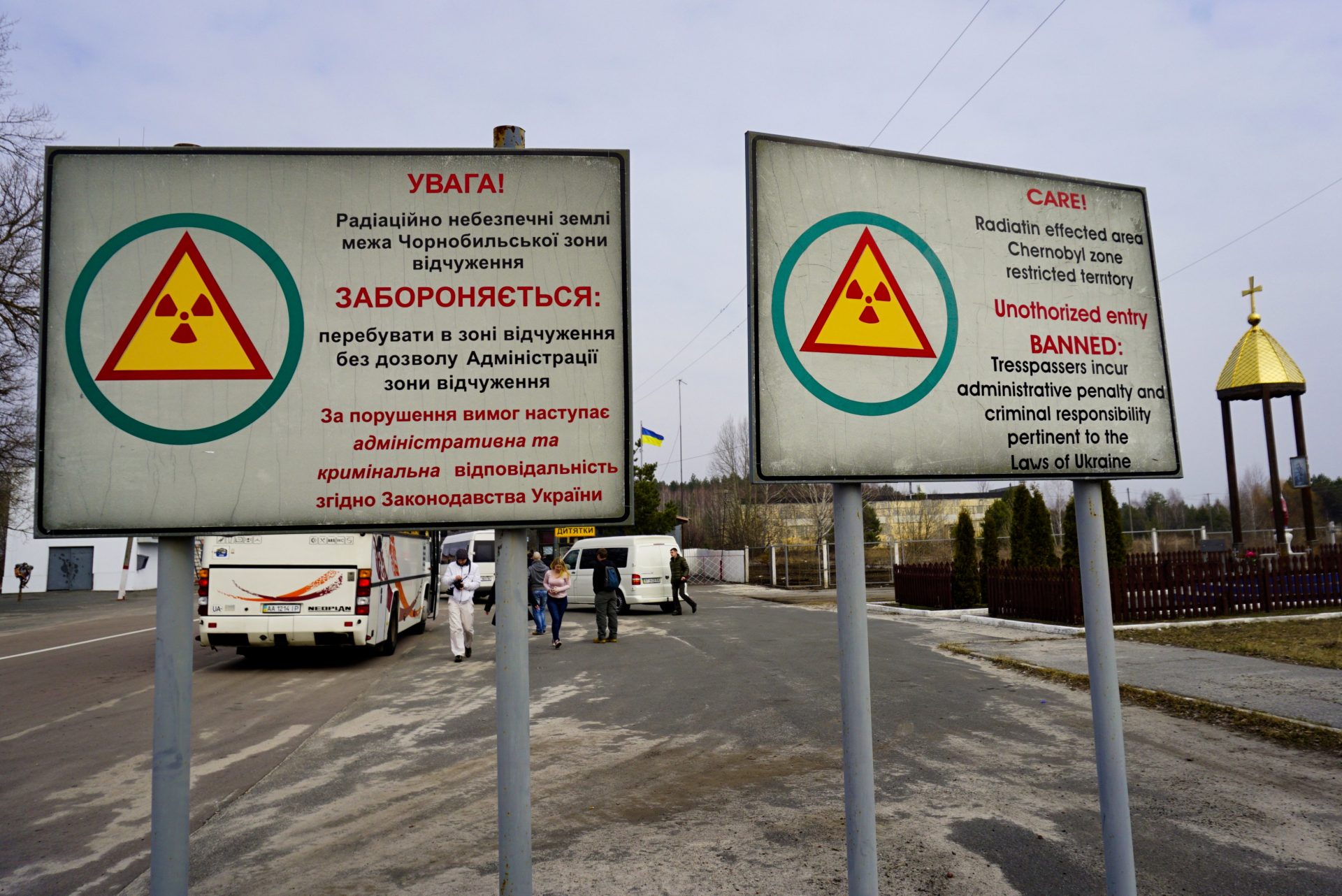
A bit of research told me I needed to book a tour from the capital for the day trip. After filling up a few hundred documents in which I stated that I took all the blame for a potential childless future, and after charging my credit card with one of the weirdest charges my bank has ever seen, I was on my way to the place of the disaster. Chernobyl, here I come!
Exploring Pripyat
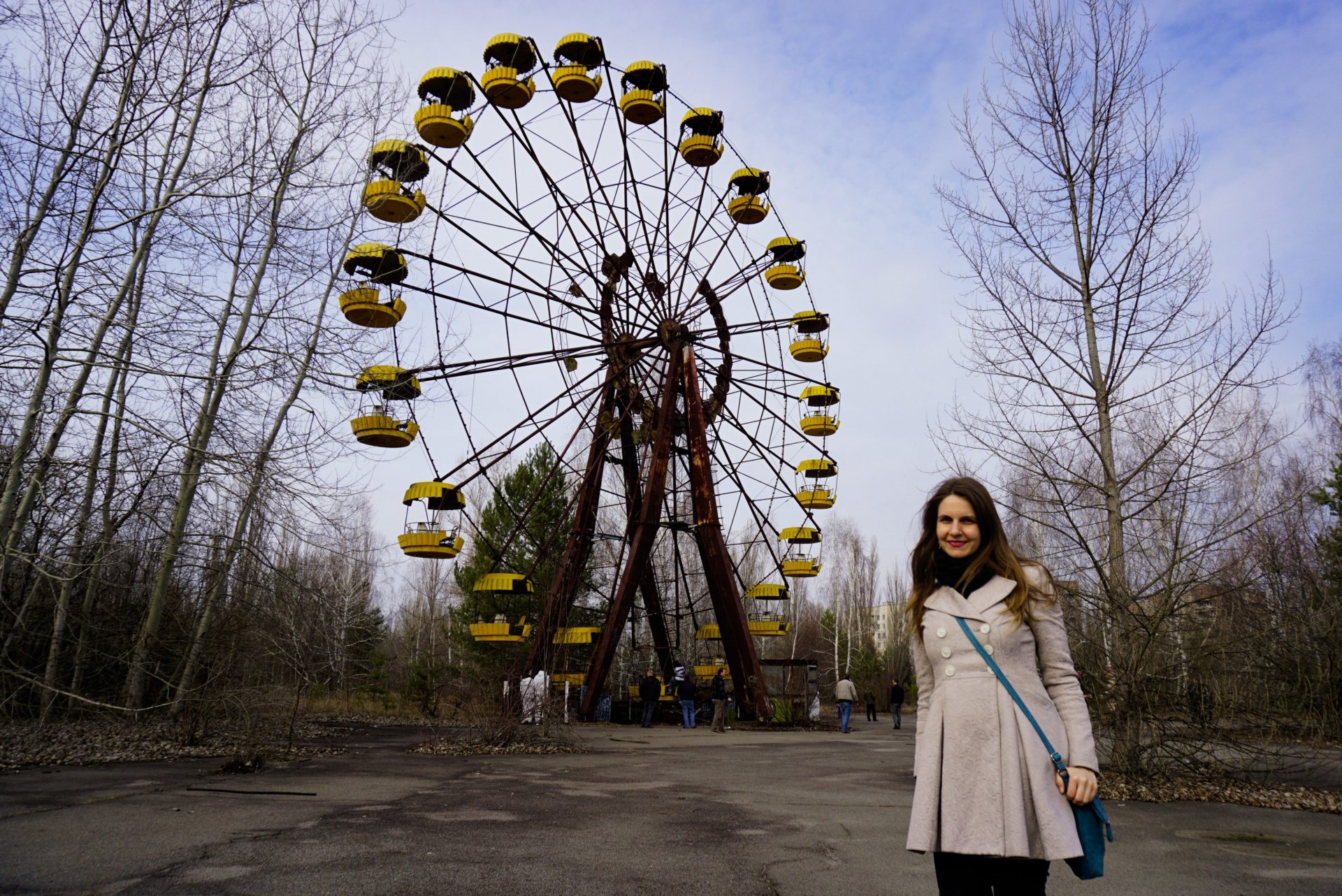
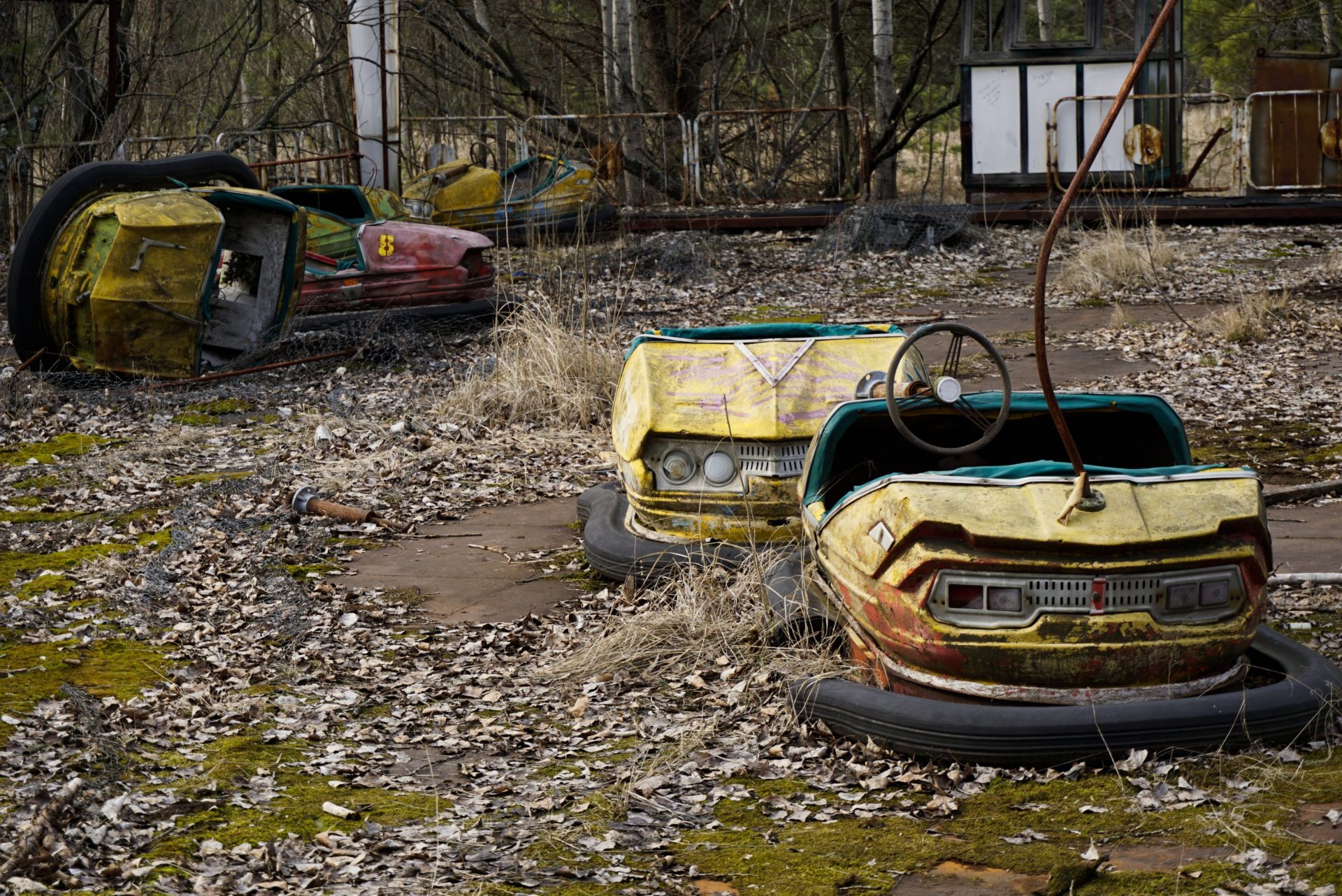
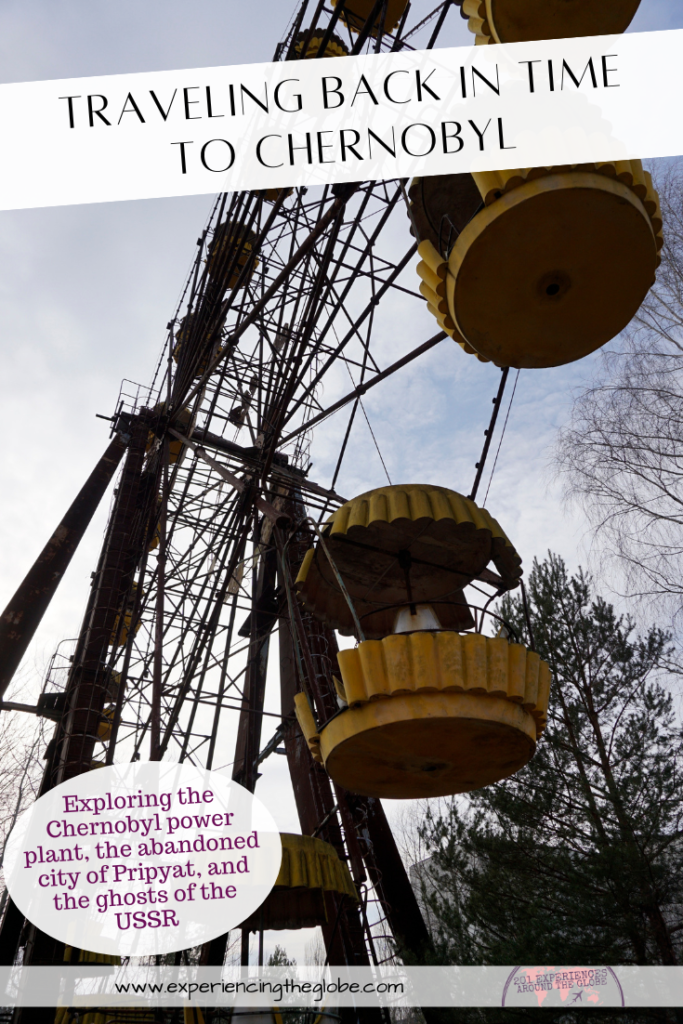
It’s difficult to disassociate the image of the abandoned wheel of fortune from the Pripyat amusement park when thinking of Chernobyl. The nuclear catastrophe that on Saturday, April 26th, 1986 exposed dangerous radiation doses to 5 million people living in contaminated areas and caused international alarm when radioactivity was detected in at least 13 European countries, stopped time, leaving an entire city abandoned.

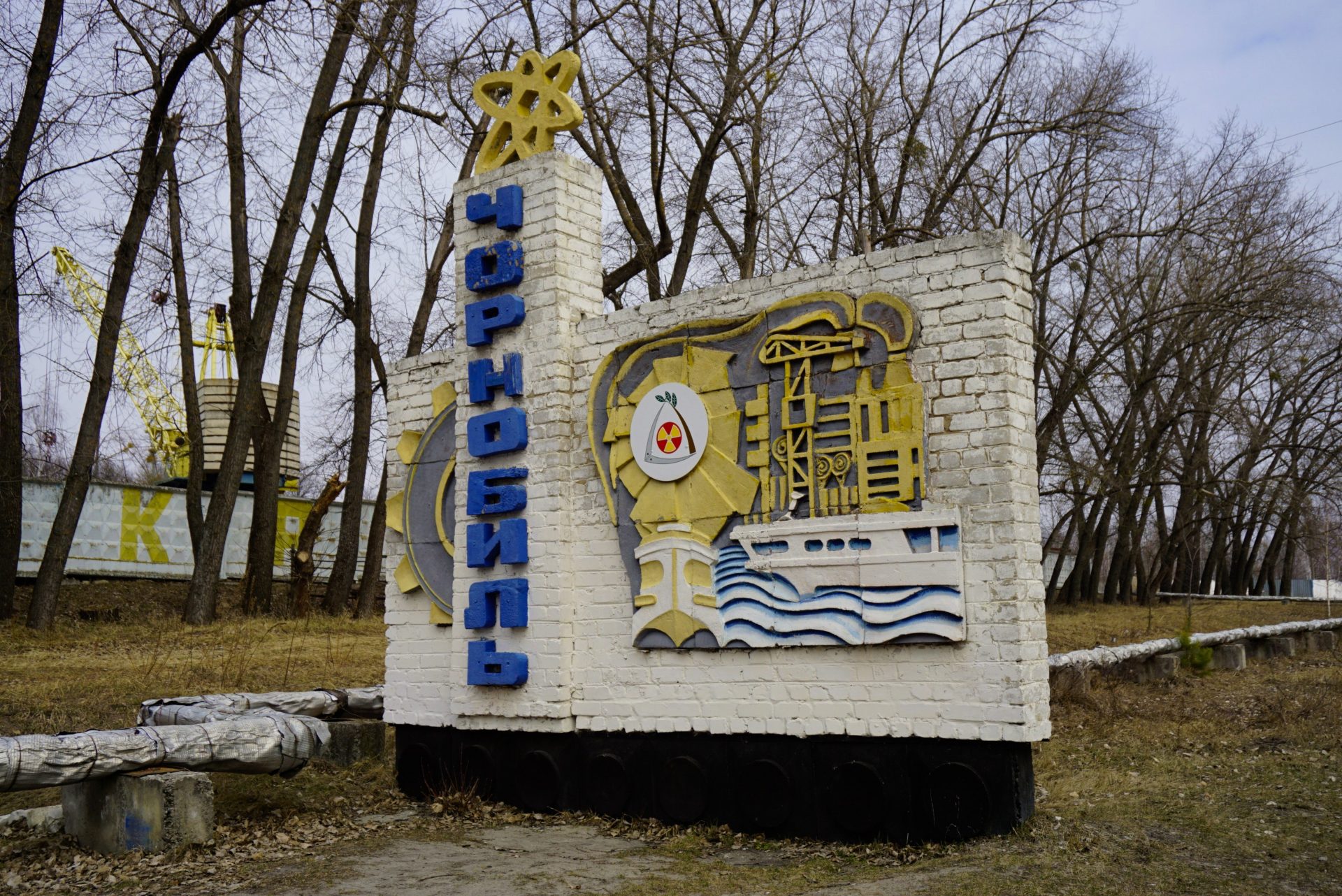
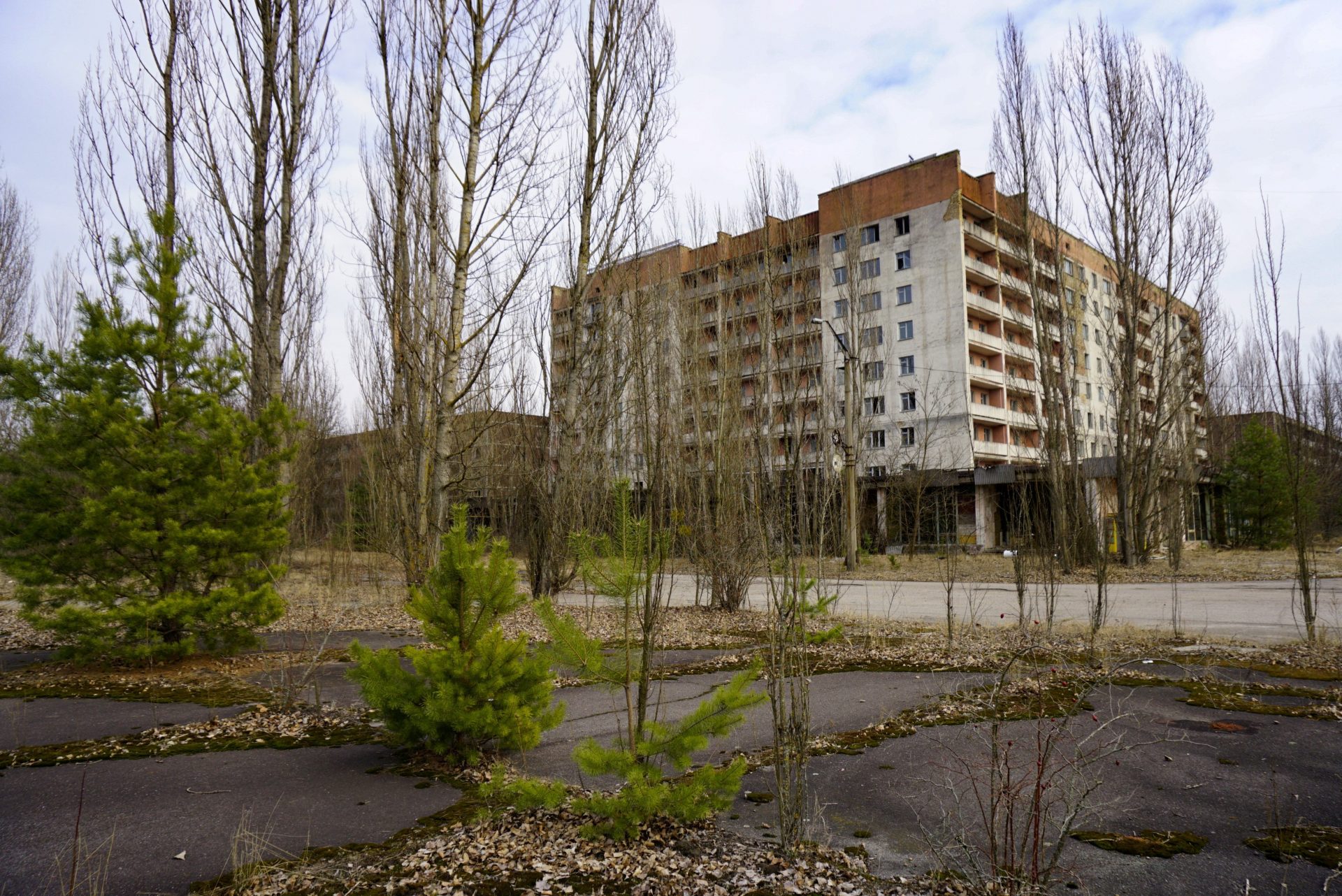
Pripyat was known as ‘the city of the future‘. The government wanted to show the grandeur of Soviet engineering through its nuclear power plant, showing off even with the place where its workers lived. Thus, they built a metropolis that exceeded all the standards of the region and the era, with a state-of-the-art hospital, a hotel, an Olympic swimming pool and a big shopping center.

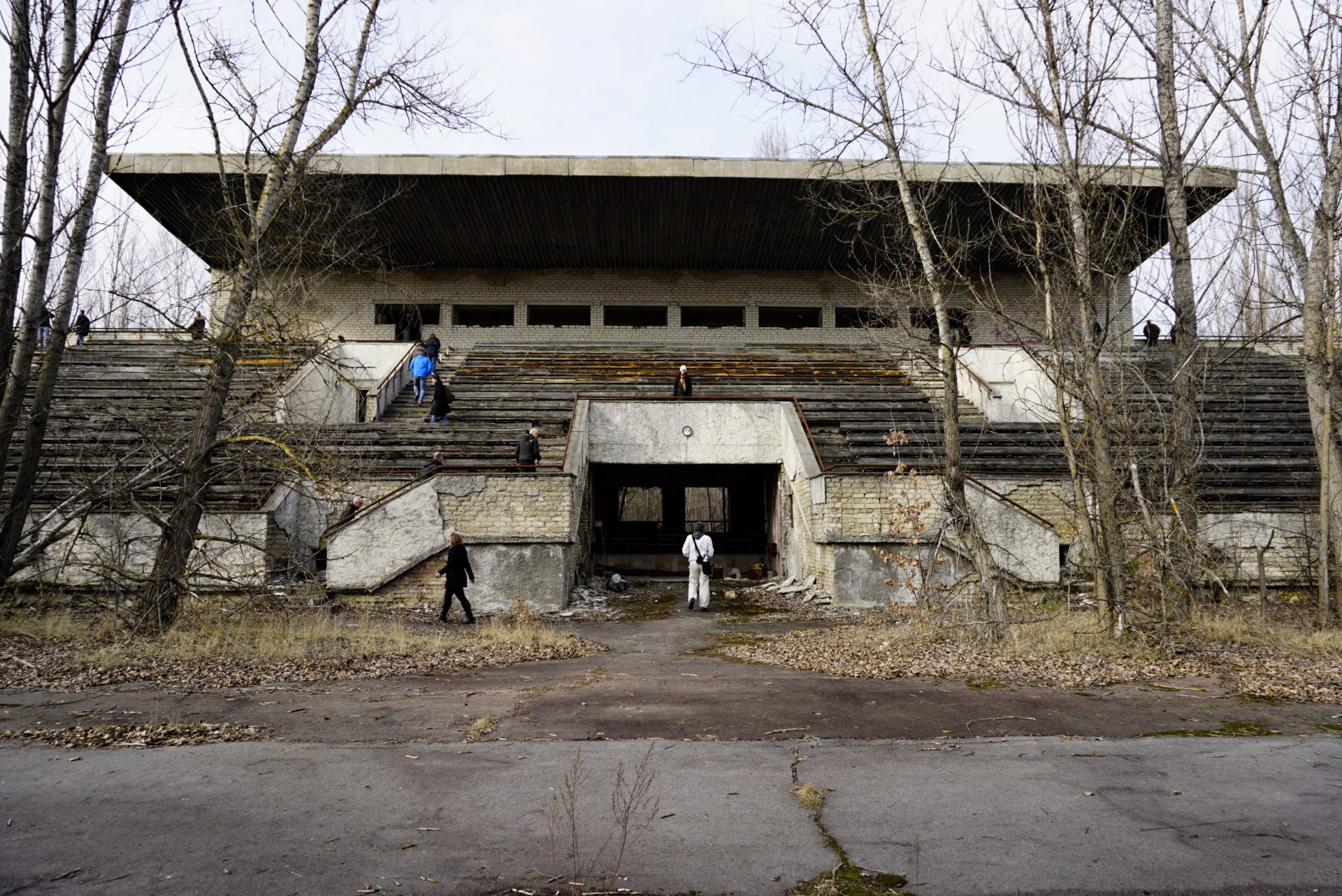
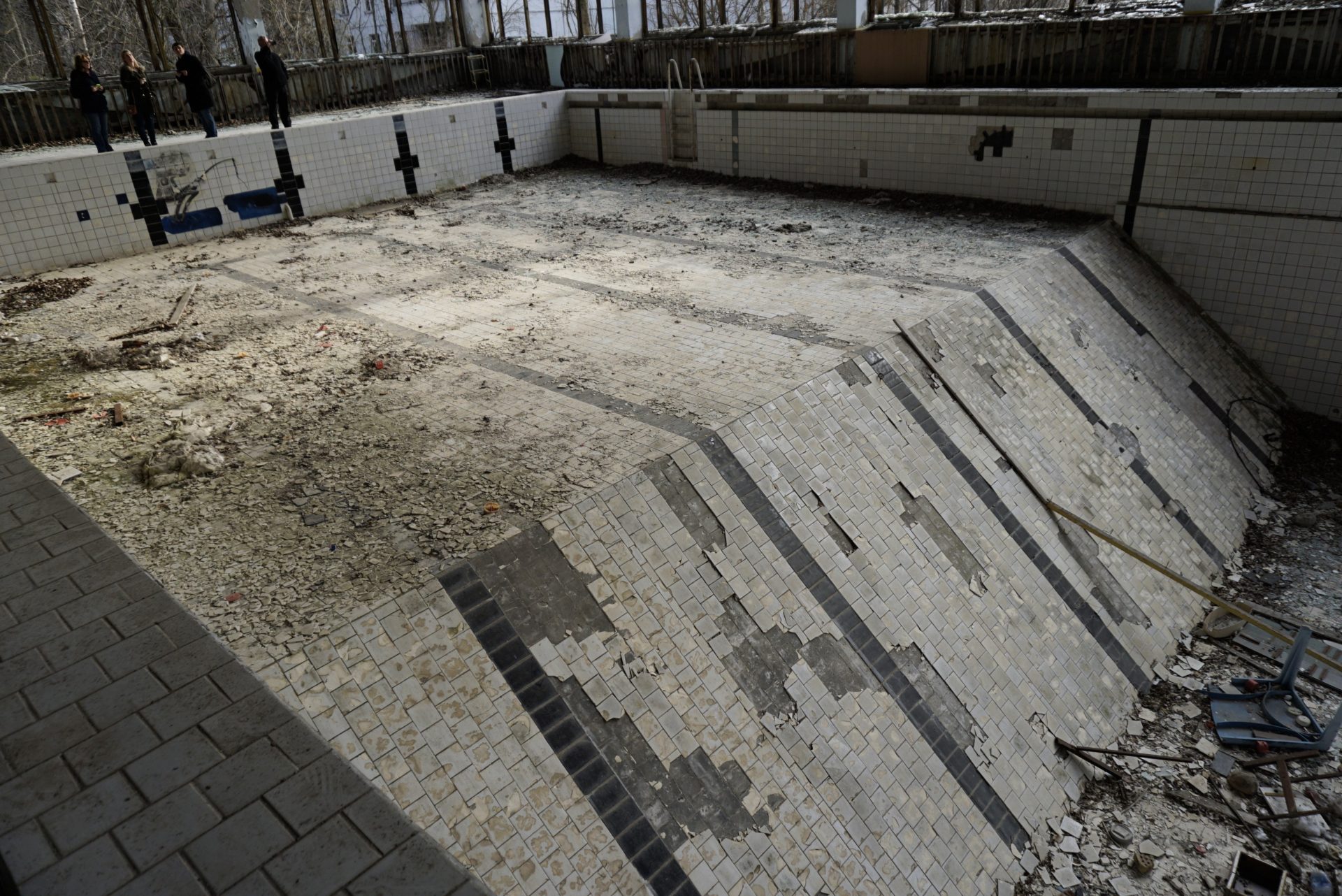
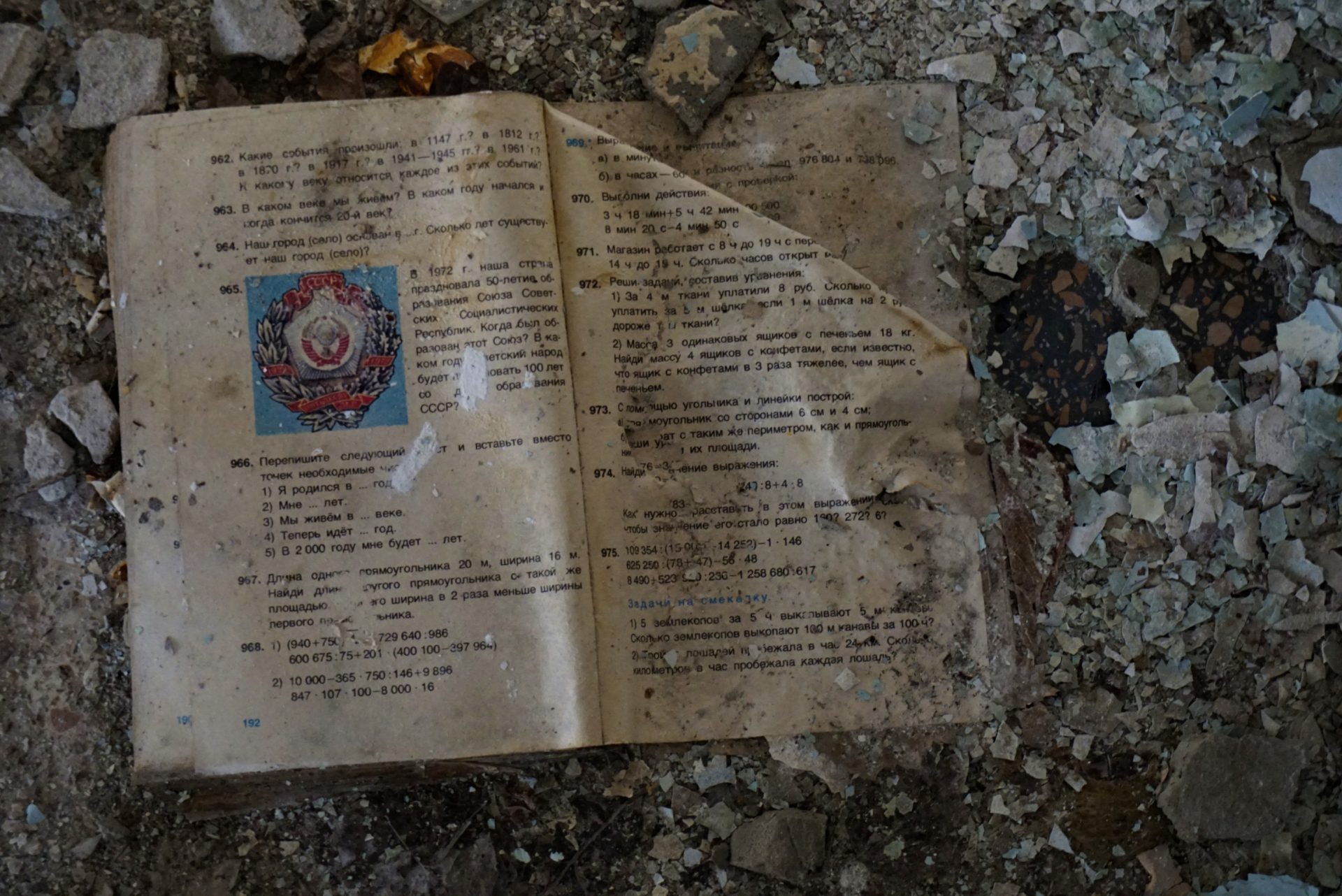
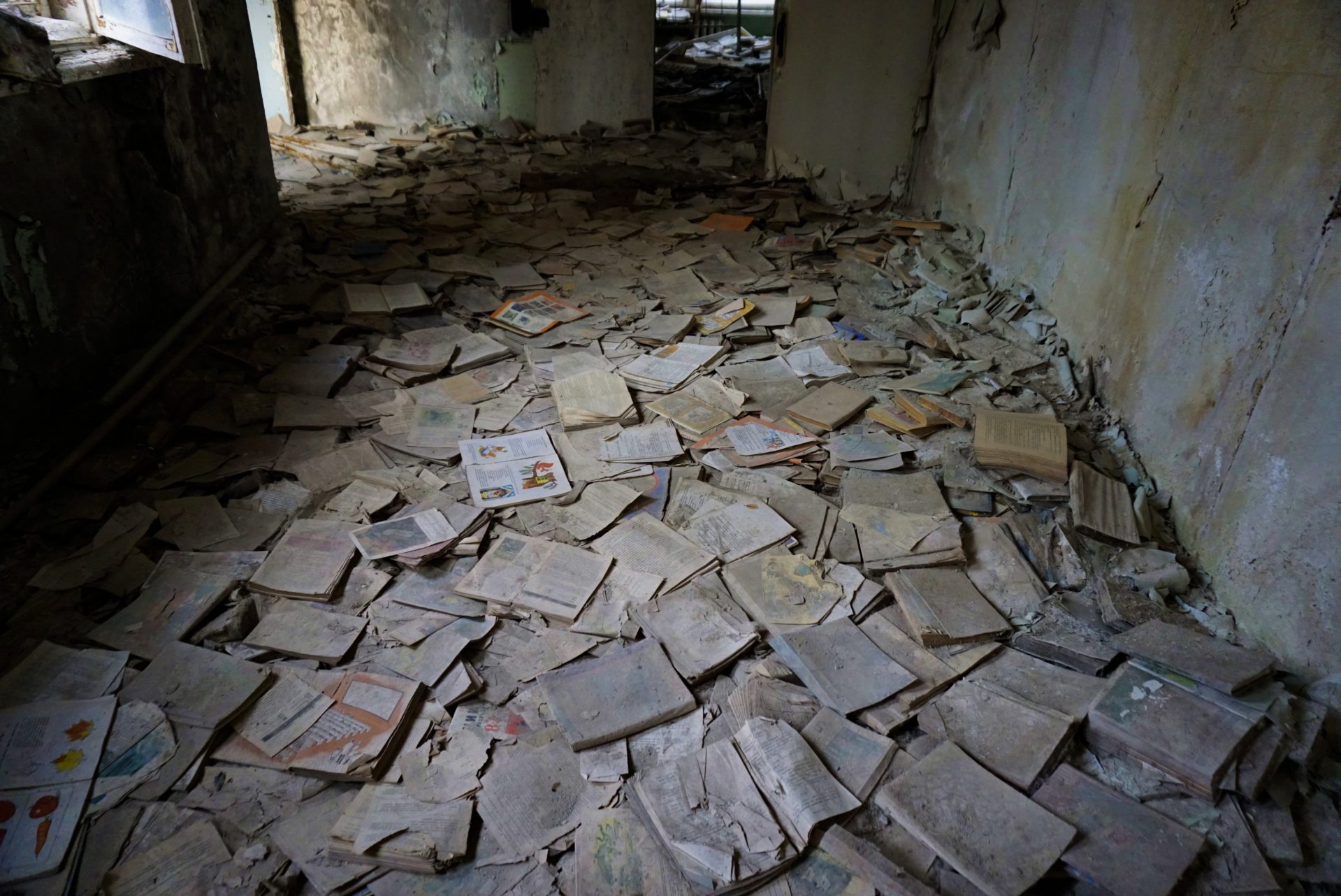
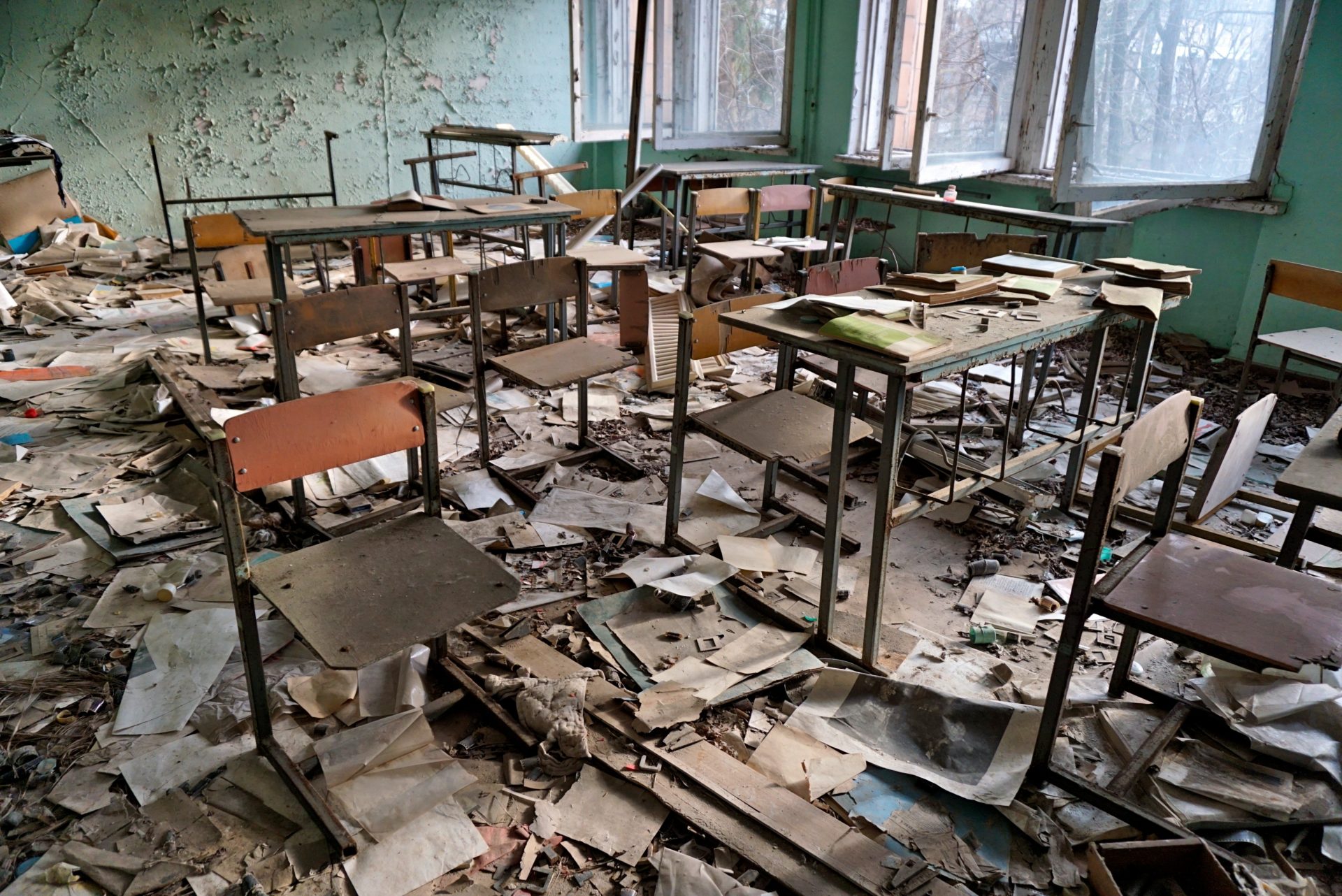
Therefore, visiting Pripyat in the 80’s was a luxury. And it still is today. It’s literally going back to the past. When the population was evacuated, the authorities informed them that they could return to their homes in 3 days, so they shouldn’t take anything with them except their personal documentation. Of course, no one was able to come back. Later on, a 30-kilometer alienation zone was decreed, and an order was given that nothing could be removed from the perimeter. So, it really feels like time froze. I let the dreary panorama sink in and took the time to walk through the abandoned school, with its corridors full of broken books and masks that were given to the children when the magnitude of the accident was sized, and around the kindergarten, full of toys destroyed by the passing of the time. Today it’s just a bitter reminder of the explosion in reactor 4.
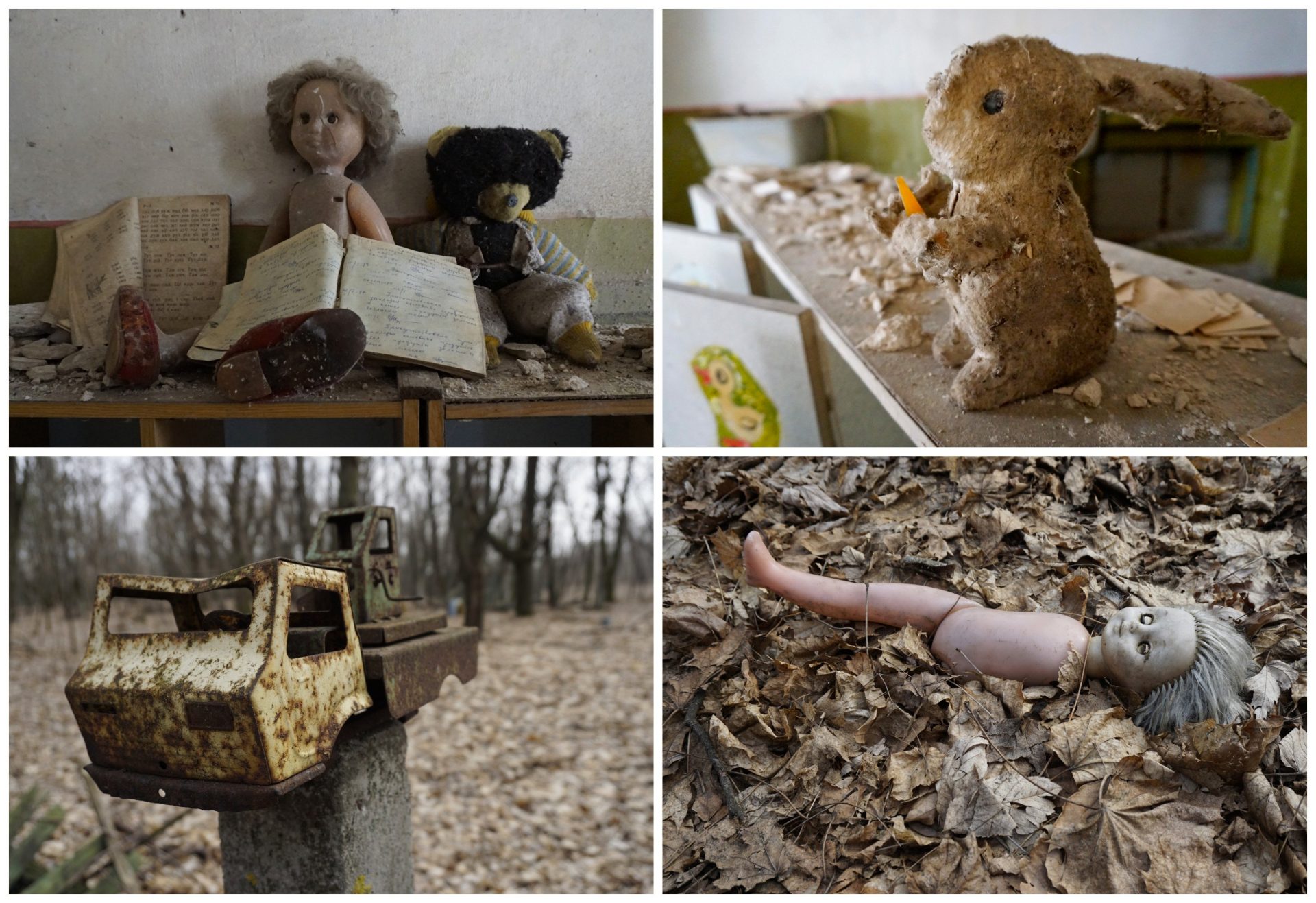
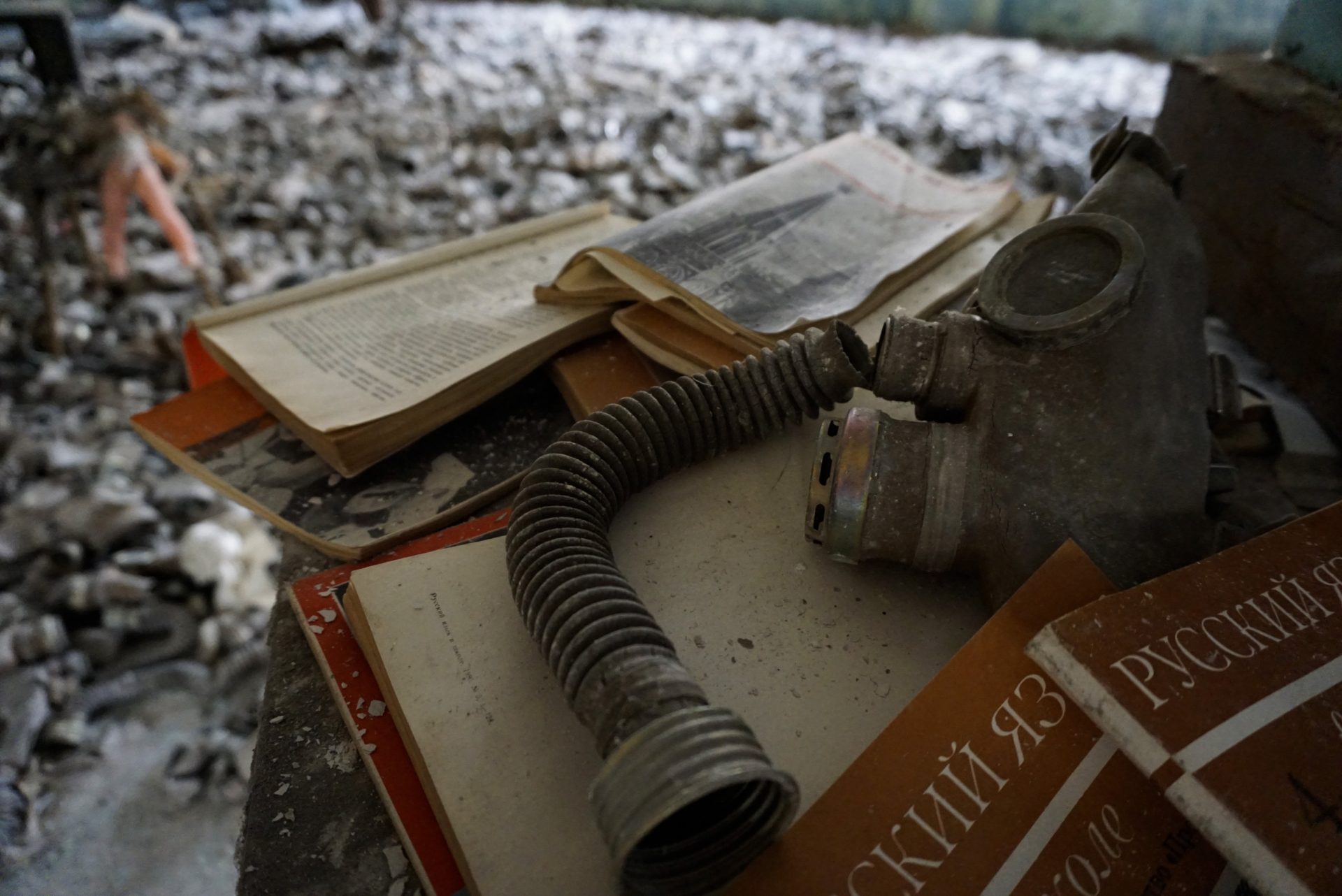
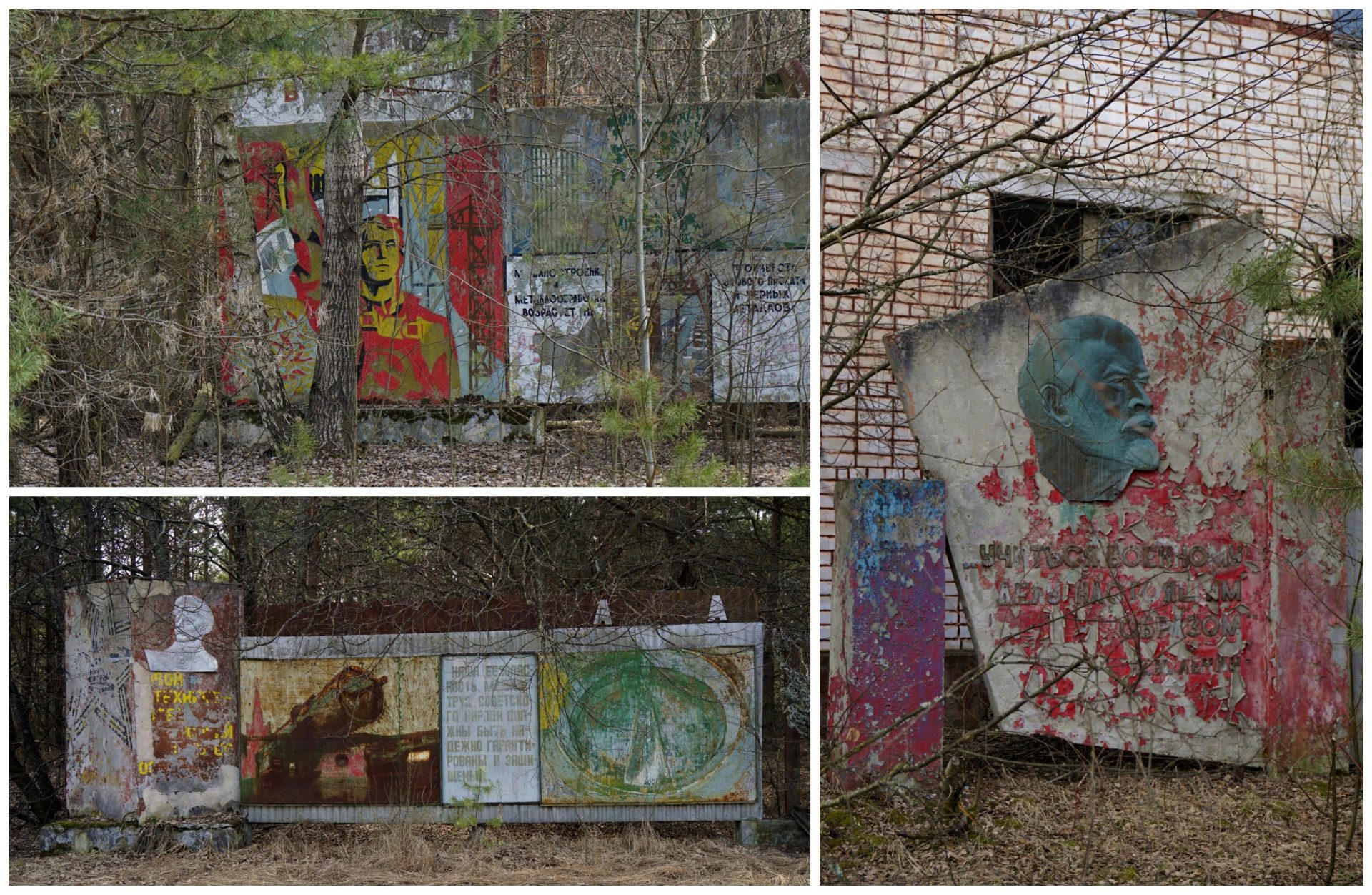
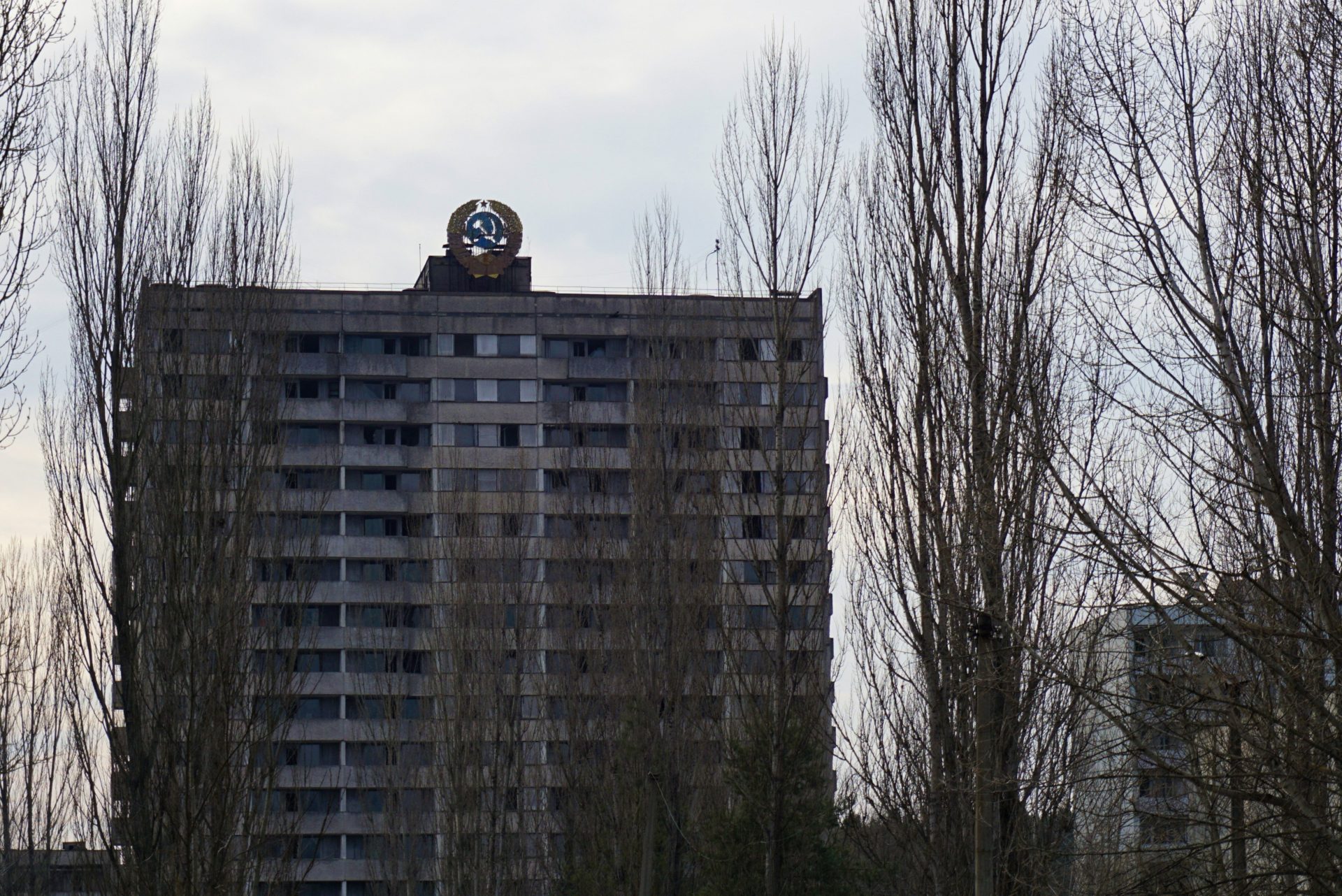
But the murals on the streets, the state emblems of the USSR and the Ukrainian Soviet Socialist Republic on the roof of public buildings, and the political propaganda posters next to the ballot boxes that were going to be used on May 1st, are items that a museum couldn’t have preserved as vividly as the abandonment of the Chernobyl exclusion zone did.

The accident and the “solution”
The experience of witnessing life in 1986, being in the 21st century, is surreal. And although it’s limited to only a few hours, since the place still has very high levels of radiation, it’s enough to feel a fraction of what life was like in the Soviet Union.
Although there is no scientific consensus on the real incidence of the tragedy in the mortality of the population, we know that the explosion had 31 direct victims and that hundreds of thousands of people received dangerous doses of radiation, especially the ones that worked in the decontamination process. The Soviet government didn’t want to acknowledge what happened, so it took them 36 hours (!) to give the order to evacuate the area. Only then they began to evaluate what to do with the reactor that had suffered the explosion.
It was decided to build a ‘sarcophagus’ that simply kept radioactive nuclear material locked up. This was built to have a useful lifetime of 30 years, hoping that in that time the international community would be able to come up with a permanent solution. In fact, one of the things that impressed me most when visiting Chernobyl is that, 30 years later, the effects of radiation and corrosion on the sarcophagus were visible to the naked eye. Since no one has been able to find a solution, a new dome, larger and more resilient, was built to cover the first one. This time its estimate lifetime is 100 years. Maybe a lasting solution will be found before having to build a third one.
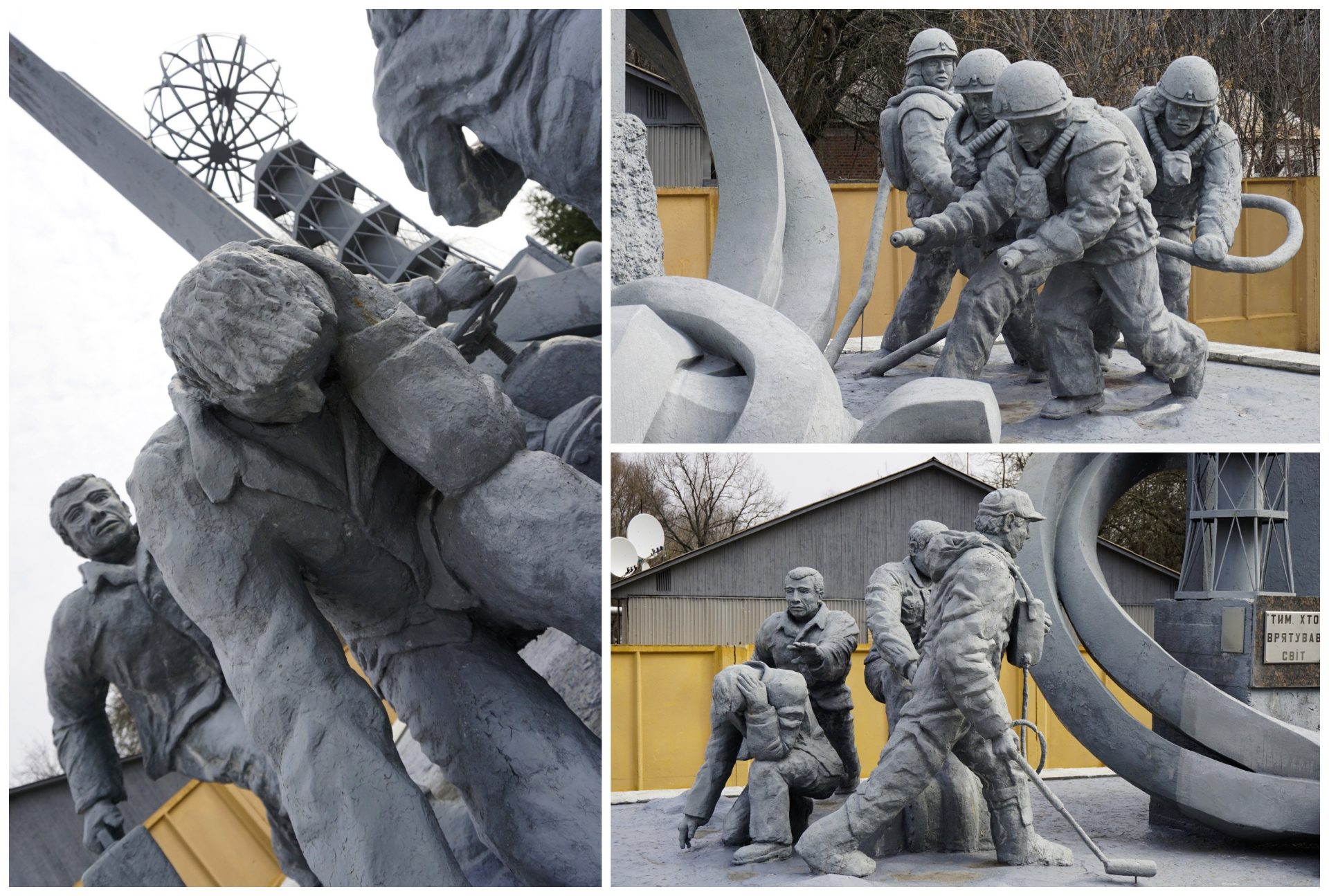
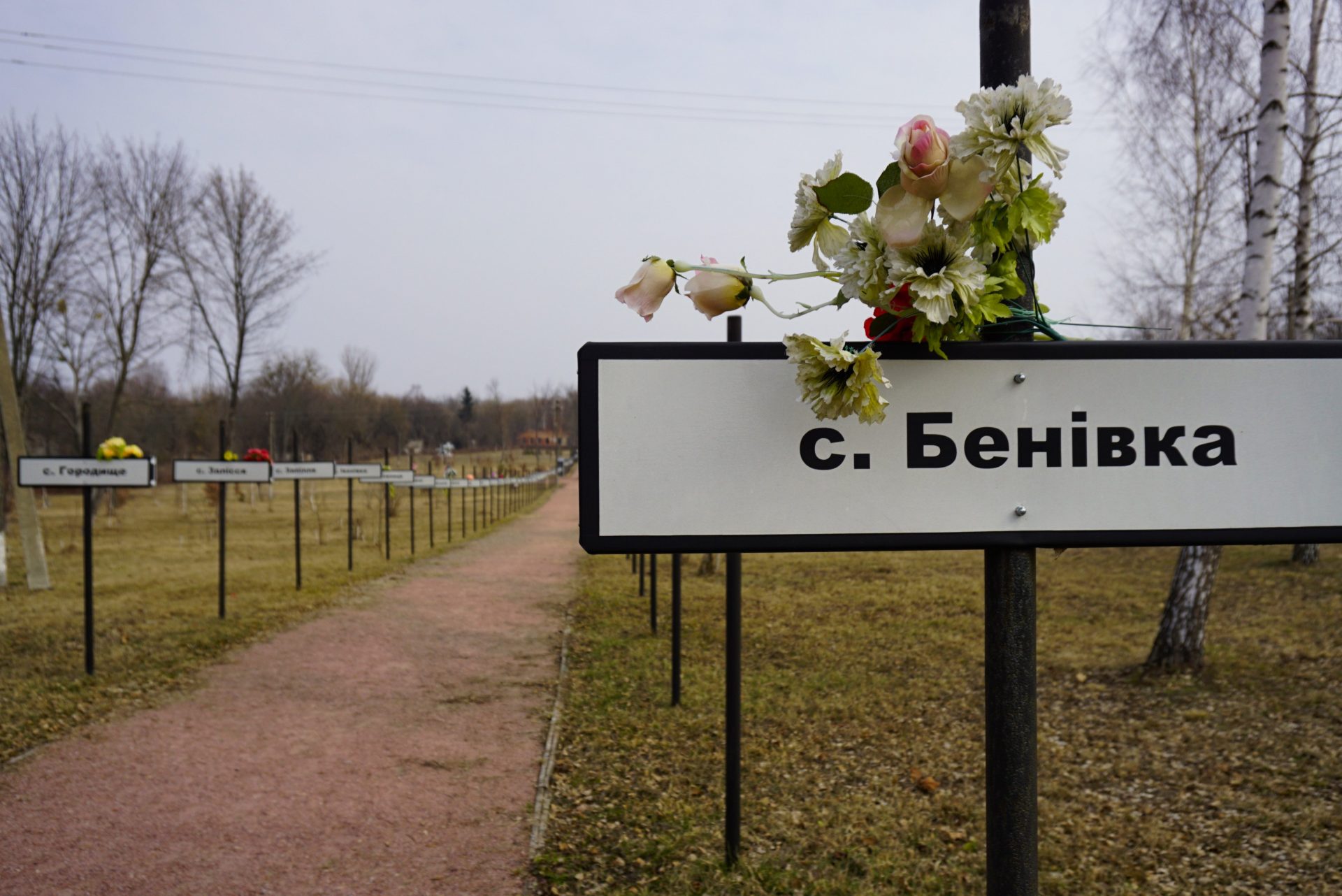


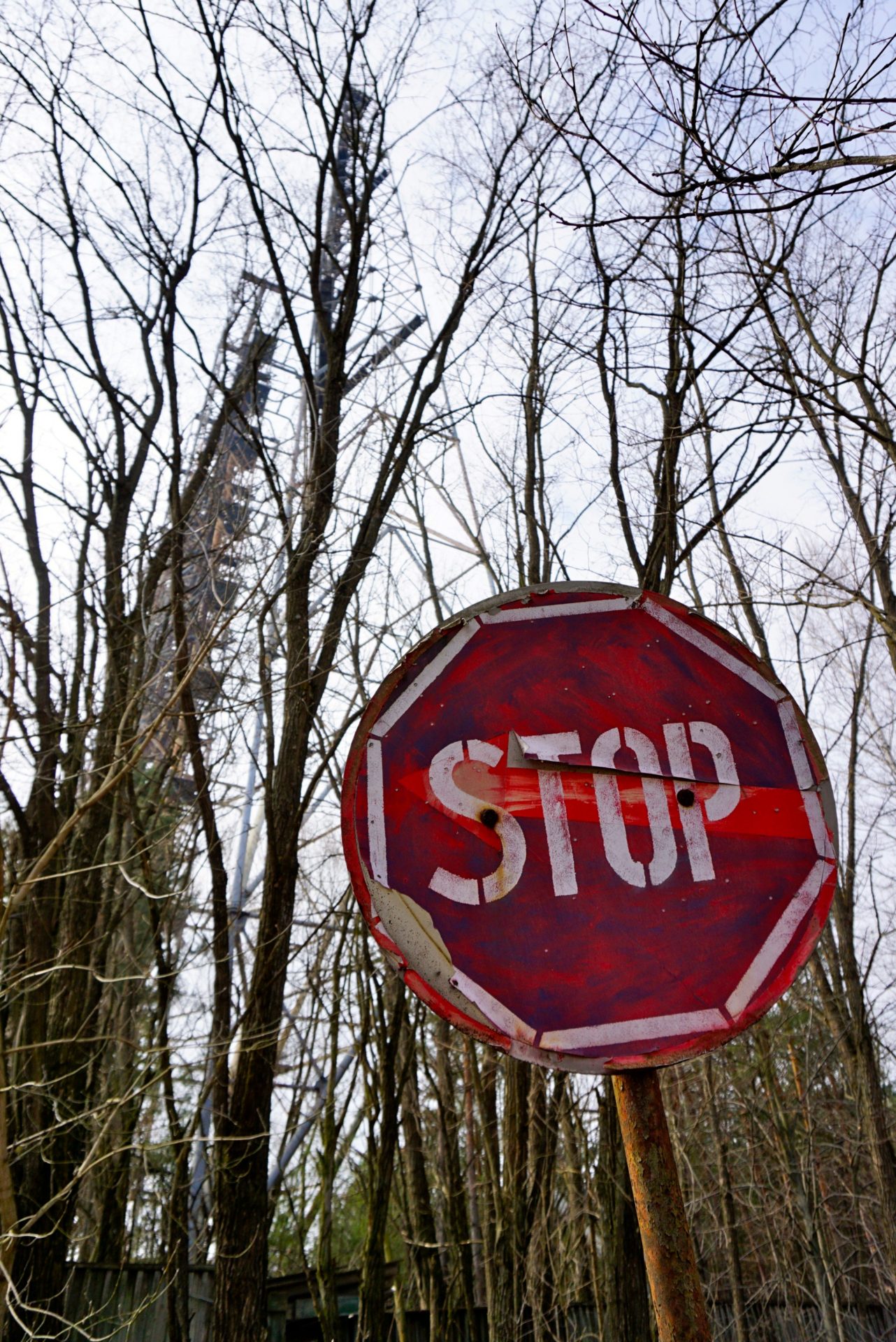
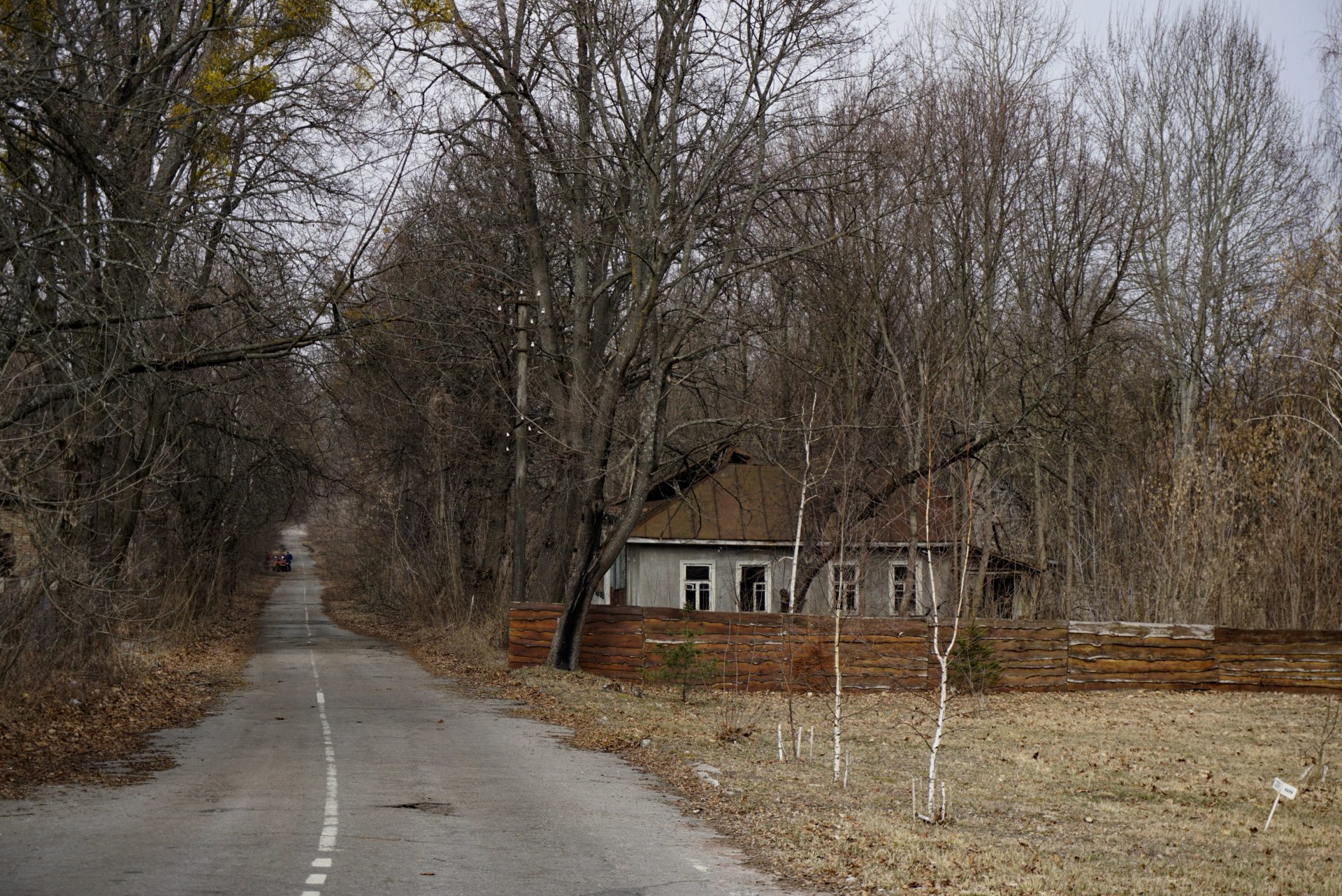
When you enter the exclusion zone, you get a dosimeter to measure the radiation. In some places it’s absolutely normal. In others it’s so high that it’s not permitted to stay for more than a few minutes. But everything looks the same. This allows you to understand why people didn’t want to leave, and why many returned, even being warned about the consequences. Thus, Chernobyl became a place where people died at the hands of an invisible executioner.

Today nature is bending the hand of the destruction that man provoked. Small trees are growing in the concrete. Among the forests that survived the effects of radiation, wild animals found a new home. This brings hope. Over the heartbreaking devastation left by the nuclear accident, you can see how life thrives.
Reflections from my visit to Chernobyl
I’m the kind of traveler who’s drawn to places most people find strange –where history lingers, and silence says more than words. My interest in geopolitics and historical nuance made Chernobyl an unforgettable experience. But I’d be lying if I said it wasn’t hard, which definitely doesn’t make it a trip for everyone. Knowing you’re walking on ground marked by so much pain, by disaster and abandonment, is something that stays with you.
And now, that weight feels even heavier. Chernobyl is no longer just a ghost of the past –it has become part of a present defined by conflict. The silence that once told stories of Soviet collapse and nuclear catastrophe now echoes with the fragility of peace, and with the knowledge that history, when ignored or manipulated, has the power to repeat itself.
Visiting Chernobyl was never about dark tourism for me. It was about understanding: how political systems fail, how people endure, and how memory can be preserved in crumbling walls and empty streets. I left with more questions than answers, and a deeper respect for the complexity of this place and the country that holds it.
When it’s safe again, I encourage you to go. To learn, to feel, to remember.
Chernobyl is not just a place frozen in time –it’s a reminder of how fragile our systems are, and how easily human error, political decisions, or armed conflict can tip the balance. Visiting it is unsettling, yes, but also enlightening. It’s a place where history, science, and geopolitics intersect in the most haunting way. And if you’re willing to face that discomfort, you’ll return with more than just eerie photos –you’ll come back with perspective.
WHAT TO READ NEXT?
- Visiting Transnistria: the Soviet State that lives on, but isn’t on the map
- Geopolitics of Travel: insights beyond what the media portrays
- Is Bratislava worth visiting? Uncovering the unique beauty and quirkiness of Slovakia’s capital
- Azerbaijan: exploring beyond the petrodollar-sponsored grandeur
- Does your place of birth determine who you are? A reflection on tourism, migration, and globalization
- The ULTIMATE Travel Experiences Bucket List
- Travel resources: the best travel tips and tricks
Liked it? Want to read it later? Pin it!
Enjoyed what you read? A lovely way to show appreciation is by buying me a coffee.
Your support keeps the stories, guides and geopolitical insights coming. Thank you so much!


What an interesting read. Thanks so much for all your insights! Shame it’s out of reach atm, but I’d love to go one day
I’m glad you enjoyed the post, and I hope this pointless war is over soon, and we can all go back to beautiful Ukraine!
Hello! I can’t imagine what it must have been like to even just be where such a catastrophe happened.
The time on the photo has stopped! This is an unusual and extreme experience! Thanks for sharing!
It’s an amazing experience! Hope I managed to take you there through my tale 😊
Thanks for sharing, definitely an interesting read. It looks like a spooky but interesting place to visit. I love all the little treasures that Eastern Europe has to offer and I need to explore more.
Ashlee
Eastern Europe is super interesting! I hope you get to explore it more. I’m here if you need any advice 😊
Chernobyl fascinates me. I think I would totally visit if given the chance. The spookiness of the empty places is like a horror movie, but I think there is hope in seeing nature take the area over. This too shall pass…
Exactly my thoughts. It’s eerie, but seeing how nature is taking over give us hope 😊
Wow. What an experience. I can’t imagine what it must have been like to even just be where such a catastrophe happened.
It’s really overwhelming, but that makes it super interesting!
I had goosebumps reading this. The photos truly are so eerie! What an experience!
I’m so happy I took you there with my story, Kate! I felt goosebumps the whole time I has there. And yes, it’s super eerie, but so interesting!
This is incredible to see. It was such a tragedy that so many people suffered from but it’s interesting to see how life was then especially since everything was left when they were evacuated.
That’s exactly what makes it so magical to me. It’s the only place in the world you can see how time stopped. You get to witness life in 1986, and how nature is taking over in the 21st century. It’s really special!
This is so different and cool! I’d be afraid to go there with the radiation but what a tragic part of history.
It can be a bit scary, that’s why I think it’s not an experience for everyone, but it is really different, and quite cool! 😊
WOW! Thanks for taking us on your journey. This is so sad. Definitely a trip I wouldn’t be able to take with something so tragic.
As I said, it’s not for everyone, but I’m really happy you experienced a bit of it through me ❤️
What an experience! I like how you described it as being frozen in time, that is exactly what you captured in your photos.
It’s quite an experience! I’m happy you saw my words through the pictures ❤️